
Warmth and ambiance, plugged in and ready in Clay County.
With winter lows averaging 7°F and a long, demanding heating season each year, Clay County homes lean on furnaces and wood stoves for serious heat—electric fireplaces fill the gap for zone warmth, ambiance, and rooms where running a flue just is not practical. Find the right unit and connect with a trusted local dealer.
Every Project Starts From One of These Five Situations
The easiest fireplace to add to an oak-and-hickory farmhouse.
Clay County sits in northwest Iowa's farm country, county seat in Spencer, population just under 13,500 spread across small towns and township roads along the Little Sioux River. Climate zone 6A and winters comparable to Madison, Wisconsin put the county in roughly the same cold-climate bracket—long winters, hard frost from November into April, and plenty of homes still framed around a wood-burning fireplace fed by local oak, hickory, maple, and walnut. Electric heat has never tried to replace that furnace or that wood stove here; it fills a different role.
Most Clay County homes run on propane furnace or forced-air heat as the primary system, with wood as a common backup for the farmhouse crowd. An electric fireplace does not compete with either—it adds real ambiance and supplemental zone heat to a finished basement, a bedroom addition, a rental property, or a room without a chimney, without any venting, gas line, or masonry work. That makes it one of the simplest hearth upgrades available in the county: no permit hassle on most plug-in units, no combustion byproducts to worry about, and installation that a local dealer can usually turn around in a single visit.
Three steps. No salesperson until you're ready.
Tell us about your project
Your zip code, your situation, and the fuel you're leaning toward—or let the answers point you to one.
See what's actually available
The brands dealers within 100 miles genuinely carry—real options, never a catalog mirage.
Get your dealer & Project Guide
A trusted local dealer, plus the free Project Guide & Parts List that names every component of the job.
Frequently Asked Questions
How much does an electric fireplace installation cost in Clay County?
Plug-in electric fireplaces and freestanding stoves typically run $500 to $1,500 installed in Clay County, and that usually just covers mounting hardware and confirming the outlet can handle the load. Built-in electric fireplaces or inserts set into an existing wood-fireplace opening run higher, roughly $1,200 to $2,500, mostly because of the electrical work involved—running a dedicated 120V or 240V circuit if the unit calls for one. Homes in Spencer with existing outlets near the install location land on the low end; rural farmhouses needing new wiring run from the panel come in higher.
Will an electric fireplace actually heat my Clay County home?
Not on its own, and any dealer worth working with will tell you that up front. Most electric fireplaces top out around 5,000 to 9,000 BTU, which is enough to noticeably warm a single room but nowhere near enough for a whole house through a Clay County winter with lows averaging 7°F. Think of it as supplemental zone heat for the room it is in—a den, a finished basement, a bedroom—while your furnace or wood stove carries the rest of the house. If you are trying to heat an entire addition or a detached structure, talk to a dealer about a larger unit or a different fuel altogether.
Who installs electric fireplaces near me, and do they need to be licensed?
Because there is no combustion, no chimney, and no CSIA-certified sweep involved, electric fireplace installation is really an electrical job. Simple plug-in units that use an existing outlet do not require a licensed electrician. Built-in units or inserts that need a new dedicated circuit do, under Iowa electrical code, and most hearth dealers serving Clay County either employ a licensed electrician or coordinate with one for that portion of the job. Ask specifically whether the quote includes the electrical work or treats it as a separate line item—it changes the total more than people expect.
What is the difference between an electric fireplace, insert, and stove?
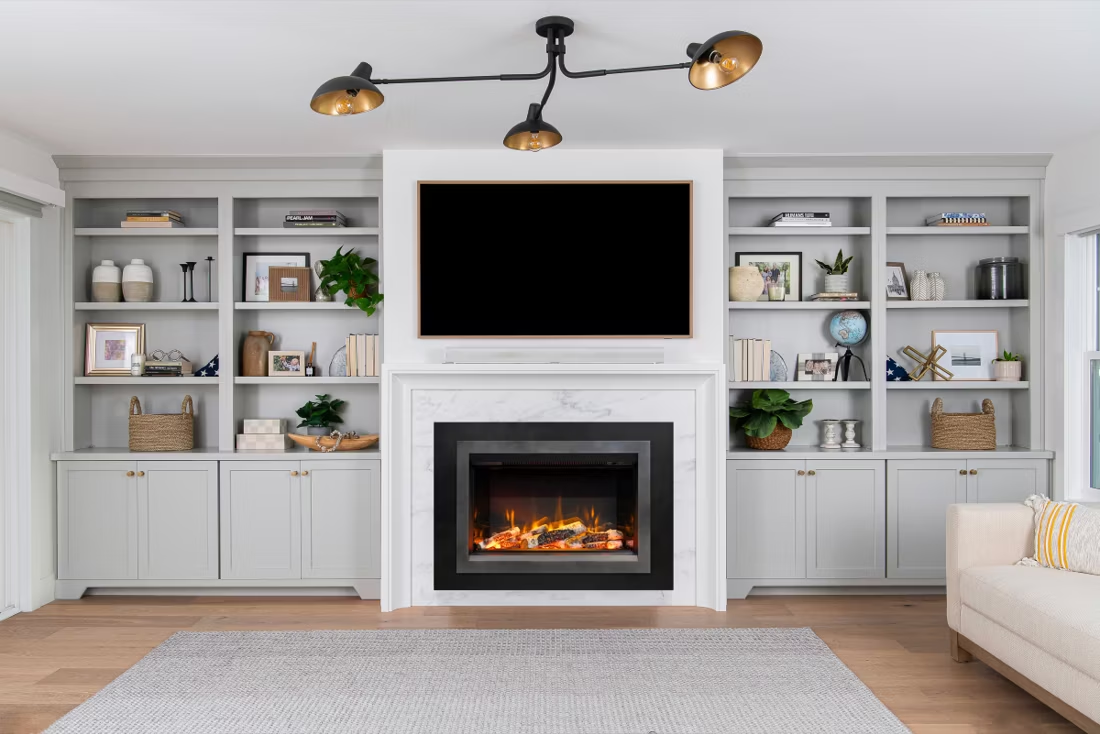
A built-in electric fireplace is designed to be framed into a wall like a traditional fireplace, often with a mantel and surround. An electric insert is sized to slide into an existing masonry or wood-fireplace opening, converting a fireplace you already have into a flame-effect heater without touching the chimney. An electric stove is a freestanding cabinet-style unit that sits on the floor, similar in footprint to a wood stove, and just needs a nearby outlet. For Clay County homes with an old wood fireplace that is not getting regular use, an insert is often the cleanest upgrade—you keep the surround and mantel and gain instant on-off heat with a flip of a switch.
Do I need a permit to install an electric fireplace in Clay County?
Most plug-in electric fireplaces and stoves that use an existing standard outlet do not require a permit. If your installation adds a new dedicated circuit—common for larger built-in units or inserts—that electrical work typically needs a permit through the City of Spencer Building Department if you are within city limits, or the Clay County Zoning and Building Department for rural addresses. A licensed electrician pulling the permit as part of the job is standard practice, and most local dealers will confirm this before scheduling install day.
What is the best electric fireplace for a Clay County home?
For a supplemental-heat room—a basement, a den, a converted porch—look at units with a true 4,600 to 9,000 BTU heater core rather than ambiance-only models, since you will actually want the warmth on the coldest days. Brands like Dimplex and Napoleon offer realistic LED flame effects that run independently of the heater, which matters in Iowa: you can enjoy the flame on a mild fall evening without running a heater you do not need, then switch on heat when temperatures drop toward single digits. For an existing wood-fireplace opening, an insert-style unit from the same manufacturers usually fits without modification. A local dealer can match dimensions to your specific opening or wall space.
Will my electric fireplace work if the power goes out?
No—and this is worth planning around in Clay County, where winter storms and ice can knock out rural power lines for hours at a time. An electric fireplace is entirely dependent on grid power (or a generator), so it provides no heat during an outage. If backup heat during a power failure matters to your household, a wood stove or a propane unit with a battery-backed ignition is a better primary or secondary choice; an electric fireplace should be thought of as a comfort and ambiance feature, not an emergency heat source.
How much does it cost to run an electric fireplace in Clay County?
At typical residential rates from Iowa Lakes Electric Cooperative or Spencer Municipal Utilities—roughly $0.12 to $0.14 per kWh—a 1,500-watt electric fireplace running on full heat costs about 18 to 21 cents per hour. Running it several hours an evening through a Clay County winter adds a modest but real amount to a monthly bill, generally less than propane or wood but more per BTU than either once you account for fuel cost. Most owners run the heater setting only during cold evenings and use the flame-only mode the rest of the time, which cuts the electric draw to a few cents an hour.
Electric vs. wood—which fireplace is right for my Clay County home?
Wood remains the backbone of supplemental and emergency heat for a lot of Clay County farmhouses, especially with local oak and hickory readily available and a real payoff during power outages. Electric wins on convenience and flexibility: no chimney, no ash, no wood stacked on the porch, and it can go in a bedroom, apartment, or basement where a wood stove simply is not an option. If you already have a working wood fireplace or stove for cold-weather backup, adding an electric unit elsewhere in the house for everyday ambiance and light supplemental heat is a common and sensible combination—and it is one the local dealers listed above set up regularly.
Can I put a TV above my fireplace?
Yes—with an asterisk. Fireplaces are hot and TVs don't like heat. Either put a mantel between them to deflect rising warmth, or choose a fireplace with heat-management technology that creates a cool zone on the wall above—the wall stays around 125 degrees, barely warm, while the room still gets full heat. If you like clean lines and don't want a mantel, heat management is the answer.
Do electric fireplaces actually produce heat?
Yes—most put out around 4,800–5,000 BTUs from a standard outlet, which comfortably warms a bedroom, office, or den as a comfort-zone heater. What they won't do is carry a whole house the way wood, gas, or pellet can. Think of electric as ambiance-first with honest supplemental heat: flames on with no heat in July, flames plus warmth in January.
How much should I budget for a fireplace?
For an average home—covering the fireplace, the vent pipe, and basic installation—a budget between $3,900 and $5,500 gives you a lot of options across wood, gas, and pellet. By the time you add finish work, gas line, and electrical, the average complete installation lands between $5,000 and $12,000 all-in. In a remodel or new build, a good rule is to put about 2.5% of the total project cost toward the fireplace.
Does a fireplace add value to my home?
On average, a fireplace adds back to the home about the same amount you spent installing it. Add the monthly savings from heating the rooms you actually use instead of the whole house—often hundreds of dollars a year—and the value case is strong before you even count what a fire does for how your family uses the room.
Find your electric fireplace in Clay County.
Tell us a bit about your home and we will put together a free Project Guide & Parts List for your electric fireplace project—sized right for your room, with the exact parts needed, and matched to a trusted local dealer in Clay County.
Find Your Fireplace →