
Zone heat for a town with winters as cold as Minneapolis.
With winter lows averaging 8°F, Clarksville sits in Minneapolis-grade cold without the chimney-building tradition to match. An electric fireplace adds supplemental warmth to a single room with no venting and no wood to split. We'll help you find a trusted local dealer who can size it right.
Every Project Starts From One of These Five Situations
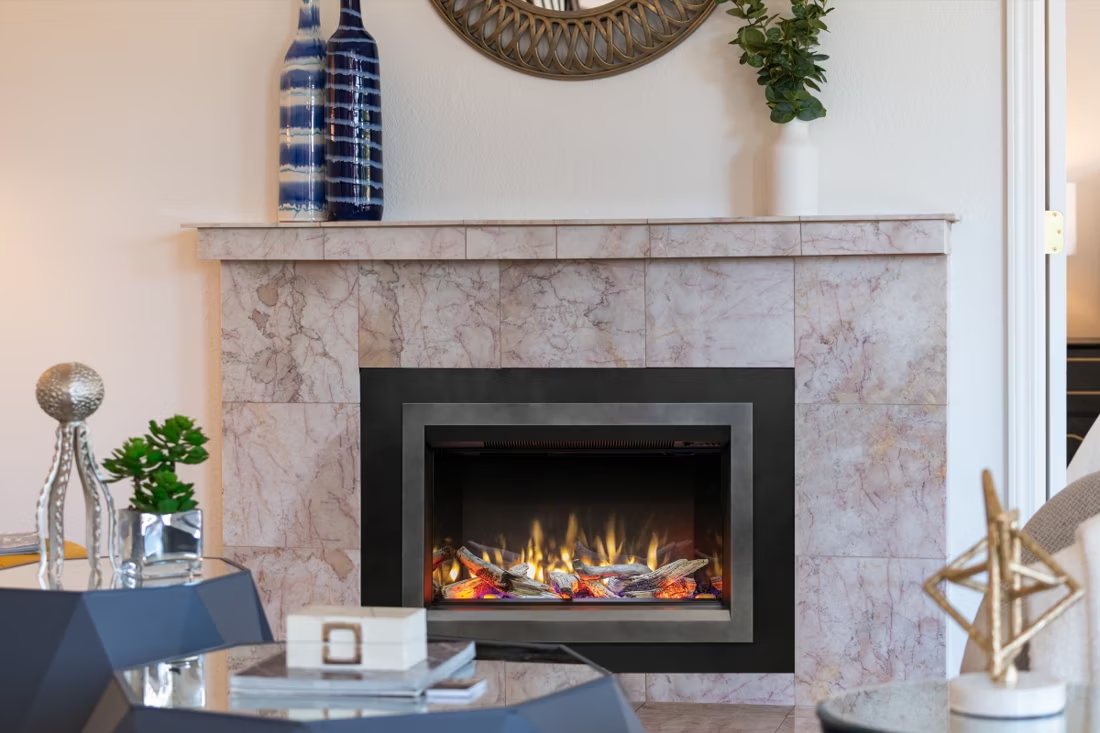
No chimney required, no wood pile to stack.
Clarksville sits on flat Butler County farmland at just under 1,000 feet, but don't let the gentle terrain fool you—in climate zone 6A, this town runs about as cold as Minneapolis over a full winter, with lows that routinely sit around 8°F. The farmland around town grows plenty of oak, hickory, maple, and walnut, but most Clarksville homes, from older farmhouses to the manufactured housing common in a town this size, were built around a central furnace rather than a masonry chimney. That's the real reason wood and pellet heat stay rare here—it isn't fuel supply, it's retrofit cost—and it's exactly the gap an electric fireplace fills: real zone heat for a bedroom, den, or living room addition with no venting, no combustion air, and no structural work.
Electric service in and around Clarksville comes through a mix of providers—Interstate Power and Light Co (Alliant Energy), MidAmerican Energy, and Butler County Rural Electric Cooperative—and the residential rates differ enough to matter for an appliance that might run several hours a day through a long Iowa winter. MidAmerican customers pay close to $0.11 per kWh, the rural co-op runs nearer $0.154, and Interstate Power and Light customers see closer to $0.179. A plug-in insert or a hardwired linear unit costs the same to buy no matter who delivers your power, but it won't cost the same to run, which is worth checking before you commit to a model.
Three steps. No salesperson until you're ready.
Tell us about your project
Your zip code, your situation, and the fuel you're leaning toward—or let the answers point you to one.
See what's actually available
The brands dealers within 100 miles genuinely carry—real options, never a catalog mirage.
Get your dealer & Project Guide
A trusted local dealer, plus the free Project Guide & Parts List that names every component of the job.
Frequently Asked Questions
How much does an electric fireplace installation cost in Clarksville?
Plug-in inserts and mantel-style units typically run $150 to $600 installed, since most are simple cord-and-plug appliances that use an outlet you already have. Built-in or wall-mounted linear units wired into a dedicated circuit land between $1,000 and $3,500 installed, with the top of that range covering larger units or custom cabinetry around them. Given the mix of older farmhouses and manufactured homes in town, it's worth having an electrician confirm your panel has room for a new circuit before you fall in love with a bigger built-in model.
Will an electric fireplace actually heat a room when it's 8°F outside?
Most electric fireplaces run a 1,500-watt heating element, which comfortably warms a single room of roughly 400 to 1,000 square feet depending on insulation—not a whole house on a January night when Clarksville's average low sits around 8°F. Treat it as zone heat: ideal for a living room, den, or bedroom addition while your furnace handles the rest of the house. Almost nobody here relies on one as a sole heat source given the length and severity of the heating season.
Do I need a permit to install an electric fireplace in Clarksville?
A plug-in insert or mantel console doesn't need a permit—it's electrically no different than plugging in a space heater. A built-in unit wired into a new dedicated circuit is a different story: that's licensed electrical work, and depending on your address it may need a permit filed through Butler County. Most local dealers handling installs in the Clarksville area will coordinate that paperwork as part of the job rather than leaving you to sort it out with the county yourself.
What's the difference between an electric insert, a wall-mount, and a built-in?
A plug-in insert drops into an existing fireplace opening or a console-style mantel and uses the outlet already there. A wall-mounted linear unit recesses into a wall and, since it often draws close to 1,500 watts continuously, usually benefits from its own circuit rather than sharing one with other outlets. A custom built-in wraps the same heating unit in cabinetry, tile, or a stone surround—largely a finish-carpentry decision, since the heater itself is identical across all three formats.
Does it matter which electric utility serves my house in Clarksville?
Yes, more than you'd expect. Clarksville-area homes are served by a mix of Interstate Power and Light Co (Alliant Energy), MidAmerican Energy, and Butler County Rural Electric Cooperative, and residential rates vary from around $0.11 per kWh on MidAmerican to roughly $0.179 on Interstate Power and Light, with the co-op in between near $0.154. Running a 1,500-watt unit several hours a day through a long Iowa winter adds up differently depending on which of those three shows up on your bill, so it's worth checking your actual rate before comparing operating costs across models.
Why don't more Clarksville homes use wood heat, given all the hardwood farmland nearby?
Butler County farmland produces plenty of oak, hickory, maple, and walnut, so it's not a fuel-supply problem. It's that most homes in town—older farmhouses and the manufactured housing common here—were built around a central furnace, not a masonry chimney, and adding one from scratch is a bigger project than most households take on. Pellet stoves run into the same issue. Electric and gas end up being the practical retrofit options for adding heat or ambiance to an existing room without rebuilding a chimney system.
How much maintenance does an electric fireplace actually need?
Very little compared to wood or gas—there's no chimney to sweep and no gas valve to inspect annually. Wipe down the glass front occasionally, vacuum dust out of the heater intake once or twice a season, and listen for a quiet, consistent blower fan. Heating elements are typically rated for 8,000 to 10,000 hours of use, which at typical supplemental-heat schedules in a Clarksville home works out to well over a decade before it needs replacing.
What size electric fireplace do I need for my room?
Match wattage to the room you're actually heating, not your whole house: a 1,000 to 1,500-watt unit covers a bedroom or den in the 300 to 500 square foot range comfortably, while larger linear models pushing 1,500 watts with better air circulation can manage open living areas up to around 1,000 square feet. With winter lows averaging 8°F, don't expect even the largest unit to substitute for your furnace on the coldest nights—size it for the room, and let the furnace carry the house.
Is an electric fireplace a good fit for a manufactured home or rental in Clarksville?
Often, yes. There's no venting, no chimney penetration, and no combustion air intake to account for, which sidesteps the code questions that come up trying to add wood or gas heat to a home that wasn't built for it. A plug-in unit needs zero structural changes, which is useful in a town where a meaningful share of the housing stock is decades-old manufactured or rental housing never designed around a masonry chimney in the first place.
Can I put a TV above my fireplace?
Yes—with an asterisk. Fireplaces are hot and TVs don't like heat. Either put a mantel between them to deflect rising warmth, or choose a fireplace with heat-management technology that creates a cool zone on the wall above—the wall stays around 125 degrees, barely warm, while the room still gets full heat. If you like clean lines and don't want a mantel, heat management is the answer.
Do electric fireplaces actually produce heat?
Yes—most put out around 4,800–5,000 BTUs from a standard outlet, which comfortably warms a bedroom, office, or den as a comfort-zone heater. What they won't do is carry a whole house the way wood, gas, or pellet can. Think of electric as ambiance-first with honest supplemental heat: flames on with no heat in July, flames plus warmth in January.
Can I install a fireplace myself?
If you're putting a fire in your house on purpose, it's best to work with an expert. Unless you're genuinely experienced in framing, gas line, vent pipe, and the national code on clearances to combustibles, have a professional do it—and ideally the same company that sells you the fireplace, so warranty, service, and liability all live under one roof.
Can a fireplace actually lower my heating bill?
Yes—by creating a comfort zone. A furnace heats every square foot of the house just to warm the one room you're in; a gas fireplace on low burns roughly a sixth of the gas a typical furnace does. Set the furnace around 55–60 degrees as a baseline, then heat the rooms your family actually uses. Families who heat this way commonly save $20–$60 a month.
Nearby Dealers
Hearth shops serving Clarksville and the surrounding area. Every listing shows whether it is a WhyFire partner, a dealer we have verified as authorized for the brands we recommend, or a local business carrying hearth products. No manufacturer pays for placement. How we verify dealers →
We’ve paused dealer listings for this connection today. Enter your zip or postal code above to find dealers near you, or come back tomorrow.
Popular Electric Brands
Where each brand came from, what's inside it today, and every current model. No brand pays to be here. Not every dealer carries every brand, so enter your zip code to see what's sold near Clarksville.
Fireplace Xtrordinair
Fireplace Xtrordinair, now often called FireplaceX, is the fireplace brand of Travis Industries, Inc., of Mukilteo, Washington.
5 electric models →DaVinci
DaVinci Custom Fireplaces is a brand of Travis Industries, Inc., of Mukilteo, Washington, the company behind Lopi and Fireplace Xtrordinair.
5 electric models →Kozy Heat
Kozy Heat was founded in 1976 by Dudley Hussong in Lakefield, Minnesota, and incorporated as Hussong Manufacturing Co., Inc. in 1978.
3 electric models →Forge & Flame
Forge & Flame is the stove brand Hearth & Home Technologies introduced in August 2023 to bring Vermont Castings, Harman, and Quadra-Fire under one name.
1 electric model →Electric Service in Clarksville
An electric fireplace's heater draws about 1,500 watts—pennies per hour at local rates.
Interstate Power And Light Co
Midamerican Energy Co
Butler County Rural Elec Coop - (Ia)
Get your free Project Guide & Parts List for a Clarksville electric fireplace.
Tell us about your home and which utility serves it—Interstate Power and Light, MidAmerican, or Butler County Rural Electric Cooperative—and we'll help you find a trusted local dealer and send a free Project Guide & Parts List with the exact unit, mounting specs, and circuit requirements for your space.
Find Your Fireplace →