
Warm up your Chickasaw County home—no chimney required.
From New Hampton to Nashua, Lawler, and the farmsteads between, electric fireplaces plug into an existing circuit and add real supplemental warmth to a single room—no gas line, no wood, no masonry work. Find the right unit and connect with a trusted local dealer.
Every Project Starts From One of These Five Situations
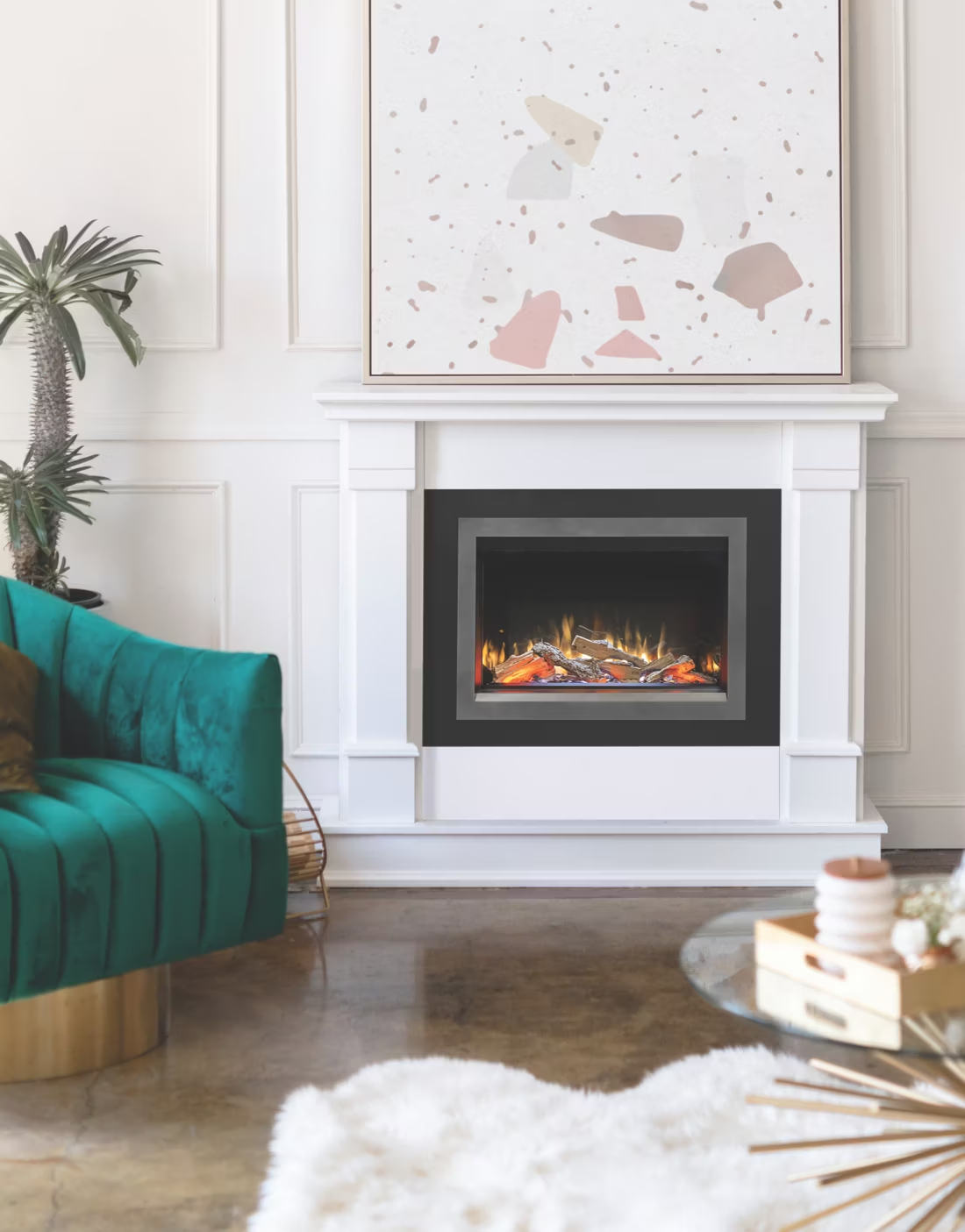
The easiest heat to add to an existing room.
Chickasaw County sits in climate zone 6A with a long, harsh winter heating season and an average winter low around 6°F—cold enough to sit alongside Fargo, ND on a heating-demand map. Most homes here lean on propane furnaces or wood heat (local hardwoods like oak, hickory, maple, and walnut are common in woodlots and windbreaks around New Hampton and Ionia) as the primary system. Electric fireplaces don't try to compete with that—they're almost always installed as zone heat: a basement rec room that never quite catches up to the furnace, a three-season porch, a bedroom addition, or simply a fireplace look in a home with no chimney and no interest in building one.
That's the real advantage in a county this rural: no venting, no gas line, no masonry to frame. A plug-in unit runs off any standard 120V outlet like a space heater. A built-in wall unit or insert may need a dedicated circuit, which means an electrician rather than a hearth crew doing the heavy lifting. Alliant Energy serves much of the surrounding rural county, while in-town customers in New Hampton draw power through the New Hampton Municipal Light Plant—either way, a licensed local electrician confirms your panel can handle the added load before anything gets mounted on the wall.
Three steps. No salesperson until you're ready.
Tell us about your project
Your zip code, your situation, and the fuel you're leaning toward—or let the answers point you to one.
See what's actually available
The brands dealers within 100 miles genuinely carry—real options, never a catalog mirage.
Get your dealer & Project Guide
A trusted local dealer, plus the free Project Guide & Parts List that names every component of the job.
Frequently Asked Questions
How much does an electric fireplace installation cost in Chickasaw County?
A basic plug-in electric fireplace—freestanding or a mantel-style unit—typically runs $300 to $800 installed, since it just needs an existing outlet and a spot on the wall or floor. A built-in wall unit or an insert placed into an existing masonry fireplace opening runs higher, usually $1,200 to $2,500, once you factor in a dedicated circuit and an electrician's time. Older Chickasaw County farmhouses with dated electrical panels sometimes need a panel upgrade first, which adds to the total—worth asking about during the initial consultation rather than after the unit is already on the wall.
Do electric fireplaces actually put out heat, or is it just for looks?
They put out real heat, just not whole-house heat. Most units are rated around 1,500 watts (roughly 5,000 BTU), enough to comfortably warm a single room in the 300-to-400-square-foot range. Given Chickasaw County's long, harsh winter heating season and winter lows that regularly sit around 6°F, an electric fireplace isn't going to replace your propane furnace or wood stove—it's built to supplement it. That makes it a good fit for a basement family room, an added-on sunroom, or a bedroom that always runs a few degrees colder than the rest of the house.
Do I need a permit to install an electric fireplace in Chickasaw County?
A plug-in unit that draws from an existing outlet doesn't require a permit—it's treated like any other appliance. A built-in unit that needs a new dedicated circuit typically does require an electrical permit, pulled by your electrician. Projects in unincorporated parts of the county go through the Chickasaw County zoning office; projects inside city limits—New Hampton, Nashua, Lawler, Alta Vista—go through the local city hall. Most electricians handle this paperwork as part of the job.
Can I put an electric insert into my existing wood or masonry fireplace?
Yes, and it's one of the more common projects in older Chickasaw County homes with a fireplace that's gone unused for years. An electric log insert or flush-mount electric insert slides into the existing firebox opening, plugs into an outlet placed inside or near the hearth, and gives you flame effect and heat without any venting at all—the chimney can even stay capped and closed. It's a straightforward way to bring a drafty, unused fireplace back to life without cutting a stainless liner or dealing with creosote.
What's the difference between a plug-in electric fireplace and a built-in electric fireplace?
A plug-in unit—freestanding, a stove-style cabinet, or a simple insert—draws from a regular 120V household outlet, so there's no electrical work involved beyond finding a spot near an existing plug. A built-in unit, whether it's a wall-recessed linear fireplace or a larger insert, often calls for a dedicated 20-amp or 240V circuit to hit its full heat output, which means a licensed electrician needs to run new wiring. For most Chickasaw County homeowners doing a simple room upgrade, plug-in is the lower-cost, lower-hassle route; built-in makes more sense for a remodel where the wiring is already being opened up.
Will my electric fireplace work during a power outage?
No—and this matters in a county where winter ice storms can knock out power for hours or longer. Electric fireplaces are entirely dependent on grid power, unlike a wood stove or a propane unit with a standing pilot. If backup heat during an outage is a priority for your household, an electric fireplace should be planned as a comfort and zone-heat addition alongside a wood stove or propane heater, not as your emergency fallback.
How much does it cost to run an electric fireplace?
A typical 1,500-watt unit run at full heat costs roughly 15 to 20 cents per hour at current Alliant Energy residential rates—call it $1.50 to $2 for a solid evening of use. That's considerably cheaper than heating an entire zone with propane, which is part of why electric fireplaces have gained ground in rural Iowa homes for rooms that only need occasional extra warmth rather than continuous heating.
Electric vs. gas vs. wood—which is right for my Chickasaw County home?
Wood makes sense if you want real backup heat during outages and have access to the oak, hickory, maple, or walnut that's common in local woodlots—but it means chimney maintenance and hauling firewood. Propane (the standard gas fuel across most of rural Chickasaw County, since natural gas mains are limited) gives you instant, higher-output heat and can run during an outage with a battery-backup unit, but requires a gas line or tank and more installation work. Electric is the lowest-cost, lowest-hassle option for supplemental warmth in a specific room—no venting, no fuel deliveries—but it depends entirely on grid power and won't heat a whole house on its own. Many households here end up with a primary propane or wood system plus an electric unit in whichever room runs coldest.
Where can I find dealers who install electric fireplaces near Chickasaw County?
Chickasaw County is a small, largely rural county, so dedicated hearth showrooms are limited within it—many residents work with electrical contractors based in New Hampton or Nashua for plug-in and built-in installs, or look toward larger nearby markets like Waterloo, Charles City, or Cedar Falls for a full-service hearth retailer that also carries electric lines. A trusted local dealer will confirm what's actually installable given your home's wiring and walk you through the options rather than leaving you guessing from a big-box display model.
Does an electric fireplace need a vent or chimney?
No—that's its superpower. An electric fireplace needs a wall and an outlet, period. No vent pipe, no gas line, no clearances to design around, which is why it works in bedrooms, offices, apartments, and walls where venting a gas or wood unit would be impractical or impossible. Installation is typically the simplest and least expensive of any fireplace type.
Can I put a TV above my fireplace?
Yes—with an asterisk. Fireplaces are hot and TVs don't like heat. Either put a mantel between them to deflect rising warmth, or choose a fireplace with heat-management technology that creates a cool zone on the wall above—the wall stays around 125 degrees, barely warm, while the room still gets full heat. If you like clean lines and don't want a mantel, heat management is the answer.
Can a fireplace actually lower my heating bill?
Yes—by creating a comfort zone. A furnace heats every square foot of the house just to warm the one room you're in; a gas fireplace on low burns roughly a sixth of the gas a typical furnace does. Set the furnace around 55–60 degrees as a baseline, then heat the rooms your family actually uses. Families who heat this way commonly save $20–$60 a month.
Can I install a fireplace myself?
If you're putting a fire in your house on purpose, it's best to work with an expert. Unless you're genuinely experienced in framing, gas line, vent pipe, and the national code on clearances to combustibles, have a professional do it—and ideally the same company that sells you the fireplace, so warranty, service, and liability all live under one roof.
Find your electric fireplace in Chickasaw County.
Tell us a bit about your home and we'll put together a free Project Guide & Parts List—the exact parts for your electric fireplace project in Chickasaw County, plus a match with the local dealer best equipped to install it.
Find Your Fireplace →