
Find the right electric fireplace for Cedar County winters.
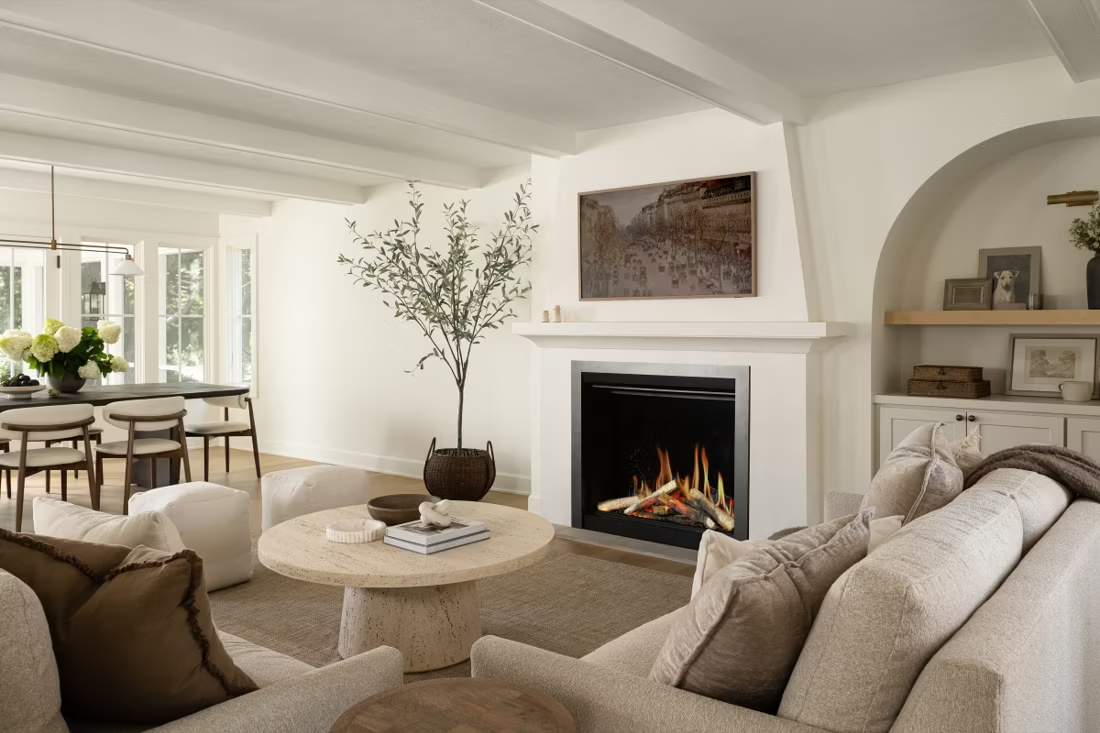
No chimney, no gas line, no venting—just plug-in or hardwired warmth for Cedar County homes from Tipton to West Branch. Find the right unit and connect with a trusted local dealer.
Every Project Starts From One of These Five Situations
Zone heat and ambiance, without the venting or permits.
Cedar County sits in a 5A climate zone with roughly 6,573 heating degree days and average winter lows around 12°F—a season long enough that most homes here run a furnace from October through April. Wood heat has deep roots in the county, with plenty of farmhouses around Tipton, Mechanicsville, and Lowden originally built around masonry fireplaces meant to burn local oak, hickory, and walnut. Electric fireplaces fit a different, increasingly common need: supplemental zone heat and ambiance in a bedroom, finished basement, sunroom, or living room addition, without adding a flue or running a gas line to a room that doesn't have one.
Alliant Energy serves most of Cedar County, with some rural townships served by area electric cooperatives instead—worth confirming before sizing a hardwired unit, since larger built-ins draw enough current to matter on an older rural service panel. Electric fireplaces here aren't meant to replace a furnace in a climate with this many heating degree days; they're best used the way most Cedar County homeowners actually use them—extra heat in the room you're in, installed by a local electrician in an afternoon, with none of the chimney maintenance or cutting-permit season that comes with wood.
Three steps. No salesperson until you're ready.
Tell us about your project
Your zip code, your situation, and the fuel you're leaning toward—or let the answers point you to one.
See what's actually available
The brands dealers within 100 miles genuinely carry—real options, never a catalog mirage.
Get your dealer & Project Guide
A trusted local dealer, plus the free Project Guide & Parts List that names every component of the job.
Frequently Asked Questions
How much does an electric fireplace installation cost in Cedar County?
Plug-in electric fireplace inserts and freestanding stoves typically run $150 to $600 for the unit itself, with no additional installation cost if you're using an existing standard outlet. Built-in or wall-mounted electric fireplaces that require a dedicated 20-amp circuit, in-wall wiring, and finish carpentry run closer to $1,200 to $2,500 installed in Cedar County, depending on whether an electrician needs to run new wire from the panel. Homes on older rural service panels around Clarence or Stanwood sometimes need a panel assessment first, which a local electrician will flag during the initial visit.
What size electric fireplace do I need for my room?
Most electric fireplaces put out 4,000 to 5,200 BTUs, enough to noticeably warm a single room of 400 to 1,000 square feet—not a whole Cedar County farmhouse in a January cold snap. For a bedroom or den, a 30 to 40-inch insert or wall unit is typical. For an open living room or finished basement, look at a 50-inch-plus model or consider two smaller units zoned to different areas. Because winter lows here average around 12°F, electric fireplaces are best planned as supplemental heat alongside your furnace rather than a replacement for it, especially in drafty older homes common outside Tipton.
Where can I find a qualified installer near me?
For plug-in units, no licensed installer is required—any qualified retailer can help you pick the right size and you plug it in yourself. For built-in or wall-mounted electric fireplaces that need new wiring or a dedicated circuit, hire a licensed Iowa electrician; several serve the Tipton, Durant, and Mechanicsville area and are familiar with the older wiring found in many Cedar County homes built before the 1970s. Local hearth dealers who carry electric lines typically coordinate the electrical work as part of the sale, which keeps warranty coverage and code compliance in one place instead of split across two vendors.
What's the difference between an electric fireplace, insert, and stove?
An electric fireplace is typically a wall-mounted or built-in unit designed to look like a finished, flush installation—common in remodels and new additions around the county. An electric insert is sized to slide into an existing masonry fireplace opening, which makes it a popular option for older Cedar County farmhouses that want to retire an underused wood fireplace without losing the mantel and surround. An electric stove is a freestanding cabinet-style unit that sits on the floor like a wood stove but simply plugs in—a good fit for a den or converted porch where you want supplemental heat without any construction at all.
Do I need a permit to install an electric fireplace in Cedar County?
A plug-in electric fireplace or stove generally doesn't require a permit since it's not a structural or wiring change. A built-in electric fireplace that requires new wiring or a dedicated circuit typically does require an electrical permit, handled through the city (in Tipton, West Branch, and Durant) or the Cedar County Building Department for unincorporated areas. Most electricians who do this work pull the permit as part of the job, so it's rarely something the homeowner has to manage directly.
Is an electric fireplace enough heat for a Cedar County winter?
On its own, no—with roughly 6,573 heating degree days and average lows around 12°F, Cedar County winters need a functioning furnace as the primary heat source. Electric fireplaces are best used as zone heat: warming the room you're actually in so you can turn the furnace thermostat down elsewhere, or adding comfort to a room, like a converted porch or basement, that the ducted system doesn't reach well. Unlike a wood stove, an electric unit also won't provide heat during a power outage, which matters more in the county's rural townships where outages can run longer than in Tipton or Durant.
How much maintenance does an electric fireplace need?
Very little compared to wood or gas. Most electric fireplaces just need occasional dusting of the heater vents and glass, and an LED light or heater fan replacement every several years if it fails—most manufacturers sell these as simple swap-in parts. There's no chimney to sweep, no gas line to inspect, and no annual service visit required. This low-maintenance profile is one of the main reasons Cedar County homeowners choose electric for finished basements or guest spaces that don't get checked on often.
Can I convert my existing wood fireplace to an electric insert?
Yes, and it's a common project in older Cedar County homes with a masonry fireplace that no longer gets much use. An electric insert slides into the existing opening, usually with a simple surround adjustment, and plugs into a nearby outlet or a new dedicated circuit if the unit calls for more power. The upside is no more chimney maintenance and no cutting permits or firewood to manage; the tradeoff is that you lose the ability to burn wood for heat during a power outage, which some rural households outside Tipton and Lowden still value as a backup during winter storms.
Electric vs. gas fireplace—which is right for my home?
Gas fireplaces put out real heat—often 20,000 to 30,000 BTUs from a direct-vent unit—enough to serve as legitimate supplemental or even primary heat for a room during a Cedar County winter, and most can run during a power outage with battery backup ignition. Electric fireplaces put out far less heat, around 4,000 to 5,200 BTUs, but install in almost any room without a gas line or venting, cost less upfront, and have essentially no ongoing maintenance. For a room that needs real winter heat, gas is usually the better fit. For ambiance plus modest supplemental warmth in a bedroom, basement, or rental property, electric is simpler and cheaper to install.
Does an electric fireplace need a vent or chimney?
No—that's its superpower. An electric fireplace needs a wall and an outlet, period. No vent pipe, no gas line, no clearances to design around, which is why it works in bedrooms, offices, apartments, and walls where venting a gas or wood unit would be impractical or impossible. Installation is typically the simplest and least expensive of any fireplace type.
Do electric fireplaces actually produce heat?
Yes—most put out around 4,800–5,000 BTUs from a standard outlet, which comfortably warms a bedroom, office, or den as a comfort-zone heater. What they won't do is carry a whole house the way wood, gas, or pellet can. Think of electric as ambiance-first with honest supplemental heat: flames on with no heat in July, flames plus warmth in January.
Does a fireplace add value to my home?
On average, a fireplace adds back to the home about the same amount you spent installing it. Add the monthly savings from heating the rooms you actually use instead of the whole house—often hundreds of dollars a year—and the value case is strong before you even count what a fire does for how your family uses the room.
Can I install a fireplace myself?
If you're putting a fire in your house on purpose, it's best to work with an expert. Unless you're genuinely experienced in framing, gas line, vent pipe, and the national code on clearances to combustibles, have a professional do it—and ideally the same company that sells you the fireplace, so warranty, service, and liability all live under one roof.
Find your electric fireplace in Cedar County.
Tell us a bit about your home and we'll match you with a trusted local dealer and put together your free Project Guide & Parts List—the right electric fireplace or insert, sized correctly, with the parts your installer will need.
Find Your Fireplace →