
Zone heat and ambiance for Buchanan County's long, cold winters.
With 7,252 heating degree days and winter lows averaging 8°F, a fireplace here has to do more than look good. I match you with a trusted local dealer who can size an electric unit that actually earns its keep in a spare bedroom, finished basement, or add-on off Independence, Jesup, or Winthrop.
Every Project Starts From One of These Five Situations
Real zone heat, no flue required.
Buchanan County sits in climate zone 6A with 7,252 heating degree days—a winter load in the same range as Madison, WI—and average lows near 8°F across the heating season. Most homes in Independence, Jesup, Winthrop, Quasqueton, and the smaller communities like Rowley, Fairbank, and Hazleton rely on propane, wood, or LP furnaces as their primary heat, since that's what carries a farmhouse or acreage through a January stretch this cold. Electric fireplaces don't try to replace that system—their real job in this county is targeted, no-hassle heat in the specific room where a furnace vent doesn't quite reach, plus the visual of a fire without cutting into a wall or running a flue.
That distinction matters because electric resistance heat costs more per BTU than propane or wood in a county with this many heating degree days, so running an electric unit as your only heat source in a drafty older Buchanan County farmhouse isn't realistic. Where electric shines is a finished basement rec room, a converted porch, a home office addition, or a bedroom over an unheated garage—spaces that don't need whole-home BTUs, just a comfortable, controllable boost. Whether you're served by Alliant Energy, Farmers Electric Cooperative, or Independence's municipal electric utility, a properly sized unit plugged into a dedicated circuit (or wired in for a built-in) runs cleanly with zero venting, zero chimney, and none of the creosote or CO concerns that come with combustion appliances.
Three steps. No salesperson until you're ready.
Tell us about your project
Your zip code, your situation, and the fuel you're leaning toward—or let the answers point you to one.
See what's actually available
The brands dealers within 100 miles genuinely carry—real options, never a catalog mirage.
Get your dealer & Project Guide
A trusted local dealer, plus the free Project Guide & Parts List that names every component of the job.
Frequently Asked Questions
How much does an electric fireplace installation cost in Buchanan County?
Most Buchanan County projects fall between $300 and $1,800. A plug-in insert or freestanding unit that just needs a standard outlet sits at the low end—that's the common choice for a basement in Independence or a spare bedroom in Jesup. A built-in wall unit with framing, a dedicated 20-amp circuit, and finish trim work runs higher, especially in an older farmhouse near Winthrop or Quasqueton where the electrical panel may need a subpanel or additional circuit added before the fireplace goes in. A local dealer will tell you which category your project falls into after seeing the room and your panel.
Will an electric fireplace actually heat my room in a Buchanan County winter?
For a single room, yes—most units are rated for 400 to 1,500 square feet and can noticeably warm a bedroom, den, or basement rec room even with lows around 8°F outside. What it won't do is replace your furnace for the whole house across a 7,252-HDD heating season; electric resistance heat costs more per BTU than the propane or LP systems most Buchanan County homes already run. Think of it as supplemental heat for the specific room it's in, not a backup for the whole house during a cold snap.
Do I need a permit for an electric fireplace in Buchanan County?
A simple plug-in unit usually doesn't require any permit—it's no different than plugging in a space heater. A built-in electric fireplace that requires new wiring or a dedicated circuit typically does need an electrical permit, and the requirement depends on whether you're inside Independence, Jesup, or Winthrop city limits or in unincorporated Buchanan County. Check with your city building department, or the county for rural properties, before work starts; most local dealers who install built-in units will pull this permit as part of the job.
What will an electric fireplace cost to run compared to my furnace?
Electric heat runs on your kWh rate, whether you're billed through Alliant Energy, Farmers Electric Cooperative, or Independence's municipal utility. A typical 1,500-watt unit run several hours a day on a cold Buchanan County evening adds a noticeable line to the bill, generally more per unit of heat than propane or wood. That's fine for zone heating a single room a few hours at a time, which is how most owners here actually use one—it becomes expensive fast if you try to lean on it as a whole-home heat source through a stretch of 8°F nights.
What's the difference between an electric insert, a built-in, and a freestanding unit?
An electric insert drops into an existing masonry or wood-burning firebox, giving an old Independence or Jesup farmhouse fireplace new life without a chimney sweep or wood supply to manage. A built-in electric fireplace gets framed into a wall like new construction, which is common in additions and remodeled basements. A freestanding or mantel unit needs no construction at all—plug it in and it's operating, which makes it the fastest option for a rental property or a room you're not ready to commit to permanent changes. Which one fits depends on whether you're renovating or just adding heat and ambiance to a room as-is.
Where do electric fireplaces make the most sense in Buchanan County homes?
Finished basements are the most common spot—no chimney to build, no combustion air to worry about, and the mild heat output pairs well with a rec room that doesn't need full-furnace BTUs. Additions, converted porches, and bedrooms over unheated garages are the other frequent picks, especially on the older farmhouses common around Winthrop and Quasqueton where extending ductwork to a new room is impractical. Manufactured and modular homes, which make up a meaningful share of rural Buchanan County housing, are also good candidates since electric units skip the roof penetration a wood or gas install would need.
Electric vs. wood or pellet—which fits my Buchanan County home better?
Wood remains a serious option here—oak, hickory, maple, and walnut are all common on county timber ground, and a wood stove keeps working with no electricity at all, which matters during an ice storm outage. Pellet stoves, stocked regionally by brands like Lignetics and Indeck Energy Services, burn cleaner and need less daily tending but do require power to run the auger and blower. Electric fits neither of those roles—it's not a storm-outage backup and it's not a primary heat source for a 7,252-HDD winter. Where it wins is simplicity and zero maintenance for a specific room, which is why many households here pair a wood or propane system for whole-home heat with an electric unit in one room for convenience.
How much maintenance does an electric fireplace need?
Very little, which is part of the appeal in a county where wood stoves need an annual chimney sweep and gas units need yearly burner service. An electric fireplace mainly needs the dust cleared from the heater vents a couple times a season and an occasional check that the flame-effect bulb or LED array is functioning. There's no ash, no creosote, and no combustion byproducts to inspect—a five-minute vacuum and wipe-down covers most of what an owner in Independence or Fairbank will ever need to do.
What size electric fireplace do I need for my room?
Sizing comes down to square footage and how well-insulated the room is, more than the fireplace's visual width. A 1,500-watt unit generally covers 400 to 1,500 square feet in a reasonably insulated space, but an older farmhouse room near Hazleton or Rowley with single-pane windows and minimal insulation will feel the heat less than a newer, tighter-built addition of the same size. A local dealer can walk the room and match wattage and heater output to your actual insulation and layout rather than a generic size chart.
Can I put a TV above my fireplace?
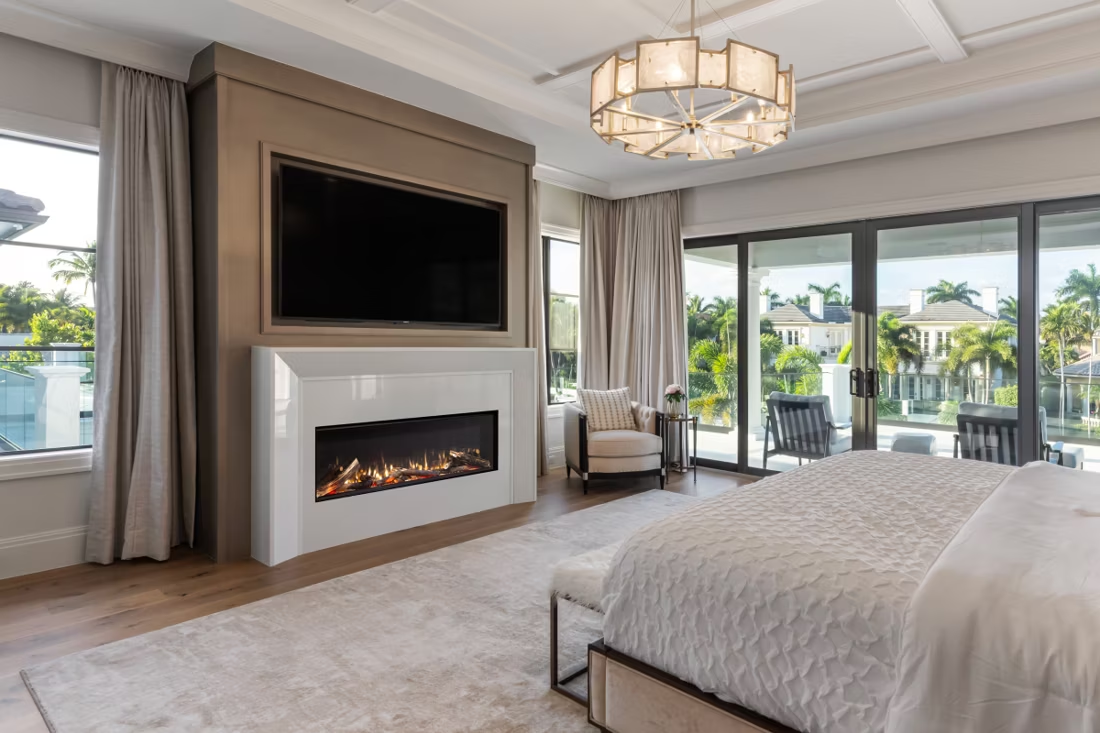
Yes—with an asterisk. Fireplaces are hot and TVs don't like heat. Either put a mantel between them to deflect rising warmth, or choose a fireplace with heat-management technology that creates a cool zone on the wall above—the wall stays around 125 degrees, barely warm, while the room still gets full heat. If you like clean lines and don't want a mantel, heat management is the answer.
Do electric fireplaces actually produce heat?
Yes—most put out around 4,800–5,000 BTUs from a standard outlet, which comfortably warms a bedroom, office, or den as a comfort-zone heater. What they won't do is carry a whole house the way wood, gas, or pellet can. Think of electric as ambiance-first with honest supplemental heat: flames on with no heat in July, flames plus warmth in January.
How much should I budget for a fireplace?
For an average home—covering the fireplace, the vent pipe, and basic installation—a budget between $3,900 and $5,500 gives you a lot of options across wood, gas, and pellet. By the time you add finish work, gas line, and electrical, the average complete installation lands between $5,000 and $12,000 all-in. In a remodel or new build, a good rule is to put about 2.5% of the total project cost toward the fireplace.
Can a fireplace actually lower my heating bill?
Yes—by creating a comfort zone. A furnace heats every square foot of the house just to warm the one room you're in; a gas fireplace on low burns roughly a sixth of the gas a typical furnace does. Set the furnace around 55–60 degrees as a baseline, then heat the rooms your family actually uses. Families who heat this way commonly save $20–$60 a month.
Stove and Fireplace Dealers in Buchanan County
Get your Buchanan County electric fireplace Project Guide & Parts List.
Tell me about your room, your panel, and how you plan to use the fireplace, and I'll match you with a trusted local Buchanan County dealer and send a free Project Guide & Parts List—the exact unit, electrical requirements, and recommended installer for your electric fireplace project.
Find Your Fireplace →