
Reliable electric fireplace heat for Black Hawk County winters.
Zone heat and real flame ambiance for the Cedar Valley's coldest months—matched with a trusted local dealer who wires it in correctly the first time, from Waterloo to Cedar Falls and everywhere between.
Every Project Starts From One of These Five Situations
The right complement to a hard-working furnace.
Black Hawk County anchors the Cedar Valley in northeast Iowa, home to more than 166,000 residents across Waterloo, Cedar Falls, and Evansdale. This is climate zone 6A territory—winter lows averaging 11°F and a heating season on par with Fargo, ND, in terms of overall load. That kind of season means the furnace does the real work in most homes here, and gas fireplaces cover most of the supplemental heating role. Electric fireplaces occupy a different, narrower lane: zone heat for a finished basement, a bedroom, or a family room, plus the flame effect people want without adding a flue.
Electric service in the county splits between MidAmerican Energy in Waterloo and Cedar Falls Utilities, the municipal utility that serves Cedar Falls and has long been known regionally for competitive residential rates. Neither factor changes much about how an electric fireplace performs, but they matter for the electrician pulling a dedicated circuit for a larger built-in unit—common in older Waterloo neighborhoods and near the UNI campus where panel capacity can be tight. With no combustion, no venting, and none of the wildfire-smoke or inversion concerns that shape wood-burning rules elsewhere, electric is also the simplest fuel to add to a rental unit, a condo near downtown Cedar Falls, or a basement remodel where running a chimney isn't realistic.
Three steps. No salesperson until you're ready.
Tell us about your project
Your zip code, your situation, and the fuel you're leaning toward—or let the answers point you to one.
See what's actually available
The brands dealers within 100 miles genuinely carry—real options, never a catalog mirage.
Get your dealer & Project Guide
A trusted local dealer, plus the free Project Guide & Parts List that names every component of the job.
Frequently Asked Questions
How much does an electric fireplace installation cost in Black Hawk County?
Electric fireplaces are the least expensive hearth product to install because there's no chimney, no gas line, and no venting to run. Plug-in units that use an existing standard outlet can be set up in an afternoon with no electrician needed. Built-in or wall-mounted units that require a dedicated 120V or 240V circuit typically add licensed electrical work on top of the unit price—a straightforward job for most Waterloo or Cedar Falls electricians, but one you shouldn't skip, since overloading an existing circuit is the most common mistake homeowners make with larger electric units.
Will an electric fireplace actually heat my Black Hawk County home?
Not the whole house, and it's important to be honest about that here. Most electric fireplaces top out around 5,000 to 9,000 BTU of supplemental heat—enough to noticeably warm a single room, but nowhere near what's needed to carry a home through a Cedar Valley winter with a heating load comparable to Fargo, ND. Think of electric as zone heat for the room you're actually sitting in, layered on top of a furnace, not a replacement for one. That's exactly why it works so well in finished basements and additions in this county—spaces that are otherwise cold and disconnected from the main HVAC zone.
Do I need a permit to install an electric fireplace in Black Hawk County?
Plug-in electric fireplaces generally don't require any permit—they're treated like any other appliance. Built-in units that need new wiring or a dedicated circuit do require an electrical permit, pulled through the local building department in Waterloo or Cedar Falls depending on where you live, and the work needs to meet current National Electrical Code requirements. A licensed electrician handling the wiring will typically pull this permit as part of the job.
Will my electric fireplace work if the power goes out?
No—this is the tradeoff with electric heat. If MidAmerican Energy or Cedar Falls Utilities service is interrupted during an ice storm or severe weather event, an electric fireplace goes dark along with everything else on the circuit. That's a real consideration in a county that sees its share of winter ice and summer storm outages. Homeowners who want backup heat that works when the grid doesn't should look at gas, which remains the standard, reliable fuel choice for most Black Hawk County homes and can be configured with battery-backup ignition.
What types of electric fireplaces are available?
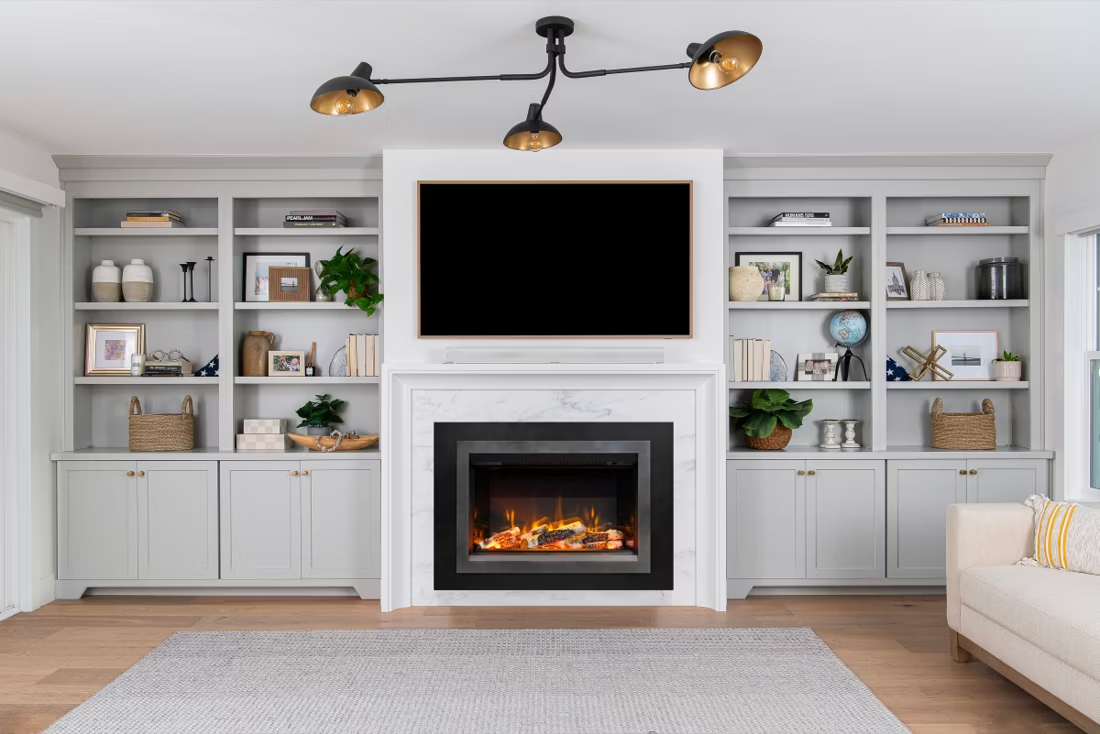
The main categories are wall-mount units (thin, TV-style units that hang like a picture and add supplemental heat and flame effect to a living room or bedroom), electric inserts (sized to slide into an existing fireplace opening—a popular option for older Waterloo homes with a masonry fireplace that's no longer used for wood), and freestanding electric stoves that mimic the look of a wood stove without any venting. Built-in linear units are also common in new construction and remodels around Cedar Falls, often specified for a clean, furniture-free wall.
What's the best electric fireplace for a Black Hawk County home?
Look for a unit with a separate heater and flame-effect control, so you can run the flame year-round for ambiance without triggering the heater in July. Brands like Dimplex and Napoleon build electric inserts and wall units with LED flame technology realistic enough to hold up next to gas in showroom comparisons, and their heaters are sized appropriately for single-room use. For a finished basement in a Waterloo or Evansdale home, a 1,500-watt unit with a built-in thermostat is usually the right call—enough to take the chill off a below-grade space without overloading a circuit.
Electric vs. gas—which is right for my home?
Gas is the more common primary or supplemental heat source in Black Hawk County because it can genuinely offset furnace load during a 6A winter and keeps working during a power outage with the right ignition system. Electric costs less to install, requires no gas line or venting, and works anywhere there's an outlet—but it's realistically limited to zone heating for one room. Many Cedar Valley homeowners end up choosing based on the space: a gas insert for the main living area where real heat output matters, and an electric unit for a basement, bedroom, or secondary space where ambiance and modest warmth are the goal.
Why don't more homes in Black Hawk County use wood or pellet stoves?
Wood and pellet stoves are genuinely uncommon here, and it's worth saying plainly rather than pretending otherwise. Waterloo and Cedar Falls are well served by natural gas infrastructure, the county doesn't carry the air-quality restrictions or curtailment periods that push some regions toward alternative heat, and the housing stock in this urban, built-out county doesn't lend itself to the rural, self-cut-firewood culture that supports wood heat elsewhere in the Midwest. Local oak, hickory, maple, and walnut are around in plenty—they're just more often firewood for a backyard fire pit than a primary heating fuel. Gas and electric are the standard, practical choices for Black Hawk County hearths.
Is an electric fireplace a good option for a rental property or condo in Cedar Falls?
Yes—it's one of the strongest use cases for electric heat in this county. Landlords and condo owners near the UNI campus and downtown Cedar Falls often choose electric fireplaces specifically because they don't require a chimney, gas line, or the ongoing maintenance that comes with combustion appliances, and most jurisdictions treat plug-in units as simple furniture rather than a fixed appliance requiring inspection. For a basement apartment or a unit without an existing flue, an electric insert or wall-mount is often the only realistic hearth option—and it adds real value in listings without adding a maintenance obligation for the owner.
Can I put a TV above my fireplace?
Yes—with an asterisk. Fireplaces are hot and TVs don't like heat. Either put a mantel between them to deflect rising warmth, or choose a fireplace with heat-management technology that creates a cool zone on the wall above—the wall stays around 125 degrees, barely warm, while the room still gets full heat. If you like clean lines and don't want a mantel, heat management is the answer.
How much does an electric fireplace cost to run?
With the heater on, a typical unit draws about 1,500 watts—at average electric rates that's roughly 20 cents an hour. Run the flame effect alone and it costs pennies; the flames are LED-driven and use about as much power as a light bulb. There's no pilot light, no fuel delivery, and essentially no maintenance.
Does a fireplace add value to my home?
On average, a fireplace adds back to the home about the same amount you spent installing it. Add the monthly savings from heating the rooms you actually use instead of the whole house—often hundreds of dollars a year—and the value case is strong before you even count what a fire does for how your family uses the room.
What is an in-home preview and do I need one?
It's a visit where a hearth professional measures your space, confirms the model you picked actually works in your home, and walks the specs—framing, gas line, venting, finish work—before anything is ordered. Some details you just can't know until you see the house. Never make a down payment without one; it's the single most-skipped step that burns buyers.
Stove and Fireplace Dealers in Black Hawk County
Listings include WhyFire partner dealers, dealers we have verified as authorized for the brands we recommend, and established local businesses that carry hearth products. Every listing shows which one it is. The ones marked Preferred run on WhyFire's software, so they can show you real pricing and book your appointment right here. No manufacturer pays for placement. How we verify dealers →
Johnson Plumbing Heating & Cooling
Hargrave Construction LLC
Find your electric fireplace in Black Hawk County.
Tell us about your space and we'll match you with the right electric fireplace or insert, plus a free Project Guide & Parts List—the exact parts and wiring needs for your project, and a trusted local dealer to install it.
Find Your Fireplace →