
Steady heat through Pottawattamie County winters.
With a heating season as demanding as Fargo, North Dakota and average winter lows near 10°F, Avoca homes need reliable zone heat. Find the right gas fireplace or insert and connect with a trusted local dealer.
Every Project Starts From One of These Five Situations
Instant heat for a farm-country climate.
Avoca sits in southwestern Iowa's Pottawattamie County, a farming community of about 1,375 people roughly 40 miles east of the Council Bluffs/Omaha metro. At climate zone 5A and 1,154 feet elevation, winters here run cold and long—average lows near 10°F and a heating season as demanding as Fargo, North Dakota put Avoca in the same heating-load territory as that city. That's a lot of season for a furnace to carry alone, which is why gas fireplaces and inserts are a common supplemental heat choice in local homes.
Electric service in Avoca comes from MidAmerican Energy and Nishnabotna Valley REC, the rural electric cooperative that covers much of the surrounding farmland. Natural gas mains reach many in-town properties, but plenty of rural Pottawattamie County homes and farmsteads already run on propane—often from the same tank that serves a furnace, grain dryer, or water heater. Either fuel works for a gas fireplace, and the appeal is the same either way: instant, controllable heat for the living room on a January night, without adding to the wood-hauling list during calving or harvest season.
Three steps. No salesperson until you're ready.
Tell us about your project
Your zip code, your situation, and the fuel you're leaning toward—or let the answers point you to one.
See what's actually available
The brands dealers within 100 miles genuinely carry—real options, never a catalog mirage.
Get your dealer & Project Guide
A trusted local dealer, plus the free Project Guide & Parts List that names every component of the job.
Frequently Asked Questions
How much does a gas fireplace installation cost in Avoca?
A typical gas fireplace or insert installation in the Avoca area runs roughly $3,500 to $9,000, with the spread driven mainly by whether you're on natural gas or need propane line work, and whether venting can follow an existing chase or requires new framing. Homes already plumbed for a propane furnace or water heater tend to land on the lower end since the fuel supply is already in place. Farmsteads needing a new propane tank set or a longer gas line run from the tank to the house will run higher. A local dealer will give you a firm number after seeing the install site.
Can I convert an existing wood-burning fireplace to gas in Avoca?
Yes, and it's a common upgrade in older Avoca homes built with a traditional masonry firebox. A gas insert slides into the existing opening and uses a stainless liner run up your current chimney for venting, so you keep the look of the fireplace without hauling and stacking wood. Converting typically costs $3,500 to $7,500 depending on the insert and whether new gas line needs to be run from a propane tank or an existing gas appliance. It's worth asking your installer whether your firebox needs a masonry inspection first, since older chimneys in this part of Iowa sometimes need liner or crown repair before an insert goes in.
Should I plan for natural gas or propane in Avoca?
It depends on where your property sits. In-town Avoca addresses often have access to natural gas service, while many rural properties and farmsteads throughout Pottawattamie County rely on propane, frequently from a tank already on-site for a furnace or grain-drying equipment. Nishnabotna Valley REC handles electric service in much of the surrounding countryside but not gas, so propane fills that gap for a lot of rural homes. Most gas fireplace models can be set up for either fuel—your installer configures the correct orifice and regulator, so the choice usually comes down to what's already running to your house.
Will a gas fireplace still work if the power goes out?
Most will, with the right ignition system. Units with IPI (intermittent pilot ignition) run on a small battery backup that kicks in automatically when the power drops, so the fireplace still lights on demand. Valor fireplaces go a step further—their pilot assembly generates its own electricity through a thermocouple, so there's no battery to remember at all. That matters in this part of Iowa, where winter ice storms occasionally knock out rural electric co-op lines for a stretch. Ask your local dealer about the ignition system on any model you're considering if backup heat is a priority.
What's the difference between a gas fireplace, gas insert, and gas stove?
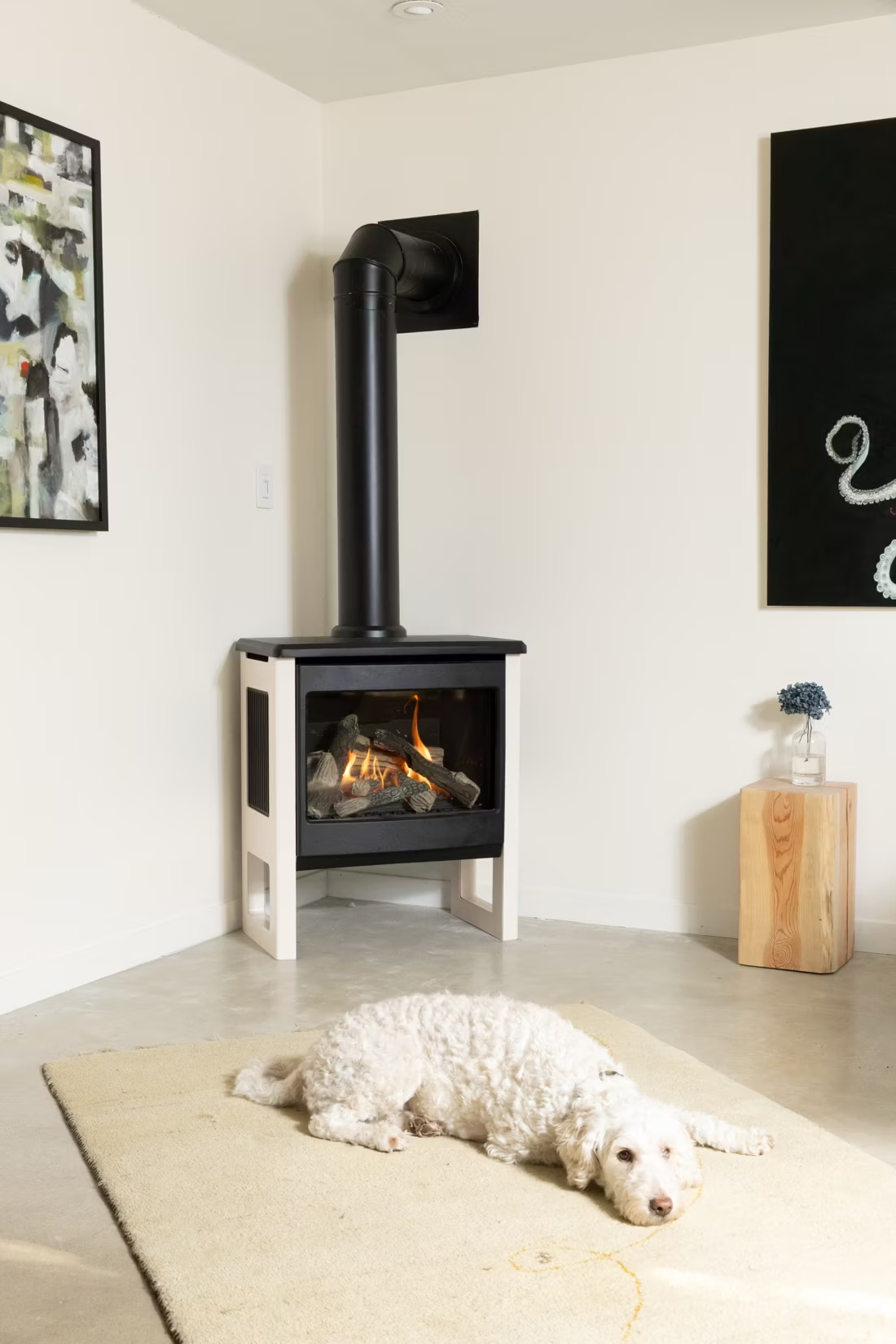
A gas fireplace is a fully built-in unit framed into a wall, typically chosen for new construction or a remodel. A gas insert is built to slide into an existing masonry firebox, turning an old wood-burning fireplace into a sealed, efficient heat source that vents through the current chimney. A gas stove is a freestanding cabinet unit, similar in footprint to a wood stove, that can go almost anywhere with the right clearances and venting. Most Avoca homeowners with an older fireplace opt for an insert; new builds and additions more often go with a built-in fireplace or a freestanding stove.
Do I need a permit to install a gas fireplace in Avoca?
Yes—gas fireplace installations require a building permit and, for the fuel line itself, work performed by a licensed gas-fitter or plumber. In Avoca, permitting typically runs through Pottawattamie County or the city depending on your address, and most local hearth dealers coordinate the permit and inspection as part of the install so you're not chasing down separate trades. If you're adding a new propane tank rather than tying into an existing one, your propane supplier will also need to sign off on the tank placement relative to the house.
Vented or vent-free gas fireplace—which should I choose?
Vented (direct-vent) fireplaces pull combustion air from outside and exhaust it back outside through sealed venting, which keeps combustion byproducts out of the living space. Vent-free units burn without any outside venting and are legal in Iowa within room-size and ventilation limits, but they release some moisture and combustion gases indoors. For a well-sealed, energy-efficient Avoca home—especially newer construction—a direct-vent unit is usually the safer, more universally recommended choice, and it doesn't require you to crack a window to stay within vent-free guidelines during a hard winter cold snap.
How often does a gas fireplace need to be serviced?
Plan on an annual inspection, ideally in early fall before the fireplace sees regular winter use. A technician checks the burner, pilot assembly, gas connections, and venting, and cleans the glass and interior—a straightforward visit that typically runs $125 to $200 in this area. Because Avoca is a small town, some homeowners schedule service through hearth dealers based in the Council Bluffs or Omaha metro who service outlying communities on a route basis, so it's worth booking a few weeks ahead of the season.
Should I consider a wood stove instead of gas in Avoca?
Most Avoca homeowners lean toward gas or electric rather than wood. This part of Pottawattamie County is open farmland rather than heavy timber, so firewood isn't as readily available as it is in more forested regions of the state, even though oak, hickory, walnut, and maple can be found along the wooded river bottoms of the nearby Nishnabotna River. Between the limited local wood supply and the convenience of a propane tank most farmsteads already have on hand, gas fireplaces and inserts are simply the more practical fit for full-time and supplemental heat here. A local dealer can talk through both if you have wooded acreage and want to weigh the option.
What's the difference between an insert and a zero-clearance fireplace?
An insert is a fireplace that slides into a pre-existing wood-burning fireplace—if you don't have one, there's nothing to insert it into. A zero-clearance fireplace is built into a framed wall, which makes it the answer for remodels and new construction. Simple test: existing masonry fireplace means insert; blank or framed wall means zero-clearance.
Is my gas fireplace wasting gas?
If it was installed more than 15 years ago, probably. Older gas fireplaces keep a standing pilot light burning all the time, and that little flame can cost a couple hundred dollars a year. Newer models use pilot-on-demand ignition—the pilot lights only when you use the fireplace and goes out when you turn it off.
What is an in-home preview and do I need one?
It's a visit where a hearth professional measures your space, confirms the model you picked actually works in your home, and walks the specs—framing, gas line, venting, finish work—before anything is ordered. Some details you just can't know until you see the house. Never make a down payment without one; it's the single most-skipped step that burns buyers.
How much should I budget for a fireplace?
For an average home—covering the fireplace, the vent pipe, and basic installation—a budget between $3,900 and $5,500 gives you a lot of options across wood, gas, and pellet. By the time you add finish work, gas line, and electrical, the average complete installation lands between $5,000 and $12,000 all-in. In a remodel or new build, a good rule is to put about 2.5% of the total project cost toward the fireplace.
Nearby Dealers
Hearth shops serving Avoca and the surrounding area. Every listing shows whether it is a WhyFire partner, a dealer we have verified as authorized for the brands we recommend, or a local business carrying hearth products. No manufacturer pays for placement. How we verify dealers →
Builders Supply Co. Inc
Fac Cooperative
Fireplace Stone & Patio
Kay Stevens Custom Designs
Edward's Stone Inc
Solar Systems Of Iowa
Find your gas fireplace in Avoca.
Tell us a bit about your home and heating goals, and we'll match you with a trusted local dealer and a free Project Guide & Parts List—the exact parts, vent kit, and installer recommendation for your Avoca gas fireplace project.
Find Your Fireplace →