
Instant Heat for Ankeny's Long Iowa Winters.
With winter lows averaging 12°F and a long, demanding heating season each year, Ankeny homes lean on gas for dependable zone heat. Find the right fireplace or insert and get matched with a trusted local dealer.
Every Project Starts From One of These Five Situations
The default heat source for Ankeny's newest homes.
Ankeny is one of the fastest-growing cities in Iowa, and most of its housing stock north of Des Moines was built during the last two to three decades of subdivision expansion. Winters here run cold—a 12°F average low and a winter heating season about as demanding as Madison, Wisconsin. But unlike older river towns with century-old masonry chimneys, Ankeny's newer construction was built in the era of ubiquitous natural gas lines, which is why gas fireplaces, not wood stoves, are the standard here. True wood-burning setups are genuinely rare in Ankeny—many subdivision covenants restrict exterior wood storage, and builder-grade homes were typically fitted with built-in fireboxes designed for gas conversion, not cordwood.
MidAmerican Energy is the dominant utility across the Des Moines metro, supplying both electricity and natural gas to most Ankeny neighborhoods, with Interstate Power and Light (Alliant Energy) also serving parts of the area. That existing gas infrastructure means most fireplace installations in Ankeny are a straightforward gas-line tie-in rather than a major utility project. Add battery-backup ignition that keeps a fireplace running through a winter storm outage, a remote thermostat, and none of the ash or creosote upkeep of cordwood, and it's easy to see why gas has become the default choice for supplemental heat in this part of Polk County.
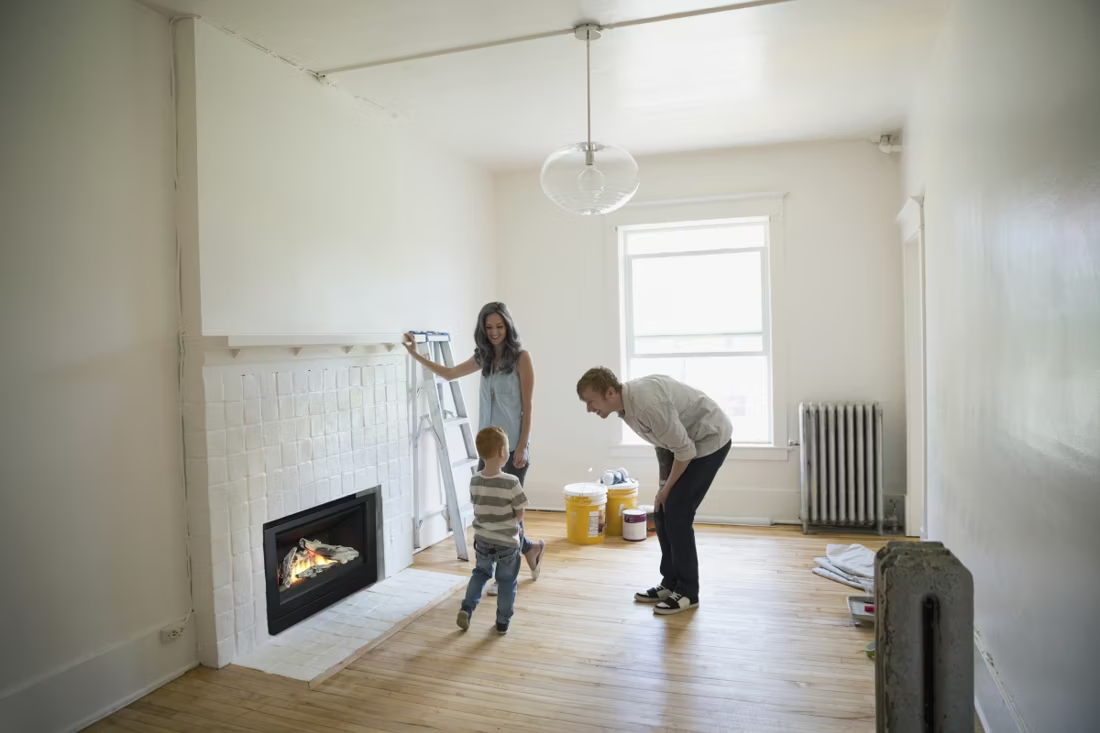
Three steps. No salesperson until you're ready.
Tell us about your project
Your zip code, your situation, and the fuel you're leaning toward—or let the answers point you to one.
See what's actually available
The brands dealers within 100 miles genuinely carry—real options, never a catalog mirage.
Get your dealer & Project Guide
A trusted local dealer, plus the free Project Guide & Parts List that names every component of the job.
Frequently Asked Questions
How much does a gas fireplace installation cost in Ankeny?
Pricing depends heavily on the unit and the venting path, but gas fireplace installations across the Des Moines metro—Ankeny included—generally run $3,500 to $9,500. A gas log insert or basic direct-vent unit tying into an existing gas line sits at the lower end. A full built-in gas fireplace for new construction, or a project that requires running a new gas line to a room that doesn't already have one, lands toward the higher end. A local dealer will give you a firm number after seeing your home, but that range is a realistic starting point for budgeting.
Can I convert my existing fireplace to gas?
Most likely, yes, and it's one of the more common projects in Ankeny's newer neighborhoods. Many homes built here in the 1990s through 2010s came standard with a built-in, factory-built wood-burning firebox rather than a masonry hearth. Those zero-clearance fireboxes can often accept a gas log set or a gas insert rated for factory-built fireplaces, converting a rarely used wood box into an on-demand heat source. Homes with true masonry fireplaces are less common in Ankeny, but the same principle applies—a liner-vented gas insert can go into an existing masonry opening if one is present.
Do I need natural gas, or is propane an option in Ankeny?
Natural gas service through MidAmerican Energy covers the vast majority of Ankeny, so most homeowners in the city limits already have gas plumbed to the house for a furnace, water heater, or range—adding a fireplace is usually a simple branch line. Propane comes into play mainly for homes on the rural edges of Polk County outside MidAmerican's natural gas footprint. Nearly all gas fireplace models can be configured for either fuel; your installer sets the correct orifice for whichever you have.
Will my gas fireplace still work if the power goes out?
Most modern gas fireplaces will, which matters in a region that sees ice storms and heavy snow load knock out power for hours at a time. Units with intermittent pilot ignition (IPI) run on a small battery backup that kicks in automatically when utility power drops, so the fireplace lights on demand just like normal. Valor fireplaces take a different approach—their pilot assembly generates its own electricity through the thermocouple, so there's no battery to remember at all. Either way, ask your dealer about the ignition system before you buy if outage performance matters to you.
What's the difference between a gas fireplace, insert, and stove?
A gas fireplace is a fully built-in unit installed during framing—common in Ankeny's newer construction. A gas insert is sized to slide into an existing fireplace opening, whether that's a masonry hearth or, more typically here, a factory-built wood-burning firebox that came standard with the house. A gas stove is a freestanding cabinet unit that sits on the floor and vents through a wall or ceiling, useful in a basement or bonus room without an existing firebox. For most Ankeny homeowners looking to upgrade an underused builder-installed fireplace, an insert is the most common path.
Do I need a permit to install a gas fireplace in Ankeny?
Yes. The City of Ankeny requires a building permit for new gas fireplace installations, and any gas line work must be done by a licensed gas-fitter, typically pulled as a separate mechanical or plumbing permit. Most established hearth dealers handle both permits as part of the installation, so you're not stuck coordinating multiple trades yourself. If you're converting a builder-installed wood firebox to gas, it's still worth confirming permit requirements with your dealer since the scope of work can vary.
What's the difference between vented and vent-free gas fireplaces?
Vented (direct-vent) gas fireplaces pull combustion air from outside and exhaust it back outside through a sealed pipe—they're the most common choice and produce real, sustained heat. Vent-free units burn gas directly into the room without external venting; Iowa's plumbing and mechanical code allows them but requires oxygen depletion sensors and specific room-size minimums. In Ankeny's newer, tightly built homes, direct-vent units are generally the better fit for indoor air quality and are what most local dealers recommend as the default.
How often should a gas fireplace be serviced?
Plan on an annual inspection, ideally before the first cold snap in late fall. A technician checks the burner, pilot assembly, venting, and gas connections, and cleans the glass and interior—a much lighter service than chimney sweeping for a wood unit, but it matters for both safety and warranty compliance. Local gas appliance service providers typically charge $150 to $250 for a standard annual visit.
Should I consider a wood-burning fireplace instead of gas in Ankeny?
For most Ankeny homes, gas is the practical answer. True wood-burning setups are uncommon here—not because the climate is too mild (12°F average lows and a long, demanding heating season say otherwise) but because most of the city was built after natural gas lines were already in place, and many subdivisions have covenants that discourage exterior wood storage or full masonry chimneys. Oak, hickory, maple, and walnut are all regionally available if you want to source firewood, but for a suburb this size, hauling and stacking cordwood is a harder sell than flipping a switch. Wood remains a niche choice mostly for rural Polk County properties outside city limits; inside Ankeny, gas is the far more common and far more practical option.
Can I put a TV above my fireplace?
Yes—with an asterisk. Fireplaces are hot and TVs don't like heat. Either put a mantel between them to deflect rising warmth, or choose a fireplace with heat-management technology that creates a cool zone on the wall above—the wall stays around 125 degrees, barely warm, while the room still gets full heat. If you like clean lines and don't want a mantel, heat management is the answer.
Why is a fireplace insert so efficient?
An insert does two things: it seals the chimney completely, so you stop losing air you already paid to heat, and it radiates warmth into the room through the firebox and glass. Most add a heat-exchange fan that pulls cool room air underneath, wraps it around the hot firebox, and pushes it back out warm. Your home is more efficient before you've even lit the first fire.
Does a fireplace add value to my home?
On average, a fireplace adds back to the home about the same amount you spent installing it. Add the monthly savings from heating the rooms you actually use instead of the whole house—often hundreds of dollars a year—and the value case is strong before you even count what a fire does for how your family uses the room.
How much should I budget for a fireplace?
For an average home—covering the fireplace, the vent pipe, and basic installation—a budget between $3,900 and $5,500 gives you a lot of options across wood, gas, and pellet. By the time you add finish work, gas line, and electrical, the average complete installation lands between $5,000 and $12,000 all-in. In a remodel or new build, a good rule is to put about 2.5% of the total project cost toward the fireplace.
Nearby Dealers
Hearth shops serving Ankeny and the surrounding area. Every listing shows whether it is a WhyFire partner, a dealer we have verified as authorized for the brands we recommend, or a local business carrying hearth products. No manufacturer pays for placement. How we verify dealers →
Kohles And Bach
Metro Heating & Cooling
Fireplace Superstore
Fireplace Stone & Patio - Waukee
Home Fires
Find your gas fireplace in Ankeny.
Tell us about your home and we'll put together a free Project Guide & Parts List—the exact parts, including the vent kit, plus a recommended local Ankeny dealer to install it right.
Find Your Fireplace →