
Instant ambiance for Allamakee County's long, cold winters.
From the Waukon bluffs to the river towns of Lansing and New Albin, an electric fireplace adds real-flame look and supplemental warmth without new venting, a gas line, or a chimney. Find the right unit and connect with a trusted local dealer.
Every Project Starts From One of These Five Situations
The simplest fireplace upgrade in the Driftless Area.
Allamakee County sits in Iowa's Driftless Area—steep bluffs and coulees above the Mississippi River, with Waukon, Lansing, Postville, and New Albin scattered through terrain that never got flattened by the glaciers. Winters here are serious: an average winter low around 8°F and roughly 7,658 heating degree days put the county in the same cold-climate bracket as Minneapolis. Generations of local homes have leaned on oak, hickory, maple, and walnut for wood heat, and that hardwood heritage still shows up in woodpiles across the county every fall.
Electric fireplaces fit a different need. They're the go-to option for rental units, condos, additions, and older farmhouses where running a new chimney chase or gas line isn't practical or worth the cost. A plug-in insert or built-in wall unit delivers real-flame visuals and 1,500-watt zone heat in a room that Alliant Energy or a rural cooperative like Allamakee-Clayton Electric Cooperative already services—no combustion byproducts, no annual chimney sweep, and installation that's usually a matter of hours, not days. In a county this cold, most homeowners use electric fireplaces as supplemental or ambiance heat for a specific room rather than as the sole heat source for the whole house, since electric resistance heat costs more per BTU than the propane or wood many rural Allamakee County homes already burn.
Three steps. No salesperson until you're ready.
Tell us about your project
Your zip code, your situation, and the fuel you're leaning toward—or let the answers point you to one.
See what's actually available
The brands dealers within 100 miles genuinely carry—real options, never a catalog mirage.
Get your dealer & Project Guide
A trusted local dealer, plus the free Project Guide & Parts List that names every component of the job.
Frequently Asked Questions
How much does an electric fireplace installation cost in Allamakee County?
Cost depends heavily on the unit type. A plug-in electric insert that drops into an existing masonry fireplace or a freestanding electric stove typically runs $150 to $600 installed, since there's no venting or gas line work involved. A built-in wall-mount electric fireplace or a linear unit set into new framing runs higher—often $800 to $2,500—because it usually requires a dedicated 120V or 240V circuit run by an electrician, plus finish carpentry around the unit. Either way, costs in Allamakee County run well below a comparable wood or gas installation, since there's no chimney, hearth pad, or gas-fitter involved.
Can an electric fireplace be my primary heat source in a climate this cold?
Generally, no—not as your only heat source. With roughly 7,658 heating degree days and winter lows regularly near 8°F, Allamakee County homes need a furnace, wood stove, or propane system as the backbone of winter heat. Electric fireplaces put out real, usable heat—typically 4,600 to 5,000 BTU from a standard 1,500-watt unit—which is enough to noticeably warm a bedroom, den, or finished basement room, but electric resistance heat costs more per BTU than propane or wood in this climate. Most local homeowners use an electric fireplace for zone heating a specific room or for ambiance while the furnace handles the rest of the house.
Do I need a permit to install an electric fireplace in Allamakee County?
Usually not for a plug-in insert or freestanding unit—those simply plug into an existing outlet and require no permit at all. A built-in wall unit that needs a new dedicated circuit is a different matter: that electrical work typically requires a permit through the Allamakee County Zoning and Planning office if you're outside city limits, or through Waukon's local building department if you're within the city. Most licensed electricians pull the permit as part of the job, so you generally don't have to handle the paperwork yourself.
What's the difference between an electric insert and an electric fireplace or mantel unit?
An electric insert is sized to slide into an existing masonry fireplace opening, converting an old wood-burning fireplace—common in older Allamakee County farmhouses—into a clean, plug-in heat source without touching the chimney. A built-in electric fireplace or wall unit is installed into new framing, often flanked by cabinetry or a mantel surround, and is the better choice for additions or rooms without an existing fireplace. A freestanding electric stove is a third option that mimics a wood stove's footprint but plugs in like an appliance. All three are available from local hearth dealers, who can tell you which fits your existing opening or wall.
Will my electric fireplace work during a power outage?
No—unlike a wood stove, an electric fireplace needs electricity to run, so it goes dark the moment the power does. That's worth weighing seriously in Allamakee County, where ice storms and heavy winter snow along the bluffs occasionally knock out rural power lines for hours or longer. Homes that rely on wood heat as backup during outages often keep a wood stove or fireplace insert as the emergency option and use electric fireplaces purely for everyday ambiance and zone heat when the grid is up.
Electric vs. wood—which is right for my Allamakee County home?
Wood, split from the oak, hickory, maple, and walnut that's common throughout the county, offers real heat output, works without electricity during outages, and fits the self-sufficient heating tradition many rural Allamakee County households already practice. Electric offers push-button simplicity, zero ash or creosote, no chimney maintenance, and installation in a fraction of the time and cost. For a primary heat source in a county averaging 7,658 heating degree days, wood or a furnace typically wins. For ambiance, a supplemental room, or a rental unit where a chimney isn't practical, electric is usually the better fit—and many local homes end up with both.
What size electric fireplace heats a room properly?
Standard 120V electric fireplace inserts and wall units put out around 4,600 to 5,000 BTU—enough to comfortably heat a 400 to 600 square foot room in a well-insulated Allamakee County home, less in an older, draftier farmhouse common in the rural parts of the county. Larger linear units or 240V models can push higher output for open-concept living areas, but most homeowners buying purely for supplemental heat are covering a single bedroom, den, or basement room rather than the whole house. A local dealer can match unit size to your specific room and insulation level.
How much maintenance does an electric fireplace need?
Very little compared to wood or gas. There's no annual chimney sweep, no gas line inspection, and no creosote to manage. Maintenance is mostly dusting the unit, occasionally cleaning the glass front, and checking that the heater fan and LED flame elements are running smoothly. Most units carry manufacturer warranties of one to five years, and local hearth dealers can handle repairs or replacement parts if the heating element or flame effect ever fails—which is uncommon given how few moving parts these units have.
Electric vs. pellet stove—which makes more sense for my home?
Pellet stoves, using pellets from regional suppliers like Lignetics or Indeck Energy Services, put out real heat output substantial enough to serve as a primary heat source for many Allamakee County homes, but they require a vent through an exterior wall or existing chimney, a hopper to refill, and periodic ash cleanout. Electric fireplaces need none of that—no venting, no fuel storage, no combustion byproducts—but they can't match a pellet stove's heat output in a genuinely cold room and still depend on grid power to run. For serious winter heat, pellet is the stronger option; for a low-maintenance ambiance upgrade in a room that doesn't need to carry the heating load, electric is simpler and cheaper to install.
Can I put a TV above my fireplace?
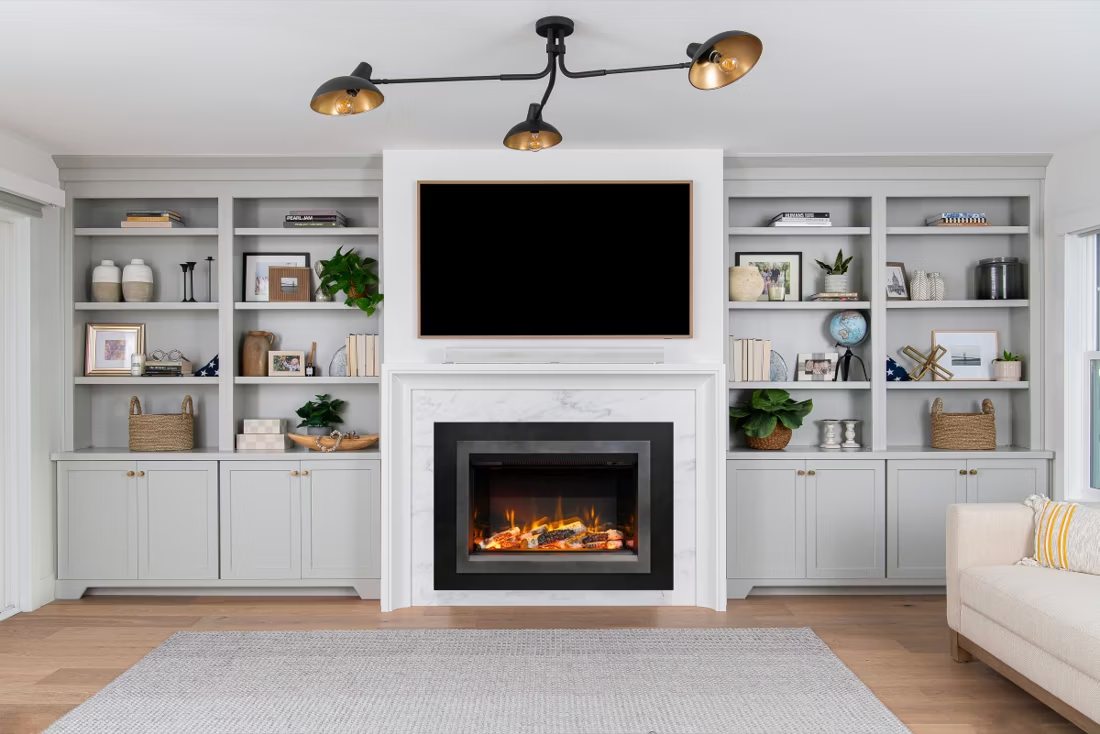
Yes—with an asterisk. Fireplaces are hot and TVs don't like heat. Either put a mantel between them to deflect rising warmth, or choose a fireplace with heat-management technology that creates a cool zone on the wall above—the wall stays around 125 degrees, barely warm, while the room still gets full heat. If you like clean lines and don't want a mantel, heat management is the answer.
How much does an electric fireplace cost to run?
With the heater on, a typical unit draws about 1,500 watts—at average electric rates that's roughly 20 cents an hour. Run the flame effect alone and it costs pennies; the flames are LED-driven and use about as much power as a light bulb. There's no pilot light, no fuel delivery, and essentially no maintenance.
Can a fireplace actually lower my heating bill?
Yes—by creating a comfort zone. A furnace heats every square foot of the house just to warm the one room you're in; a gas fireplace on low burns roughly a sixth of the gas a typical furnace does. Set the furnace around 55–60 degrees as a baseline, then heat the rooms your family actually uses. Families who heat this way commonly save $20–$60 a month.
Can I install a fireplace myself?
If you're putting a fire in your house on purpose, it's best to work with an expert. Unless you're genuinely experienced in framing, gas line, vent pipe, and the national code on clearances to combustibles, have a professional do it—and ideally the same company that sells you the fireplace, so warranty, service, and liability all live under one roof.
Find your electric fireplace in Allamakee County.
Tell us a bit about your home and room, and we'll match you with a trusted local dealer and send over your free Project Guide & Parts List—the exact unit, wiring needs, and parts for your Allamakee County electric fireplace project.
Find Your Fireplace →