
Zone heat for Adams County's long, cold winters.
With average winter lows near 12°F and a heating load in the same range as Madison, Wisconsin, Adams County homes need more than ambiance from a fireplace. Electric inserts and stoves add real, no-vent heat to bedrooms, additions, and farmhouse living rooms around Corning and the surrounding townships—find the right unit and get matched with a trusted local dealer.
Every Project Starts From One of These Five Situations
Instant heat, no chimney required.
Adams County is home to just over 2,000 residents spread across the farmland surrounding Corning, and a lot of the county's housing stock is older farmhouses built long before central air or forced-air furnaces were standard. Winters here are genuinely cold—average lows near 12°F and a heating load in the same range as Madison, Wisconsin. Many of these homes have additions, converted porches, or upstairs bedrooms that the main furnace never quite reaches, and no chimney or gas line to retrofit. That's exactly where electric fireplaces and inserts earn their keep.
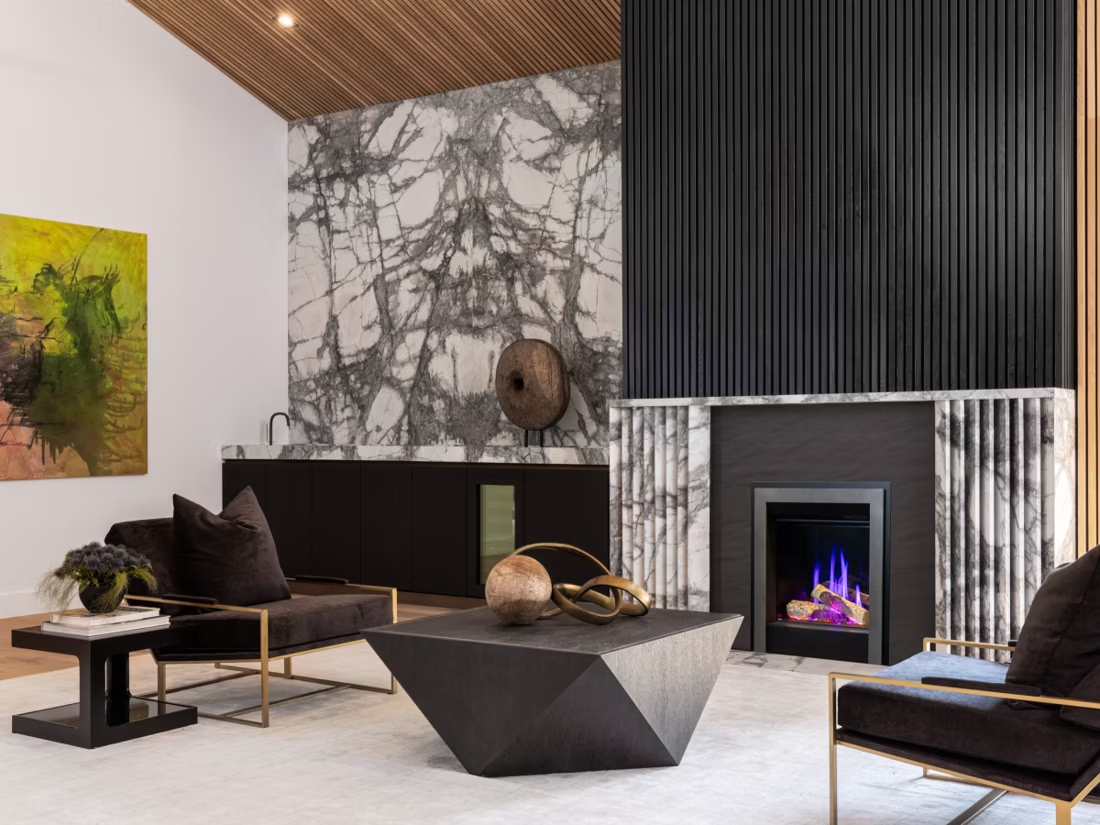
Because electric units plug into a standard outlet (or a dedicated 240-volt circuit for higher-output models) and vent nowhere, they install in an afternoon almost anywhere in the county—no masonry work, no gas permit, no cutting into an exterior wall. For a county this rural, where most homes run on a rural electric cooperative rather than an investor-owned utility, that simplicity matters. Electric won't replace a furnace or a wood stove as primary heat on a sub-zero January night, but as supplemental zone heat for a spare bedroom, a finished basement, or a living room where a family just wants real flame without a burn permit, it's a practical, low-maintenance fit.
Three steps. No salesperson until you're ready.
Tell us about your project
Your zip code, your situation, and the fuel you're leaning toward—or let the answers point you to one.
See what's actually available
The brands dealers within 100 miles genuinely carry—real options, never a catalog mirage.
Get your dealer & Project Guide
A trusted local dealer, plus the free Project Guide & Parts List that names every component of the job.
Frequently Asked Questions
How much does an electric fireplace installation cost in Adams County?
Most electric fireplace and insert installations in Adams County run $400 to $2,000. A plug-in wall-mounted unit or a freestanding electric stove on the low end needs nothing more than an outlet. Built-in models or inserts that require a dedicated 240-volt circuit, new wiring run from the panel, or custom framing into an existing masonry fireplace push toward the higher end—especially in older farmhouses around Corning where panel upgrades are sometimes needed to add a circuit. A local dealer can give you a firm number after seeing your electrical panel and the space.
What size electric fireplace do I need for my Adams County home?
Electric fireplaces are rated in watts, not BTUs in the way a wood or gas unit is—a typical 1,500-watt insert puts out roughly 5,000 BTUs, enough to noticeably warm a 400- to 1,000-square-foot space depending on ceiling height and insulation. In a drafty older farmhouse with 9-foot ceilings and single-pane windows, size toward the upper end of that range or plan on the unit as supplemental heat alongside your furnace or propane system. For additions and converted porches—common in this part of southwest Iowa—a single well-placed unit is usually enough to make the room usable through the winter.
Do I need an electrician to install an electric fireplace in Adams County?
A plug-in electric fireplace needs nothing more than a standard outlet, so no electrician is required. But higher-output built-in models and many inserts call for a dedicated 240-volt circuit, which does require a licensed electrician and, in most cases, a permit through your local building authority. Given how many Adams County homes are on older electrical panels, it's worth having a dealer or electrician confirm your panel has capacity before you commit to a specific unit.
What's the difference between an electric fireplace, insert, and stove?
An electric fireplace is typically a built-in or wall-mounted unit designed to look framed into the wall—popular in living rooms and primary spaces. An electric insert is sized to slide into an existing masonry fireplace opening, which is a common retrofit in older Adams County farmhouses that have a fireplace but no functioning chimney liner. An electric stove is a freestanding unit styled like a wood stove, which works well in a room with no fireplace at all—a converted porch or basement family room, for example. All three heat the same way; the choice comes down to what's already in the room.
Do I need a permit for an electric fireplace in Adams County?
In most cases, no—because there's no venting, gas line, or chimney involved, a plug-in electric fireplace generally doesn't trigger a building permit. If your installation requires new wiring or a dedicated 240-volt circuit, that electrical work typically does require a permit through your local building authority, and it's work that should go through a licensed electrician regardless of whether a permit is pulled. Your local dealer can tell you which category your specific unit falls into.
Is an electric fireplace enough heat for an Adams County winter?
On its own, no—with lows averaging around 12°F and a winter heating load in the same range as Madison, Wisconsin, Adams County winters are too cold for electric to serve as a home's sole heat source. Where electric excels is zone heating: taking the edge off a room your furnace struggles to reach, adding heat to a converted porch or finished basement, or providing supplemental warmth so you can turn the thermostat down elsewhere in the house. Paired with a furnace, heat pump, or propane system, an electric unit in the right room can meaningfully cut your heating costs without replacing your primary system.
What does it cost to run an electric fireplace in Adams County?
A typical 1,500-watt electric fireplace run on the heat setting for several hours a day costs roughly $10 to $25 a month, depending on local electric rates and how often you use it. Most Adams County homes are served by a rural electric cooperative rather than an investor-owned utility, and rates run close to the regional average for southwest Iowa. Because most units let you run the flame effect without heat, you can also use them for ambiance in the off-season at a fraction of that cost.
Electric vs. wood—which makes more sense for my Adams County home?
Wood has deep roots in this part of Iowa—oak, hickory, maple, and walnut are all common locally, and a wood stove or insert can serve as genuine primary heat, including during a power outage, which electric cannot do. Electric fireplaces can't replace that off-grid resilience, but they win on convenience: no wood to split and stack, no chimney to sweep, and no permit or clearance requirements, which makes them a much simpler fit for a room that just needs supplemental warmth or ambiance rather than a whole-home heat source. Many Adams County households end up with both—wood or propane for real winter heat, electric for the rooms and moments where flame without the fuss matters more.
Electric vs. propane fireplace—which is better for Adams County?
Outside of Corning, natural gas lines are limited across Adams County, which makes propane the standard gas option for most rural homes here—and it delivers real, furnace-level heat output that electric can't match on the coldest nights. Electric fireplaces skip the propane tank, delivery contract, and venting altogether, which makes them a much lower-commitment choice for a single room or an add-on space. If you already have a propane tank and lines run for a furnace or water heater, adding a propane fireplace to the main living area is often worth it; for a spare bedroom, sunroom, or basement, electric is usually the simpler and cheaper path.
Can I put a TV above my fireplace?
Yes—with an asterisk. Fireplaces are hot and TVs don't like heat. Either put a mantel between them to deflect rising warmth, or choose a fireplace with heat-management technology that creates a cool zone on the wall above—the wall stays around 125 degrees, barely warm, while the room still gets full heat. If you like clean lines and don't want a mantel, heat management is the answer.
Does an electric fireplace need a vent or chimney?
No—that's its superpower. An electric fireplace needs a wall and an outlet, period. No vent pipe, no gas line, no clearances to design around, which is why it works in bedrooms, offices, apartments, and walls where venting a gas or wood unit would be impractical or impossible. Installation is typically the simplest and least expensive of any fireplace type.
Does a fireplace add value to my home?
On average, a fireplace adds back to the home about the same amount you spent installing it. Add the monthly savings from heating the rooms you actually use instead of the whole house—often hundreds of dollars a year—and the value case is strong before you even count what a fire does for how your family uses the room.
How much should I budget for a fireplace?
For an average home—covering the fireplace, the vent pipe, and basic installation—a budget between $3,900 and $5,500 gives you a lot of options across wood, gas, and pellet. By the time you add finish work, gas line, and electrical, the average complete installation lands between $5,000 and $12,000 all-in. In a remodel or new build, a good rule is to put about 2.5% of the total project cost toward the fireplace.
Find your electric fireplace in Adams County.
Tell us about your home and the room you're trying to heat, and we'll match you with the right electric fireplace, insert, or stove—plus a free Project Guide & Parts List with the exact parts and a trusted local dealer for your Adams County installation.
Find Your Fireplace →