
Warm up a room in Adair County without touching a chimney.
Zero-clearance electric heat for the farmhouses and small-town homes of Adair County—no venting, no gas line, no masonry work. Find the right unit and get matched with a local installer who can wire it in correctly.
Every Project Starts From One of These Five Situations
A practical fix for a cold-climate home.
Adair County sits in southwestern Iowa's rolling farm country—Greenfield as the county seat, with Casey, Fontanelle, and Stuart spread across a population of around 5,469. Climate zone 5A here means a real winter: average lows near 11°F and roughly 6,628 heating degree days a year, the kind of cold that settles into older farmhouses with single-pane windows and rooms that the furnace never quite catches up on. A lot of the county's housing stock predates modern insulation standards, which is exactly the situation where a supplemental electric unit earns its keep.
Electric fireplaces and inserts don't need a chimney, a gas line, or combustion air, which makes them a straightforward retrofit into an existing mantel, a finished basement, or a drafty upstairs bedroom that the central system can't reach. Many rural Adair County homes are served by a rural electric cooperative rather than a municipal utility, and that's worth knowing before you buy: a 1,500-watt built-in heater on a 15-amp circuit runs fine on standard household wiring, but a 240-volt hardwired unit may call an electrician into the picture and possibly a permit conversation with the county. Either way, electric is the lowest-friction way to add real, usable heat to one room in an old house—it's just not a whole-home backup during a grid outage, which matters in a county where ice storms do happen.
Three steps. No salesperson until you're ready.
Tell us about your project
Your zip code, your situation, and the fuel you're leaning toward—or let the answers point you to one.
See what's actually available
The brands dealers within 100 miles genuinely carry—real options, never a catalog mirage.
Get your dealer & Project Guide
A trusted local dealer, plus the free Project Guide & Parts List that names every component of the job.
Frequently Asked Questions
How much does an electric fireplace installation cost in Adair County?
Cost depends heavily on the type. A plug-in freestanding or wall-mount unit that just needs a standard outlet can be a same-day, low-cost project—often under $1,000 installed. A built-in electric insert set into an existing mantel or a hardwired wall unit that requires an electrician to run a dedicated circuit costs more, typically landing in the low-to-mid thousands once labor and any trim work are included. Homes with older wiring or a fuse panel instead of a breaker box—common in Adair County's older farmhouses—may need panel work first, which adds to the total. A local installer will give you a firm number after seeing the room and the panel.
What size electric fireplace or insert do I need?
Sizing an electric unit is mostly about the room you're trying to warm, not the whole house, since these units are supplemental heaters by design. A 1,500-watt built-in heater will comfortably take the edge off a single bedroom or living room in the 11°F average lows Adair County sees most winters, but it won't replace a furnace in a drafty farmhouse with 9-foot ceilings and old windows. If you're trying to make one room genuinely comfortable on the coldest nights of a 6,628-HDD winter, talk to a local dealer about heater wattage and CFM airflow rather than just the width of the unit—a wide, low-wattage decorative model looks great but won't move much heat.
Who installs electric fireplaces near me in Adair County?
Plug-in units don't require a specialist—many homeowners install those themselves. For built-in inserts, wall-mounted units, or anything that needs a new circuit, you want a licensed electrician, ideally one who's done hearth work before and understands clearance-to-combustible requirements around a mantel or trim. A trusted local dealer will either handle the electrical work directly or coordinate with an electrician they already work with, which matters in a county this size where you may not have five contractors to choose from.
What's the difference between an electric fireplace, insert, and wall-mounted unit?
A freestanding electric fireplace is a self-contained cabinet unit you plug in and place against a wall—no installation beyond plugging it in. An electric insert is built to slide into an existing masonry fireplace opening or a custom-framed cavity, giving you the look of a built-in without any venting. A wall-mounted unit hangs flat on the wall like a large picture frame, usually hardwired, and is popular in newer builds or remodels where floor space is tight. For Adair County's older housing stock, an insert into an existing fireplace opening is often the cleanest retrofit.
Do I need a permit to install an electric fireplace in Adair County?
A simple plug-in unit generally doesn't trigger a permit—it's no different than plugging in a space heater. If the installation involves adding a new dedicated circuit, upgrading the panel, or hardwiring a 240-volt unit, that electrical work typically does require a permit and inspection under the county's building code. A local installer who's done work in Adair County before will know whether your specific project needs to go through that process, so it's worth asking during the quote.
What's the best electric fireplace for a cold Iowa winter?
Look for a unit with a genuine 1,500-watt heating element and a stated square-footage rating, not just a model that looks good—many decorative units on the low end of the price range prioritize the flame effect over actual heat output. For a supplemental unit meant to carry a room through Adair County's coldest stretches, brands with dual-function heat settings and thermostatic control give you more flexibility than a single high/low switch. If the goal is real comfort in a drafty older room rather than ambiance alone, say so up front—a local dealer can steer you away from the units that are mostly for looks.
Will my electric fireplace work during a power outage?
No—and this is worth being direct about. Electric fireplaces run entirely on grid power, so if the electricity goes out, so does the unit, no matter how it's installed. In a rural county like Adair, where ice storms and downed lines can knock out power for hours or longer, an electric fireplace is not a backup heat source. If losing heat during an outage is a real concern for your household, it's worth pairing an electric unit—great for daily ambiance and zone heat—with a wood stove, propane heater, or generator as your actual outage plan.
How much does it cost to run an electric fireplace?
A typical 1,500-watt heater running on high costs roughly 15 to 25 cents an hour depending on your electric rate, which for many Adair County homes on a rural electric cooperative works out to a few dollars for an evening of use. That's meaningfully cheaper per hour than running a whole-house furnace to heat just one occupied room, which is part of why electric units are popular as zone heaters in bedrooms and finished basements—you heat the room you're in and leave the thermostat lower everywhere else.
Electric vs. wood—which makes sense for my Adair County home?
Wood is still the practical choice for real backup heat here—oak, hickory, maple, and walnut are all common locally, and a wood stove keeps working when the power doesn't. Electric wins on convenience: no wood to split or haul, no chimney to maintain, no permits for a basic plug-in unit, and instant on-off operation with a remote. For a lot of Adair County households, the two aren't competing—electric handles daily ambiance and supplemental warmth in a bedroom or den, while a wood stove or furnace backup covers the nights the grid goes down.
Can I put a TV above my fireplace?
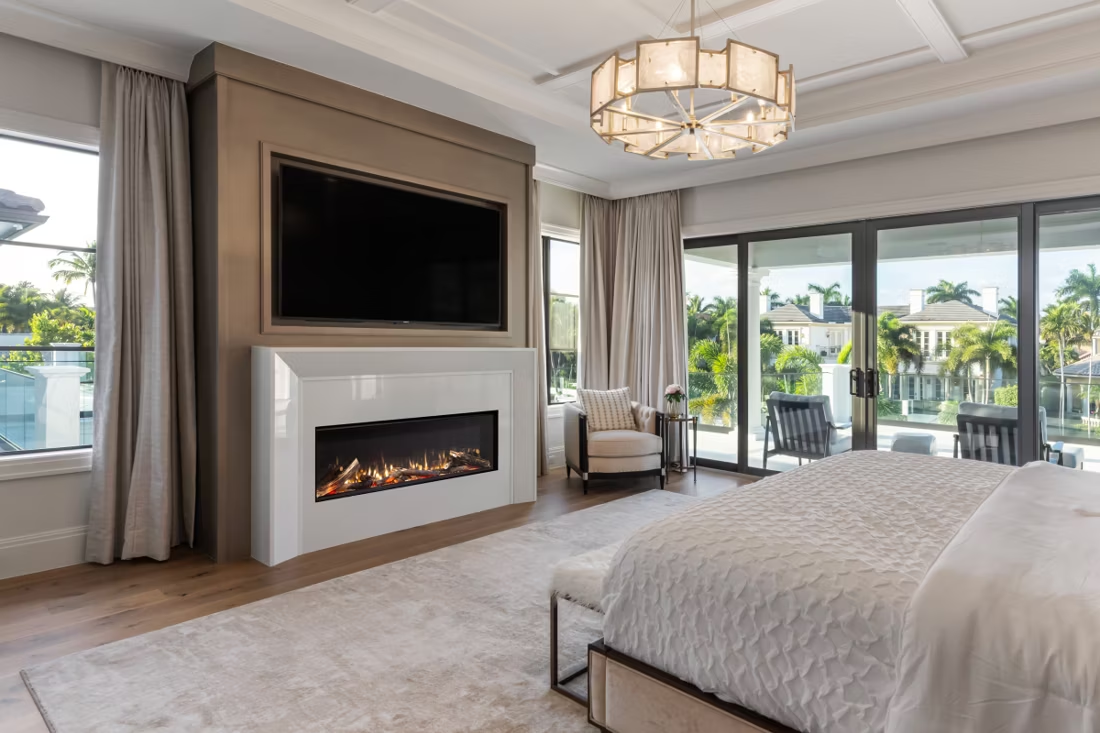
Yes—with an asterisk. Fireplaces are hot and TVs don't like heat. Either put a mantel between them to deflect rising warmth, or choose a fireplace with heat-management technology that creates a cool zone on the wall above—the wall stays around 125 degrees, barely warm, while the room still gets full heat. If you like clean lines and don't want a mantel, heat management is the answer.
Does an electric fireplace need a vent or chimney?
No—that's its superpower. An electric fireplace needs a wall and an outlet, period. No vent pipe, no gas line, no clearances to design around, which is why it works in bedrooms, offices, apartments, and walls where venting a gas or wood unit would be impractical or impossible. Installation is typically the simplest and least expensive of any fireplace type.
Can a fireplace actually lower my heating bill?
Yes—by creating a comfort zone. A furnace heats every square foot of the house just to warm the one room you're in; a gas fireplace on low burns roughly a sixth of the gas a typical furnace does. Set the furnace around 55–60 degrees as a baseline, then heat the rooms your family actually uses. Families who heat this way commonly save $20–$60 a month.
Should the dealer who sells my fireplace also install it?
Ideally, yes. A fireplace project involves vent pipe, gas line, electrical, and often tile or stone. Hire three or four separate trades and you own the liability and the game of telephone between them. One company selling and installing means one accountable party, start to finish—ask about factory training, on-time completion records, and what happens if an inspection fails.
Get your Adair County electric fireplace Project Guide & Parts List.
Tell us about your home and the room you're trying to warm, and we'll match you with a local dealer and send over a free Project Guide & Parts List—the right unit, the wiring plan, and what it'll take to get it installed correctly.
Find Your Fireplace →