
Reliable gas heat built for White County winters.
From farmhouses outside Monticello to cottages on Lake Shafer and Lake Freeman, gas fireplaces deliver instant, dependable warmth through White County's five-month heating season. Find the right unit and get matched with a trusted local dealer.
Every Project Starts From One of These Five Situations
Instant heat without the woodpile.
White County sits in north-central Indiana's flat farm country, at roughly 700 feet elevation, with a Climate Zone 5A profile, a long winter heating season, and average winter lows around 19°F—a cold season on par with Madison, WI, that stretches from late October well into March. With a population of just under 12,800 spread across Monticello, Wolcott, Reynolds, Idaville, Chalmers, and the farmland between them, homes here range from century-old farmhouses with woodlots of oak, hickory, and maple to seasonal cottages ringing Lake Shafer and Lake Freeman near Indiana Beach.
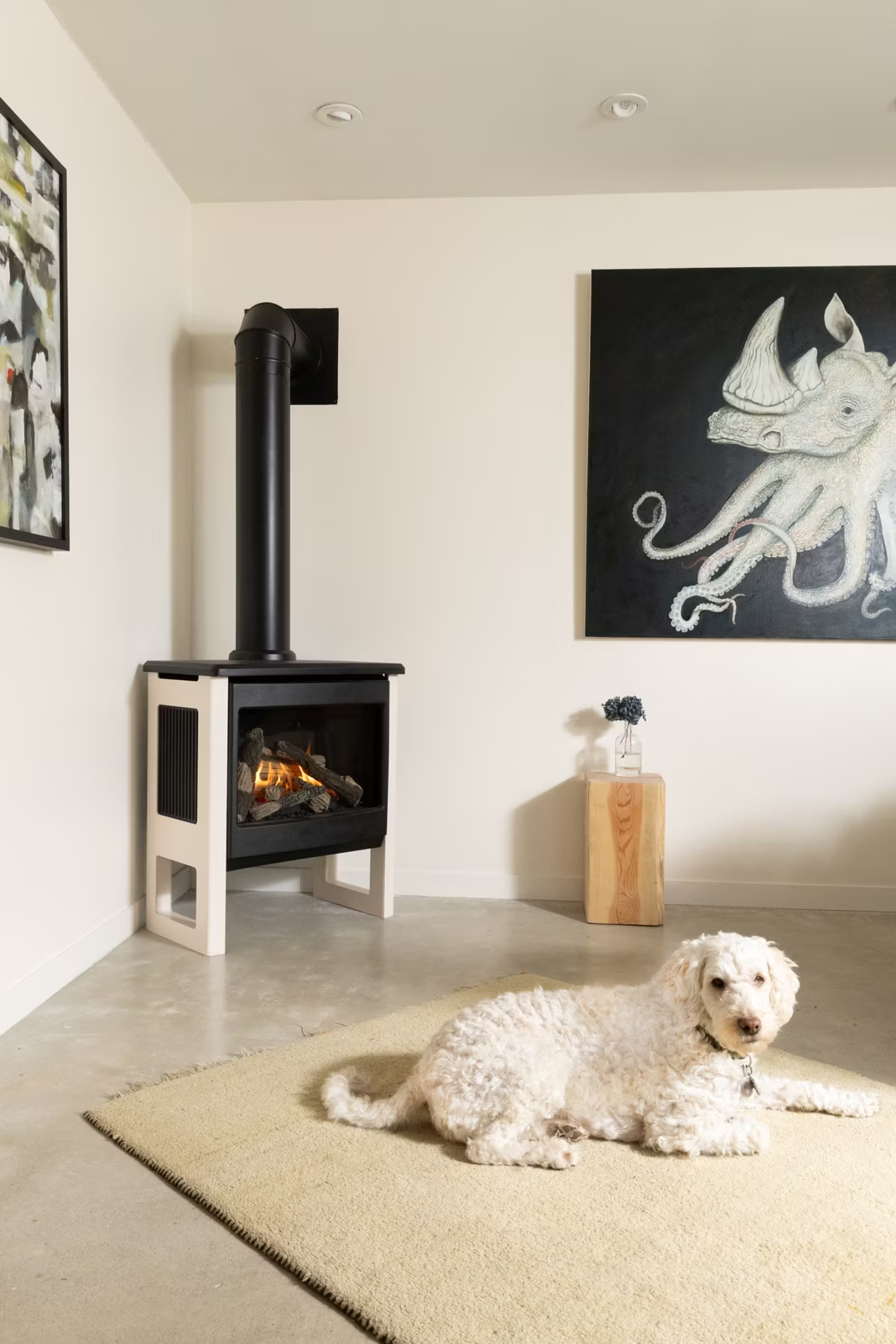
Natural gas service through NIPSCO reaches Monticello and the county's larger towns, making a direct-vent gas fireplace or insert an easy add for homes already on the line. Out in the unincorporated county—and at many of the lake properties around Lake Shafer and Lake Freeman that sit off the natural gas grid—propane from a regional supplier fills the gap. Either way, a gas fireplace means flipping a switch for heat instead of tending a stove, which matters for farm families running a full day of chores and for lake-home owners who want the place warm the moment they arrive for a weekend.
Three steps. No salesperson until you're ready.
Tell us about your project
Your zip code, your situation, and the fuel you're leaning toward—or let the answers point you to one.
See what's actually available
The brands dealers within 100 miles genuinely carry—real options, never a catalog mirage.
Get your dealer & Project Guide
A trusted local dealer, plus the free Project Guide & Parts List that names every component of the job.
Frequently Asked Questions
n/a
n/a
n/a
n/a
n/a
n/a
n/a
n/a
n/a
n/a
n/a
n/a
n/a
n/a
n/a
n/a
n/a
n/a
Why is a fireplace insert so efficient?
An insert does two things: it seals the chimney completely, so you stop losing air you already paid to heat, and it radiates warmth into the room through the firebox and glass. Most add a heat-exchange fan that pulls cool room air underneath, wraps it around the hot firebox, and pushes it back out warm. Your home is more efficient before you've even lit the first fire.
What's the difference between an insert and a zero-clearance fireplace?
An insert is a fireplace that slides into a pre-existing wood-burning fireplace—if you don't have one, there's nothing to insert it into. A zero-clearance fireplace is built into a framed wall, which makes it the answer for remodels and new construction. Simple test: existing masonry fireplace means insert; blank or framed wall means zero-clearance.
How much should I budget for a fireplace?
For an average home—covering the fireplace, the vent pipe, and basic installation—a budget between $3,900 and $5,500 gives you a lot of options across wood, gas, and pellet. By the time you add finish work, gas line, and electrical, the average complete installation lands between $5,000 and $12,000 all-in. In a remodel or new build, a good rule is to put about 2.5% of the total project cost toward the fireplace.
Does a fireplace add value to my home?
On average, a fireplace adds back to the home about the same amount you spent installing it. Add the monthly savings from heating the rooms you actually use instead of the whole house—often hundreds of dollars a year—and the value case is strong before you even count what a fire does for how your family uses the room.
Stove and Fireplace Dealers in White County
Find your gas fireplace in White County.
Tell us about your home and we'll match you with a trusted local dealer and a free Project Guide & Parts List—the exact parts, vent kit, and installer recommendation for your gas project in White County.
Find Your Fireplace →