
Real heat, no chimney, no permit headaches.
Electric fireplaces and inserts for Washington County homes—from Salem to the rural stretches along Highway 56. Find the right unit and get matched with a trusted local dealer.
Every Project Starts From One of These Five Situations
An easy way to add heat and ambiance to any room.
Washington County sits in climate zone 4A with a winter heating season comparable to places like Columbus or Indianapolis and average winter lows around 24 degrees—cold enough to want supplemental heat in bedrooms and additions, but nowhere near the severity of places like Fargo or Bismarck where a wood-burning primary heat source dominates the conversation. That moderate profile is exactly where electric fireplaces earn their place: they're not trying to replace a furnace, they're filling in the gaps—a chilly bonus room over the garage, a finished basement, a farmhouse addition that the ductwork never quite reached.
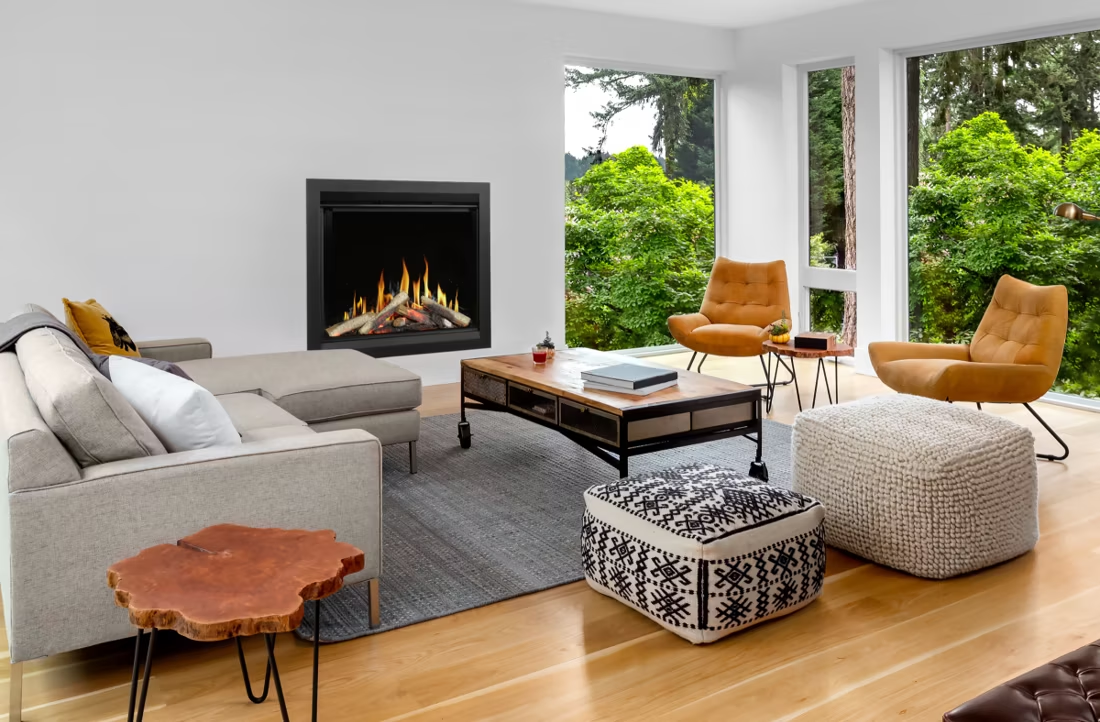
With no chimney, no venting, and no combustion, electric units skip the building permit process that wood and gas installs require through the county. That matters in a county of about 9,100 people spread across a lot of rural acreage, where a contractor trip for a permit-heavy install can add real cost. An electric insert or built-in plugs into a standard outlet, mounts in an afternoon, and gives you real radiant or fan-forced heat plus a flame effect that runs independent of the heat—useful for Salem homes wanting ambiance in July and warmth in January without running two different systems.
Three steps. No salesperson until you're ready.
Tell us about your project
Your zip code, your situation, and the fuel you're leaning toward—or let the answers point you to one.
See what's actually available
The brands dealers within 100 miles genuinely carry—real options, never a catalog mirage.
Get your dealer & Project Guide
A trusted local dealer, plus the free Project Guide & Parts List that names every component of the job.
Frequently Asked Questions
How much does an electric fireplace installation cost in Washington County?
Most electric fireplace installations in Washington County run between $400 and $1,200, which is well below what a wood or gas install costs here—those typically start in the $4,000-plus range once venting and permitting are factored in. A basic plug-in insert or wall-mounted unit sits at the low end. Built-in electric fireplaces that require a dedicated 120V or 240V circuit, minor wall framing, or a mantel surround land toward the higher end. Because there's no chimney or gas line involved, most of the cost is the unit itself and a modest amount of electrician or carpentry labor.
Do I need a permit to install an electric fireplace in Washington County?
Generally no—plug-in electric fireplaces and inserts don't require the building permit that wood stoves and gas fireplaces need through the county. If you're having a dedicated circuit run for a built-in unit, an electrician may need to pull an electrical permit depending on the scope of the work, but that's a much simpler process than the combustion-appliance permitting wood and gas installs go through. Ask your installer whether your specific project needs sign-off.
Will an electric fireplace actually heat a room in a Washington County winter?
Yes, for the room it's in—most electric inserts and built-ins put out 4,500 to 5,000 BTUs, enough to noticeably warm a bedroom, den, or basement family room even at the 24-degree average winter lows this county sees. What it won't do is replace your furnace for whole-home heating during a hard cold snap. Think of it as zone heat: it takes the edge off a room your HVAC struggles to reach, or lets you turn the thermostat down elsewhere while keeping one room comfortable.
What's the difference between an electric insert and an electric built-in?
An electric insert is sized to slot into an existing masonry or wood-burning fireplace opening—a common upgrade for older Salem homes that have a fireplace they no longer want to feed wood into. An electric built-in (sometimes called a linear or wall-mount unit) is designed to be framed into a wall or media center from scratch, which is the more common route in newer construction or additions that never had a fireplace to begin with. Both plug into standard household power in most cases; larger built-ins sometimes call for a dedicated circuit.
Can I put an electric fireplace where a wood stove used to be?
Often, yes—if the existing chimney and hearth opening are structurally sound, an electric insert can slide into that same opening without any venting work, since there's no combustion byproduct to exhaust. This is a common project for older farmhouses in the rural parts of Washington County where oak, hickory, or maple used to be the go-to firewood but the household wants to stop dealing with wood handling and chimney maintenance. A local dealer can measure the opening and confirm fit before you buy anything.
How does an electric fireplace compare to a gas or wood option for this area?
Wood and gas both put out real heat that can carry a room through a cold Washington County night, and wood in particular works during a power outage—a real consideration in a county with a fair amount of rural overhead line exposed to ice and downed limbs. Electric fireplaces need power to run, so they're not a backup-heat option, but they cost a fraction to install, require no chimney or gas line, and can be added to nearly any room in an afternoon. For homeowners who want ambiance and supplemental warmth without the commitment of a combustion appliance, electric is usually the simpler answer.
Do electric fireplaces need any maintenance?
Very little compared to wood or gas. There's no chimney to sweep and no annual gas line inspection—most upkeep is dusting the unit, occasionally cleaning the glass front, and replacing the heater fan or LED flame components if they wear out after years of use, which local dealers can usually service or replace. That low-maintenance profile is part of why electric units are a popular pick for second homes, rental properties, and rooms that don't get daily use.
Can I run an electric fireplace on a regular household outlet?
Most portable and insert-style electric fireplaces are designed to run on a standard 120V, 15-amp household circuit—the same outlet a space heater would use, though electric fireplaces are typically more efficient and safer for continuous use. Larger built-in units, especially wide linear models, sometimes draw enough current that a dedicated circuit is recommended to avoid tripping breakers, particularly if other appliances share that circuit. A local dealer or electrician can tell you which category your chosen unit falls into.
Is an electric fireplace a good fit for a Washington County rental or basement?
It's one of the most common uses for electric units locally. A finished basement in Salem or a rural rental property benefits from an electric fireplace because there's no chimney to build, no gas line to run, and no combustion safety concerns for a tenant to manage—just plug it in. For basements especially, the supplemental heat is genuinely useful given how much colder a below-grade room runs compared to the rest of the house during Washington County's winter months.
Do electric fireplaces actually produce heat?
Yes—most put out around 4,800–5,000 BTUs from a standard outlet, which comfortably warms a bedroom, office, or den as a comfort-zone heater. What they won't do is carry a whole house the way wood, gas, or pellet can. Think of electric as ambiance-first with honest supplemental heat: flames on with no heat in July, flames plus warmth in January.
Can I put a TV above my fireplace?
Yes—with an asterisk. Fireplaces are hot and TVs don't like heat. Either put a mantel between them to deflect rising warmth, or choose a fireplace with heat-management technology that creates a cool zone on the wall above—the wall stays around 125 degrees, barely warm, while the room still gets full heat. If you like clean lines and don't want a mantel, heat management is the answer.
Can a fireplace actually lower my heating bill?
Yes—by creating a comfort zone. A furnace heats every square foot of the house just to warm the one room you're in; a gas fireplace on low burns roughly a sixth of the gas a typical furnace does. Set the furnace around 55–60 degrees as a baseline, then heat the rooms your family actually uses. Families who heat this way commonly save $20–$60 a month.
Can I install a fireplace myself?
If you're putting a fire in your house on purpose, it's best to work with an expert. Unless you're genuinely experienced in framing, gas line, vent pipe, and the national code on clearances to combustibles, have a professional do it—and ideally the same company that sells you the fireplace, so warranty, service, and liability all live under one roof.
Find your electric fireplace in Washington County.
Tell us a bit about your home and we'll put together a free Project Guide & Parts List—the right electric fireplace or insert for your space, matched with a trusted local Washington County dealer.
Find Your Fireplace →