
Warm up any room in Warren County, no chimney required.
From Williamsport to Pine Village to the farmhouses scattered along the Wabash, electric fireplaces give Warren County homes real zone heat and real ambiance without venting, gas lines, or masonry work. Find the right unit and get matched with a trusted local dealer.
Every Project Starts From One of These Five Situations
Zone heat for any room, no venting required.
Warren County is one of Indiana's smallest and most rural counties—about 3,947 people spread across farmland along the Wabash River, with Williamsport as the county seat and home to the state's tallest waterfall. Winters here average lows around 16°F with a heating season on par with a cold, six-plus-month winter, putting the county firmly in cold-climate territory, though not quite as severe as Madison, Wisconsin, to the north. A lot of housing stock in the county is older farmhouses, manufactured homes, and additions built without a masonry chimney or a gas line nearby, which makes running new venting for a wood or gas appliance expensive or simply not possible in some rooms.
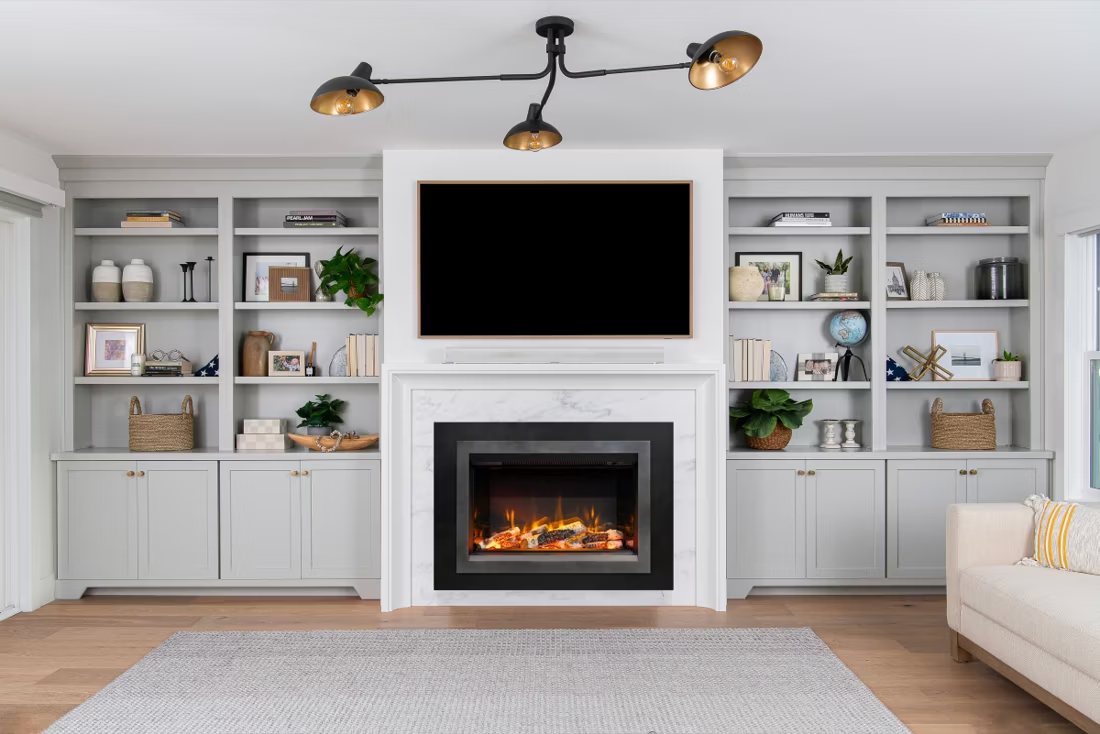
That's where electric fireplaces and inserts fit in. They plug into a standard outlet or run off a dedicated 120V/240V circuit, need no chimney and no gas permit, and can go into a bonus room, a mobile home, a bedroom, or an existing but unused fireplace opening. Electric service across the county runs through Tipmont REMC, the rural electric cooperative based in Linden that also serves neighboring Tippecanoe and Fountain counties—which matters for running costs and for understanding what electric heat can and can't do during a winter ice storm. Used as supplemental zone heat rather than a whole-home primary source, an electric fireplace can meaningfully cut what you're spending to heat one room with propane or a woodstove elsewhere in the house.
Three steps. No salesperson until you're ready.
Tell us about your project
Your zip code, your situation, and the fuel you're leaning toward—or let the answers point you to one.
See what's actually available
The brands dealers within 100 miles genuinely carry—real options, never a catalog mirage.
Get your dealer & Project Guide
A trusted local dealer, plus the free Project Guide & Parts List that names every component of the job.
Frequently Asked Questions
How much does an electric fireplace installation cost in Warren County?
Most electric fireplace projects in Warren County run $400 to $1,200. A plug-in freestanding unit or a basic insert that fits an existing fireplace opening sits at the low end—no electrician needed if you're using an existing outlet. A built-in linear unit or a wall-mounted model that requires a new dedicated circuit, drywall work, or a mantel surround runs toward the higher end once you add a licensed electrician's time. Because so much housing in the county is older farmhouses without extra circuits near the fireplace wall, budget on the higher side if you're not just dropping an insert into an existing opening.
What size electric fireplace or insert do I need?
Electric units are rated for the room they're meant to supplement, not the whole house—most put out somewhere in the 4,000-5,200 BTU range on high, enough to comfortably take the edge off a 300-400 square foot room. For a living room addition or a larger farmhouse room with high ceilings, look at a wider linear insert (40 inches or more) rather than assuming a bigger heater number will cover more square footage—electric heat output caps out regardless of unit size, so placement and room layout matter more than watts. A local dealer can walk your specific room and tell you honestly whether electric alone will carry it or whether you'll want it paired with your existing furnace or a wood stove elsewhere in the house.
Do I need a permit to install an electric fireplace in Warren County?
A plug-in electric fireplace or insert that uses an existing outlet typically doesn't require a permit. If your installation needs a new dedicated circuit, a hardwired connection, or you're building a surround or mantel as part of the project, that electrical work generally needs to go through the Warren County Area Plan Commission, which handles building and electrical permits for the county. Most licensed electricians and hearth dealers in the area know the local process and will pull the permit as part of the job so you don't have to coordinate it yourself.
What's the difference between an electric fireplace, insert, and wall-mounted unit?
A freestanding electric fireplace looks like a cabinet or stove and can go almost anywhere with an outlet nearby—no installation beyond plugging it in. An electric insert is built to slide into an existing masonry or wood-burning fireplace opening, which is common in older Warren County farmhouses that have an unused fireplace they'd rather convert than tear out. A wall-mounted or linear electric fireplace mounts flush to the wall like a flat-screen TV and is usually the choice for new construction, additions, or rooms without any existing fireplace opening at all. Which one fits depends mostly on whether you're working with an existing masonry opening or starting from a blank wall.
Will my electric fireplace work during a power outage?
No—and this is worth being honest about for Warren County specifically. Electric fireplaces have no battery backup and stop working the moment power drops, which matters here because winter ice storms occasionally take down lines served by Tipmont REMC, and restoration in the county's more rural stretches can take longer than it does closer to Lafayette. If backup heat during outages is a real concern for your household, an electric fireplace should be planned as supplemental comfort heat, not your only cold-weather plan—a wood stove or a propane appliance with battery-backed ignition is the better choice if you need heat that survives an outage.
How much does it cost to run an electric fireplace in Warren County?
Running costs depend on your Tipmont REMC rate and how many hours a day you use the heater function, but a typical 1,500-watt electric fireplace running on high for a few hours a night costs somewhere in the range of a few dollars a month in electricity—noticeably cheaper than running a whole-house furnace to heat one room. The flame effect alone, run without the heater on, uses only a small fraction of that. For households looking to cut propane or fuel-oil use in a single room they occupy most, switching that room over to electric supplemental heat is one of the more straightforward ways to trim a winter bill.
What's the best electric fireplace for a Warren County home?
For older farmhouses and additions without existing fireplace openings, a wide linear electric insert or wall-mounted unit with a true 4,500-5,000 BTU heater (not just an ambiance-only model) gives you meaningful supplemental heat on the coldest nights, when lows in the county average around 16°F. Brands like Dimplex, Napoleon, and ClassicFlame make models with real infrared or fan-forced heating elements suited to that use, as opposed to decorative-only units meant purely for looks. If you're converting an existing masonry opening rather than building new, make sure the insert dimensions match your firebox before ordering—a local dealer can measure and confirm fit.
Electric vs. wood—which makes more sense for my Warren County home?
Wood remains a strong choice in the county given easy access to local oak, hickory, maple, and beech, and it keeps working when the power's out—a real consideration with Tipmont REMC service and occasional ice-storm outages. Wood also demands more work: cutting or buying cordwood, cleaning ash, and annual chimney maintenance. Electric skips all of that—no venting, no ash, no chimney sweep—but it's entirely dependent on grid power and works best as supplemental zone heat rather than a true backup source. Plenty of Warren County homes end up with both: a wood stove for backup and ambiance, an electric insert or wall unit in a room where running a chimney isn't practical.
Where can I find a local dealer to install an electric fireplace in Warren County?
Warren County's population is small enough that it doesn't support its own hearth showroom, so most installations are handled by dealers and electricians based out of nearby Lafayette or West Lafayette who regularly work throughout Tippecanoe, Fountain, and Warren counties. That's exactly the kind of gap Find My Fireplace exists to close—we match you with a trusted dealer who actually services your part of the county, rather than leaving you to guess which big-box option might show up on installation day.
Can I put a TV above my fireplace?
Yes—with an asterisk. Fireplaces are hot and TVs don't like heat. Either put a mantel between them to deflect rising warmth, or choose a fireplace with heat-management technology that creates a cool zone on the wall above—the wall stays around 125 degrees, barely warm, while the room still gets full heat. If you like clean lines and don't want a mantel, heat management is the answer.
What fireplace styles should I know before shopping?
Four cover most of the market: screen-front traditional (mesh front, open feel, fits craftsman homes), traditional door set (the classic look you grew up with), modern linear (wide, low, the statement piece for entertaining), and clean face contemporary (no trim—your tile or stone runs right to the fire's edge). Walk in knowing those four terms and you're ahead of most buyers.
What is an in-home preview and do I need one?
It's a visit where a hearth professional measures your space, confirms the model you picked actually works in your home, and walks the specs—framing, gas line, venting, finish work—before anything is ordered. Some details you just can't know until you see the house. Never make a down payment without one; it's the single most-skipped step that burns buyers.
Can I install a fireplace myself?
If you're putting a fire in your house on purpose, it's best to work with an expert. Unless you're genuinely experienced in framing, gas line, vent pipe, and the national code on clearances to combustibles, have a professional do it—and ideally the same company that sells you the fireplace, so warranty, service, and liability all live under one roof.
Find your electric fireplace in Warren County.
Tell us about your room and we'll put together a free Project Guide & Parts List—the right electric fireplace or insert for your space, the exact parts you'll need, and a trusted local dealer to install it.
Find Your Fireplace →