
The cleanest way to add warmth to any room in Vanderburgh County.
No chimney, no gas line, no venting—just plug in or wire up and go. Find the right electric fireplace for your Evansville-area home and connect with a trusted local dealer.
Every Project Starts From One of These Five Situations
Mild winters, modern living—electric heat that just works.
Vanderburgh County sits in climate zone 4A with a relatively short, mild winter heating season and a winter low average around 27°F—noticeably milder than the deep-cold Midwest of Fargo or Duluth, where wood and pellet heat carry real load-bearing importance. Across Evansville, Newburgh, Darmstadt, and the rest of the county's 208,370 residents, that moderate climate is exactly why wood-burning and pellet setups rarely make sense here (both are flagged not-applicable for this county), while electric fireplaces have become the standard, mainstream choice for adding warmth and ambiance to a room.
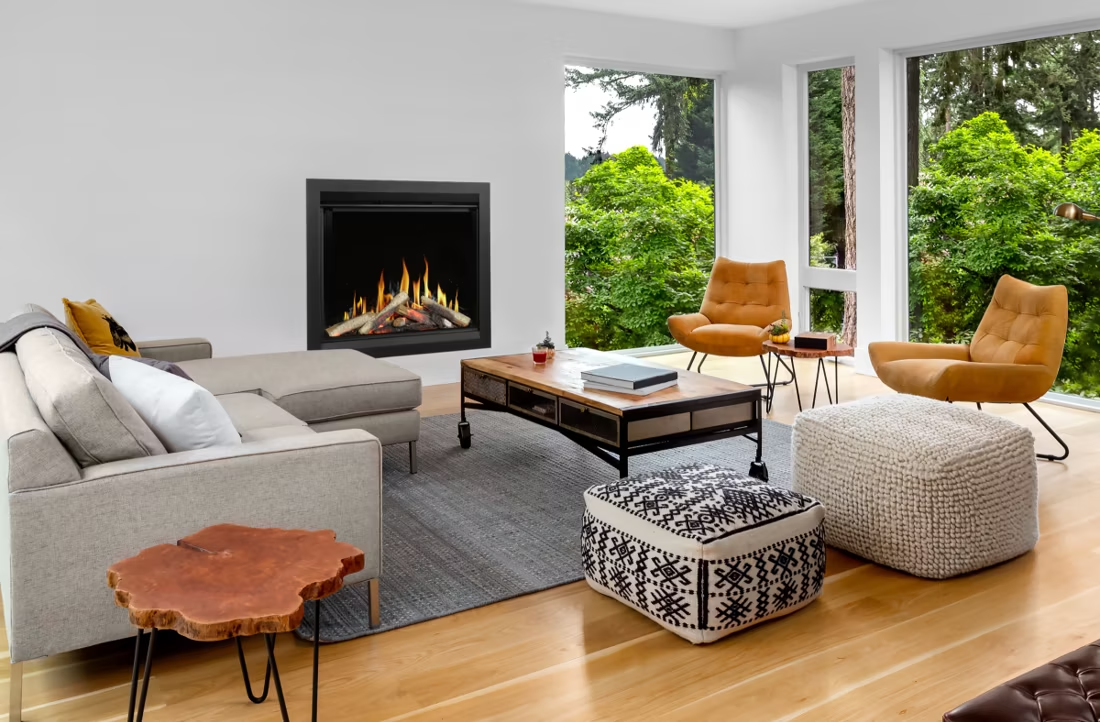
Electric units work in places wood and gas can't touch: condos and apartments downtown, historic homes in Evansville's Riverside district where a new chimney penetration isn't an option, finished basements, and rental properties where a landlord won't allow venting modifications. CenterPoint Energy serves electric accounts throughout the county, and most plug-in units run on a standard 120V household circuit with no permit required. Built-in, hardwired, or 240V linear units are a different story—those go through a licensed electrician and typically require an electrical permit from the Vanderburgh County Building Commission (or the City of Evansville's building department if you're inside city limits). Either way, you get real supplemental zone heat and a realistic flame effect without touching your home's structure.
Three steps. No salesperson until you're ready.
Tell us about your project
Your zip code, your situation, and the fuel you're leaning toward—or let the answers point you to one.
See what's actually available
The brands dealers within 100 miles genuinely carry—real options, never a catalog mirage.
Get your dealer & Project Guide
A trusted local dealer, plus the free Project Guide & Parts List that names every component of the job.
Frequently Asked Questions
How much does an electric fireplace installation cost in Vanderburgh County?
A plug-in electric insert or freestanding stove typically runs $300 to $1,500 for the unit itself, with little to no installation cost since it plugs into an existing outlet. A built-in wall-mount or linear electric fireplace—the kind framed into a wall or media wall in newer Newburgh and Darmstadt construction—usually runs $2,000 to $5,000 installed once you factor in framing, a dedicated circuit, and electrician labor for a hardwired 240V unit. Retrofitting an electric insert into an existing masonry fireplace opening in an older Evansville home tends to land in the middle of that range, since it usually just needs an outlet added behind the firebox rather than full electrical work.
Do I need a permit to install an electric fireplace in Vanderburgh County?
A standard plug-in electric fireplace or insert that runs on a regular 120V outlet doesn't require a permit—it's treated like any other appliance. If you're installing a hardwired, built-in, or 240V linear electric fireplace, that work goes through a licensed electrician and typically needs an electrical permit through the Vanderburgh County Building Commission, or the City of Evansville's building department if the property is inside city limits. Most local dealers who sell built-in units either employ a licensed electrician or work with one regularly, so the permit gets pulled as part of the installation rather than left to you.
Will an electric fireplace actually heat my room, or is it just for looks?
Most electric fireplaces put out a genuine 1,500 watts of heat—enough to noticeably warm a bedroom, home office, or den, and to take the edge off a chilly morning without firing up the furnace. Given Vanderburgh County's relatively mild, short winter heating season and winter lows that average around 27°F, an electric unit works well as zone heat for the rooms you actually use, letting you turn the thermostat down elsewhere. It's not designed to replace a whole-home furnace on the coldest nights of the year, but for supplemental heat and ambiance in a specific room, it does real work—not just visual effect.
Electric vs. gas fireplace—which is right for my Evansville-area home?
Gas fireplaces (standard here too, with natural gas service available through much of Evansville and Newburgh) put out more heat and give you that instant, consistent warmth, but they require venting or a gas line and a more involved install. Electric fireplaces skip all of that—no venting, no gas line, no chimney—which makes them the simpler, lower-cost option for condos, apartments, rentals, and historic homes where running new gas or venting isn't practical. If you want a genuine backup heat source with higher output, gas is usually the better fit; if you want ambiance and zone warmth with minimal installation hassle, electric wins.
What's the best electric fireplace option for an older home without a working chimney?
For older homes in Evansville with an existing but unused masonry fireplace opening, an electric insert is usually the cleanest fix—it slides into the existing opening, plugs in or ties into a nearby outlet, and instantly turns a cold, decorative fireplace into a working heat source without any chimney work. For homes with no fireplace opening at all, a wall-mount or mantel-style electric fireplace is the more common route, since it can go on almost any wall with a nearby outlet. Local dealers can measure your existing opening and recommend the right insert size.
Can I install an electric fireplace in a historic Evansville home without affecting the exterior?
Yes—this is one of the main reasons electric is popular in Evansville's older neighborhoods, including homes near the Riverside Historic District. Because electric units don't require any venting, chimney modification, or exterior penetration, they don't trigger the kind of historic preservation review that a new gas line or masonry chimney repair might. An electric insert dropped into an existing fireplace opening preserves the home's original look while adding usable heat—no permits related to the building's exterior, no impact on the historic facade.
How much does it cost to run an electric fireplace in Vanderburgh County?
Running costs depend on your CenterPoint Energy electric rate, but a typical 1,500-watt electric fireplace running on high costs somewhere in the range of 15 to 25 cents per hour of use at current residential rates. Most homeowners don't run units at full heat output continuously—they use the flame effect for ambiance most of the time and kick on the heater only when they want supplemental warmth, which keeps actual operating costs modest compared to running a furnace longer to heat the whole house.
Are electric fireplaces safe around kids and pets?
Electric fireplaces are generally considered the safest fireplace option for households with young kids or pets. There's no open flame, no hot glass in most models (many use cool-touch tempered glass fronts), no soot, no carbon monoxide risk, and no real combustion byproducts to worry about. That said, the heating element itself can still get warm, so it's worth keeping the same basic clearance and supervision habits you'd use with any space heater. Several local dealers carry models specifically marketed with child-safe cool-touch surfaces if that's a priority for your household.
Are there any rebates available for installing an electric fireplace in Vanderburgh County?
Electric fireplaces generally don't qualify for the same efficiency rebates that heat pumps or high-efficiency furnaces do, since they're typically viewed as supplemental heat rather than a primary heating system upgrade. It's worth checking with CenterPoint Energy directly, as utility rebate programs change periodically and occasionally include electric heating accessories or smart thermostats bundled with a fireplace purchase. Local dealers can usually tell you what, if anything, is currently available at the time of your project.
Do electric fireplaces actually produce heat?
Yes—most put out around 4,800–5,000 BTUs from a standard outlet, which comfortably warms a bedroom, office, or den as a comfort-zone heater. What they won't do is carry a whole house the way wood, gas, or pellet can. Think of electric as ambiance-first with honest supplemental heat: flames on with no heat in July, flames plus warmth in January.
Does an electric fireplace need a vent or chimney?
No—that's its superpower. An electric fireplace needs a wall and an outlet, period. No vent pipe, no gas line, no clearances to design around, which is why it works in bedrooms, offices, apartments, and walls where venting a gas or wood unit would be impractical or impossible. Installation is typically the simplest and least expensive of any fireplace type.
What is an in-home preview and do I need one?
It's a visit where a hearth professional measures your space, confirms the model you picked actually works in your home, and walks the specs—framing, gas line, venting, finish work—before anything is ordered. Some details you just can't know until you see the house. Never make a down payment without one; it's the single most-skipped step that burns buyers.
How much should I budget for a fireplace?
For an average home—covering the fireplace, the vent pipe, and basic installation—a budget between $3,900 and $5,500 gives you a lot of options across wood, gas, and pellet. By the time you add finish work, gas line, and electrical, the average complete installation lands between $5,000 and $12,000 all-in. In a remodel or new build, a good rule is to put about 2.5% of the total project cost toward the fireplace.
Stove and Fireplace Dealers in Vanderburgh County
Listings include WhyFire partner dealers, dealers we have verified as authorized for the brands we recommend, and established local businesses that carry hearth products. Every listing shows which one it is. The ones marked Preferred run on WhyFire's software, so they can show you real pricing and book your appointment right here. No manufacturer pays for placement. How we verify dealers →
Leisure Distributors
Master Sweeps
Find your electric fireplace in Vanderburgh County.
Tell us a bit about your home and we'll match you with the right electric fireplace, insert, or built-in unit—plus a free Project Guide & Parts List and a trusted local dealer to install it.
Find Your Fireplace →