
Find your electric fireplace in Steuben County.
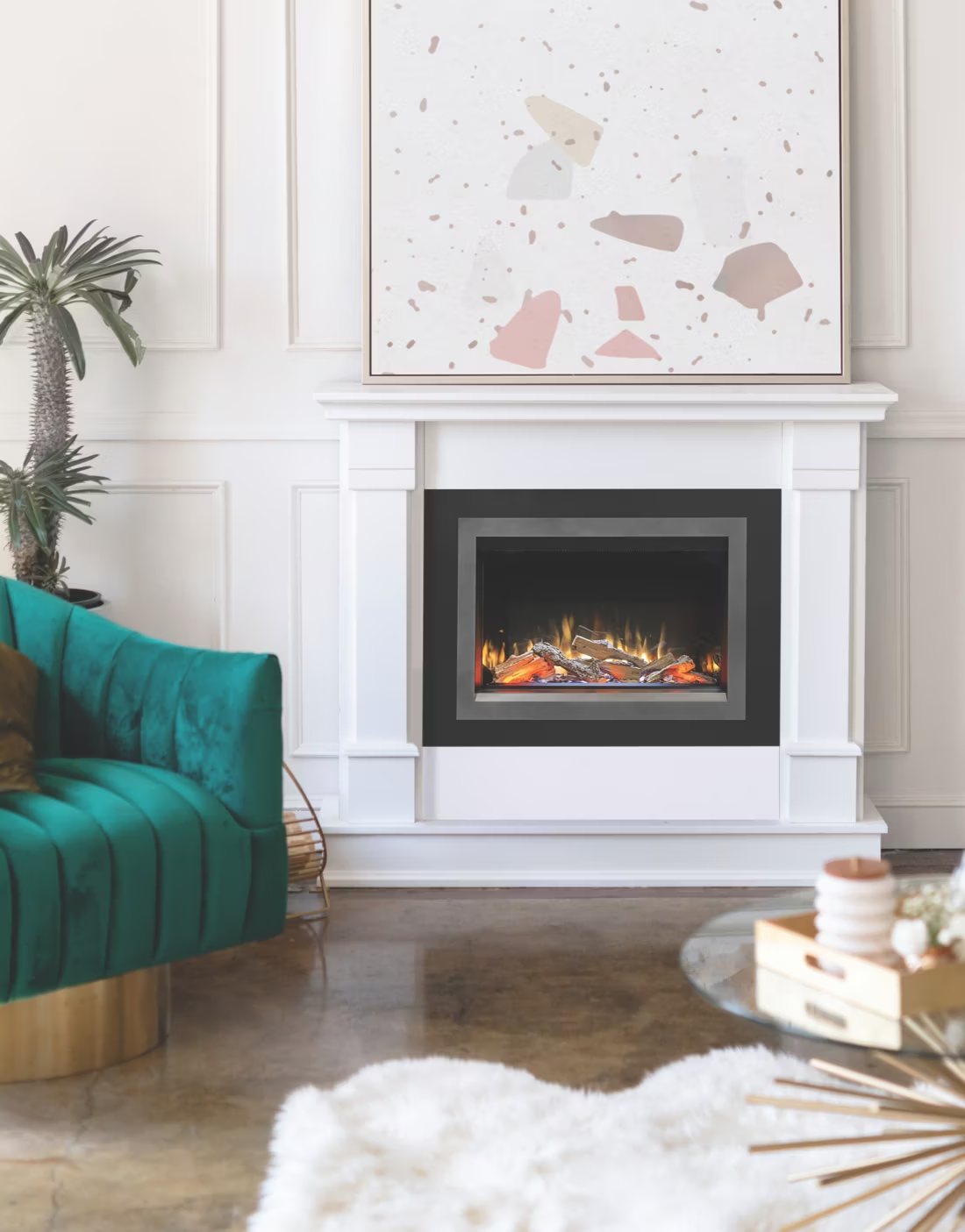
No chimney, no gas line, no venting—just plug-in or hardwired warmth for lake cottages and year-round homes across Steuben County. Find the right unit and connect with a trusted local dealer.
Every Project Starts From One of These Five Situations
Zone heat that fits the Lake Country lifestyle.
Steuben County sits in Indiana's far northeast corner, home to more than 100 natural lakes and the county seat of Angola. At climate zone 5A with a long, cold heating season and winter lows averaging 16°F, this is a genuinely cold-climate county—comparable in heating load to Madison, WI—but electric fireplaces here aren't usually asked to carry the whole house. They're doing the job they do best: supplemental warmth in a lake room, a finished basement, a den, or a seasonal cottage that gets used well into shoulder season.
That fits the county's housing stock well. Many homes around Lake James, Snow Lake, and the other lakes were built as seasonal cottages without masonry chimneys or gas service, and retrofitting an electric insert or wall unit is far simpler than adding venting after the fact. Indiana Michigan Power serves Angola and much of the incorporated area, while Steuben County REMC covers many of the rural and lake-shore properties outside city limits—either way, electric heat means no fuel deliveries, no chimney sweeps, and heat you can run for a few hours on a cool evening without lighting anything.
Three steps. No salesperson until you're ready.
Tell us about your project
Your zip code, your situation, and the fuel you're leaning toward—or let the answers point you to one.
See what's actually available
The brands dealers within 100 miles genuinely carry—real options, never a catalog mirage.
Get your dealer & Project Guide
A trusted local dealer, plus the free Project Guide & Parts List that names every component of the job.
Frequently Asked Questions
How much does an electric fireplace installation cost in Steuben County?
Plug-in electric inserts and freestanding stoves are the least expensive option, typically running $300 to $900 installed since most just need an existing 120V outlet and a spot in an existing fireplace opening or built cabinet. Built-in wall units and linear electric fireplaces that require framing, a dedicated circuit, or an electrician to run new wiring run higher—usually $1,500 to $4,000 depending on unit size and whether drywall or trim work is involved. Lake cottages with older or undersized electrical panels sometimes need panel or circuit upgrades before a larger unit can be added, which a local dealer will flag during a home visit.
Do I need a permit to install an electric fireplace in Steuben County?
A simple plug-in electric insert or stove generally doesn't require a permit—it's treated like any other appliance. A built-in electric fireplace that involves new electrical wiring, a dedicated circuit, or structural framing typically does require an electrical permit through the Steuben County Building Department, especially for new construction or a remodel. Most local dealers who handle built-in installs will pull the permit and schedule the inspection as part of the job, so it's worth asking upfront whether that's included.
Can an electric fireplace actually heat a room in a Steuben County winter?
It can heat a single room comfortably, but it's not built to replace your furnace during a 16°F January night. Most electric fireplaces top out around 5,000–5,200 BTUs on the heat setting—enough to noticeably warm a bedroom, den, or lake room, but not sized for whole-house heating given this county's long, cold heating season. Think of it as targeted comfort: heat the room you're actually sitting in and let the thermostat back off elsewhere, rather than expecting it to substitute for central heat on the coldest days.
What's the difference between an electric insert and a built-in wall unit?
An electric insert is sized to slide into an existing fireplace opening—a popular choice for older lake cottages around Angola and the Snow Lake area that already have a masonry firebox but no working chimney. A built-in wall unit is designed to be framed into new construction or a remodel, often with a linear, low-profile look and a wider range of sizes. If you already have a fireplace opening, an insert is usually the simpler and cheaper path; if you're finishing a basement or building new, a built-in unit gives more flexibility on size and placement.
Are electric fireplaces a good fit for a seasonal lake cottage?
Very often, yes. A lot of Steuben County's lake-shore homes were built as seasonal cottages without gas lines or working chimneys, and adding either after the fact is expensive and sometimes structurally impractical. An electric insert or stove drops into an existing fireplace opening or a built cabinet with no venting, no gas permit, and no combustion byproducts to worry about—which also matters for cottages that sit closed up for stretches of the off-season. The tradeoff is that it needs power; a cottage with limited electrical service may need a circuit added before a larger unit can be installed.
Will I need to upgrade my electrical panel for a larger unit?
Sometimes. Small plug-in units run fine on a standard household outlet, but larger built-in linear fireplaces often call for a dedicated 20-amp circuit, and in some of the county's older lake cottages the existing panel is already close to capacity once air conditioning, well pumps, and other loads are factored in. A local dealer or licensed electrician can check your panel's available capacity during the initial consultation—it's a quick check that avoids a surprise mid-install.
How much maintenance does an electric fireplace need?
Very little compared to wood or gas. There's no chimney to sweep, no gas line to inspect, and no ash or soot to clean up. Maintenance is mostly dusting the unit, occasionally cleaning the glass front, and replacing the LED light strip or heater fan after several years of regular use—most of that's a homeowner-level task, though local dealers can handle warranty repairs if a heating element or circuit board fails.
Electric vs. wood or gas—which makes sense for a Steuben County home?
Wood stoves burning local oak, hickory, or maple make sense where you want real heat output during extended outages and don't mind tending a fire—common in year-round homes off the lake. Gas offers instant, higher-output heat where propane or natural gas service already exists, which many in-town Angola homes have. Electric wins on simplicity and low install cost, especially for lake cottages, basements, or rooms where running gas or venting isn't practical—the tradeoff is that it's supplemental heat, and it goes down along with the power in an outage. Plenty of county homeowners run wood or gas as primary heat and add an electric unit in a second living space purely for convenience.
Are there rebates available for electric fireplaces in Steuben County?
Electric fireplaces don't typically qualify for the efficiency rebates offered for heat pumps or high-efficiency furnaces, since they're supplemental rather than primary heat sources. It's still worth checking current program offerings through Indiana Michigan Power or Steuben County REMC, as utility rebate programs change year to year and occasionally include electric heating accessories. A local dealer will generally know which, if any, current programs apply to the specific unit you're considering.
Can I put a TV above my fireplace?
Yes—with an asterisk. Fireplaces are hot and TVs don't like heat. Either put a mantel between them to deflect rising warmth, or choose a fireplace with heat-management technology that creates a cool zone on the wall above—the wall stays around 125 degrees, barely warm, while the room still gets full heat. If you like clean lines and don't want a mantel, heat management is the answer.
Do electric fireplaces actually produce heat?
Yes—most put out around 4,800–5,000 BTUs from a standard outlet, which comfortably warms a bedroom, office, or den as a comfort-zone heater. What they won't do is carry a whole house the way wood, gas, or pellet can. Think of electric as ambiance-first with honest supplemental heat: flames on with no heat in July, flames plus warmth in January.
How much should I budget for a fireplace?
For an average home—covering the fireplace, the vent pipe, and basic installation—a budget between $3,900 and $5,500 gives you a lot of options across wood, gas, and pellet. By the time you add finish work, gas line, and electrical, the average complete installation lands between $5,000 and $12,000 all-in. In a remodel or new build, a good rule is to put about 2.5% of the total project cost toward the fireplace.
Does a fireplace add value to my home?
On average, a fireplace adds back to the home about the same amount you spent installing it. Add the monthly savings from heating the rooms you actually use instead of the whole house—often hundreds of dollars a year—and the value case is strong before you even count what a fire does for how your family uses the room.
Find your electric fireplace in Steuben County.
Tell us a bit about your home—including whether it's a year-round house or a lake cottage—and we'll match you with the right electric fireplace or insert, plus a free Project Guide & Parts List and a trusted local dealer to install it.
Find Your Fireplace →