
Add real fireplace warmth to any room in Spencer County—no chimney required.
With a moderate winter heating season and winter lows averaging in the mid-20s, Spencer County doesn't demand a whole-home wood or gas system for every room. An electric fireplace adds instant ambiance and supplemental warmth to a bedroom, sunroom, or den in Rockport, Santa Claus, or anywhere along the Ohio River—plugged in and running the same day.
Every Project Starts From One of These Five Situations
Convenience wins in a county with mild winters.
Spencer County sits along the Ohio River in southern Indiana, home to Rockport, Santa Claus, Chrisney, Grandview, and the Lincoln Boyhood National Memorial, with a population just under 10,500 spread across mostly rural land. At climate zone 4A with a moderate winter heating season and winter lows averaging 26 degrees, the county sees real cold but nothing close to the sustained sub-zero stretches of Madison, WI or Duluth, MN. That matters for fuel choice: this isn't a climate where a household has to run a wood stove around the clock from November to April just to stay ahead of the cold.
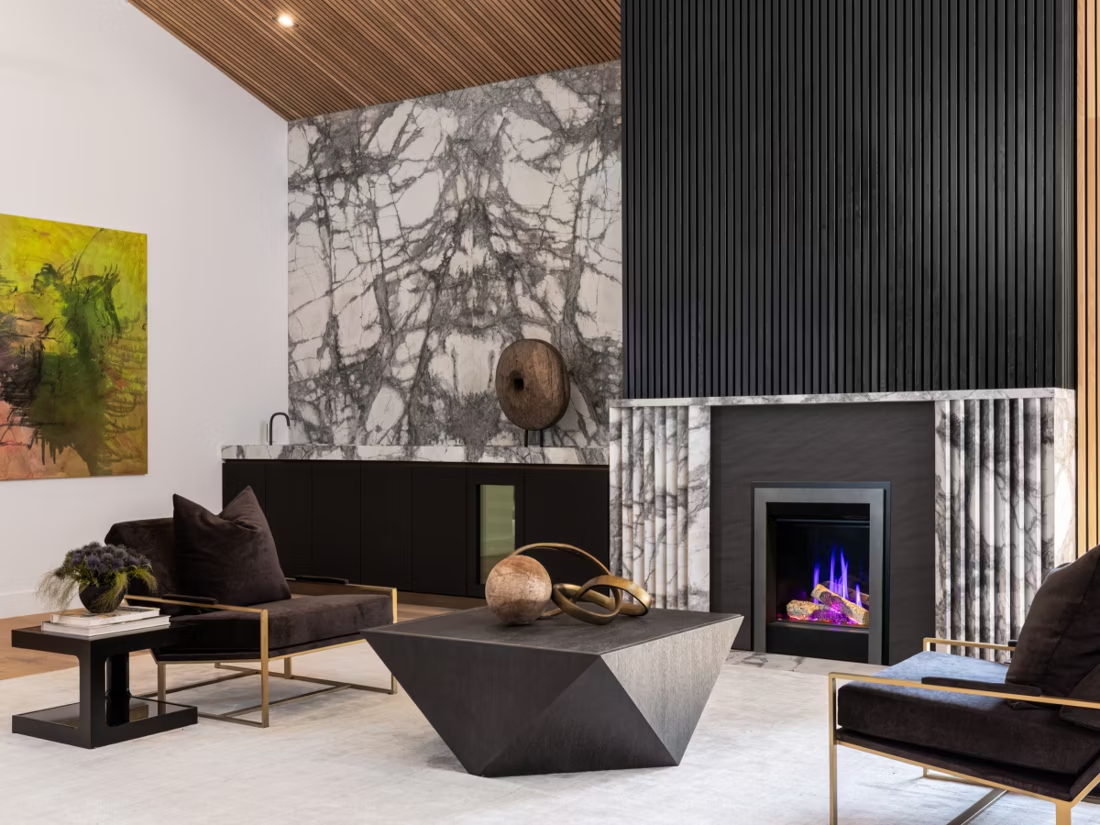
That's exactly the climate where electric fireplaces make the most sense—not as a whole-home heating strategy, but as a fast, no-venting way to add real heat and the look of a fire to a specific room. Many Spencer County homes, especially older farmhouses near Grandview and Lincoln City with existing but unused masonry fireplaces, are good candidates for an electric insert that drops into the opening without touching the chimney. Others go with a wall-mounted or built-in linear unit in a newer room addition where running gas line or a Class A chimney isn't practical. There's no smoke, no ash, and nothing to permit through public land offices—just a unit, a circuit, and a local installer who sets it level and wires it correctly.
Three steps. No salesperson until you're ready.
Tell us about your project
Your zip code, your situation, and the fuel you're leaning toward—or let the answers point you to one.
See what's actually available
The brands dealers within 100 miles genuinely carry—real options, never a catalog mirage.
Get your dealer & Project Guide
A trusted local dealer, plus the free Project Guide & Parts List that names every component of the job.
Frequently Asked Questions
How much does an electric fireplace installation cost in Spencer County?
Most wall-mounted or freestanding electric fireplaces run $300 to $1,500 installed, since many plug into a standard 120V outlet and require no structural work. An electric insert that drops into an existing masonry fireplace opening—a common project in Spencer County's older homes—typically runs $400 to $1,800 depending on the unit's size and trim kit. Built-in linear electric fireplaces with a custom surround or mantel, popular in new construction and remodels, run higher, often $1,500 to $4,000 once carpentry and finishing are included. If your chosen unit needs a dedicated 240V circuit, add roughly $200 to $600 for an electrician to run it from your panel. A local dealer can give you a firm number after seeing the room and your panel capacity.
Will an electric fireplace actually heat a room in Spencer County's winters?
For supplemental heat in a single room, yes—most electric fireplaces put out around 4,000 to 5,000 BTU on the heat setting, enough to noticeably warm a bedroom, den, or sunroom on a cold Spencer County evening. Given the county's moderate winter heating needs and winter lows averaging in the mid-20s, that's usually sufficient supplemental output alongside your existing furnace. What an electric fireplace won't do is replace your primary heat source during an extended cold snap or, importantly, during a power outage—since it runs entirely on grid electricity, it goes dark the moment the power does. If backup heat during outages matters to your household, pair it with a wood stove or ask about battery-backup gas options.
Can I convert my existing fireplace to electric?
Yes, and it's one of the more common projects local dealers handle in Spencer County, where a fair number of older homes near Rockport and Grandview have an original masonry fireplace that's rarely used. An electric insert slides into the existing opening, uses the same footprint, and needs only a nearby outlet or a short electrical run—no liner, no chimney sweep, no venting work at all. It's a straightforward way to get a working, attractive fireplace back without touching the existing masonry or running new gas line.
Do I need a permit for an electric fireplace in Spencer County?
In most cases, no—because there's no venting, gas line, or chimney work involved, electric fireplace installs generally fall outside the permitting requirements that apply to wood and gas units. The one exception is if your unit requires a new dedicated 240V circuit; that electrical work typically does require a permit through the local building department, and a licensed electrician handling the install will usually pull it for you. Ask your dealer whether your chosen model needs a dedicated circuit before you buy, since it affects both cost and permitting.
Electric vs. gas fireplace—which makes more sense for my Spencer County home?
Gas delivers real heat output and can serve as genuine supplemental or even primary heat in a room, but it requires either a natural gas line or a propane tank, plus venting for most models—a bigger project and a bigger check. Electric skips all of that: plug it in (or wire a dedicated circuit) and it works the same day, with no ongoing fuel cost beyond your electric bill and no service calls for pilot lights or gas valves. For a home already on natural gas or propane where you want real heat in a main living space, gas is often worth the extra install cost. For a bedroom, rental, sunroom, or any spot where installing gas or venting a chimney isn't practical, electric is usually the better fit.
What's the best electric fireplace for a Spencer County home?
For most Spencer County living rooms and bedrooms, a mid-size linear electric fireplace or insert from a mainstream brand with a realistic flame effect and a 4,000-5,000 BTU heater covers the room well without needing a dedicated circuit. For larger open rooms or great rooms in newer construction, look at higher-output built-in units that do require 240V wiring—they'll noticeably warm a bigger space rather than just providing ambiance. Given the county's moderate winters, most homeowners are better served prioritizing flame realism and room fit over maximum BTU output; a local dealer can match wattage to your actual square footage during an in-home visit.
How much does an electric fireplace add to my utility bill?
Running cost depends on your electric rate and how many hours per day you run the heater. A typical 1,500-watt electric fireplace heater costs a few cents to run per hour on the flame-only setting, and roughly 15 to 20 cents per hour with the heater engaged, based on typical southern Indiana electric rates from providers serving the county. Running the heater for a few hours each evening through a Spencer County winter adds a modest, predictable amount to your monthly bill—far less than heating an entire room with central HVAC alone, since you're only warming the space you're using.
Electric fireplace vs. pellet stove—which should I choose?
Pellet stoves, fueled by bags sourced from regional suppliers like Indeck Energy Services, Lignetics, or Somerset Pellet Fuel, put out serious heat—often enough to serve as a home's primary heat source—but they require a vent, a hopper you refill regularly, and electricity to run the auger and blower, so they're not backup heat during an outage either. Electric fireplaces skip the venting and pellet handling entirely but offer meaningfully less heat output. If you want a genuine wood-alternative heat source for a larger space, pellet is the stronger choice. If you want low-maintenance ambiance and modest supplemental heat with zero venting or fuel storage, electric wins.
Electric fireplace vs. wood stove—which is right for my home?
Wood stoves burning local oak, hickory, maple, or beech deliver serious radiant heat and keep working through a power outage—a real advantage on the Ohio River's ice-storm-prone winters. But they need a proper chimney, regular cleaning, and a wood supply. Electric fireplaces need none of that, install in a fraction of the time, and produce zero smoke or ash, but they're strictly grid-dependent and better suited to supplemental warmth than whole-home heating. In a climate zone 4A county like Spencer with a moderate winter heating season, plenty of homeowners run a wood stove in the main living area for real cold-weather backup and an electric fireplace in a bedroom or den purely for comfort and looks.
Can I put a TV above my fireplace?
Yes—with an asterisk. Fireplaces are hot and TVs don't like heat. Either put a mantel between them to deflect rising warmth, or choose a fireplace with heat-management technology that creates a cool zone on the wall above—the wall stays around 125 degrees, barely warm, while the room still gets full heat. If you like clean lines and don't want a mantel, heat management is the answer.
Does an electric fireplace need a vent or chimney?
No—that's its superpower. An electric fireplace needs a wall and an outlet, period. No vent pipe, no gas line, no clearances to design around, which is why it works in bedrooms, offices, apartments, and walls where venting a gas or wood unit would be impractical or impossible. Installation is typically the simplest and least expensive of any fireplace type.
Can a fireplace actually lower my heating bill?
Yes—by creating a comfort zone. A furnace heats every square foot of the house just to warm the one room you're in; a gas fireplace on low burns roughly a sixth of the gas a typical furnace does. Set the furnace around 55–60 degrees as a baseline, then heat the rooms your family actually uses. Families who heat this way commonly save $20–$60 a month.
What is an in-home preview and do I need one?
It's a visit where a hearth professional measures your space, confirms the model you picked actually works in your home, and walks the specs—framing, gas line, venting, finish work—before anything is ordered. Some details you just can't know until you see the house. Never make a down payment without one; it's the single most-skipped step that burns buyers.
Find your electric fireplace in Spencer County.
Tell us about your room, your panel, and what you want the fireplace to do, and we'll match you with a trusted local dealer serving Spencer County—plus a free Project Guide & Parts List with the exact parts, including any wiring needed, for your electric fireplace project.
Find Your Fireplace →