
Real Warmth, No Chimney, No Mess.
Zone heat for Michiana's long, gray winters—plug-in or built-in, installed by a trusted local pro, no venting required.
Every Project Starts From One of These Five Situations
Notre Dame's snowbelt winters call for heat you can add anywhere.
Notre Dame sits in St. Joseph County just off Lake Michigan's snowbelt, where lake-effect systems stack on top of a already cold Midwestern winter—a heating season on par with the coldest stretches of the Upper Midwest and average lows near 17°F. Between campus housing, married-student apartments, and the older homes surrounding the university, a lot of this area's housing stock either lacks a masonry chimney or was never built for wood burning in the first place, which is part of why wood stoves are essentially absent here. Electric fireplaces fill that gap: no flue, no clearance-to-combustible math, no gas line.
Indiana Michigan Power serves the Notre Dame area at a residential rate around $0.1631 per kWh, which keeps day-to-day running costs predictable and low compared to the up-front commitment of a masonry retrofit. A local dealer can drop an electric insert into an existing (often unused) fireplace opening, mount a built-in linear unit in a family room or basement rec space, or wire a dedicated circuit for a larger unit—whichever fits your home and your heating goals during the coldest Michiana months.
Three steps. No salesperson until you're ready.
Tell us about your project
Your zip code, your situation, and the fuel you're leaning toward—or let the answers point you to one.
See what's actually available
The brands dealers within 100 miles genuinely carry—real options, never a catalog mirage.
Get your dealer & Project Guide
A trusted local dealer, plus the free Project Guide & Parts List that names every component of the job.
Frequently Asked Questions
How much does an electric fireplace installation cost in Notre Dame?
Plug-in units that slot into an existing fireplace opening or sit on a stand typically run $300 to $900 installed, since they use a standard 120V outlet and need no electrical work. Built-in linear or wall-mounted units that require a dedicated 20-amp circuit, in-wall wiring, or drywall framing generally run $1,500 to $4,000 once an electrician is involved. Insert conversions into an old, unused masonry fireplace fall in between—usually $800 to $2,000 depending on whether the existing firebox needs any modification to accept the new unit.
Will an electric fireplace actually heat a room in Notre Dame's winters?
Most electric fireplaces are rated for 400 to 1,500 watts of supplemental heat, enough to comfortably warm a single room—a family room, den, or finished basement—but they're not designed to replace a furnace at Notre Dame's 17°F average winter lows. Homeowners here typically use them for zone heating: keeping the room they're actually in warm while dialing back the central thermostat elsewhere, which is where most of the real savings show up over a Michiana heating season that runs from October well into April.
Do I need a permit to install an electric fireplace in Notre Dame?
A plug-in unit that uses an existing outlet needs no permit at all. If your installer is adding a new dedicated circuit or doing any wiring inside a wall for a built-in unit, St. Joseph County requires an electrical permit, which a licensed electrician will typically pull as part of the job. There's no fire-code review process like you'd see with a wood or gas appliance, since there's no combustion, flue, or venting involved.
How much does it cost to run an electric fireplace here?
At Indiana Michigan Power's residential rate of about $0.1631 per kWh, a typical 1,500-watt electric fireplace running on high costs roughly 24 to 25 cents per hour, or about $6 for a 24-hour stretch. Most homeowners don't run one continuously—it's more common to run it a few hours in the evening in whatever room the family is using, which keeps the added cost to a few dollars a month even through a full Michiana winter.
Will my electric fireplace work during a power outage?
No—electric fireplaces require power to run the heating element, blower, and flame effect, so they go dark along with everything else in the house during an outage. Given how lake-effect storms can knock out power in this part of St. Joseph County for stretches during the winter, some homeowners pair an electric fireplace with a battery backup or portable generator plan, or keep a separate propane or wood-burning appliance elsewhere in the home for true outage backup. A local dealer can talk through both approaches.
Electric vs. gas fireplace—which is right for my Notre Dame home?
Gas fireplaces put out more real heat and can serve as a legitimate secondary heat source during a cold snap, but they require a gas line and venting work, which adds cost and complexity—especially in older homes near campus that were never plumbed for it. Electric fireplaces skip all of that: no gas line, no venting, and a much simpler install, which is why they're the more common choice in rental units, married-student housing, and rooms where running new gas line isn't practical. If your home already has gas service and you want meaningful supplemental heat, gas is worth a look; if simplicity and low install cost matter more, electric is usually the better fit.
Can I put an electric insert into an old, unused fireplace opening?
Yes, and it's one of the most common electric projects in this area. Because wood-burning fireplaces are rare in Notre Dame—many older homes have a masonry opening that's sat unused for years—an electric insert is often the easiest way to bring that space back into use. A local dealer will check the opening's dimensions, confirm there's a nearby outlet or run a new circuit if the unit calls for more power, and fit an insert sized to the existing firebox rather than a generic one-size-fits-all unit.
Do electric fireplaces look like a real fire?
Modern LED flame technology from brands like Dimplex, Napoleon, and Amantii has closed a lot of the gap—realistic ember beds, adjustable flame speed and color, and glass media options that mimic driftwood or crystal ice rather than the orange-plastic-log look of older units. Higher-end linear models in particular are convincing enough that they're often installed purely for ambiance in rooms where heat output is secondary. A local retailer can show you the flame effect in person, which matters more than spec sheets here.
What size electric fireplace do I need for my room?
Manufacturers generally size electric fireplaces by room square footage and insulation quality rather than BTU alone—a 1,000 to 1,500-watt unit comfortably supplements a 300 to 400 square foot room with typical insulation, while larger open-concept spaces common in some of the newer construction around Notre Dame may need a larger linear unit or a pair of units. Ceiling height, window count, and whether the room is on an exterior wall all matter more here than they would in a milder climate, so an in-home look from a local dealer beats guessing from a box label.
Can I put a TV above my fireplace?
Yes—with an asterisk. Fireplaces are hot and TVs don't like heat. Either put a mantel between them to deflect rising warmth, or choose a fireplace with heat-management technology that creates a cool zone on the wall above—the wall stays around 125 degrees, barely warm, while the room still gets full heat. If you like clean lines and don't want a mantel, heat management is the answer.
Does an electric fireplace need a vent or chimney?
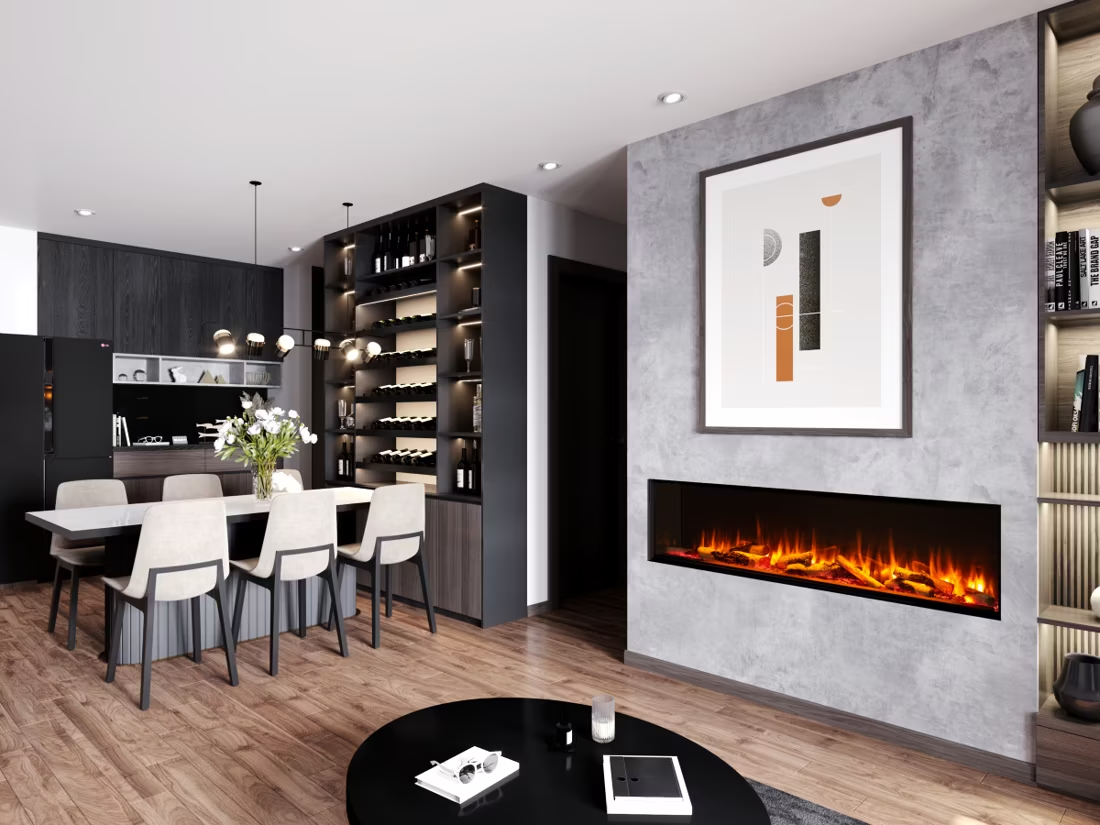
No—that's its superpower. An electric fireplace needs a wall and an outlet, period. No vent pipe, no gas line, no clearances to design around, which is why it works in bedrooms, offices, apartments, and walls where venting a gas or wood unit would be impractical or impossible. Installation is typically the simplest and least expensive of any fireplace type.
Does a fireplace add value to my home?
On average, a fireplace adds back to the home about the same amount you spent installing it. Add the monthly savings from heating the rooms you actually use instead of the whole house—often hundreds of dollars a year—and the value case is strong before you even count what a fire does for how your family uses the room.
What is an in-home preview and do I need one?
It's a visit where a hearth professional measures your space, confirms the model you picked actually works in your home, and walks the specs—framing, gas line, venting, finish work—before anything is ordered. Some details you just can't know until you see the house. Never make a down payment without one; it's the single most-skipped step that burns buyers.
Nearby Dealers
Hearth shops serving Notre Dame and the surrounding area. Every listing shows whether it is a WhyFire partner, a dealer we have verified as authorized for the brands we recommend, or a local business carrying hearth products. No manufacturer pays for placement. How we verify dealers →
Brickworks Supply
Fireplace Shoppe- Niles
Michiana Fireplace And Home Center
Electric Service in Notre Dame
An electric fireplace's heater draws about 1,500 watts—pennies per hour at local rates.
Indiana Michigan Power Co
Find your electric fireplace in Notre Dame.
Tell us about your room and we'll put together a free Project Guide & Parts List—the right unit, the electrical work it needs, and a trusted local dealer to install it.
Find Your Fireplace →