
Add real warmth to any room in Noble County—no chimney required.
From lake cottages around Sylvan and Skinner Lake to finished basements in Kendallville and Albion, electric fireplaces bring zone heat and ambiance without venting, gas lines, or masonry work. Find the right unit and connect with a trusted local dealer.
Every Project Starts From One of These Five Situations
Zone heat for basements, additions, and older farmhouses.
Noble County sits in climate zone 5A with a long, hard winter and average winter lows near 17°F—real Indiana cold that runs from November through March. Most homes here, from the county seat in Albion to Kendallville, Ligonier, Rome City, Cromwell, and Wolf Lake, heat primarily with propane or a fuel-oil furnace, with wood stoves burning local oak, hickory, maple, and beech as a common supplement in older farmhouses. Electric fireplaces fit into that picture as zone heat rather than a whole-house solution—warming the room people actually live in without asking a furnace to fight its way through ductwork that wasn't designed for an addition or a finished basement.
That's exactly where electric units earn their keep in Noble County: finished basements, sunroom additions, lake cottages around Sylvan Lake and Big Lake that only see seasonal use, and rental units in Kendallville where a landlord doesn't want to touch a chimney or gas line. There's no flue to inspect, no clearance-to-combustibles math for a chimney, and no permit through the Noble County Building Department in Albion for a standard plug-in unit. NIPSCO serves electric service across most of the county, and a well-chosen unit runs on a normal 120-volt outlet or, for larger built-ins, a dedicated 240-volt circuit your electrician can size correctly the first time.
Three steps. No salesperson until you're ready.
Tell us about your project
Your zip code, your situation, and the fuel you're leaning toward—or let the answers point you to one.
See what's actually available
The brands dealers within 100 miles genuinely carry—real options, never a catalog mirage.
Get your dealer & Project Guide
A trusted local dealer, plus the free Project Guide & Parts List that names every component of the job.
Frequently Asked Questions
How much does an electric fireplace installation cost in Noble County?
Plug-in electric fireplaces—freestanding stoves, mantel packages, or simple inserts that use a standard 120-volt outlet—typically run $150 to $600 for the unit itself, with no installation labor beyond hanging or placing it. Built-in wall units or larger inserts that require a dedicated 240-volt circuit run higher, generally $800 to $2,500 once an electrician runs new wiring, which is common in Noble County's older farmhouses where the original panel wasn't built for a supplemental heat appliance. Local dealers can tell you within a few minutes whether your room needs the larger draw or whether a standard outlet will do the job.
Do I need a permit to install an electric fireplace in Noble County?
For a plug-in unit that uses an existing outlet, no permit is required—it's treated like any other appliance. If your project involves running a new dedicated circuit, adding a 240-volt line, or recessing a built-in unit into a wall, that electrical work needs a permit through the Noble County Building Department in Albion, and it should be pulled by a licensed electrician. Most local dealers either employ a licensed electrician or work with one regularly, so the permitting gets handled as part of the installation rather than left to you.
What size electric fireplace do I need for my room?
Electric fireplace heaters are typically rated to heat 400 to 1,000 square feet, but real-world performance depends on ceiling height, insulation, and how open the room is to adjoining spaces. In Noble County's older farmhouses with taller ceilings and less insulation, expect actual heating coverage on the lower end of a unit's rated range. For a finished basement or a closed-off room, a mid-size insert or built-in will usually keep up. For open-concept additions or larger lake cottage great rooms, sizing up—or planning on the fireplace as ambiance plus supplemental heat rather than the room's sole heat source—is the more realistic approach. A local dealer can walk your space and size it accurately.
Can an electric fireplace heat my whole house?
No—and this is worth being direct about. With average winter lows around 17°F and a long, hard winter, Noble County winters ask more of a heating system than a 1,500-watt electric heater can deliver across an entire house. Electric fireplaces are zone heaters: excellent for warming the specific room they're in and cutting down on furnace runtime elsewhere, but they're not a replacement for the propane or fuel-oil furnace that carries the load through a January cold snap. Think of it as targeted comfort and ambiance for the room you actually spend evenings in, not a primary heating system.
What's the difference between an electric insert, a wall-mount unit, and an electric fireplace mantel package?
An electric insert is built to slide into an existing masonry fireplace opening, giving an old wood-burning fireplace new life without any venting or chimney work—a common upgrade for older Noble County homes that inherited a fireplace they never use. A wall-mount unit hangs flush or recessed into drywall, popular in additions and finished basements where there's no existing fireplace opening. A mantel package pairs an electric insert with a surrounding cabinet or mantel shelf, giving a freestanding, furniture-style look that works well in rentals or homes where you don't want to modify walls at all. All three plug into standard outlets or a dedicated circuit depending on wattage.
Is an electric fireplace a good fit for a lake cottage around Sylvan Lake or Skinner Lake?
Yes, and it's one of the more common requests from seasonal-use properties around Noble County's lakes. Electric units don't need a chimney sweep, don't have a flue that can let critters or moisture in over a closed-up winter, and can be switched on the moment you arrive without worrying about creosote buildup from a season of disuse. The tradeoff is the one that matters most for a lake cottage: electric fireplaces don't function during a power outage, so they're not a backup heat source if a winter storm knocks out service to a rural property. For a cottage with reliable power and mostly weekend or seasonal use, electric is a low-maintenance choice.
How much does an electric fireplace cost to run in Noble County?
Most electric fireplaces draw around 1,500 watts on the heat setting, which at typical NIPSCO residential electric rates runs roughly 15 to 20 cents an hour of heater use—noticeably cheaper per hour than running a whole-house furnace to warm one room. Many units let you run the flame effect with the heater off, which draws only a few watts, so you can keep the ambiance going in shoulder-season months without any real electric cost. For a room used several hours a night through a Noble County winter, expect a modest but noticeable line item on your electric bill, well below what supplemental space heaters or an oversized furnace zone would cost.
Electric vs. wood—which is right for my Noble County home?
Wood stoves burning local oak, hickory, maple, or beech offer real radiant heat, work without electricity during outages, and remain popular supplemental heat in Noble County's older farmhouses. Electric fireplaces trade that off for convenience—no wood to split or stack, no chimney to sweep, no ash, and instant on-off operation—but they go dark the moment the power does. For a primary residence where backup heat during an ice storm matters, wood or a propane unit with battery-backed ignition is the safer bet. For a finished basement, an addition, a rental unit, or a lake cottage where convenience and clean operation matter more than storm resilience, electric is usually the better fit.
Do electric fireplaces work well in older Noble County farmhouses?
Generally yes, with one caveat worth planning around. Many farmhouses across Noble County were built long before central air conditioning or supplemental electric appliances were common, which means panels and circuits sometimes need an upgrade before a larger built-in electric fireplace can be added. A basic plug-in unit sidesteps that issue entirely and can go into almost any room with a working outlet. For a wall-mounted or recessed built-in, it's worth having a local dealer or electrician confirm your panel has room for a new 240-volt circuit before you fall in love with a specific model—it's a quick check that avoids a surprise mid-project.
Can I put a TV above my fireplace?
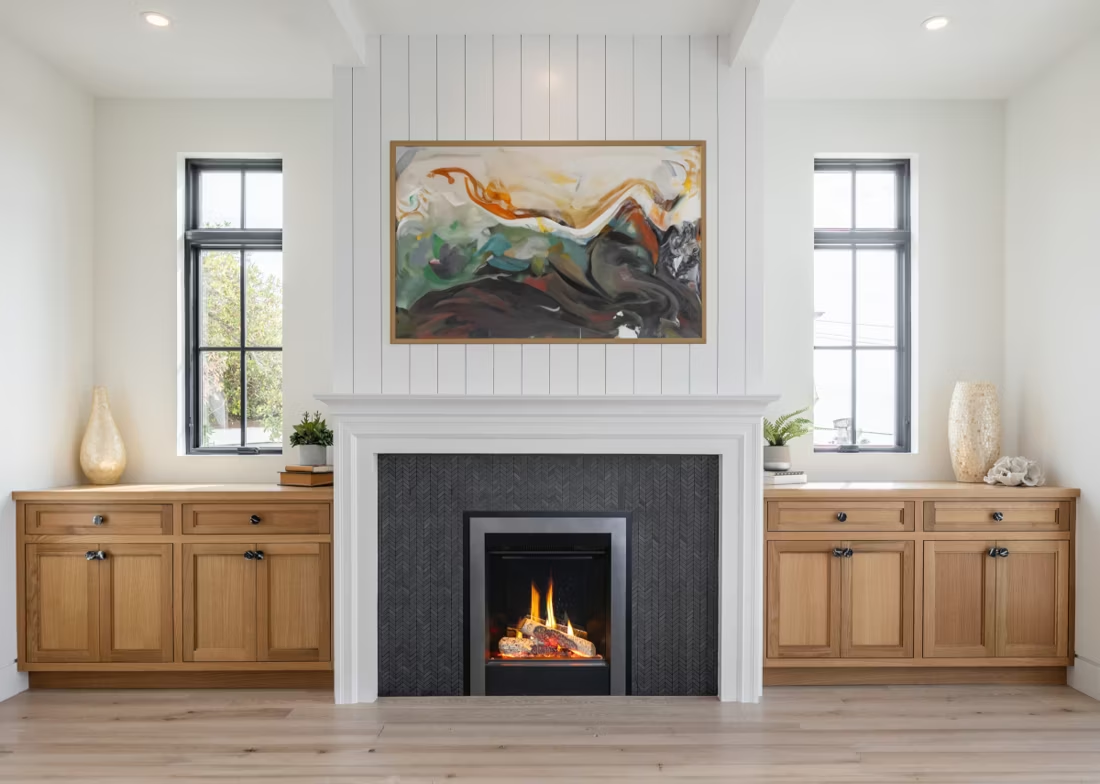
Yes—with an asterisk. Fireplaces are hot and TVs don't like heat. Either put a mantel between them to deflect rising warmth, or choose a fireplace with heat-management technology that creates a cool zone on the wall above—the wall stays around 125 degrees, barely warm, while the room still gets full heat. If you like clean lines and don't want a mantel, heat management is the answer.
Does an electric fireplace need a vent or chimney?
No—that's its superpower. An electric fireplace needs a wall and an outlet, period. No vent pipe, no gas line, no clearances to design around, which is why it works in bedrooms, offices, apartments, and walls where venting a gas or wood unit would be impractical or impossible. Installation is typically the simplest and least expensive of any fireplace type.
What is an in-home preview and do I need one?
It's a visit where a hearth professional measures your space, confirms the model you picked actually works in your home, and walks the specs—framing, gas line, venting, finish work—before anything is ordered. Some details you just can't know until you see the house. Never make a down payment without one; it's the single most-skipped step that burns buyers.
Does a fireplace add value to my home?
On average, a fireplace adds back to the home about the same amount you spent installing it. Add the monthly savings from heating the rooms you actually use instead of the whole house—often hundreds of dollars a year—and the value case is strong before you even count what a fire does for how your family uses the room.
Stove and Fireplace Dealers in Noble County
Find your electric fireplace in Noble County.
Tell us a bit about your room and how you plan to use it, and we'll match you with a trusted local dealer and send over a free Project Guide & Parts List—a plan for your electric fireplace project in Noble County with the exact parts and your recommended local dealer.
Find Your Fireplace →