
Warm up a room in Newton County—no chimney required.
Plug-in or hardwired heat for Newton County farmhouses and newer builds alike—zone warmth for a sunroom, basement, or bedroom without gas lines or venting. Find the right unit and connect with a trusted local dealer.
Every Project Starts From One of These Five Situations
Straightforward heat for a county of open prairie and older farmhouses.
Newton County is one of Indiana's smallest by population—just over 9,000 people spread across flat Grand Prairie farmland between Kentland, Morocco, Brook, and Goodland. Winters here are genuinely cold: average lows near 15°F and 6,352 heating degree days put the county in the same range as Madison, Wisconsin, for sustained winter heating demand. Many homes in the county are older farmhouses built decades before central heating was standard, with additions and outbuildings that the main furnace never quite reaches.
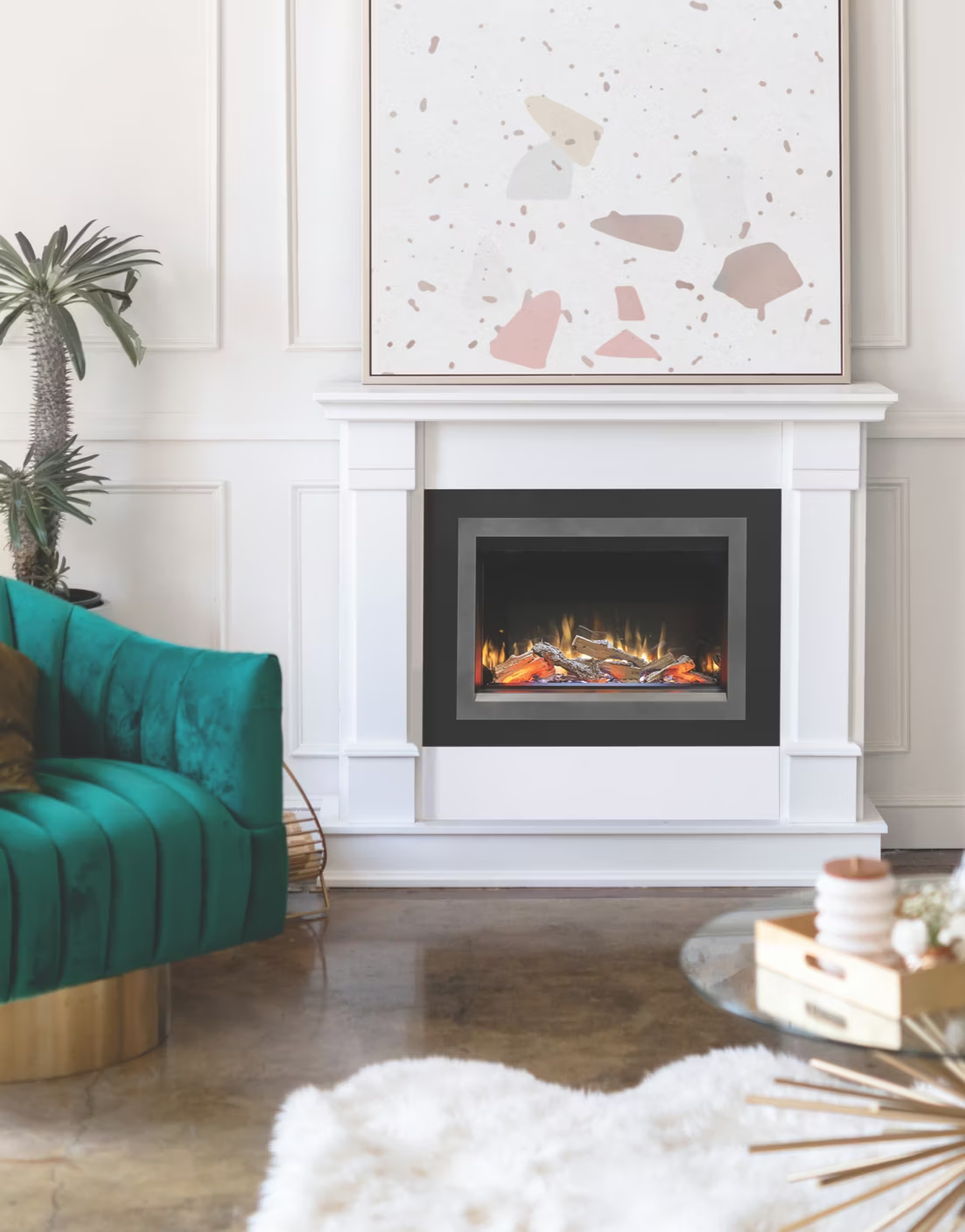
That's where electric fireplaces earn their place. Much of rural Newton County sits outside municipal natural gas service, relying instead on propane, wood, or electric heat pumps for primary heat, and electric fireplaces slot in easily as no-venting, no-chimney zone heat for a den, sunroom, or finished basement. NIPSCO serves much of the county's electric load, with rural electric cooperatives covering outlying farms—either way, an electric fireplace is simply another 120V or 240V circuit, not a construction project. No masonry, no gas line, no annual chimney sweep—just a straightforward install a licensed electrician can usually finish in an afternoon.
Three steps. No salesperson until you're ready.
Tell us about your project
Your zip code, your situation, and the fuel you're leaning toward—or let the answers point you to one.
See what's actually available
The brands dealers within 100 miles genuinely carry—real options, never a catalog mirage.
Get your dealer & Project Guide
A trusted local dealer, plus the free Project Guide & Parts List that names every component of the job.
Frequently Asked Questions
How much does an electric fireplace installation cost in Newton County?
A plug-in freestanding electric fireplace or mantel unit typically runs $200 to $800 for the unit itself and often needs no electrician at all—it plugs into a standard outlet. A built-in or insert model wired to a dedicated 120V or 240V circuit usually runs $1,200 to $2,500 installed, and that range climbs if your home's electrical panel needs an upgrade—common in Newton County's older farmhouses that were never wired for a second dedicated appliance circuit. A local dealer can tell you within minutes whether your panel has room or needs work first.
What's the difference between a plug-in electric fireplace and a hardwired one?
Plug-in units are the simplest option—they draw from a standard 120V outlet, produce up to about 1,500 watts of heat, and can be moved if you rearrange a room. Hardwired built-ins and inserts are wired directly into a dedicated circuit, often 240V, and can produce more heat output for a larger space while sitting flush in a wall or existing fireplace opening. For a spare bedroom or home office in a Newton County farmhouse, a plug-in model is often enough. For a larger family room or a permanent fireplace-look installation, hardwired is the better long-term choice.
Do I need a permit to install an electric fireplace in Newton County?
A simple plug-in unit generally doesn't require any permit—it's no different than plugging in a space heater. If your installation involves running a new dedicated circuit or upgrading your electrical panel, that wiring work does require an electrical permit through Newton County's building department, and it should be pulled by a licensed electrician. Most local dealers either employ licensed electricians or coordinate directly with one, so the paperwork gets handled as part of the install rather than left to you.
How big a space can an electric fireplace actually heat?
Most electric fireplaces are rated for zone heating, not whole-house heat. A typical 5,000-watt unit on a 240V circuit can comfortably supplement heat for a room in the 400–1,000 square foot range—a good match for a sunroom, den, or finished basement in a Newton County home, but not enough to carry a whole farmhouse through a 15°F night on its own. With 6,352 heating degree days in the county, your furnace or heat pump should stay the primary heat source, with the electric fireplace handling the room you actually live in.
What are the best electric fireplace brands available locally?
Dimplex, Napoleon, and Touchstone are among the most widely available electric fireplace brands and are commonly stocked or ordered by hearth dealers serving Newton County. Features worth comparing include flame realism, heater wattage (look for a true 5,000 BTU-class heater if you want real supplemental warmth, not just the flame effect), and whether the unit is designed as a built-in insert versus a freestanding mantel package. A local dealer can walk you through which models fit your specific opening and circuit setup.
Electric vs. wood vs. pellet—which makes sense for a Newton County home?
Newton County has strong local wood resources—oak, hickory, maple, and beech are common along the Iroquois River bottomland and county timber stands—and pellet fuel is available regionally through suppliers like Indeck Energy Services, Lignetics, and Somerset Pellet Fuel. Wood and pellet stoves put out real heat and, in wood's case, keep working during a power outage. Electric fireplaces can't do that—no battery backup, no output if the grid goes down, which matters in a rural county where ice storms occasionally knock out NIPSCO or co-op power for hours. Many Newton County homeowners run electric for daily convenience and ambiance in the main living space, while keeping a wood or pellet stove elsewhere as real backup heat.
Can an electric fireplace be my home's primary heat source?
Not in Newton County's climate. With average winter lows around 15°F and over 6,300 heating degree days a year, a farmhouse or ranch home needs a real furnace, heat pump, or wood stove as primary heat. Electric fireplaces are best treated as zone heat—warming the specific room you're in without running ductwork or a whole-house system harder than it needs to. Think of it as taking the edge off a cold room, not replacing your furnace.
What's the difference between an electric insert, a built-in, and a mantel package?
An electric insert is sized to slot into an existing fireplace opening—a common upgrade for Newton County homes with an old, rarely-used masonry fireplace that's just collecting dust. A built-in unit is designed to be framed into a wall during a remodel or new construction, giving a flush, custom look. A mantel package pairs a freestanding electric unit with a surrounding cabinet or mantel shelf, requiring no construction at all—just floor space and an outlet or nearby circuit. Most rural homeowners start with an insert or mantel package since neither requires framing work.
Will my electric fireplace still work if the power goes out?
No—unlike a gas fireplace with battery-backed ignition, an electric fireplace has no heat or flame output without grid power. That matters in Newton County, where ice storms and high winds can knock out NIPSCO or rural cooperative service for extended stretches during the coldest months. If reliable backup heat matters to you, plan on a wood stove, propane heater, or generator setup alongside your electric fireplace rather than relying on it during an outage.
Can I put a TV above my fireplace?
Yes—with an asterisk. Fireplaces are hot and TVs don't like heat. Either put a mantel between them to deflect rising warmth, or choose a fireplace with heat-management technology that creates a cool zone on the wall above—the wall stays around 125 degrees, barely warm, while the room still gets full heat. If you like clean lines and don't want a mantel, heat management is the answer.
Do electric fireplaces actually produce heat?
Yes—most put out around 4,800–5,000 BTUs from a standard outlet, which comfortably warms a bedroom, office, or den as a comfort-zone heater. What they won't do is carry a whole house the way wood, gas, or pellet can. Think of electric as ambiance-first with honest supplemental heat: flames on with no heat in July, flames plus warmth in January.
Can a fireplace actually lower my heating bill?
Yes—by creating a comfort zone. A furnace heats every square foot of the house just to warm the one room you're in; a gas fireplace on low burns roughly a sixth of the gas a typical furnace does. Set the furnace around 55–60 degrees as a baseline, then heat the rooms your family actually uses. Families who heat this way commonly save $20–$60 a month.
How much should I budget for a fireplace?
For an average home—covering the fireplace, the vent pipe, and basic installation—a budget between $3,900 and $5,500 gives you a lot of options across wood, gas, and pellet. By the time you add finish work, gas line, and electrical, the average complete installation lands between $5,000 and $12,000 all-in. In a remodel or new build, a good rule is to put about 2.5% of the total project cost toward the fireplace.
Find your electric fireplace in Newton County.
Tell us a bit about your home and we'll put together a free Project Guide & Parts List—the right electric fireplace or insert for your space, the parts you'll need, and a trusted local dealer to install it.
Find Your Fireplace →