
Instant heat and ambiance, no chimney required.
From lakefront cottages on Wawasee and Tippecanoe to condos and additions around Warsaw, electric fireplaces install almost anywhere in Kosciusko County—no venting, no masonry, no permit headaches. Find the right unit and connect with a trusted local dealer.
Every Project Starts From One of These Five Situations
The easiest hearth upgrade in Indiana's lake country.
Kosciusko County sits in climate zone 5A with a cold, long winter heating season and winter lows that average around 17°F—a cold-but-not-brutal profile similar to Buffalo, NY. Warsaw anchors the county as both the county seat and its orthopedic manufacturing hub, while the surrounding landscape is dotted with more than 100 natural lakes—Wawasee, Tippecanoe, Winona, and Webster among them—that draw seasonal residents and year-round lake-home owners alike. Plenty of older farmhouses in the county still burn oak, hickory, maple, or beech in a wood fireplace or stove, but electric has become the fastest-growing hearth category for a very different set of homes.
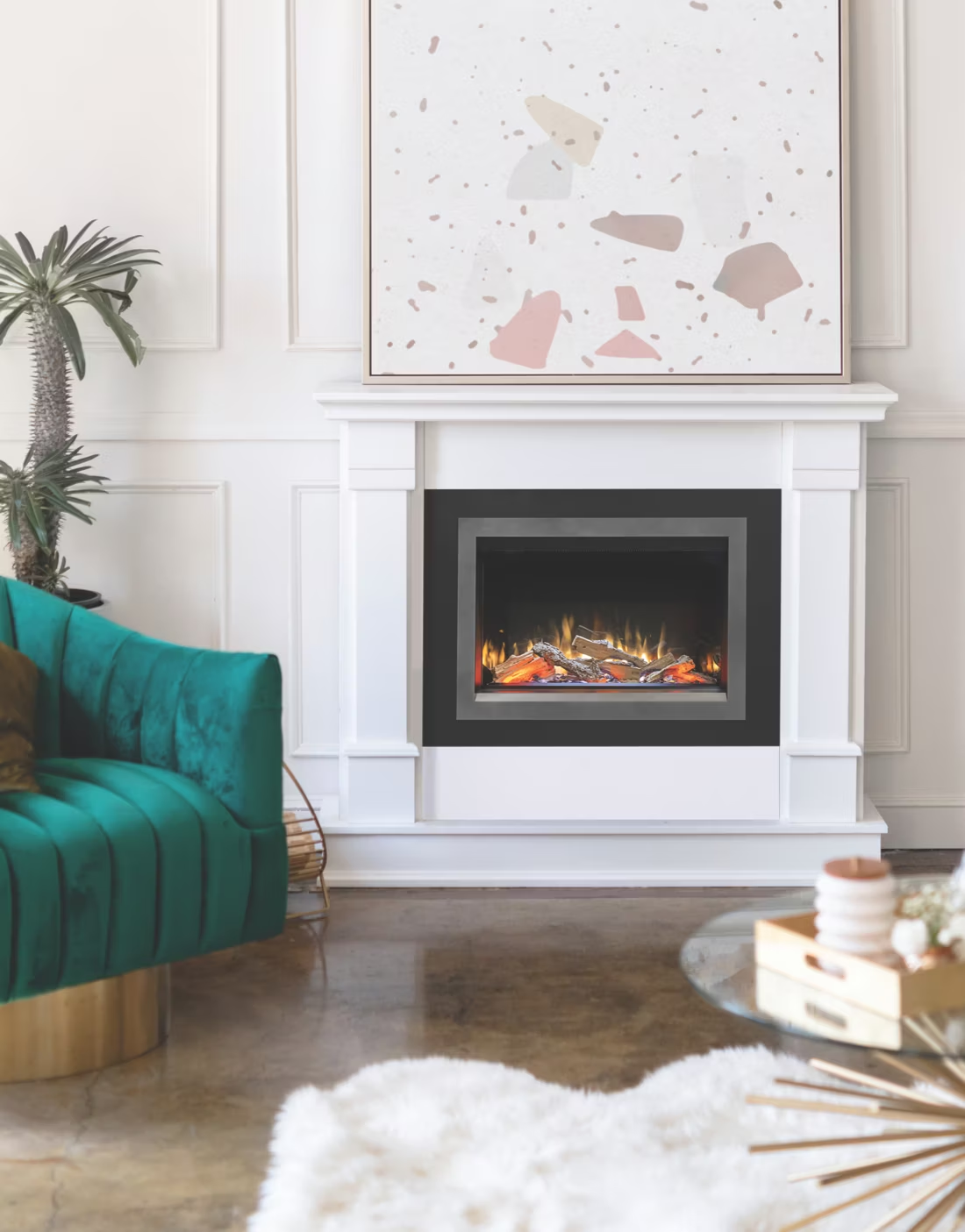
Electric fireplaces make the most sense in Kosciusko County where venting a wood or gas unit isn't practical or allowed—condos, additions, finished basements, and lake cottages where HOA covenants or dock-association rules restrict solid-fuel burning or new chimney construction. A plug-in insert needs nothing more than a standard outlet; a larger built-in wall unit typically runs on a dedicated 240-volt circuit, which most electricians serving Kosciusko County REMC and NIPSCO territory can add in an afternoon. There's no cutting permit, no chimney sweep, and—since Kosciusko County has no air quality non-attainment issues to begin with—no burn-ban restrictions to work around. It's zone heat and fireplace ambiance without the venting problem.
Three steps. No salesperson until you're ready.
Tell us about your project
Your zip code, your situation, and the fuel you're leaning toward—or let the answers point you to one.
See what's actually available
The brands dealers within 100 miles genuinely carry—real options, never a catalog mirage.
Get your dealer & Project Guide
A trusted local dealer, plus the free Project Guide & Parts List that names every component of the job.
Frequently Asked Questions
How much does an electric fireplace installation cost in Kosciusko County?
A plug-in electric insert that drops into an existing fireplace opening typically runs $300 to $900 installed, since it just needs an outlet and a surround adjustment. A built-in wall unit or a linear electric fireplace set into new framing runs higher—often $1,500 to $3,500 once you include the dedicated 240-volt circuit, wall finishing, and a custom mantel or surround. Costs on the higher end usually reflect cabinetry and electrical work rather than the unit itself, since electric fireplaces have no venting or chimney costs to worry about. Local dealers will give you a firm number after seeing the space.
Will an electric fireplace actually heat a room, or is it just for looks?
Most electric fireplaces include a built-in fan heater rated around 4,700 to 5,000 BTU, enough to comfortably warm a single room of 400 to 1,000 square feet depending on insulation and ceiling height. That makes them a legitimate zone-heat option for a lake cottage sunroom, a finished basement, or a bedroom—but with Kosciusko County averaging 17°F winter lows and a long, demanding winter heating season, an electric fireplace is not a replacement for your furnace on the coldest nights. Most owners run it for supplemental warmth and ambiance while the home's primary heating system does the heavy lifting.
Can I install an electric fireplace in a lake cottage or condo with restrictive covenants?
Yes—this is one of the main reasons electric has taken off around Wawasee, Tippecanoe, and Winona Lake. Many dock associations and lake-community covenants restrict or prohibit new chimneys and solid-fuel appliances, but electric units don't touch any of that—no venting, no exterior penetration, no combustion byproducts. A plug-in model needs only an outlet and can be removed just as easily if you sell or convert the property. For rental cottages and seasonal properties across the county, that flexibility matters as much as the heat.
What's the difference between an electric insert, a wall-mounted unit, and a freestanding electric stove?
An electric insert is built to slide into an existing masonry or zero-clearance fireplace opening, which makes it the natural upgrade for Kosciusko County farmhouses converting an old wood fireplace they no longer want to tend. A wall-mounted or built-in linear unit is framed into a wall—common in new additions, finished basements, and lake-house great rooms where there's no existing firebox. A freestanding electric stove sits on the floor like a traditional wood stove but plugs into an outlet, which works well in a cabin or bonus room where you want stove styling without any chimney at all. All three heat similarly; the choice comes down to what opening (if any) you're working with.
Do I need a permit or a licensed electrician for an electric fireplace in Kosciusko County?
A plug-in electric insert that uses a standard household outlet generally doesn't require a permit—it's treated like any other appliance. A hardwired unit on a dedicated 240-volt circuit does require electrical work, and it's worth having a licensed electrician pull that circuit rather than tapping an existing one, both for safety and so the installation doesn't trip breakers when the heater and other appliances run at once. Larger remodel projects that involve new framing may trigger a standard building permit through the local jurisdiction, which your contractor can confirm. Either way, there's no chimney inspection, no gas-line permit, and no emissions certification to navigate—electric is the most straightforward permitting path of any hearth fuel.
What's the best electric fireplace for Kosciusko County's climate?
For year-round homes, look at a unit with a strong built-in heater (rated close to 5,000 BTU) so it earns its keep as real supplemental heat during the county's long heating season—not just a flame-effect display. For lake cottages used seasonally, flame-only or lower-heat models are fine since the fireplace is more about ambiance during shoulder-season weekends than carrying heat load through a Buffalo-style winter. Realistic-flame LED models from brands sold through local dealers have closed most of the visual gap with gas, and multi-function remotes with thermostatic control make it easy to run heat only when a room actually needs it.
How much does an electric fireplace cost to run?
Most electric fireplace heaters draw around 1,500 watts on the heat setting, which—depending on your rate through Kosciusko County REMC, NIPSCO, or your local municipal utility—generally costs somewhere in the range of 15 to 25 cents per hour of heater use. Running the flame effect alone without heat uses a fraction of that, often just a few watts, so leaving the ambiance on for evening use costs very little. Compared to running a whole-house furnace to cover the same square footage, using an electric fireplace to zone-heat a single occupied room can meaningfully reduce winter energy bills.
Electric vs. wood—which is right for my Kosciusko County home?
Wood remains a strong choice for county farmhouses with existing masonry fireplaces and easy access to local oak, hickory, maple, or beech—it produces real radiant heat and keeps working if the power goes out, which matters during winter storms. Electric wins for condos, lake cottages under covenant restrictions, finished basements without a flue, and any homeowner who wants fireplace ambiance without cutting, stacking, or cleaning up ash. It's also the simpler retrofit—no chimney liner, no clearance-to-combustibles calculations, no annual sweep. Plenty of households in the county end up with both: wood in a main living area, electric in a bedroom, basement, or seasonal lake room.
Where can I find a local dealer to install an electric fireplace near me?
Look for hearth retailers and electricians serving the Warsaw, Syracuse, and North Webster areas who regularly install both insert and built-in electric units—they'll know how to size the unit to your room, coordinate any dedicated circuit work, and finish the surround cleanly. Big-box units ordered online without local install support are the most common source of returns and undersized-heater complaints, since the wattage and fit really do need to match your space. A local dealer who's actually been inside lake-area homes with covenant restrictions will also know what's realistically allowed before you buy anything.
Can I put a TV above my fireplace?
Yes—with an asterisk. Fireplaces are hot and TVs don't like heat. Either put a mantel between them to deflect rising warmth, or choose a fireplace with heat-management technology that creates a cool zone on the wall above—the wall stays around 125 degrees, barely warm, while the room still gets full heat. If you like clean lines and don't want a mantel, heat management is the answer.
How much does an electric fireplace cost to run?
With the heater on, a typical unit draws about 1,500 watts—at average electric rates that's roughly 20 cents an hour. Run the flame effect alone and it costs pennies; the flames are LED-driven and use about as much power as a light bulb. There's no pilot light, no fuel delivery, and essentially no maintenance.
What is an in-home preview and do I need one?
It's a visit where a hearth professional measures your space, confirms the model you picked actually works in your home, and walks the specs—framing, gas line, venting, finish work—before anything is ordered. Some details you just can't know until you see the house. Never make a down payment without one; it's the single most-skipped step that burns buyers.
Does a fireplace add value to my home?
On average, a fireplace adds back to the home about the same amount you spent installing it. Add the monthly savings from heating the rooms you actually use instead of the whole house—often hundreds of dollars a year—and the value case is strong before you even count what a fire does for how your family uses the room.
Stove and Fireplace Dealers in Kosciusko County
Find your electric fireplace in Kosciusko County.
Tell us a bit about your home—lake cottage, condo, or year-round house—and we'll match you with a trusted local dealer and send over a free Project Guide & Parts List with the exact parts for your electric fireplace project in Kosciusko County.
Find Your Fireplace →