
The fireplace upgrade Johnson County homes can install in an afternoon.
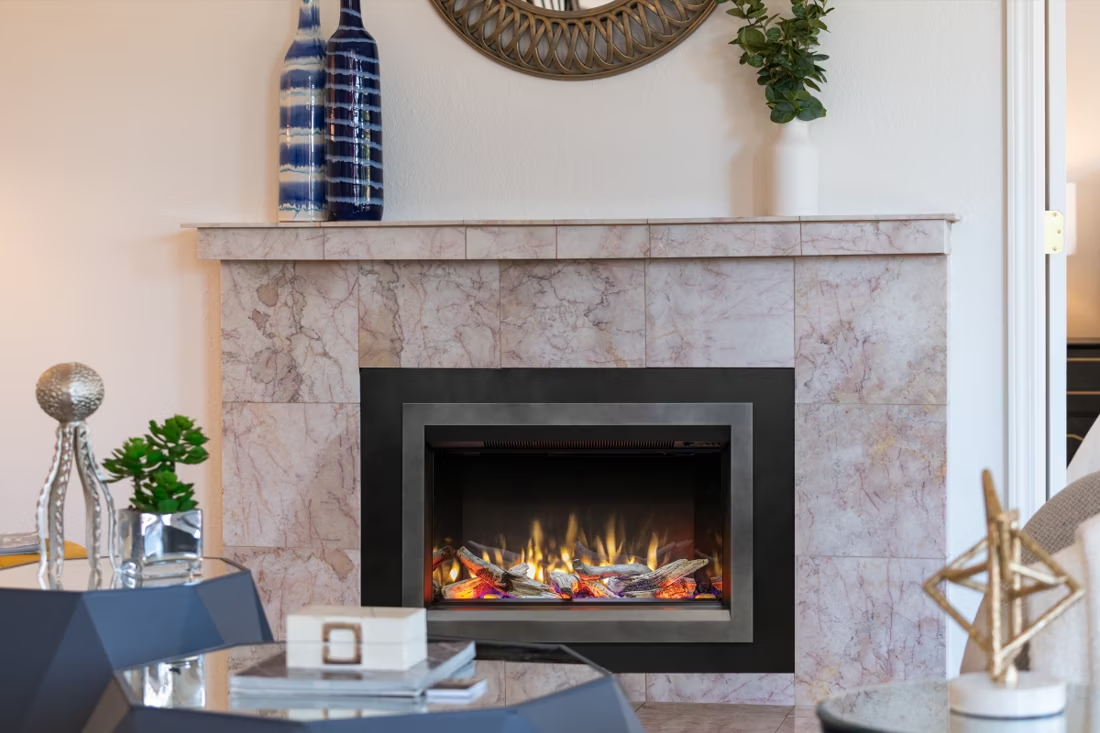
No chimney, no gas line, no venting—just real ambiance and zone heat for homes across Greenwood, Franklin, Bargersville, and the rest of Johnson County. We'll match you with a trusted local dealer who can size the right unit for your room.
Every Project Starts From One of These Five Situations
The practical fireplace for a fast-growing suburban county.
Johnson County has grown into one of the busiest corners of the Indianapolis metro, with more than 116,000 residents spread across Greenwood, Franklin, Bargersville, Whiteland, and Edinburgh. Winters here are real but not extreme—average lows near 19°F and a heating season similar to inland Ohio or southern Wisconsin. That combination of steady suburban growth and a moderately cold climate zone (5A) has made electric fireplaces one of the fastest-growing categories in local home remodeling: they add fireplace ambiance and useful zone heat to a bedroom, basement, or great room without the venting or gas-line work a wood or gas unit requires.
Wood-burning fireplaces are largely absent from the county's newer subdivisions—most homes built in the last two or three decades in Greenwood, Bargersville, and Whiteland were never framed with a masonry chimney, and pellet stoves see little demand for the same reason. Electricity, on the other hand, is available everywhere: Duke Energy Indiana serves most of the county's towns, while Johnson County REMC covers the rural areas outside city limits. That universal access, combined with the fact that most electric units plug into an existing outlet or a simple dedicated circuit, is why electric has become the go-to option for homeowners who want a fireplace without a construction project.
Three steps. No salesperson until you're ready.
Tell us about your project
Your zip code, your situation, and the fuel you're leaning toward—or let the answers point you to one.
See what's actually available
The brands dealers within 100 miles genuinely carry—real options, never a catalog mirage.
Get your dealer & Project Guide
A trusted local dealer, plus the free Project Guide & Parts List that names every component of the job.
Frequently Asked Questions
How much does an electric fireplace installation cost in Johnson County?
Electric fireplace installations in Johnson County typically run from about $500 for a plug-in insert or mantel package up to $2,500-$3,500 for a larger built-in unit with a dedicated 240-volt circuit, custom surround, and wall recessing. Simple insert conversions into an existing masonry fireplace in older Franklin or Trafalgar homes tend to land on the lower end, since most units plug into a standard outlet behind the firebox. New-construction built-ins in Greenwood or Bargersville subdivisions, where the fireplace is framed into a great room wall, cost more once electrical rough-in and finish carpentry are factored in. Because there's no venting or chimney work required, electric installs are consistently the least expensive fireplace option available in the county.
Does an electric fireplace need a dedicated circuit?
Most electric fireplace inserts and small mantel units draw 1,500 watts or less and run on a standard 120-volt, 15-amp household circuit—no rewiring needed. Larger built-in units, multi-sided fireplaces, or installations where the fireplace shares a circuit with other appliances usually call for a dedicated 20-amp circuit, and some high-output models require 240 volts. A licensed electrician should confirm your panel has capacity, especially in older Franklin and Edinburgh homes with 100-amp service that's already carrying a lot of load. Newer homes throughout Greenwood, Bargersville, and Whiteland subdivisions typically have 200-amp panels with room to spare.
Do I need a permit to install an electric fireplace in Johnson County?
Johnson County requires an electrical permit whenever a new dedicated circuit is installed for a fireplace, even though there's no venting or gas line to inspect. If you're simply plugging an insert into an existing outlet, no permit is needed. For a hard-wired built-in or a unit needing a new 240-volt circuit, your electrician pulls the permit through the Johnson County building department (or your city's building office if you're inside Greenwood, Franklin, or Bargersville limits) and schedules the inspection. Most local dealers coordinate this as part of the installation, so homeowners rarely have to deal with the paperwork directly.
Electric vs. gas fireplace—which is right for my home?
Gas fireplaces are common throughout Johnson County and offer more genuine heat output plus the visual of a real flame, but they require a gas line and venting (or careful vent-free installation) and typically cost several thousand dollars more to install. Electric fireplaces skip all of that: no gas line, no venting, no chimney—just a wall outlet or a simple circuit run. For homeowners in newer Bargersville and Whiteland subdivisions who want fireplace ambiance in a bedroom, basement, or home office without adding a gas appliance, electric is usually the faster and cheaper path. For a primary living room where real heat output matters during Johnson County's coldest stretches, gas remains the stronger option.
Can an electric fireplace actually heat a room in Johnson County's winters?
Electric fireplaces produce genuine heat—most units put out 4,600 to 5,000 BTUs, enough to comfortably warm a single room—but they're not a practical way to heat an entire Johnson County home through a winter that averages 19°F lows, a season on par with inland Ohio or southern Wisconsin. Running enough electric resistance heat to replace a furnace for the whole house would be expensive at Indiana electricity rates. Most homeowners here use electric fireplaces as zone heating for a specific room—a finished basement, a home office, a primary bedroom—while central HVAC handles the rest of the house.
Can I put an electric insert into my existing fireplace, or does it need to be built in?
Electric inserts fit into existing masonry or prefab wood fireplace openings throughout the county's older housing stock in Franklin, Trafalgar, and Edinburgh, giving homeowners fireplace ambiance without the smoke, ash, or chimney maintenance that came with the original wood-burning setup—many of which saw little regular use to begin with. In newer construction across Greenwood, Bargersville, and Whiteland, electric fireplaces are more often built directly into a great-room wall or entertainment center as part of the original framing, with no masonry involved at all. Wall-mounted and freestanding electric stove models are also popular for finished basements, a common renovation project in the county's older ranch-style homes.
What's the best electric fireplace style for a Johnson County home?
Realistic log-set electric fireplaces have improved considerably, with LED flame technology and log sets modeled after regionally familiar species like oak and hickory—a detail that matters to homeowners converting an old wood-burning fireplace who want the visual to still feel authentic. For finished basements and media rooms, linear electric fireplaces with clean glass-and-flame designs are popular in newer Bargersville and Whiteland builds. A local hearth dealer can walk you through flame quality, heater wattage, and control options (wall switch, remote, or smart-home integration) side by side, which is difficult to judge from photos alone.
How much does it cost to run an electric fireplace in Johnson County?
Running an electric fireplace costs less than most homeowners expect. At typical Indiana electricity rates, a 1,500-watt unit running on high for a few hours a night costs roughly 20 to 30 cents per hour to operate—far less than heating a whole room with a furnace. Most of Johnson County is served by Duke Energy Indiana, with Johnson County REMC serving rural areas outside town limits; either way, an electric fireplace used for evening ambiance or zone heating has a minimal impact on a monthly bill compared to running a space heater of similar wattage for the same hours.
Why do so few Johnson County homes have wood-burning fireplaces?
Wood-burning fireplaces and stoves are uncommon in Johnson County today—most of the housing stock has been built or remodeled in the last few decades, many subdivisions in Greenwood, Bargersville, and Whiteland were never built with masonry chimneys, and there's little of the rural wood-cutting culture found in more forested parts of the state. Where older homes in Franklin or Trafalgar do have an existing wood fireplace, it's often underused because of the ash, smoke, and chimney upkeep involved. Electric inserts let those homeowners keep the look of the original fireplace opening while removing the maintenance, which is a big part of why electric has become the default upgrade path across the county.
Can I put a TV above my fireplace?
Yes—with an asterisk. Fireplaces are hot and TVs don't like heat. Either put a mantel between them to deflect rising warmth, or choose a fireplace with heat-management technology that creates a cool zone on the wall above—the wall stays around 125 degrees, barely warm, while the room still gets full heat. If you like clean lines and don't want a mantel, heat management is the answer.
Do electric fireplaces actually produce heat?
Yes—most put out around 4,800–5,000 BTUs from a standard outlet, which comfortably warms a bedroom, office, or den as a comfort-zone heater. What they won't do is carry a whole house the way wood, gas, or pellet can. Think of electric as ambiance-first with honest supplemental heat: flames on with no heat in July, flames plus warmth in January.
Can a fireplace actually lower my heating bill?
Yes—by creating a comfort zone. A furnace heats every square foot of the house just to warm the one room you're in; a gas fireplace on low burns roughly a sixth of the gas a typical furnace does. Set the furnace around 55–60 degrees as a baseline, then heat the rooms your family actually uses. Families who heat this way commonly save $20–$60 a month.
Can I install a fireplace myself?
If you're putting a fire in your house on purpose, it's best to work with an expert. Unless you're genuinely experienced in framing, gas line, vent pipe, and the national code on clearances to combustibles, have a professional do it—and ideally the same company that sells you the fireplace, so warranty, service, and liability all live under one roof.
Stove and Fireplace Dealers in Johnson County
Find your electric fireplace in Johnson County.
Tell us about your room and we'll match you with a trusted local Johnson County dealer and send over a free Project Guide & Parts List—a clear plan for your electric fireplace project, right down to the parts list and recommended installer.
Find Your Fireplace →