
Add real ambiance to your Jefferson County home—no chimney required.
From the bluffs above the Ohio River in Madison to the farmhouses around Hanover and Dupont, electric fireplaces give Jefferson County homeowners real flame-look ambiance and supplemental warmth without touching a wall or a flue. Find the right unit and connect with a trusted local dealer.
Every Project Starts From One of These Five Situations
Heat and ambiance that fit Madison's historic homes.
Jefferson County's winters are noticeably milder than the upper Midwest—Climate Zone 4A, a moderate winter heating season, and an average winter low near 24°F. That's a fraction of what a place like Duluth, MN or Burlington, VT racks up over a season, which means most Jefferson County homes don't need a primary wood or gas heat source to get through January. What they often want instead is a warm focal point in a family room, sunroom, or bedroom addition—and that's exactly where electric fireplaces do their best work.
Madison, the county seat, sits inside one of the largest contiguous National Historic Landmark districts in the country, with block after block of 19th-century brick homes whose masonry chimneys are expensive to reline and whose exteriors are protected from alteration. An electric fireplace sidesteps all of that—no venting, no gas line, no exterior modification for a review board to weigh in on. Out in Hanover and Dupont and the rural stretches of the county, electric units serve a different purpose: quick supplemental heat in a room that's hard to keep comfortable off the central system, installed in an afternoon rather than a multi-day retrofit.
Three steps. No salesperson until you're ready.
Tell us about your project
Your zip code, your situation, and the fuel you're leaning toward—or let the answers point you to one.
See what's actually available
The brands dealers within 100 miles genuinely carry—real options, never a catalog mirage.
Get your dealer & Project Guide
A trusted local dealer, plus the free Project Guide & Parts List that names every component of the job.
Frequently Asked Questions
How much does an electric fireplace cost to install in Jefferson County?
Electric fireplaces are the least expensive hearth upgrade available, and that holds true in Jefferson County. A plug-in insert or freestanding stove that runs on a standard 120V household outlet is the simplest and cheapest option—often installed in an afternoon with no electrical work beyond plugging it in. A built-in wall unit or a larger insert with a heater draw over 1,500 watts may call for a dedicated circuit, which means bringing in a licensed electrician for a modest add-on cost. Compared to a masonry chimney reline or a new gas line run—both common headaches in Madison's older housing stock—electric is the low-friction option.
Are electric fireplaces enough to heat a home through a Jefferson County winter?
Not as a primary heat source. With a moderate winter heating season and average winter lows in the mid-20s, Jefferson County winters are moderate by national standards, but electric fireplaces are still built for zone heating—warming the room they're in, not the whole house. Most local homeowners install one to take the edge off a chilly addition, sunroom, or finished basement, or simply for the visual warmth of a fire without wood or gas involved. Central heat or a supplemental wood or gas appliance still carries the load on the coldest nights, especially in older Madison homes with less insulation than newer construction out toward Hanover.
Can I install an electric fireplace in a historic Madison home without running into preservation issues?
Generally, yes—and that's a big part of why electric fireplaces are popular in Madison's historic district. Because there's no venting, no exterior penetration, and no chimney modification, an electric fireplace typically doesn't trigger the kind of exterior-appearance review that a new masonry flue or gas venting run would in a historic overlay district. You'll still want to pull a standard electrical permit if any wiring work is involved, but the process is far simpler than anything touching the building's exterior. A local dealer familiar with Madison's older housing stock can tell you quickly whether your specific project needs sign-off.
What's the difference between an electric fireplace, insert, and mantel package?
A freestanding electric stove sits on the floor like a small appliance and can go almost anywhere near an outlet. An electric insert is sized to slide into an existing fireplace opening—a common choice for Jefferson County homes with an old, rarely-used masonry firebox that homeowners want to convert without touching the chimney. A mantel package combines an electric firebox with a surrounding mantel and shelf unit, built as one piece for a room with no existing fireplace at all. Which one fits your space usually comes down to whether you're retrofitting an old opening or starting from a blank wall.
Do electric fireplaces need a dedicated electrical circuit?
It depends on the unit. Smaller electric fireplaces with heaters in the 1,500-watt range typically run fine on a standard 15- or 20-amp household circuit, plugged straight into a wall outlet. Larger built-in units, especially ones installed alongside other electronics or appliances on the same circuit, often call for a dedicated line to avoid tripping breakers. A local dealer or licensed electrician can tell you within a few minutes of looking at your panel and the unit's spec sheet whether you're fine as-is or need an upgrade.
Will an electric fireplace work during a power outage?
No—electric fireplaces are entirely dependent on grid power, so they shut down the moment the electricity does. That matters more in the rural stretches of Jefferson County around Dupont and outside Hanover, where ice storms and downed lines can mean outages lasting a day or more. Homeowners in those areas who want backup heat alongside an electric fireplace's everyday convenience often pair it with a wood stove or a battery-backed gas unit elsewhere in the house—the electric fireplace handles daily ambiance and light supplemental heat, the other appliance handles the emergency.
What's the best electric fireplace for supplemental heat in a Jefferson County home?
For a room that genuinely needs extra warmth—not just ambiance—look for a unit with a true 1,500-watt heater rated for the square footage you're heating, from established brands like Dimplex, Napoleon, or Amantii. Realistic flame technology has improved enough that most homeowners are choosing based on heat output and cabinet style rather than settling for a weaker unit. For a historic Madison home where you're dropping an insert into an existing fireplace opening, measure the firebox opening carefully—older Indiana masonry fireplaces often run non-standard dimensions, and a local dealer can match you to a model that actually fits.
How does an electric fireplace compare to wood or gas in Jefferson County?
Wood remains a strong option here—Jefferson County has plenty of oak, hickory, maple, and beech available locally, and a wood stove or insert provides real primary or backup heat that keeps working through a power outage. Gas offers instant, thermostat-controlled heat without wood handling, though it requires either a natural gas line or a propane tank. Electric is the simplest of the three: no fuel to manage, no venting, no combustion byproducts, and the lowest installation cost, but it can't replace a real heat source on the coldest days and it's dark the moment the power goes out. Many Jefferson County homeowners land on electric for a secondary room and wood or gas for the main living space.
Where can I get an electric fireplace installed near me in Jefferson County?
Trusted hearth dealers cover Madison and the surrounding Jefferson County area, including Hanover and Dupont, and most electric fireplace installs—plug-in units especially—can be scheduled and completed quickly since there's no venting or gas work involved. Because electric fireplaces come in such a wide range of cabinet styles, insert sizes, and heater outputs, matching the right unit to your specific fireplace opening or wall space is where a local installer earns their fee. Find My Fireplace matches you with a dealer who already knows Jefferson County's housing stock, from Madison's historic brick homes to newer construction near Hanover.
Does an electric fireplace need a vent or chimney?
No—that's its superpower. An electric fireplace needs a wall and an outlet, period. No vent pipe, no gas line, no clearances to design around, which is why it works in bedrooms, offices, apartments, and walls where venting a gas or wood unit would be impractical or impossible. Installation is typically the simplest and least expensive of any fireplace type.
Can I put a TV above my fireplace?
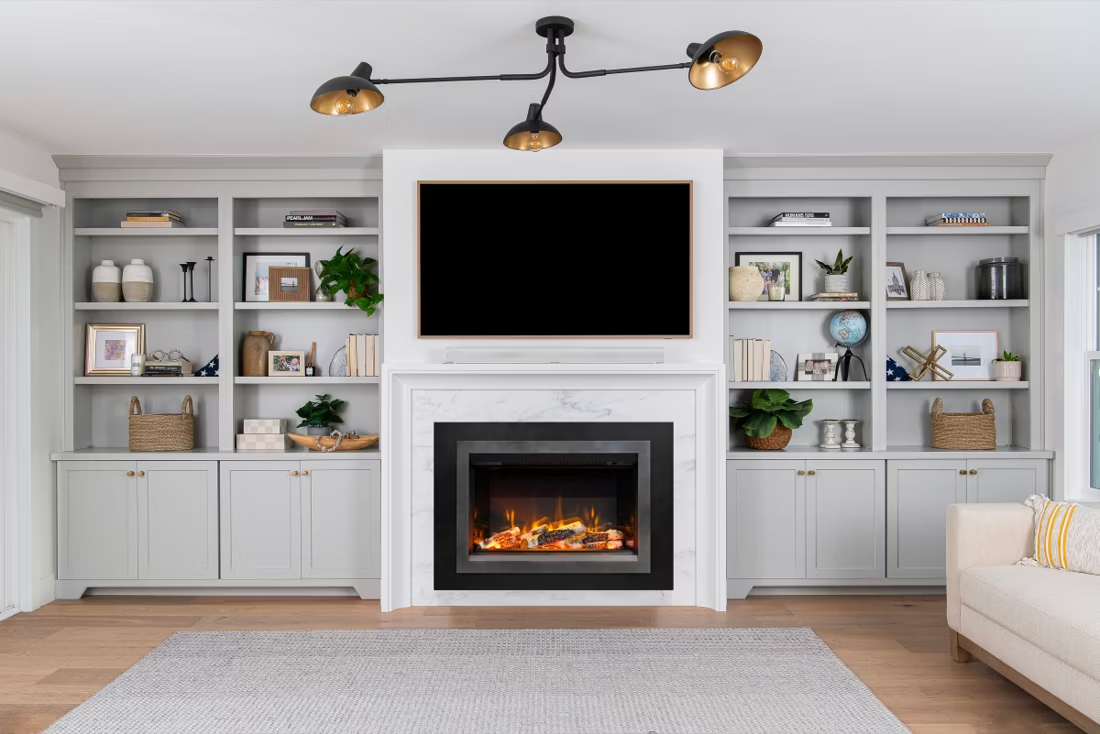
Yes—with an asterisk. Fireplaces are hot and TVs don't like heat. Either put a mantel between them to deflect rising warmth, or choose a fireplace with heat-management technology that creates a cool zone on the wall above—the wall stays around 125 degrees, barely warm, while the room still gets full heat. If you like clean lines and don't want a mantel, heat management is the answer.
Can a fireplace actually lower my heating bill?
Yes—by creating a comfort zone. A furnace heats every square foot of the house just to warm the one room you're in; a gas fireplace on low burns roughly a sixth of the gas a typical furnace does. Set the furnace around 55–60 degrees as a baseline, then heat the rooms your family actually uses. Families who heat this way commonly save $20–$60 a month.
What is an in-home preview and do I need one?
It's a visit where a hearth professional measures your space, confirms the model you picked actually works in your home, and walks the specs—framing, gas line, venting, finish work—before anything is ordered. Some details you just can't know until you see the house. Never make a down payment without one; it's the single most-skipped step that burns buyers.
Stove and Fireplace Dealers in Jefferson County
Find your electric fireplace in Jefferson County.
Tell us a bit about your home and we'll match you with the right electric fireplace or insert, plus a free Project Guide & Parts List—the exact parts and your recommended local Jefferson County dealer, ready to go.
Find Your Fireplace →