
Electric heat that works in every room of your Jackson County home.
No chimney, no gas line, no venting—just clean, controllable heat for the additions, basements, and rentals that oak-fired wood stoves and gas lines never quite reach across Jackson County.
Every Project Starts From One of These Five Situations
The easiest fireplace upgrade in Jackson County.
Jackson County sits in the Muscatatuck and White River valleys of south-central Indiana, in climate zone 4A with a solid six-month heating season and winter lows that average around 22°F. It's a real heating season—long enough that a lot of Seymour and Brownstown homeowners run supplemental heat from October through March—but not so brutal that a room needs 100,000 BTUs to stay comfortable. That middle ground is exactly where electric fireplaces earn their keep. Jackson County's woodlots are thick with oak, hickory, maple, and beech, and plenty of rural households still burn wood or run propane and natural gas appliances as primary heat. But when it comes to a finished basement in Seymour, a bonus room addition in Brownstown, or a rental unit in Crothersville where running a gas line or masonry chimney isn't practical, electric is often the more sensible call.
Electric units plug into a standard outlet or wire into a dedicated 20-amp circuit, produce zero combustion byproducts, and need no chimney or vent kit at all—which matters whether you're on Jackson County REMC's cooperative lines out in the rural townships or municipal and investor-owned service closer to town. There's no cutting permit to pull, no cordwood to season, and no annual chimney sweep. For homeowners who want the visual warmth of a fire and some real supplemental heat without touching the roofline or the gas meter, an electric insert or wall-mount unit gets it done in an afternoon.
Three steps. No salesperson until you're ready.
Tell us about your project
Your zip code, your situation, and the fuel you're leaning toward—or let the answers point you to one.
See what's actually available
The brands dealers within 100 miles genuinely carry—real options, never a catalog mirage.
Get your dealer & Project Guide
A trusted local dealer, plus the free Project Guide & Parts List that names every component of the job.
Frequently Asked Questions
How much does an electric fireplace installation cost in Jackson County?
Freestanding and plug-in electric fireplaces are the least expensive option, typically running $150 to $600 for the unit with no professional installation required beyond plugging it in. Built-in electric fireplaces, wall-mount units, and inserts that replace an existing masonry firebox usually run $1,200 to $3,500 installed, which covers the unit, any surround or mantel carpentry, and an electrician running a dedicated circuit if the existing outlet isn't rated for it. Costs trend toward the higher end for older Brownstown and Seymour homes with knob-and-tube or undersized panel wiring, since the electrical work becomes the bigger line item rather than the fireplace itself.
Do I need a permit to install an electric fireplace in Jackson County?
Plug-in freestanding units generally don't require any permit since there's no wiring or venting modification involved. Built-in or wall-mounted electric fireplaces that get hardwired to a dedicated circuit typically do require an electrical permit, pulled through the Jackson County Building Department (or the local jurisdiction if you're inside Seymour city limits). A licensed electrician handling the circuit work will usually pull this permit as part of the job, so it's worth confirming that's included in any installer's quote before work starts.
Is electric heat enough for a Jackson County winter, or is it just for looks?
With Jackson County having a solid six-month heating season and winter lows near 22°F, electric fireplaces work best as zone heat for a specific room rather than as whole-house primary heat—most units top out around 5,000 to 5,200 BTUs, enough to comfortably warm 400 to 1,000 square feet depending on insulation. That makes them a strong fit for a finished basement, sunroom, or home office where running ductwork or a gas line isn't practical, but they're not a replacement for a furnace on the coldest nights. Homeowners looking for true primary heat in Jackson County's climate typically pair electric with existing central heat rather than relying on it alone.
What size electric fireplace do I need for my room?
Match the heater's BTU rating to your square footage and insulation level rather than just the look of the unit. A 26 to 30-inch wall-mount or insert with a 4,600 to 5,200 BTU heater handles a typical 300 to 600 square foot Jackson County living room or basement rec room; larger 50 to 60-inch units are usually chosen for visual impact across a wide wall and often have the heater feature turned off or dialed down for supplemental use only. Older farmhouses around Medora and Freetown with higher ceilings and less insulation will want to size up or treat the electric unit as a secondary heat source alongside a wood stove or furnace.
Should I get an insert, a wall-mount, or a mantel package?
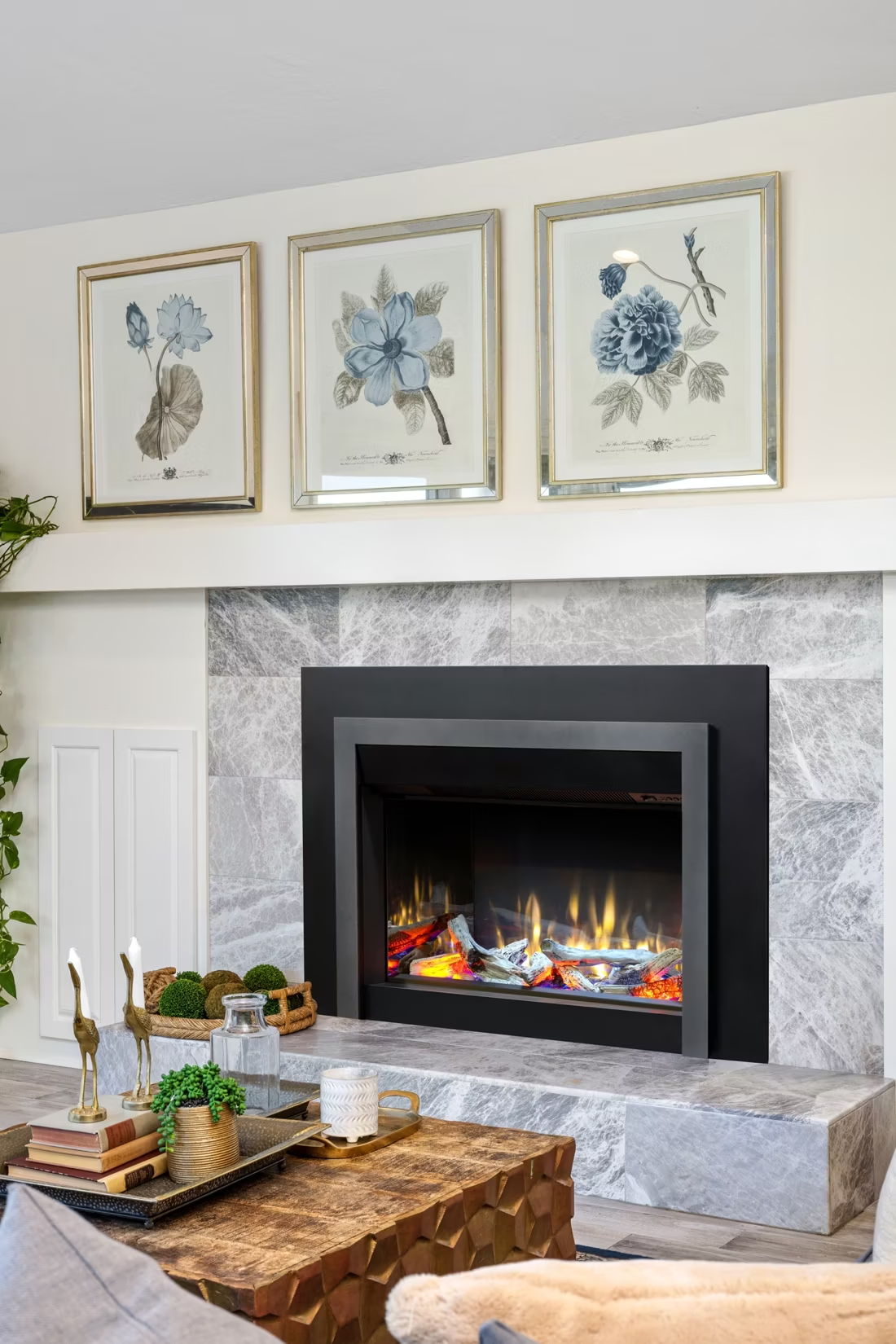
If you already have a masonry fireplace—common in older Seymour and Brownstown homes—an electric insert slides into that existing opening and gives you a clean, code-free upgrade without touching the chimney (which can simply be capped). A wall-mount unit is the right call for a room with no existing fireplace, mounting flush or recessed into the wall like a large-format TV. A mantel package pairs a smaller electric firebox with a freestanding cabinet, which works well for renters in Crothersville or Medora who want fireplace ambiance without any modification to the wall or unit.
How much does an electric fireplace cost to run compared to wood or gas?
A typical electric fireplace draws around 1,500 watts on the heat setting, which runs roughly 15 to 20 cents per hour at typical Jackson County residential electric rates—cheaper per hour than propane in most cases, though generally higher than well-seasoned oak or hickory cut on your own property. The advantage isn't fuel cost, it's convenience and zero maintenance: no cutting permits, no cordwood storage, no propane tank rental. For a room used a few hours a night through the winter, most homeowners find the electric bill increase modest and predictable, especially compared to running a whole-house furnace harder to heat one room.
Where do electric fireplaces make the most sense in Jackson County?
The strongest fit is anywhere a chimney or gas line isn't realistic: finished basements in Seymour ranch homes, additions in Brownstown built without ductwork extended to the new space, mobile and manufactured homes around Crothersville where venting a wood or gas appliance is restricted, and rental properties throughout the county where a landlord wants ambiance and supplemental heat without the liability of an open flame. It's also a common choice for bedrooms and home offices where a small, controllable heat source beats running the central furnace for one occupied room.
Are electric fireplaces safe around kids and pets?
Electric fireplaces run cooler to the touch than wood stoves or gas units—most glass fronts stay at or near room temperature since there's no real flame or combustion—and nearly all models include an automatic overheat shutoff and a cool-touch exterior. There's no creosote buildup, no chimney fire risk, and no carbon monoxide to monitor, which matters for rural Jackson County properties where fire department response times can run longer than in town. That said, the heating element and any exposed cord still warrant normal supervision around small children.
Are there rebates or efficiency incentives for electric fireplaces in Jackson County?
Electric fireplaces are 100% efficient at the point of use—every watt becomes heat in the room, unlike wood or gas where some heat is lost to the flue—but there generally aren't dedicated manufacturer rebates for electric fireplace purchases the way there are for heat pumps or high-efficiency furnaces. It's worth checking directly with Jackson County REMC or your local electric provider for any seasonal efficiency programs, since co-op incentives change year to year and aren't always advertised outside member mailings. A local dealer can also flag any current manufacturer promotions on specific insert or wall-mount models.
Can I put a TV above my fireplace?
Yes—with an asterisk. Fireplaces are hot and TVs don't like heat. Either put a mantel between them to deflect rising warmth, or choose a fireplace with heat-management technology that creates a cool zone on the wall above—the wall stays around 125 degrees, barely warm, while the room still gets full heat. If you like clean lines and don't want a mantel, heat management is the answer.
Do electric fireplaces actually produce heat?
Yes—most put out around 4,800–5,000 BTUs from a standard outlet, which comfortably warms a bedroom, office, or den as a comfort-zone heater. What they won't do is carry a whole house the way wood, gas, or pellet can. Think of electric as ambiance-first with honest supplemental heat: flames on with no heat in July, flames plus warmth in January.
Can I install a fireplace myself?
If you're putting a fire in your house on purpose, it's best to work with an expert. Unless you're genuinely experienced in framing, gas line, vent pipe, and the national code on clearances to combustibles, have a professional do it—and ideally the same company that sells you the fireplace, so warranty, service, and liability all live under one roof.
Does a fireplace add value to my home?
On average, a fireplace adds back to the home about the same amount you spent installing it. Add the monthly savings from heating the rooms you actually use instead of the whole house—often hundreds of dollars a year—and the value case is strong before you even count what a fire does for how your family uses the room.
Find your electric fireplace in Jackson County.
Tell us about your room and how you want to use it, and we'll match you with a trusted local Jackson County dealer plus a free Project Guide & Parts List—the exact unit, mounting or insert specs, and electrical requirements for your space.
Find Your Fireplace →