
Find the right electric fireplace for your Henry County home.
No gas line, no chimney, no permit headaches—just plug-in warmth and ambiance for homes across New Castle, Knightstown, Middletown, and the rest of Henry County. Find the right unit and connect with a trusted local dealer.
Every Project Starts From One of These Five Situations
Simple, flexible heat for east-central Indiana winters.
Henry County sits in climate zone 5A with a winter heating load about like Bismarck, ND's, and average winter lows around 17°F—a solid, unremarkable Midwest winter, comparable in severity to what homeowners deal with in Fargo ND or Bismarck ND on the coldest stretches, though nowhere near as extreme most of the year. That's not a climate that demands electric as primary heat, but it's exactly the kind of setting where electric fireplaces earn their keep as supplemental zone heat: a den, a finished basement, a bedroom addition, or a main-floor mantel where the furnace already covers the baseline load and the electric unit adds ambiance plus a little extra warmth on the coldest nights.
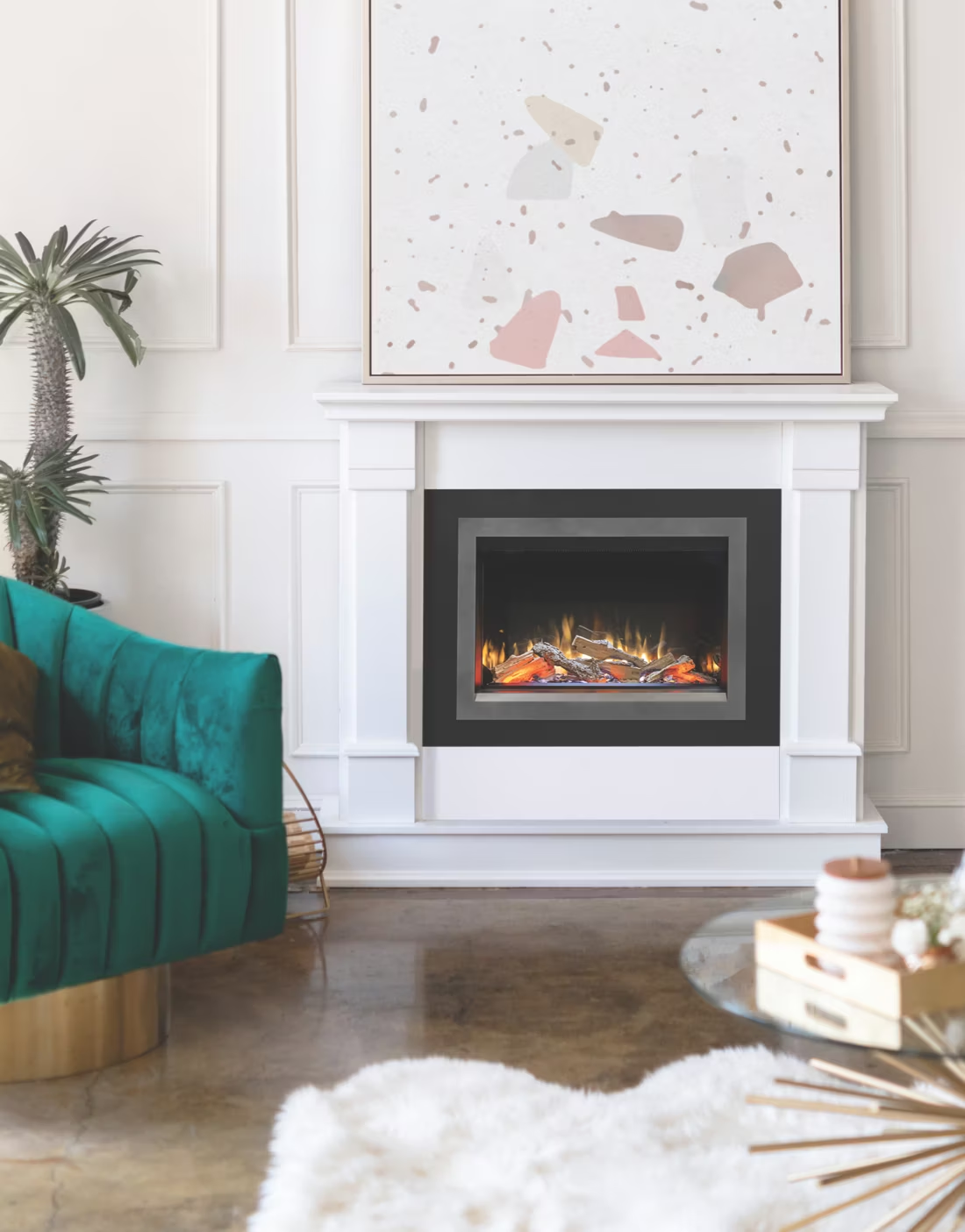
Homes throughout New Castle, Middletown, Knightstown, Cambridge City, and the county's rural stretches don't need a chimney, gas line, or venting system for an electric fireplace, which keeps installation straightforward compared to wood or gas projects nearby. Most units run on standard 120V household circuits, though larger built-ins sometimes call for a dedicated 240V circuit or electrician work. For renters, older farmhouses without existing masonry fireplaces, or homeowners who want a fast weekend upgrade without permits or combustion venting, electric is often the most practical path—and a local dealer can steer you toward the model that actually fits your room's heat load and your home's wiring.
Three steps. No salesperson until you're ready.
Tell us about your project
Your zip code, your situation, and the fuel you're leaning toward—or let the answers point you to one.
See what's actually available
The brands dealers within 100 miles genuinely carry—real options, never a catalog mirage.
Get your dealer & Project Guide
A trusted local dealer, plus the free Project Guide & Parts List that names every component of the job.
Frequently Asked Questions
How much does an electric fireplace installation cost in Henry County?
Most electric fireplace installations in Henry County run between $400 and $1,200. A plug-in insert or wall-mounted unit that uses an existing standard outlet sits at the low end. Built-in units requiring a dedicated 240V circuit, new framing, or a mantel surround push toward the higher end once electrician labor is factored in. Because there's no venting or chimney work involved, electric installs are consistently the least expensive hearth project available to homeowners in New Castle and the surrounding townships—often a fraction of what a comparable wood or gas insert would cost.
Do I need a permit to install an electric fireplace in Henry County?
Typically no, if you're installing a plug-in unit into an existing outlet—there's no combustion, so it falls outside the building code triggers that apply to wood and gas appliances. If your project involves adding a new dedicated circuit or doing electrical panel work, a licensed electrician will usually pull an electrical permit through the appropriate local jurisdiction as part of that work. It's worth asking your installer directly, since the answer depends on the scope of the electrical work rather than the fireplace itself.
Will an electric fireplace actually heat my room, or is it just for looks?
Most electric fireplaces include a real heating element—typically 1,500 watts, which is enough to noticeably warm a single room (200-400 square feet) in addition to whatever ambiance the flame effect provides. For Henry County homes where the furnace already handles whole-house heating, an electric unit in a den, bedroom, or finished basement adds meaningful supplemental warmth on cold nights without straining the HVAC system. Just don't expect it to replace your furnace during a stretch of single-digit lows—it's built for zone heating, not whole-home output.
What size electric fireplace do I need for my space?
Sizing depends more on the room's square footage and insulation than on the width of the unit's flame display. As a rough guide for Henry County homes: a 750-1,000 watt unit suits a small bedroom or office, 1,500 watts (the most common output) handles most standard living rooms and dens, and larger built-in units with dual heaters can cover open-concept spaces. Older farmhouses with less insulation, common throughout the rural parts of the county, may need a slightly higher-output unit than a newer, tightly-built home of the same square footage. A local dealer can size the room correctly rather than guessing off the box specs.
What's the difference between an electric insert, a wall-mount, and a freestanding electric stove?
An electric insert is designed to slide into an existing masonry fireplace opening, giving an old wood-burning fireplace a no-maintenance makeover without touching the chimney. A wall-mount unit hangs like a flat-screen TV and works well in newer construction or remodels where there's no existing fireplace. A freestanding electric stove sits on the floor and mimics the look of a wood or pellet stove, which is a popular choice for Henry County homes wanting stove styling without the wood handling or venting. All three plug into standard household power in most cases.
Can an electric fireplace run during a power outage?
No—electric fireplaces require utility power to operate, so they go dark along with everything else during an outage. This is worth factoring into your fuel decision if backup heat during winter storms matters to you. Henry County homeowners who want heat that survives a power outage typically pair an electric fireplace (for everyday convenience and ambiance) with a wood stove or a battery-backed gas unit elsewhere in the house for outage resilience. If electric is your only hearth appliance, a portable generator is the main fallback during extended outages.
How does an electric fireplace compare to a gas or wood option for a Henry County home?
Wood offers real fire and radiant heat, and it's the traditional standard in a county with plentiful oak, hickory, and maple available for burning, but it requires chimney maintenance and doesn't suit every home. Gas delivers instant, higher-output heat with real flame but needs a gas line or propane tank and periodic servicing. Electric skips both the venting and the fuel supply chain entirely—no chimney, no gas line, no ash, no permit hassle in most cases—in exchange for lower heat output and total dependence on grid power. For a supplemental unit in a den, basement, or bedroom, electric is usually the simplest and cheapest of the three. For primary heat backup during outages, wood or gas typically wins.
Do electric fireplaces need any regular maintenance?
Very little compared to wood or gas. Most manufacturers recommend occasionally dusting the unit and checking that the fan and blower vents stay clear of debris or pet hair, since a blocked vent can cause the unit to overheat and shut off as a safety measure. LED light strips inside modern units are rated for tens of thousands of hours and rarely need replacement. There's no annual chimney sweep or gas line inspection required, which is part of why electric appeals to homeowners in Henry County who want hearth ambiance without an ongoing service commitment.
Is an electric fireplace a good fit for a rental or a home I'm not planning to stay in long-term?
Yes—this is one of the more common reasons Henry County homeowners and renters choose electric. Plug-in units require no permanent alteration to the home, can be unplugged and taken to the next house, and don't involve chimney or gas line work that a landlord would need to approve. Wall-mounted or insert-style units that get built into trim or an existing fireplace opening are less portable but still avoid the combustion venting and code review that wood or gas installs require. For a starter home in New Castle or a rental property anywhere in the county, electric is often the lowest-commitment way to add real hearth ambiance.
Do electric fireplaces actually produce heat?
Yes—most put out around 4,800–5,000 BTUs from a standard outlet, which comfortably warms a bedroom, office, or den as a comfort-zone heater. What they won't do is carry a whole house the way wood, gas, or pellet can. Think of electric as ambiance-first with honest supplemental heat: flames on with no heat in July, flames plus warmth in January.
Does an electric fireplace need a vent or chimney?
No—that's its superpower. An electric fireplace needs a wall and an outlet, period. No vent pipe, no gas line, no clearances to design around, which is why it works in bedrooms, offices, apartments, and walls where venting a gas or wood unit would be impractical or impossible. Installation is typically the simplest and least expensive of any fireplace type.
What is an in-home preview and do I need one?
It's a visit where a hearth professional measures your space, confirms the model you picked actually works in your home, and walks the specs—framing, gas line, venting, finish work—before anything is ordered. Some details you just can't know until you see the house. Never make a down payment without one; it's the single most-skipped step that burns buyers.
Can I install a fireplace myself?
If you're putting a fire in your house on purpose, it's best to work with an expert. Unless you're genuinely experienced in framing, gas line, vent pipe, and the national code on clearances to combustibles, have a professional do it—and ideally the same company that sells you the fireplace, so warranty, service, and liability all live under one roof.
Find your electric fireplace in Henry County.
Tell us a bit about your home and we'll match you with the right electric fireplace, insert, or stove—plus a free Project Guide & Parts List and a trusted local dealer to install it.
Find Your Fireplace →