
Find your electric fireplace in Franklin County.
Plug-in warmth and zero-clearance style for the rolling hill country around Brookville, Laurel, and Oldenburg. Find the right unit and connect with a trusted local dealer.
Every Project Starts From One of These Five Situations
Instant heat with none of the venting hassle.
Franklin County sits in climate zone 5A with a solid Midwest heating season and winter lows averaging 20 degrees—a real but manageable Midwest winter, similar in feel to Madison, WI, though not nearly as punishing as Duluth or International Falls. With roughly 5,500 residents spread across small towns like Brookville, Laurel, and Oldenburg and a lot of rural acreage in between, a good share of the county's housing stock is older farmhouses, log-sided homes, and additions without existing chimneys or gas lines. That's exactly where electric fireplaces earn their place.
There's no venting to run, no gas line to trench, and no combustion byproducts to worry about—which makes electric a practical fit for finished basements, converted porches, bedrooms, and any room where cutting a hole for venting isn't realistic or worth the cost. It won't replace a wood stove as primary heat during a January cold snap the way an oak or hickory fire might, but for supplemental warmth, ambiance, and a fast weekend install, it's hard to beat in a county where a lot of homes are older and budgets for major renovation work are tighter than in nearby Cincinnati suburbs.
Three steps. No salesperson until you're ready.
Tell us about your project
Your zip code, your situation, and the fuel you're leaning toward—or let the answers point you to one.
See what's actually available
The brands dealers within 100 miles genuinely carry—real options, never a catalog mirage.
Get your dealer & Project Guide
A trusted local dealer, plus the free Project Guide & Parts List that names every component of the job.
Frequently Asked Questions
How much does an electric fireplace installation cost in Franklin County?
Most electric fireplace and insert installations in Franklin County run between $400 and $1,200, which is a fraction of what wood or gas installs cost since there's no venting, chimney work, or gas line to install. A basic plug-in insert into an existing mantel surround sits at the low end. A built-in wall unit with electrical work—running a dedicated 120V circuit, cutting into drywall, and finishing trim—lands toward the higher end. Local dealers serving Brookville and the surrounding townships can usually complete a straightforward install in a single day.
Do I need an electrician to install an electric fireplace?
For a simple plug-in unit, no—it goes into any standard outlet. For a built-in electric fireplace or one requiring a dedicated circuit (common with larger units drawing close to 1,500 watts), yes, a licensed electrician should run the line. Many local hearth dealers either employ an electrician or coordinate directly with one as part of the install, which is worth asking about upfront so you're not managing two separate contractors for a project this small.
Will an electric fireplace actually heat my room?
Most units are rated for 400-1,500 square feet depending on model and are genuinely effective as supplemental heat in a single room—a den, bedroom, or finished basement. They won't heat an entire farmhouse through a Franklin County January the way a wood stove burning seasoned oak or hickory can, and they're not a substitute for your primary furnace on the coldest nights when temps drop toward that 20-degree average low. Think of electric as zone heat: turn it on where you're sitting, turn down the thermostat elsewhere, and let the fireplace do double duty as ambiance and a bill-trimmer.
Do I need a permit for an electric fireplace in Franklin County?
Typically no for a plug-in unit—it's treated like any other appliance. A built-in installation that involves new electrical circuitry may fall under Franklin County's building and electrical permitting depending on the scope of work, so it's worth a quick call to the county building department if your project includes wall modifications or new wiring. Local dealers who handle built-in installs regularly can tell you within a few minutes whether your specific project needs a permit.
What's the difference between an electric insert and a built-in electric fireplace?
An electric insert is sized to slide into an existing masonry fireplace opening or a mantel surround—a common choice for older Franklin County farmhouses that have an unused wood-burning fireplace they'd rather not maintain. A built-in unit is framed into a wall like a piece of millwork, with no existing opening required, which makes it a good fit for additions, finished basements, or new construction. Inserts are usually the faster and cheaper of the two since they use an opening you already have.
Is electric a realistic primary heat source in Franklin County's climate?
Not really, and any honest local dealer will tell you the same. With a solid Midwest heating season and winter lows regularly near 20 degrees, Franklin County needs a real primary heating system—furnace, heat pump, or a wood/gas appliance sized for whole-home use. Electric fireplaces are best understood as supplemental heat and ambiance for a specific room, not a way to lower your furnace's workload across the whole house. Where they shine is targeted comfort: heating the room you're actually in without running ductwork harder than it needs to.
Can I put an electric fireplace on any wall?
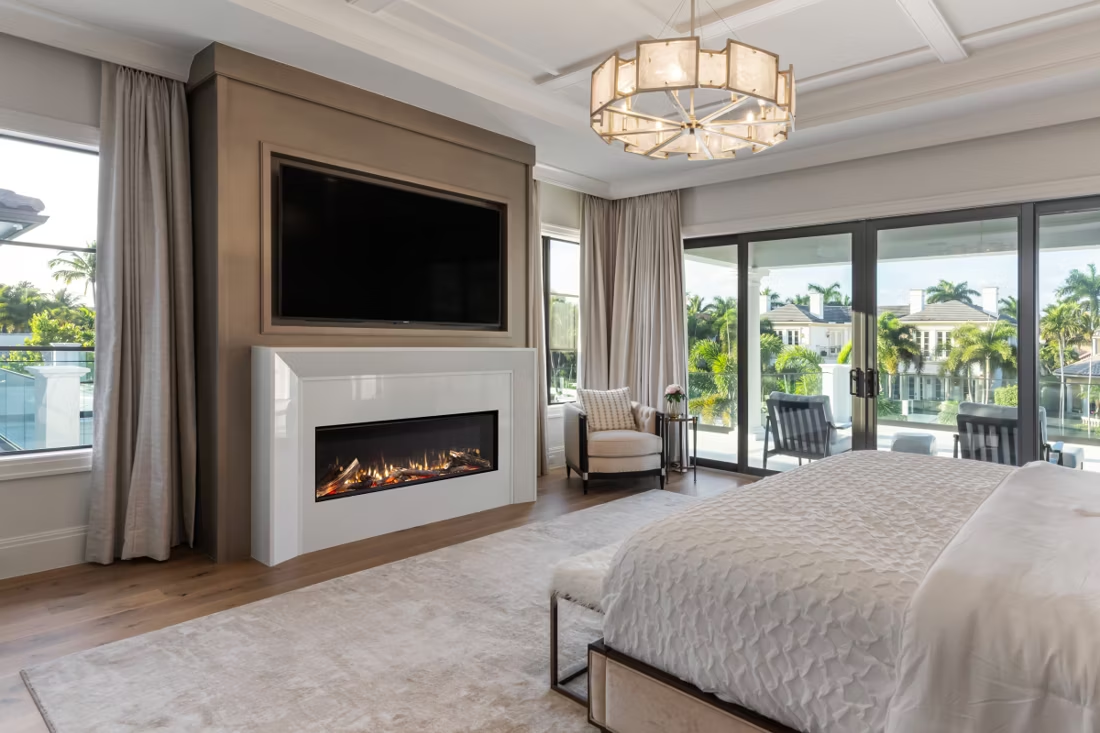
Nearly—electric fireplaces don't need clearance to combustibles the way wood stoves do, so they can go against almost any wall, including over TVs in a media wall setup, which is a popular request from Franklin County homeowners doing basement or living room refreshes. The main constraint is outlet access or, for built-ins, proximity to an electrical panel for new circuit runs. A local dealer can walk your space in about fifteen minutes and tell you what's realistic.
How does an electric fireplace compare to wood heat, given the local wood supply?
Franklin County has plenty of oak, hickory, maple, and beech in the surrounding woodlots, and a lot of longtime residents already burn wood as a serious heat source or backup during outages—something electric simply can't do, since it needs grid power to run. Electric wins on convenience: no splitting, stacking, or ash cleanup, and instant on-off with a remote. Wood wins on raw heat output and independence from the power grid. Plenty of local homes run both—wood for the workhorse heat and cold-weather backup, electric for the room where a chimney was never in the cards.
Are electric fireplaces expensive to run day to day?
Running costs depend on your electric rate and how many hours you use the heater function versus flame-only mode. Most units draw around 1,500 watts on high heat, which on a typical rural Indiana electric rate works out to a modest per-hour cost—far less than most people assume, especially if you're using it to supplement rather than replace your furnace. Running flame effects without heat (common in shoulder-season months) costs only pennies an hour since the light show alone draws very little power.
Can I put a TV above my fireplace?
Yes—with an asterisk. Fireplaces are hot and TVs don't like heat. Either put a mantel between them to deflect rising warmth, or choose a fireplace with heat-management technology that creates a cool zone on the wall above—the wall stays around 125 degrees, barely warm, while the room still gets full heat. If you like clean lines and don't want a mantel, heat management is the answer.
Does an electric fireplace need a vent or chimney?
No—that's its superpower. An electric fireplace needs a wall and an outlet, period. No vent pipe, no gas line, no clearances to design around, which is why it works in bedrooms, offices, apartments, and walls where venting a gas or wood unit would be impractical or impossible. Installation is typically the simplest and least expensive of any fireplace type.
Does a fireplace add value to my home?
On average, a fireplace adds back to the home about the same amount you spent installing it. Add the monthly savings from heating the rooms you actually use instead of the whole house—often hundreds of dollars a year—and the value case is strong before you even count what a fire does for how your family uses the room.
Can I install a fireplace myself?
If you're putting a fire in your house on purpose, it's best to work with an expert. Unless you're genuinely experienced in framing, gas line, vent pipe, and the national code on clearances to combustibles, have a professional do it—and ideally the same company that sells you the fireplace, so warranty, service, and liability all live under one roof.
Get your Franklin County electric fireplace Project Guide.
Tell us a bit about your home and we'll match you with a trusted local dealer plus a free Project Guide & Parts List—sized to your room and ready for install.
Find Your Fireplace →