
Add real warmth to a DeKalb County home—no chimney required.
From the older farmhouses around Auburn and Waterloo to newer builds in Garrett and Butler, electric fireplaces give DeKalb County homeowners zone heat without venting, gas lines, or a masonry chimney. Find the right unit and connect with a trusted local dealer.
Every Project Starts From One of These Five Situations
Zone heat that fits any DeKalb County home.
DeKalb County sits in northeast Indiana's climate zone 5A, with roughly 6,590 heating degree days a year and winter lows that average 16°F—a cold-climate profile closer to Madison, WI than to most of the Midwest's I-70 corridor. Furnaces run hard from November through March across Auburn, Garrett, Waterloo, Butler, and Ashley, and a lot of the county's housing stock—older farmhouses with balloon framing, post-war ranch homes, mobile and manufactured housing on the rural edges of the county—has cold rooms that the central system never quite catches up on.
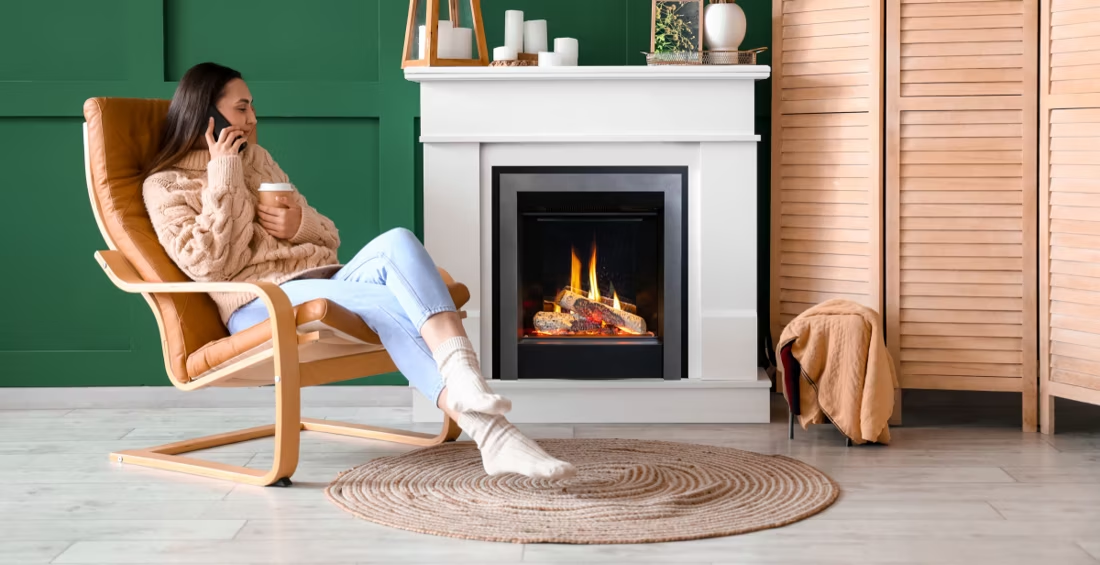
That's where electric fireplaces do real work. There's no chimney to build, no gas line to run, and no permit hassle for a standard plug-in unit—just a 120V outlet and a room that needs supplemental heat. DeKalb REMC serves much of the rural county outside Auburn's municipal service area, and a 1,500-watt electric insert or stove is a predictable, low-drama add to a monthly bill compared to running propane or extending gas piping to a detached space. For finished basements, sunrooms, converted porches, and bedrooms in older DeKalb County homes that never got proper ductwork, electric heat is often the simplest fix available.
Three steps. No salesperson until you're ready.
Tell us about your project
Your zip code, your situation, and the fuel you're leaning toward—or let the answers point you to one.
See what's actually available
The brands dealers within 100 miles genuinely carry—real options, never a catalog mirage.
Get your dealer & Project Guide
A trusted local dealer, plus the free Project Guide & Parts List that names every component of the job.
Frequently Asked Questions
How much does an electric fireplace installation cost in DeKalb County?
A freestanding or wall-mounted plug-in electric fireplace typically runs $200 to $700 for the unit itself, with no installation cost beyond plugging it in—a good fit for renters in Garrett or Waterloo who can't modify the structure. A built-in electric insert or a unit tied to a dedicated 20-amp circuit runs higher, usually $800 to $2,500 including an electrician's time, especially in older DeKalb County farmhouses where the existing panel needs a new circuit run. Converting an old, unused masonry fireplace opening into an electric insert is one of the more common projects local dealers handle here, since it keeps the mantel and surround while eliminating the draft of an open flue.
Do I need a permit to install an electric fireplace in DeKalb County?
Most plug-in, freestanding electric fireplaces don't require any permit—they're treated like any other appliance you plug into a wall outlet. If you're adding a built-in unit that requires new wiring or a dedicated circuit, that electrical work typically needs a permit through the DeKalb County Building Department (or the City of Auburn if you're inside city limits), and it should be done by a licensed electrician regardless of whether a permit is technically required. Local dealers who handle installs in the county generally coordinate this step for you.
Will an electric fireplace actually heat my DeKalb County home?
Most electric fireplace inserts and stoves are rated around 4,600–5,000 BTU (roughly 1,500 watts), which comfortably heats a single room of 300–400 square feet—enough to take the edge off a chilly bedroom or den, but not enough to replace a furnace during a DeKalb County winter with 6,590 heating degree days and average lows near 16°F. Think of electric heat as zone heating: it lets you turn the thermostat down elsewhere in the house and keep the room you're actually using warm, which is where most of the real savings come from.
What's the best electric fireplace option for a rental or mobile home in DeKalb County?
Freestanding electric stoves and cabinet-style units are the easiest fit for rentals in Garrett, Waterloo, or Butler and for the manufactured housing common in the rural parts of DeKalb County—no structural changes, no wiring, just an outlet and clearance from combustibles. Wall-mounted electric fireplaces are the next step up if you own the home and want a built-in look without the electrical work of a full insert. Either option can be unplugged and taken with you if you move.
Electric vs. wood—which makes more sense for my DeKalb County home?
Wood stoves burning local oak, hickory, maple, or beech still make sense for DeKalb County homes that want heat during a power outage—a real consideration on the rural DeKalb REMC lines during ice storms—and for homeowners with access to cheap or free firewood. Electric fireplaces win on convenience: no wood handling, no ash, no chimney maintenance, and instant on-off operation, but they go dark the moment the power does. A lot of county homeowners end up with both—wood or a backup generator-fed system for outages, electric for everyday ambiance and zone heat in a room the furnace doesn't reach well.
Electric vs. propane—which is right for my DeKalb County home?
Propane is common throughout rural DeKalb County where natural gas mains don't reach, and a propane fireplace or insert delivers more heat output than electric—useful if you're trying to offset furnace load in a drafty older farmhouse. But propane means a tank, delivery, and fuel cost that electric skips entirely. For a room that just needs supplemental warmth and where running a gas line would mean real expense, an electric insert is usually the simpler, lower-cost answer. For whole-room or near-primary heat, propane still has the edge.
How much does it cost to run an electric fireplace day to day?
A typical 1,500-watt electric fireplace run on high costs roughly 15–25 cents an hour depending on your DeKalb REMC or municipal electric rate—comparable to running a large space heater. Most units have a lower-wattage flame-only setting for ambiance without the heat, which costs only a few cents an hour. Compared to running your furnace to compensate for a cold room, zone heating one space with an electric insert is usually the cheaper option over a full DeKalb County winter.
Can I put an electric insert into my existing fireplace opening?
Yes—this is one of the more common projects local dealers see in DeKalb County's older housing stock, particularly farmhouses around Auburn and Waterloo with an existing but rarely-used masonry fireplace. An electric insert slides into the opening, plugs into a nearby outlet (or a new dedicated circuit for larger units), and gives you the look of a fire without needing to address the chimney's condition at all—a real advantage if the flue itself needs expensive repair work you'd rather skip.
How do I find a local dealer who installs electric fireplaces in DeKalb County?
Look for a hearth dealer who actually installs in DeKalb County rather than just ships a box—someone who will size the unit to your room, tell you honestly whether you need a dedicated circuit, and coordinate any electrical permit with the county if the project calls for it. A local installer will also know which units hold up well in older farmhouse wiring versus newer construction, which matters more than most online retailers let on.
Does an electric fireplace need a vent or chimney?
No—that's its superpower. An electric fireplace needs a wall and an outlet, period. No vent pipe, no gas line, no clearances to design around, which is why it works in bedrooms, offices, apartments, and walls where venting a gas or wood unit would be impractical or impossible. Installation is typically the simplest and least expensive of any fireplace type.
Can I put a TV above my fireplace?
Yes—with an asterisk. Fireplaces are hot and TVs don't like heat. Either put a mantel between them to deflect rising warmth, or choose a fireplace with heat-management technology that creates a cool zone on the wall above—the wall stays around 125 degrees, barely warm, while the room still gets full heat. If you like clean lines and don't want a mantel, heat management is the answer.
How much should I budget for a fireplace?
For an average home—covering the fireplace, the vent pipe, and basic installation—a budget between $3,900 and $5,500 gives you a lot of options across wood, gas, and pellet. By the time you add finish work, gas line, and electrical, the average complete installation lands between $5,000 and $12,000 all-in. In a remodel or new build, a good rule is to put about 2.5% of the total project cost toward the fireplace.
Can I install a fireplace myself?
If you're putting a fire in your house on purpose, it's best to work with an expert. Unless you're genuinely experienced in framing, gas line, vent pipe, and the national code on clearances to combustibles, have a professional do it—and ideally the same company that sells you the fireplace, so warranty, service, and liability all live under one roof.
Stove and Fireplace Dealers in DeKalb County
Find your electric fireplace in DeKalb County.
Tell us a bit about your home and we'll put together a free Project Guide & Parts List—the right electric fireplace or insert for your space, the exact parts you'll need, and a trusted local dealer in DeKalb County to install it.
Find Your Fireplace →