
Find the right electric fireplace for your Cass County home.
Supplemental zone heat and real ambiance for Cass County homes—from Logansport row houses to Walton and Galveston farmhouses—without a chimney, gas line, or wood pile. Find the right unit and connect with a trusted local dealer.
Every Project Starts From One of These Five Situations
Reliable warmth without venting, gas lines, or fuel storage.
Cass County sits where the Wabash and Eel rivers meet in north-central Indiana, with Logansport as the county seat and roughly 22,500 residents spread between town and surrounding farmland. Winters here run cold but not extreme—Climate Zone 5A, an average winter low near 18°F, and just under 6,000 heating degree days puts Cass County in a more moderate band than the truly brutal winters of Fargo, ND or Duluth, MN, but still cold enough that a single central furnace can leave back bedrooms, sunrooms, and converted farmhouse additions chilly from November through March.
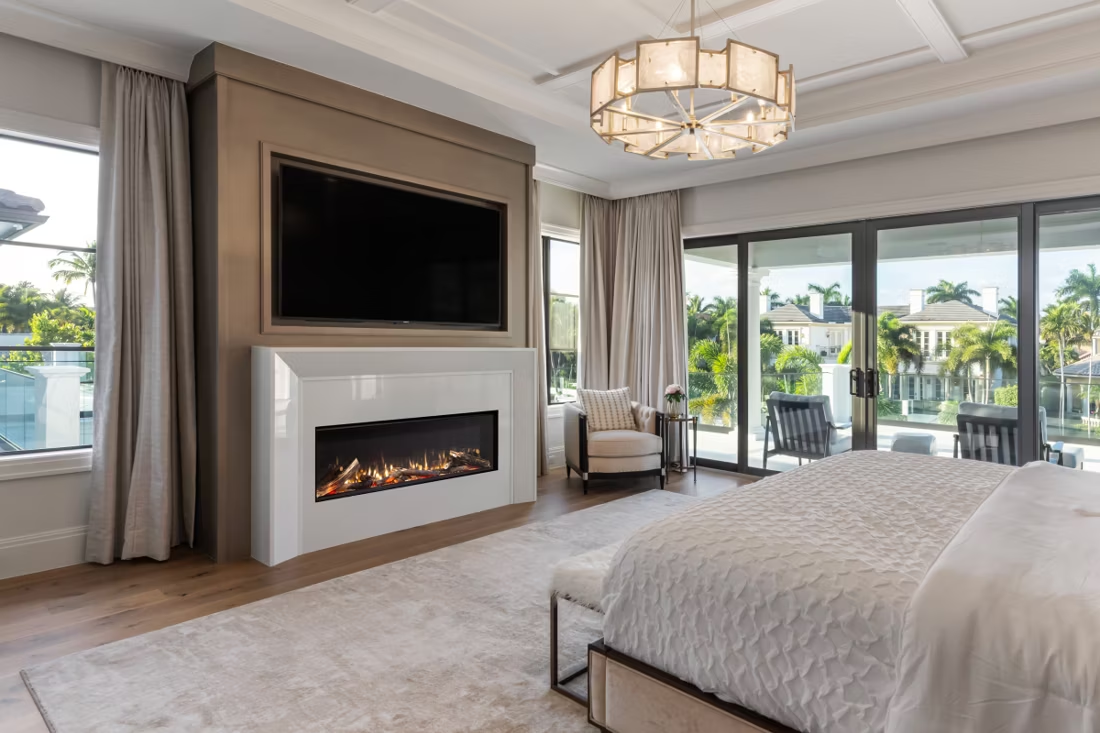
That's the gap electric fireplaces fill best. Many of Cass County's older homes—especially the pre-1950s housing stock in Logansport and the farmhouses scattered through Walton, Galveston, and Royal Center—were built before whole-house forced air was standard, and some still have rooms that run cold no matter how hard the furnace works. An electric insert, wall-mounted unit, or freestanding stove plugs into a standard outlet (or a dedicated 20-amp circuit for larger built-ins), needs no chimney, no gas line, and no wood storage, and gives you real supplemental heat and flame-effect ambiance in the room that needs it most. It's also the fastest and least invasive install of any fireplace fuel type—a real advantage for renters, condo owners, and anyone who wants heat and ambiance without construction.
Three steps. No salesperson until you're ready.
Tell us about your project
Your zip code, your situation, and the fuel you're leaning toward—or let the answers point you to one.
See what's actually available
The brands dealers within 100 miles genuinely carry—real options, never a catalog mirage.
Get your dealer & Project Guide
A trusted local dealer, plus the free Project Guide & Parts List that names every component of the job.
Frequently Asked Questions
How much does an electric fireplace installation cost in Cass County?
Electric fireplaces are by far the least expensive fireplace fuel type to install because there's no chimney, no gas line, and no fresh-air intake to run. A plug-in insert or wall-mounted unit typically costs $300 to $1,500 installed, and most plug directly into an existing 120-volt outlet with no electrician needed. Larger built-in units or custom mantel packages that require a dedicated 20-amp circuit run higher, often $1,500 to $3,000, once an electrician is brought in to add the circuit. Local dealers serving Logansport and the rest of Cass County will size the unit to the room and tell you upfront whether your existing wiring is sufficient.
Can an electric fireplace heat my whole room, or just look nice?
Most electric fireplaces sold today put out real heat, not just visual flame effect—typical units are rated around 4,600 to 5,200 BTU (roughly 1,500 watts), enough to noticeably warm a 400 to 600 square foot room as supplemental heat. That's a good match for the kind of single-room heating gap common in Cass County's older housing stock—a sunroom addition in Logansport, a converted porch in Walton, or a bonus room over an unheated garage. They're not designed to replace your furnace across a whole house with nearly 6,000 heating degree days of Cass County winter, but they're very effective at making one specific room comfortable without running the whole system harder.
Do I need a permit to install an electric fireplace in Cass County?
For a standard plug-in electric insert or wall-mounted unit, no permit is needed—it's treated like any other appliance plugged into an outlet. If you're installing a built-in electric fireplace that requires new wiring or a dedicated circuit, that electrical work typically needs a permit through the Cass County Building Department (or the City of Logansport if the home is within city limits), and should be pulled by a licensed electrician. Local dealers who handle built-in installations are familiar with which projects cross that line and will flag it before work starts.
What's the difference between an electric insert, a wall-mounted unit, and a built-in?
An electric insert is sized to slide into an existing masonry fireplace opening, giving an old wood-burning fireplace in a Logansport home real usable heat again without touching the chimney. A wall-mounted unit hangs on any interior wall like a large flat-screen TV and is popular in rooms with no existing fireplace. A built-in is recessed into new framing—often as part of a media wall or new construction—and generally looks the most seamless but usually needs a dedicated circuit and sometimes drywall work. For most Cass County homes with an existing but unused fireplace, an insert is the simplest upgrade; homes without one usually go wall-mounted or built-in depending on the room.
Will an electric fireplace work during a power outage?
No—and this is the honest tradeoff against wood heat. Electric fireplaces require power to run, so during a winter outage they go dark along with the rest of the house's electric systems. In Cass County, where ice storms and downed lines from Wabash Valley winters do knock out power for stretches, that's worth planning around if backup heat matters to you. Homeowners who want both the convenience of electric heat day-to-day and a fallback during outages often pair an electric fireplace in the main living space with a wood stove or a battery/generator setup elsewhere in the house.
What's the best electric fireplace for Cass County's climate?
For the room-specific heating gaps typical of Cass County's older homes, look for a unit with a true heating element rated around 1,500 watts (roughly 5,000 BTU) rather than a decorative-only flame unit—that's the difference between ambiance and actual warmth on a January night near 18°F. Brands like Dimplex, Napoleon, and Touchstone are widely carried by hearth dealers in the region and offer thermostat control, which matters if you want the unit to cycle on and off automatically rather than running constantly. For an existing masonry fireplace in a Logansport home, an insert-style unit with a fan-forced heater will move more warm air into the room than a purely radiant model.
How much does it cost to run an electric fireplace in Cass County?
A typical 1,500-watt electric fireplace running on high costs roughly 15 to 25 cents per hour, depending on your rate. In Logansport, power is supplied by the city-owned Logansport Municipal Utilities, which includes hydroelectric generation on the Wabash River alongside purchased power; rural parts of the county are more often served by NIPSCO or a local electric cooperative. Either way, running an electric fireplace a few hours an evening in one room costs meaningfully less than raising the thermostat for the whole house, which is the main reason they're popular as zone heat rather than whole-home heat.
Electric vs. wood—which is right for my Cass County home?
Wood offers real backup heat during power outages, the lowest ongoing fuel cost if you have access to a woodlot, and works well with the oak, hickory, maple, and beech that's common firewood throughout Cass County. It requires a chimney, more maintenance, and physical wood handling. Electric offers instant on-off convenience, zero venting or chimney requirements, no ash or smoke, and the simplest install of any fuel type—but it does nothing for you if the power goes out, and it's a supplemental heat source rather than a furnace replacement. Many Cass County homeowners run both: wood in a main gathering space for backup heat and atmosphere, electric in a bedroom, sunroom, or basement where running a chimney isn't practical.
Electric vs. gas fireplace—which should I choose?
Gas fireplaces produce more heat output and can serve as a more serious supplemental or even primary heat source in a single room, but they require either a natural gas line or a propane tank and typically a professional venting installation. Electric fireplaces produce less raw heat but need nothing more than an outlet (or a dedicated circuit for larger units), making them the easier and cheaper retrofit—especially in a room where running new gas line isn't practical, like a converted attic space or an addition on a Cass County farmhouse. If your home already has gas service and you want real heating power in a frequently used room, gas is worth a look; if you want a fast, low-cost upgrade to a room that just needs a little extra warmth, electric is usually the better fit.
Can I put a TV above my fireplace?
Yes—with an asterisk. Fireplaces are hot and TVs don't like heat. Either put a mantel between them to deflect rising warmth, or choose a fireplace with heat-management technology that creates a cool zone on the wall above—the wall stays around 125 degrees, barely warm, while the room still gets full heat. If you like clean lines and don't want a mantel, heat management is the answer.
Does an electric fireplace need a vent or chimney?
No—that's its superpower. An electric fireplace needs a wall and an outlet, period. No vent pipe, no gas line, no clearances to design around, which is why it works in bedrooms, offices, apartments, and walls where venting a gas or wood unit would be impractical or impossible. Installation is typically the simplest and least expensive of any fireplace type.
Can I install a fireplace myself?
If you're putting a fire in your house on purpose, it's best to work with an expert. Unless you're genuinely experienced in framing, gas line, vent pipe, and the national code on clearances to combustibles, have a professional do it—and ideally the same company that sells you the fireplace, so warranty, service, and liability all live under one roof.
How much should I budget for a fireplace?
For an average home—covering the fireplace, the vent pipe, and basic installation—a budget between $3,900 and $5,500 gives you a lot of options across wood, gas, and pellet. By the time you add finish work, gas line, and electrical, the average complete installation lands between $5,000 and $12,000 all-in. In a remodel or new build, a good rule is to put about 2.5% of the total project cost toward the fireplace.
Find your electric fireplace in Cass County.
Tell us a bit about your home and we'll match you with the right electric insert, wall-mounted unit, or built-in—plus a free Project Guide & Parts List with the exact parts for your Cass County project and our recommended local dealer.
Find Your Fireplace →