
Add instant warmth to any room in Carroll County—no chimney required.
Zone heat for farmhouses, bonus rooms, and finished basements from Delphi to Flora and Camden—plug in or hardwire, no venting, no gas line. Find the right unit and connect with a trusted local dealer.
Every Project Starts From One of These Five Situations
Electric fireplaces fill the gaps wood and propane furnaces can't reach.
Carroll County sits at the confluence of the Wabash and Tippecanoe rivers in north-central Indiana, a farming county of about 7,200 people centered on Delphi with smaller communities in Flora, Camden, and Burlington. Climate zone 5A here means real winters—average lows around 19°F and a winter heating season on par with Madison, WI. Plenty of local homes burn oak, hickory, maple, and beech for supplemental heat, but a lot of Carroll County's housing stock is older farmhouses with additions, converted upstairs rooms, or finished basements that the furnace never quite reaches. That's the gap an electric fireplace is built for.
Electric heat also matters for the homes and rentals where wood or gas simply isn't practical—no existing chimney, no interest in a gas line permit, or a landlord who wants a clean, code-free install. Carroll White REMC and Duke Energy Indiana serve most of the county's electric accounts, and a modern electric insert or built-in draws no more current than a hair dryer or space heater on its high setting. There's no venting to size, no combustion byproducts, and in most cases no building permit at all for a plug-in unit—though a hardwired built-in with a new circuit typically does need an electrical permit through the county. The right unit won't replace your furnace on a January night, but it will take the edge off a cold bonus room without opening a wall or a chimney flue that's been capped for decades.
Three steps. No salesperson until you're ready.
Tell us about your project
Your zip code, your situation, and the fuel you're leaning toward—or let the answers point you to one.
See what's actually available
The brands dealers within 100 miles genuinely carry—real options, never a catalog mirage.
Get your dealer & Project Guide
A trusted local dealer, plus the free Project Guide & Parts List that names every component of the job.
Frequently Asked Questions
How much does an electric fireplace installation cost in Carroll County?
Plug-in electric fireplace inserts and freestanding stoves are the cheapest path—the unit itself runs $300 to $800 and there's no installation cost beyond plugging it into a standard outlet. Built-in wall units and mantel packages cost more, typically $1,200 to $2,000 installed, because most of that budget covers a licensed electrician running a dedicated 20-amp circuit—standard practice for larger units pulling 1,500 watts continuously. Framing a recessed built-in into an existing wall in an older Delphi or Flora farmhouse can add cost if the wall cavity needs modification. A local dealer will tell you within a few minutes of looking at your room whether you need new wiring or can go plug-and-play.
Will an electric fireplace actually heat my room, or is it just for looks?
Most residential electric fireplaces put out around 4,600 to 5,200 BTU (roughly 1,500 watts) on the heat setting, which is enough to noticeably warm a single room of 400 to 1,000 square feet depending on insulation and ceiling height. That's real, usable heat for a bonus room, converted porch, or finished basement—but with a winter heating season on par with Madison, WI and winter lows near 19°F, it is not a whole-home heating solution. Think of it as zone heat: something you run in the room you're actually using, letting you turn the thermostat down elsewhere. If you're trying to heat an entire home in Carroll County's climate, a wood stove or gas system is the better primary fuel, with electric as the supplemental layer.
Do I need a permit to install an electric fireplace in Carroll County?
A plug-in electric fireplace or insert that runs off a standard household outlet generally doesn't require a permit—it's treated the same as any other appliance. A hardwired built-in unit that requires a new dedicated circuit does typically need an electrical permit, which goes through the Carroll County Building Department for unincorporated areas or the applicable town office if you're inside Delphi or Flora city limits. Most licensed electricians pull this permit as part of the job, so you're not usually the one filing paperwork. If you're renting or don't want any wiring work at all, sticking with a plug-in model sidesteps the permit question entirely.
What's the difference between an electric fireplace, insert, and mantel package?
An electric insert is designed to slide into an existing fireplace opening—including an old wood-burning masonry fireplace that's been capped or is otherwise unused—and it uses the existing opening rather than requiring any venting. A built-in electric fireplace is meant to be recessed into a wall during a remodel, with the wall framed around it. A mantel package pairs a freestanding or wall-mount electric firebox with a surrounding mantel shelf, giving you the look of a full fireplace without any construction. For Carroll County homeowners with an old, unused masonry fireplace in a farmhouse living room, an insert is usually the simplest upgrade. For a bonus room or basement with no existing fireplace, a mantel package or wall-mount unit is more common.
How much does it cost to run an electric fireplace in Carroll County?
A typical 1,500-watt electric fireplace on its heat setting draws 1.5 kWh per hour. At Carroll White REMC or Duke Energy Indiana's residential rates—generally in the range of $0.13 to $0.15 per kWh—that works out to roughly 20 to 23 cents an hour, or about $2 for a 10-hour evening of use. Running it on the flame-only setting with no heat costs a fraction of a cent per hour since the LED effects draw almost no power. That makes electric heat noticeably cheaper to operate than most people expect, though it's still generally more expensive per BTU than wood or propane once you're running it for extended primary heating rather than as a zone-heat supplement.
What's the best electric fireplace for a cold-climate Carroll County home?
Look for a unit with a true 1,500-watt heater and a built-in thermostat rather than a single fixed heat setting—that lets you dial in the right output for a small converted room versus a larger open living area. Many rural homes in Carroll County outside Delphi and Flora run on propane or fuel oil furnaces rather than natural gas, so an electric fireplace in a bonus room or basement can meaningfully reduce propane consumption during shoulder-season months (October, November, March, April) when running the whole furnace for one warm room doesn't make sense. Models with a remote and multi-speed fan are worth the small upcharge if you're heating anything larger than a single small room. A local dealer can match wattage and footprint to your specific space.
Is an electric fireplace safe for kids, pets, or a rental property?
Electric fireplaces are one of the safest hearth options for households with young kids or pets—most models use LED flame effects with glass that stays cool to the touch, unlike a real firebox or a wood stove's hot exterior. There's no open flame, no combustion byproducts, and no carbon monoxide risk, which also makes them a good fit for tightly sealed newer construction or an older Delphi farmhouse where you don't want to introduce any combustion appliance. For rental properties in the county, a plug-in electric unit is often the only fireplace-style option a landlord will approve, since it requires no permit, no venting modification, and no change to the building's fire rating.
Can I put an electric fireplace insert into my old wood-burning fireplace?
Yes—this is a common project in Carroll County's older housing stock, particularly farmhouses around Delphi, Flora, and Camden with a masonry fireplace that's gone unused for years, sometimes because the chimney needs repair the owner doesn't want to invest in. An electric insert slides into the existing firebox opening, plugs into a standard outlet (or a new dedicated circuit if the unit calls for it), and doesn't use the chimney at all—so a deteriorating flue that would fail inspection for wood or gas use isn't a problem. It's often the fastest way to bring a dead fireplace back into daily use without touching the chimney.
Electric vs. wood—which is right for my Carroll County home?
Wood—burning local oak, hickory, maple, or beech—delivers far more heat output and keeps working during a power outage, which matters in a rural county where winter storms can knock out lines for hours. It also has real upfront cost: a chimney, clearances, and annual sweeps. Electric has none of that overhead, installs in an afternoon, and costs nothing to permit in most cases, but it depends entirely on the grid and won't help you if the power's out during a January cold snap. For a lot of Carroll County households, the practical answer is both: a wood stove or insert as the serious cold-weather backup, and an electric unit for everyday zone heat in a room the furnace doesn't reach well.
Can I put a TV above my fireplace?
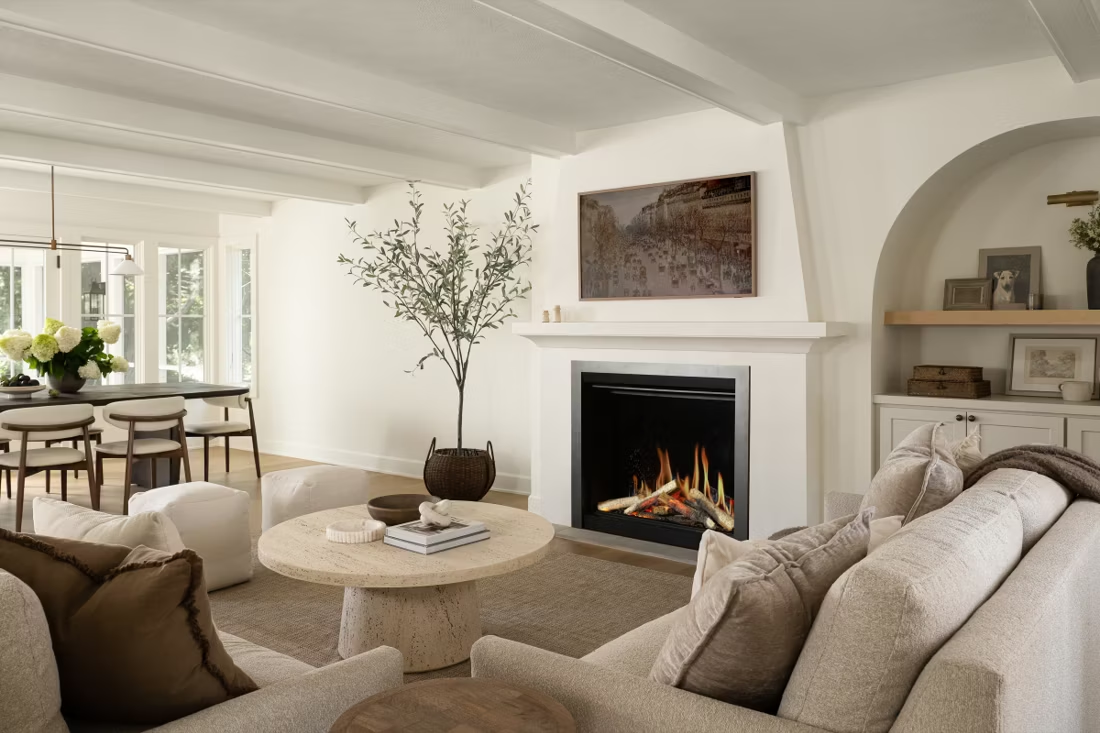
Yes—with an asterisk. Fireplaces are hot and TVs don't like heat. Either put a mantel between them to deflect rising warmth, or choose a fireplace with heat-management technology that creates a cool zone on the wall above—the wall stays around 125 degrees, barely warm, while the room still gets full heat. If you like clean lines and don't want a mantel, heat management is the answer.
Do electric fireplaces actually produce heat?
Yes—most put out around 4,800–5,000 BTUs from a standard outlet, which comfortably warms a bedroom, office, or den as a comfort-zone heater. What they won't do is carry a whole house the way wood, gas, or pellet can. Think of electric as ambiance-first with honest supplemental heat: flames on with no heat in July, flames plus warmth in January.
Does a fireplace add value to my home?
On average, a fireplace adds back to the home about the same amount you spent installing it. Add the monthly savings from heating the rooms you actually use instead of the whole house—often hundreds of dollars a year—and the value case is strong before you even count what a fire does for how your family uses the room.
Can a fireplace actually lower my heating bill?
Yes—by creating a comfort zone. A furnace heats every square foot of the house just to warm the one room you're in; a gas fireplace on low burns roughly a sixth of the gas a typical furnace does. Set the furnace around 55–60 degrees as a baseline, then heat the rooms your family actually uses. Families who heat this way commonly save $20–$60 a month.
Stove and Fireplace Dealers in Carroll County
Find your electric fireplace in Carroll County.
Tell us a bit about your home and we'll match you with the right electric fireplace, insert, or built-in—plus a free Project Guide & Parts List with the exact parts and your recommended local dealer.
Find Your Fireplace →