
Real ambiance and real heat, without the venting.
Allen County sees a long, cold heating season each year and winter lows near 18°F—enough cold to want supplemental heat, but plenty of homes in Fort Wayne and surrounding townships don't have a chimney or a gas line to work with. Electric fills that gap. Find the right unit and connect with a trusted local dealer.
Every Project Starts From One of These Five Situations
No chimney, no gas line, no problem.
Allen County is Indiana's second-most populous county, and most of that growth over the past two decades has come in the form of newer subdivisions around Fort Wayne, New Haven, and Huntertown where homes are built without a masonry fireplace or a dedicated gas line to the living room. At the same time, winter here is real—a long heating season stretching from fall well into spring, with average lows around 18°F and stretches that dip well below that. It's not International Falls or Fargo territory, but it's cold enough that a supplemental heat source in the family room or finished basement gets used, not just admired.
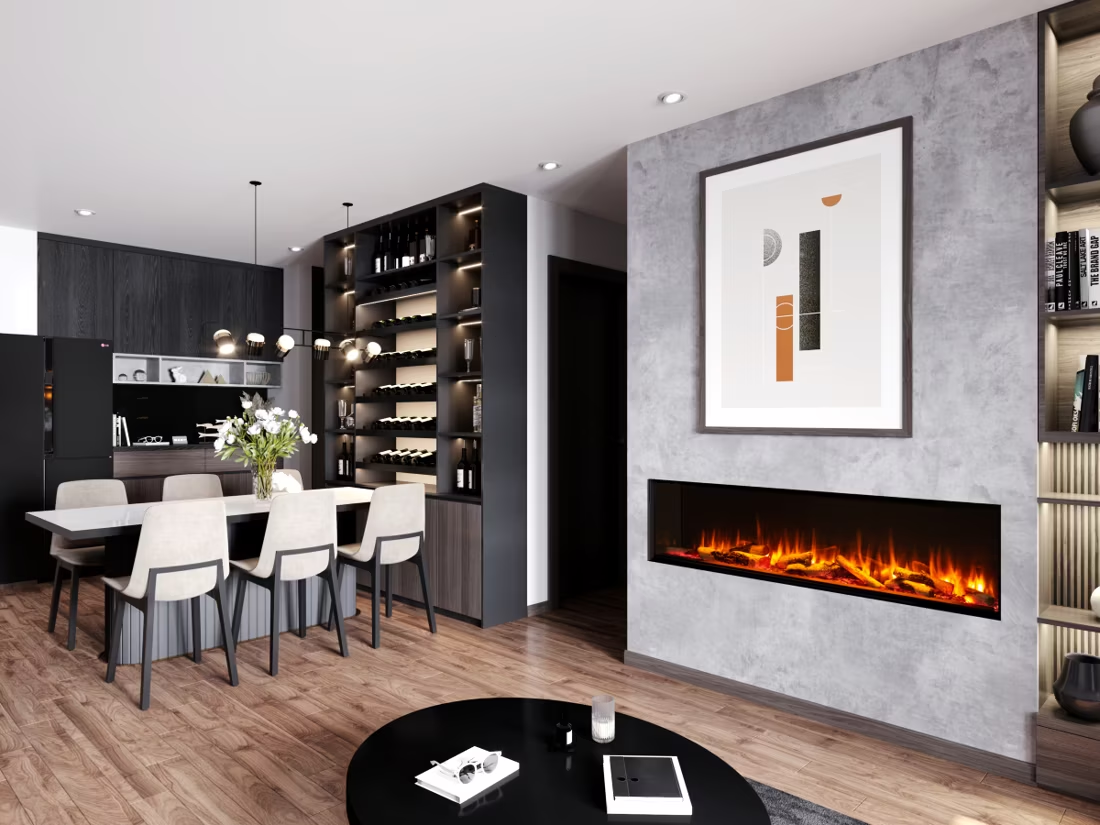
Electric fireplaces and inserts solve a specific problem for Allen County homeowners: they install almost anywhere with a standard 120V outlet, add zone heat to a bonus room or basement without touching the ductwork, and work in townhomes, condos, and rentals where venting a wood or gas unit isn't an option. AEP Indiana Michigan Power serves most of the county, and running a typical electric insert costs a fraction of what many homeowners expect once they see the utility bill next to a portable space heater. It's not a replacement for a furnace on a January night, but it's real, visible heat with none of the permitting or chimney work that wood and gas installs require.
Three steps. No salesperson until you're ready.
Tell us about your project
Your zip code, your situation, and the fuel you're leaning toward—or let the answers point you to one.
See what's actually available
The brands dealers within 100 miles genuinely carry—real options, never a catalog mirage.
Get your dealer & Project Guide
A trusted local dealer, plus the free Project Guide & Parts List that names every component of the job.
Frequently Asked Questions
How much does an electric fireplace installation cost in Allen County?
Most electric fireplace installs in Allen County run $400 to $1,200 total. A plug-in insert or wall-mount unit dropped into an existing opening sits at the low end, since it just needs a standard outlet. Built-in electric fireplaces that require framing, a recessed wall opening, or a dedicated 20-amp circuit run higher. Compare that to a wood or gas install in the county, which typically starts in the $4,500 range once venting and permitting are factored in—electric is the budget and simplicity option by a wide margin, which is a big part of why it's popular in newer Fort Wayne-area subdivisions and finished basements.
Do I need a permit to install an electric fireplace in Allen County?
Usually not for a plug-in or wall-mount unit using an existing outlet—that's treated like any other appliance. If you're adding a dedicated circuit, doing built-in framing work, or having an electrician run new wiring for a larger unit, a local electrical permit through the applicable city or township jurisdiction may apply, and any licensed electrician doing the work will typically pull it. This is one of the simpler permitting pictures of any fuel type in Allen County, which is part of the appeal for homeowners who don't want to deal with inspections tied to chimney or gas line work.
Will an electric fireplace actually heat a room, or is it just for looks?
Most electric inserts and stoves put out a real 4,000 to 5,000 BTU of heat—enough to noticeably warm a family room, bonus room, or finished basement, especially in a newer, well-insulated Allen County home. It won't replace your furnace on a sub-zero night, but as supplemental zone heat in a room you use daily, it can meaningfully cut how often the central heat kicks on. The flame effect runs independently of the heater, so you can run the visual without the heat in shoulder-season weather, or run both together when it's genuinely cold outside.
What's the difference between an electric insert and a built-in electric fireplace?
An electric insert is sized to slide into an existing fireplace opening—masonry, zero-clearance wood, or an old gas box you're retiring—and typically just needs a nearby outlet. A built-in electric fireplace is designed to be framed into a wall from scratch, common in Allen County new construction and remodels where there's no existing opening to work with. Inserts are the faster, lower-cost option for a home with an existing hearth; built-ins give you more design flexibility but involve more carpentry and electrical work up front.
How much does it cost to run an electric fireplace in Allen County?
Running a typical 1,500-watt electric fireplace for several hours an evening costs roughly 20 to 40 cents an hour at AEP Indiana Michigan Power's residential rates, depending on your specific plan and usage tier. Most homeowners find that's noticeably cheaper than they expected, especially compared to running a portable space heater of similar output, since built-in electric fireplace heaters are generally more efficient at directing heat into the room rather than losing it around a cord and plug.
Can I install an electric fireplace in a condo or rental in Fort Wayne?
Yes—this is one of the strongest use cases for electric. Wood and gas installations typically require venting modifications or gas line work that landlords and condo associations often won't allow, but a plug-in or wall-mount electric unit needs nothing more than an outlet and, in most cases, no structural changes at all. That's why electric fireplaces are common in Fort Wayne-area apartments, condos, and rental properties where a tenant or owner wants supplemental heat and ambiance without any permanent modification to the building.
Is an electric fireplace a good fit for Allen County's climate, or should I go with gas or wood instead?
With a long, cold heating season and winter lows around 18°F, Allen County is cold enough that a lot of homeowners want more heat output than electric alone provides for a primary heat source—that's where gas and wood, with install costs from $4,500 up, tend to win for whole-room or backup heating. Electric shines as a secondary or zone-heat solution: a finished basement, a home office, a bonus room over a garage, or any space where running a chimney or gas line isn't practical. Plenty of Allen County homes run gas or wood in the main living area and electric in a secondary space for exactly this reason.
Does an electric fireplace work during a power outage?
No—unlike a battery-backed gas fireplace or a wood stove that needs no electricity at all, an electric fireplace stops working the moment the power goes out, since both the flame effect and the heater rely on line power. For Allen County homeowners who want a heat source that keeps working through an ice storm or extended outage, wood is the more resilient option, and gas units with battery-backed ignition are a middle ground. Electric is best understood as a convenience and ambiance appliance, not an emergency heat source.
What electric fireplace brands are available through local Allen County dealers?
Local hearth dealers in the Fort Wayne area typically carry established electric fireplace lines such as Dimplex, Napoleon, and Amantii, spanning everything from simple plug-in inserts to larger built-in units with realistic flame technology. Availability and current inventory vary by dealer and season, which is exactly why matching with a local pro who knows what's actually in stock and installable in your specific space matters more than browsing a national catalog online.
Can I put a TV above my fireplace?
Yes—with an asterisk. Fireplaces are hot and TVs don't like heat. Either put a mantel between them to deflect rising warmth, or choose a fireplace with heat-management technology that creates a cool zone on the wall above—the wall stays around 125 degrees, barely warm, while the room still gets full heat. If you like clean lines and don't want a mantel, heat management is the answer.
Does an electric fireplace need a vent or chimney?
No—that's its superpower. An electric fireplace needs a wall and an outlet, period. No vent pipe, no gas line, no clearances to design around, which is why it works in bedrooms, offices, apartments, and walls where venting a gas or wood unit would be impractical or impossible. Installation is typically the simplest and least expensive of any fireplace type.
Does a fireplace add value to my home?
On average, a fireplace adds back to the home about the same amount you spent installing it. Add the monthly savings from heating the rooms you actually use instead of the whole house—often hundreds of dollars a year—and the value case is strong before you even count what a fire does for how your family uses the room.
Can a fireplace actually lower my heating bill?
Yes—by creating a comfort zone. A furnace heats every square foot of the house just to warm the one room you're in; a gas fireplace on low burns roughly a sixth of the gas a typical furnace does. Set the furnace around 55–60 degrees as a baseline, then heat the rooms your family actually uses. Families who heat this way commonly save $20–$60 a month.
Stove and Fireplace Dealers in Allen County
Listings include WhyFire partner dealers, dealers we have verified as authorized for the brands we recommend, and established local businesses that carry hearth products. Every listing shows which one it is. The ones marked Preferred run on WhyFire's software, so they can show you real pricing and book your appointment right here. No manufacturer pays for placement. How we verify dealers →
Granite Ridge
Nob Sales Corporation
Chimney 1
Brickworks Supply Center
Home Lumber Of New Haven, Inc
Find your electric fireplace in Allen County.
Tell us a bit about your home and we'll match you with the right electric fireplace or insert, plus a free Project Guide & Parts List with the exact parts and a recommended local Allen County dealer.
Find Your Fireplace →