
Real Fire Ambiance, Zero Chimney Required.
Supplemental warmth and real flame effect for Wonder Lake homes and lake cottages—no venting, no gas line, no masonry. Get matched with a trusted local dealer.
Every Project Starts From One of These Five Situations
Instant ambiance for lake homes without a flue.
Wonder Lake sits in McHenry County just south of the Wisconsin border, at roughly 800 feet elevation, where winter lows average around 13°F and the season brings a long, hard winter heating load—in the same range as Madison, WI. A lot of housing stock around the lake itself is older cottages and seasonal cabins that were never built with a chimney or the structural framing to add one. That's exactly the situation where an electric fireplace makes sense: it plugs into a standard 120V outlet (or a dedicated 240V circuit for larger built-in wall units), needs no flue, no gas line, and no combustion air, and can go into a finished basement, a converted lake room, or a condo wall in an afternoon.
Electric service in Wonder Lake comes from Commonwealth Edison (ComEd) and Rock Energy Cooperative, with residential rates running about 13.4 to 14.5 cents per kWh—on the lower end nationally. That keeps operating costs modest: a 1,500-watt unit run a few hours a night adds only a few dollars a month to the bill. Electric won't replace a furnace on a single-digit January night, but as zone heat for one room, or as year-round ambiance in a lake house that only sees heavy use on weekends, it's hard to beat for simplicity.
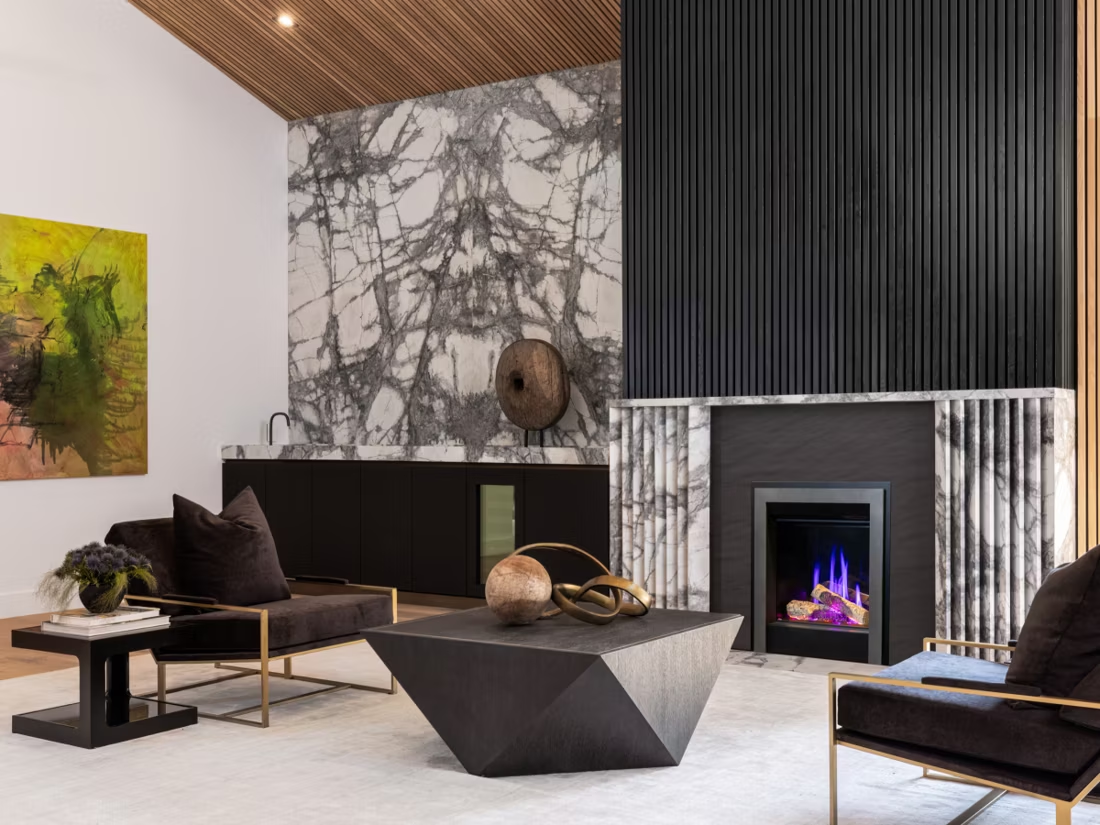
Three steps. No salesperson until you're ready.
Tell us about your project
Your zip code, your situation, and the fuel you're leaning toward—or let the answers point you to one.
See what's actually available
The brands dealers within 100 miles genuinely carry—real options, never a catalog mirage.
Get your dealer & Project Guide
A trusted local dealer, plus the free Project Guide & Parts List that names every component of the job.
Frequently Asked Questions
How much does an electric fireplace installation cost in Wonder Lake?
Plug-in electric inserts and freestanding stoves typically run $300 to $1,500 installed, since most just need an existing outlet and a finished mantel or surround—no electrician required in many cases. Built-in wall units and larger linear electric fireplaces that require a dedicated 240V circuit run higher, generally $1,500 to $4,000 once you factor in an electrician for the new circuit, wall framing, and finish work. Recessed units set into an existing masonry fireplace opening (common in older McHenry County homes) usually land in the middle of that range.
Will an electric fireplace actually heat a room in a Wonder Lake winter?
It will heat a room, but it won't heat a house—and that distinction matters given Wonder Lake's average winter low of 13°F and a long, hard winter heating season. Most electric units top out around 5,000 BTU (roughly 1,500 watts), enough to noticeably warm a single room or open den, but not enough to offset whole-home heat loss on a cold January night. Homeowners here typically use electric as supplemental zone heat alongside a furnace, or as the sole heat source in a seasonal lake cottage that isn't occupied during the coldest stretches of winter.
Do I need a permit to install an electric fireplace in Wonder Lake?
A plug-in electric insert or freestanding stove that uses an existing outlet generally doesn't require a permit. If you're adding a built-in wall unit that needs a new dedicated circuit, McHenry County or the Village of Wonder Lake building department typically requires an electrical permit for that circuit work, and it should be pulled by a licensed electrician regardless of whether the fireplace itself needs one. Local dealers who install built-in units usually coordinate the electrical permit as part of the job.
What's the difference between an electric insert, a wall-mounted unit, and a freestanding electric stove?
An electric insert is sized to slide into an existing masonry fireplace opening, giving old fireplaces around the lake a working heat source and flame effect without touching the chimney. A wall-mounted or built-in linear unit is framed into a wall like a TV, popular in newer lake homes and remodels where a clean, modern look matters. A freestanding electric stove looks like a traditional wood stove but plugs into a standard outlet—a good fit for cabins and seasonal cottages where you want stove aesthetics without any venting at all. Most Wonder Lake homeowners converting an old fireplace go with an insert; new construction or remodels tend toward wall units.
Are electric fireplaces a good fit for seasonal lake cottages?
Yes, and it's one of the more common uses around Wonder Lake specifically. Many lake cottages here were built decades ago without a chimney, and adding masonry venting to a small seasonal structure is often not worth the cost. An electric unit gives the cottage supplemental heat for shoulder-season weekends and the look of a real fire for entertaining, without the maintenance concerns of a wood-burning appliance sitting unused for months at a time. It's also the lowest-risk option for a property that isn't checked on daily during winter.
Electric vs. wood vs. gas—which makes sense for my Wonder Lake home?
Wood is the strongest choice if you want real heat output during a power outage and have access to local hardwoods—oak, hickory, walnut, and maple are all common firewood species in McHenry County. Gas offers instant, consistent heat and works well as a primary supplemental source in a year-round home with natural gas service. Electric is the lowest-cost and lowest-hassle option—no chimney, no fuel storage, no combustion byproducts—but it's the weakest heat source of the three and depends entirely on grid power. For a year-round primary residence in a climate this cold, electric usually plays a supporting role rather than the main event; for a seasonal cottage or a purely ambiance-focused room, it's often the simplest answer.
How much does it cost to run an electric fireplace in Wonder Lake?
At Wonder Lake's residential rates—about 13.4 cents per kWh through ComEd and 14.5 cents through Rock Energy Cooperative—a typical 1,500-watt electric fireplace costs roughly 20 to 22 cents per hour to run on high heat. Used for ambiance only (flame effect, heater off), the draw drops to well under 1 cent per hour. Running one for three hours a night through a winter month adds up to somewhere around $18 to $20 on the electric bill, which is why many homeowners use them as an evening supplement rather than an all-day heat source.
Will an electric fireplace work during a power outage?
No—this is the one honest tradeoff worth flagging. Electric fireplaces require grid power to run the heater, blower, and flame effect, so they go dark the moment the power does. For Wonder Lake homes that lose power during winter storms and want a heat source that keeps working, a wood stove or a battery-backed gas unit is the better fallback. Electric is best thought of as convenient everyday heat and ambiance, not emergency heat.
What size electric fireplace do I need for my room?
Most electric fireplaces are rated to heat 400 to 1,000 square feet, which covers a typical den, living room, or lake-house great room. For an open-concept space or a room with cathedral ceilings—common in lake homes around Wonder Lake—you'll want a unit on the higher end of that range, or you may need to treat it purely as ambiance and rely on the furnace for the heavy lifting. A local dealer can size the unit to your specific room during a quick in-home or virtual consultation, which is worth doing before buying off a big-box shelf.
Can I put a TV above my fireplace?
Yes—with an asterisk. Fireplaces are hot and TVs don't like heat. Either put a mantel between them to deflect rising warmth, or choose a fireplace with heat-management technology that creates a cool zone on the wall above—the wall stays around 125 degrees, barely warm, while the room still gets full heat. If you like clean lines and don't want a mantel, heat management is the answer.
Do electric fireplaces actually produce heat?
Yes—most put out around 4,800–5,000 BTUs from a standard outlet, which comfortably warms a bedroom, office, or den as a comfort-zone heater. What they won't do is carry a whole house the way wood, gas, or pellet can. Think of electric as ambiance-first with honest supplemental heat: flames on with no heat in July, flames plus warmth in January.
Can a fireplace actually lower my heating bill?
Yes—by creating a comfort zone. A furnace heats every square foot of the house just to warm the one room you're in; a gas fireplace on low burns roughly a sixth of the gas a typical furnace does. Set the furnace around 55–60 degrees as a baseline, then heat the rooms your family actually uses. Families who heat this way commonly save $20–$60 a month.
Can I install a fireplace myself?
If you're putting a fire in your house on purpose, it's best to work with an expert. Unless you're genuinely experienced in framing, gas line, vent pipe, and the national code on clearances to combustibles, have a professional do it—and ideally the same company that sells you the fireplace, so warranty, service, and liability all live under one roof.
Nearby Dealers
Hearth shops serving Wonder Lake and the surrounding area. Every listing shows whether it is a WhyFire partner, a dealer we have verified as authorized for the brands we recommend, or a local business carrying hearth products. No manufacturer pays for placement. How we verify dealers →
Fireplace And Patio
Lakes Brick & Block
Jhb Group, Inc.
Lakeside Fireplace
Smokin' Deal Bbq
Fireplaces Plus
Electric Service in Wonder Lake
An electric fireplace's heater draws about 1,500 watts—pennies per hour at local rates.
Commonwealth Edison Co
Rock Energy Cooperative
Find your electric fireplace in Wonder Lake.
Tell us about your home or lake cottage and we'll put together a free Project Guide & Parts List—the right electric unit, the exact parts, and a trusted local dealer to install it.
Find Your Fireplace →