
Real warmth for White County homes, no chimney required.
From Carmi to the farmhouses along the Wabash, electric fireplaces give White County homeowners zone heat and real flame-look ambiance without a flue, a gas line, or a cord of wood to split. Find the right unit and get matched with a trusted local dealer.
Every Project Starts From One of These Five Situations
The easiest fireplace upgrade in White County.
White County sits in climate zone 4A with a winter heating season on the longer, colder side and winter lows that average around 21°F—cold enough that most homes lean on a furnace or heat pump for the bulk of the season, but not so extreme that a supplemental heat source needs to carry the whole load. Wood heat runs deep here, with oak, hickory, walnut, and maple all common in local woodlots, but plenty of White County homes—especially older farmhouses around Carmi with aging or unused masonry chimneys, and manufactured or modular homes common throughout the rural townships—aren't set up for a wood or gas installation without real construction work.
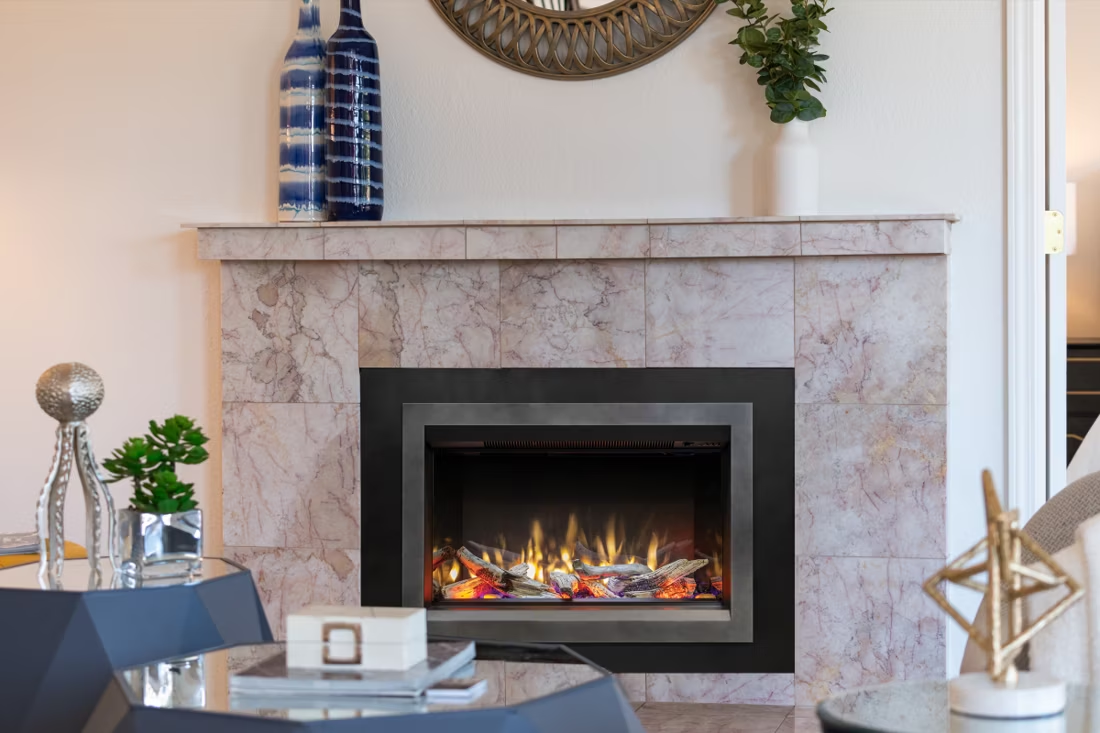
That's where electric fits in. A zero-clearance electric insert can drop straight into an old, unused fireplace opening with no flue, no gas line, and often no permit at all if it's a plug-in unit. Built-in models that need a dedicated 20-amp circuit are still a fraction of the cost and hassle of running new venting through a farmhouse roofline. For renters, seasonal properties, home offices, and bonus rooms across the county, electric delivers real heat and a convincing flame without touching the structure of the house.
Three steps. No salesperson until you're ready.
Tell us about your project
Your zip code, your situation, and the fuel you're leaning toward—or let the answers point you to one.
See what's actually available
The brands dealers within 100 miles genuinely carry—real options, never a catalog mirage.
Get your dealer & Project Guide
A trusted local dealer, plus the free Project Guide & Parts List that names every component of the job.
Frequently Asked Questions
How much does an electric fireplace installation cost in White County?
A plug-in electric insert or freestanding unit runs $400 to $800 installed—often it's just a matter of setting the unit in place and plugging it into an existing outlet. Built-in electric fireplaces that require a dedicated circuit typically run $1,200 to $2,500 once you factor in an electrician running new wiring, especially in older White County farmhouses where the panel may need a new breaker slot. Compare that to the $4,500-plus most wood or gas installs require for chimney or venting work, and electric is consistently the lowest-cost way to add real heat and ambiance to a room.
Do I need a permit to install an electric fireplace in White County?
Plug-in electric fireplaces that use a standard 120V outlet generally don't require a permit—there's no gas line, no venting, and no structural change. Built-in units that need a new dedicated circuit typically do require an electrical permit, since you're adding wiring to the panel. Whether that permit runs through White County's building department or the city of Carmi's own office depends on where the home sits, and most local electricians and hearth dealers will pull it as part of the job.
Can an electric fireplace actually heat a room in White County's winters?
Yes, for the room it's in. Most electric fireplaces put out around 5,000 to 10,000 BTU (roughly 1,500 watts), which comfortably heats a single living room, sunroom, or bonus room. With winter lows averaging 21°F and a long, cold winter heating season, electric units aren't sized to replace a furnace for the whole house—they're best used as targeted, supplemental heat for the room you're actually sitting in, letting you turn the thermostat down elsewhere in the house.
What's the difference between an electric fireplace, insert, and stove?
An electric fireplace is typically a built-in, wall-mounted, or media-console unit designed to look like a framed hearth. An electric insert is sized to slide into an existing masonry fireplace opening—the most common retrofit for older White County homes with a chimney that's no longer safe or practical to burn wood in. An electric stove is a freestanding unit styled like a traditional wood stove, popular for a rustic look in a room without an existing fireplace. All three plug in or wire to a circuit—none of them need venting.
Can I put an electric insert into my old wood fireplace without using the chimney?
Yes, and it's one of the most common projects for older homes in White County. If you've got a masonry fireplace that's been unused for years—common in farmhouses around Carmi where the flue may be cracked or capped off—an electric insert drops into that opening, uses none of the existing chimney, and gives you real heat and flame-look glow with zero combustion byproducts to vent. It's a straightforward retrofit that a local dealer can usually complete in a single visit.
How much does it cost to run an electric fireplace in White County?
At a typical Illinois residential rate of around $0.13 to $0.15 per kWh, a 1,500-watt electric fireplace running on its heat setting costs roughly 20 to 22 cents an hour. Run it four hours a night through a cold stretch and you're looking at about $25 to $30 a month—far less than the fuel cost of running a furnace to heat the same room, and with no chimney sweep, no propane delivery, and no firewood to split or stack.
Is electric a good primary heat option for rural White County homes without natural gas?
Most rural White County homes without natural gas service rely on propane or a wood stove for primary heat, and electric fireplaces generally cost more per BTU than either. Where electric makes sense as a bigger piece of the heating picture is in smaller spaces—additions, converted porches, mobile and manufactured homes—where running a propane line or building a chimney isn't practical. For most whole-house situations, electric works best as the supplemental layer on top of your existing furnace or propane system rather than a full replacement.
Are electric fireplaces safe for homes with kids or pets?
Electric fireplaces are one of the safest hearth options for households with young kids, pets, or older family members. There's no open flame, no combustion, and no carbon monoxide risk, and the glass front on most modern units stays cool to the touch even while running. That makes them a common choice for finished basements, playrooms, and multigenerational households throughout White County where a real wood or gas fire isn't the right fit.
Electric vs. wood or gas—which fits my White County home?
Wood heat has deep roots in this part of Illinois, with plenty of oak, hickory, walnut, and maple available locally, and it works without power during storm outages—a real consideration in rural White County. Gas offers instant, higher-output heat where a line is already run or propane service is available. Electric wins when the priority is low upfront cost, zero venting, and flexibility—a renter who can take the unit when they move, a farmhouse with a chimney that's no longer sound, or a room where running gas or building a hearth just isn't worth the construction. A local dealer can walk through your specific room and heating goals to help you land on the right fit.
Can I put a TV above my fireplace?
Yes—with an asterisk. Fireplaces are hot and TVs don't like heat. Either put a mantel between them to deflect rising warmth, or choose a fireplace with heat-management technology that creates a cool zone on the wall above—the wall stays around 125 degrees, barely warm, while the room still gets full heat. If you like clean lines and don't want a mantel, heat management is the answer.
Do electric fireplaces actually produce heat?
Yes—most put out around 4,800–5,000 BTUs from a standard outlet, which comfortably warms a bedroom, office, or den as a comfort-zone heater. What they won't do is carry a whole house the way wood, gas, or pellet can. Think of electric as ambiance-first with honest supplemental heat: flames on with no heat in July, flames plus warmth in January.
Can I install a fireplace myself?
If you're putting a fire in your house on purpose, it's best to work with an expert. Unless you're genuinely experienced in framing, gas line, vent pipe, and the national code on clearances to combustibles, have a professional do it—and ideally the same company that sells you the fireplace, so warranty, service, and liability all live under one roof.
Does a fireplace add value to my home?
On average, a fireplace adds back to the home about the same amount you spent installing it. Add the monthly savings from heating the rooms you actually use instead of the whole house—often hundreds of dollars a year—and the value case is strong before you even count what a fire does for how your family uses the room.
Find your electric fireplace in White County.
Tell us a bit about your home and we'll put together a free Project Guide & Parts List for your White County electric fireplace project—the right unit, the circuit requirements, and a trusted local dealer to install it.
Find Your Fireplace →