
Real heat, zero venting, installed in an afternoon.
Supplemental warmth and real ambiance for Waukegan homes and condos—no chimney, no gas line, no masonry work. Find the right unit and connect with a trusted local dealer.
Every Project Starts From One of These Five Situations
The no-chimney way to add heat and ambiance.
Waukegan sits on the Lake Michigan shoreline in Lake County, at a modest 715 feet of elevation, but that lakefront location doesn't spare it from a real Illinois winter—average lows run around 16°F and the area sees a long, cold heating season typical of much of the Upper Midwest. What it does spare homeowners is the option to add a wood-burning appliance without a fight: much of Waukegan's housing stock is older lakefront homes, condos, and multi-unit buildings along Sheridan Road and near downtown where chimney space, HOA rules, or insurance requirements make wood-burning impractical or off the table entirely.
That's where electric fireplaces do their best work. A plug-in insert or built-in unit delivers real supplemental heat and a convincing flame effect without venting, without a gas line, and often without a permit. Commonwealth Edison serves Waukegan at a residential rate around 13.4 cents per kWh, which keeps day-to-day operating cost modest for a unit that's typically run as zone heat in a bedroom, living room, or converted sunroom rather than as the whole-house heat source.
Three steps. No salesperson until you're ready.
Tell us about your project
Your zip code, your situation, and the fuel you're leaning toward—or let the answers point you to one.
See what's actually available
The brands dealers within 100 miles genuinely carry—real options, never a catalog mirage.
Get your dealer & Project Guide
A trusted local dealer, plus the free Project Guide & Parts List that names every component of the job.
Frequently Asked Questions
How much does it cost to install an electric fireplace in Waukegan?
A basic plug-in insert or mantel package that uses an existing 120V outlet typically runs $300 to $900 installed, since there's no venting and often minimal electrical work involved. A built-in wall unit or a larger linear electric fireplace that requires a dedicated 20-amp circuit—common in condo and townhome remodels around Waukegan—runs closer to $800 to $2,000 once an electrician is involved. Retrofitting an existing masonry fireplace opening with an electric insert is usually on the lower end since the surround already exists. Local dealers can give you a firm number after seeing the space and your existing electrical service.
Do I need a permit to install an electric fireplace in Waukegan?
In most cases, no—a plug-in electric fireplace that uses an existing outlet doesn't trigger a permit. If your installer needs to add a new dedicated circuit or move wiring inside a wall for a built-in unit, that electrical work typically does require a permit through the City of Waukegan Building & Zoning Department (or the applicable township office if you're outside city limits). Licensed electricians handling the circuit work usually pull the permit as part of the job, so it's worth confirming that's included in your quote.
What size electric fireplace do I need for my Waukegan home?
Most electric fireplace heaters are rated to comfortably heat 400 to 1,000 square feet as supplemental heat, which covers a typical living room, bedroom, or open den in a Waukegan bungalow or condo. Given the area's long, cold heating season, don't expect an electric unit to replace your furnace on a January night—it's built to take the edge off a specific room and cut down on how hard your central system has to work, not to heat an entire house. A local dealer can match wattage and BTU output to your room's square footage and insulation during a quick in-home look.
Electric vs. gas fireplace—which makes more sense for my home?
Gas fireplaces put out more real heat and can serve as a legitimate secondary heat source during a cold snap, but they require venting, a gas line, and a larger installation budget if your home isn't already plumbed for gas. Electric fireplaces install almost anywhere—including interior walls, condos, and rental units—with no venting and a far smaller upfront cost, though the heat output tops out lower and it's better suited to zone heating than serious cold-weather backup. For many Waukegan condos and older multi-unit buildings where running new gas line or venting isn't realistic, electric is the practical answer; for detached homes with an existing gas hookup, it's worth comparing both with a local retailer.
Are wood-burning fireplaces common in Waukegan, or should I stick with electric?
Wood-burning appliances are uncommon in Waukegan's current housing mix—most of the city is dense, lakefront, or multi-unit housing where insurance requirements, HOA restrictions, or lack of chimney access rule wood out even though local hardwoods like oak, hickory, and maple are plentiful across Lake County. A handful of detached homes on larger lots still burn wood, but for most residents here, electric or gas cover the practical middle ground between ambiance and installability. If you're set on wood heat, a local hearth dealer can tell you honestly whether your specific home and lot can support it.
What does it cost to run an electric fireplace in Waukegan?
At ComEd's residential rate of roughly 13.4 cents per kWh, a typical electric fireplace running on its 1,500-watt heat setting costs around 20 cents per hour to operate—call it $1.20 to $2.40 for a typical 6-to-12-hour evening of use. Running the flame effect alone, without heat, costs only a few cents an hour since most units draw well under 100 watts in that mode. That makes electric fireplaces cheap to run as evening ambiance and reasonably affordable as targeted supplemental heat in one room.
What's the best use case for an electric fireplace in a Waukegan condo or apartment?
Condos and apartments—common throughout downtown Waukegan and along the lakefront—are exactly where electric fireplaces make the most sense. There's no venting to coordinate with a condo association, no gas line approval process, and most units can be plugged into an existing outlet or added with a simple circuit upgrade that doesn't touch shared building systems. A built-in linear unit set into a media wall or a freestanding stove-style unit both work well in smaller square footage, and neither requires the structural sign-off that a masonry fireplace retrofit would.
How much maintenance does an electric fireplace need?
Very little compared to wood or gas. There's no chimney to sweep, no gas lines to inspect, and no combustion byproducts to worry about. Routine care is mostly dusting the unit, occasionally cleaning the glass front, and replacing the LED light source or heating element if it eventually wears out—often a 10-plus year timeline for quality units. Some Waukegan homeowners have a local electrician check a dedicated circuit installation once during the first year, but after that there's no annual service requirement the way there is with a wood stove or gas insert.
Are there rebates or efficiency incentives for electric fireplaces in Waukegan?
Electric fireplaces themselves aren't typically eligible for the kind of efficiency rebates gas furnaces or heat pumps get, since they're supplemental rather than primary heat. That said, ComEd periodically runs residential energy-efficiency programs and demand-response incentives that can apply to broader electrical upgrades tied to your installation, such as panel or circuit work. It's worth checking ComEd's current program list before your installation so any eligible upgrades get bundled into the same electrician visit.
Can I put a TV above my fireplace?
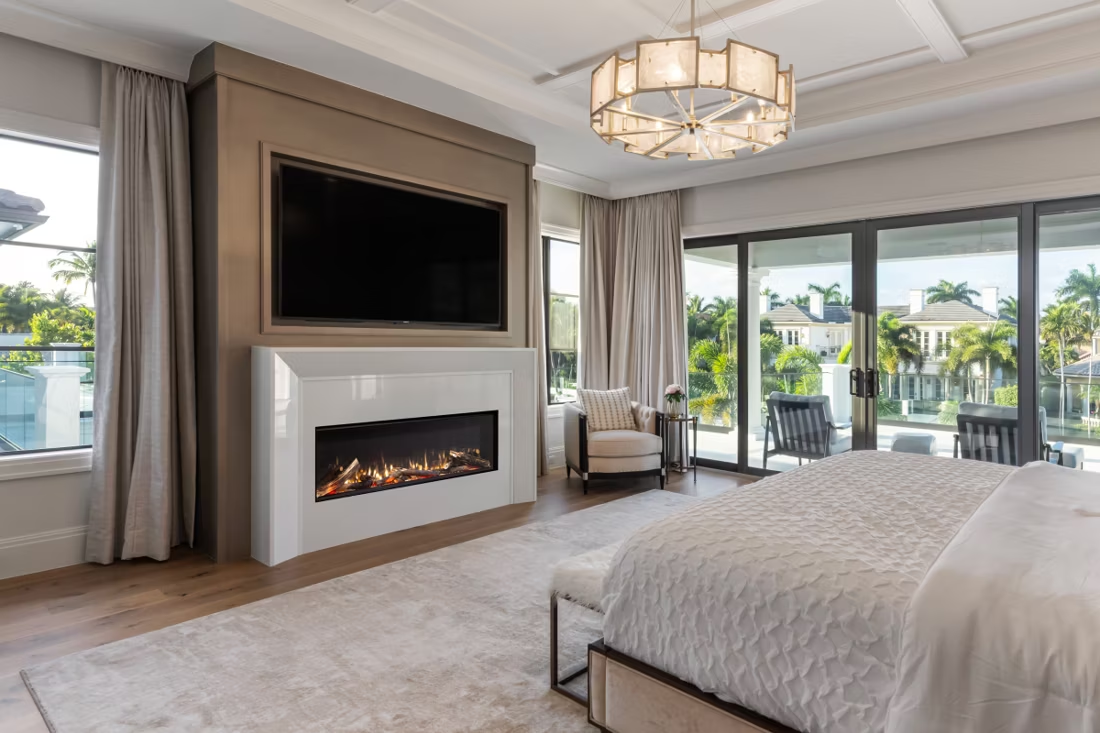
Yes—with an asterisk. Fireplaces are hot and TVs don't like heat. Either put a mantel between them to deflect rising warmth, or choose a fireplace with heat-management technology that creates a cool zone on the wall above—the wall stays around 125 degrees, barely warm, while the room still gets full heat. If you like clean lines and don't want a mantel, heat management is the answer.
Does an electric fireplace need a vent or chimney?
No—that's its superpower. An electric fireplace needs a wall and an outlet, period. No vent pipe, no gas line, no clearances to design around, which is why it works in bedrooms, offices, apartments, and walls where venting a gas or wood unit would be impractical or impossible. Installation is typically the simplest and least expensive of any fireplace type.
How much should I budget for a fireplace?
For an average home—covering the fireplace, the vent pipe, and basic installation—a budget between $3,900 and $5,500 gives you a lot of options across wood, gas, and pellet. By the time you add finish work, gas line, and electrical, the average complete installation lands between $5,000 and $12,000 all-in. In a remodel or new build, a good rule is to put about 2.5% of the total project cost toward the fireplace.
Does a fireplace add value to my home?
On average, a fireplace adds back to the home about the same amount you spent installing it. Add the monthly savings from heating the rooms you actually use instead of the whole house—often hundreds of dollars a year—and the value case is strong before you even count what a fire does for how your family uses the room.
Nearby Dealers
Hearth shops serving Waukegan and the surrounding area. Every listing shows whether it is a WhyFire partner, a dealer we have verified as authorized for the brands we recommend, or a local business carrying hearth products. No manufacturer pays for placement. How we verify dealers →
Fireplaces Plus
Smokin' Deal Bbq
General Masonry Supply
Fireplace And Patio
Alaskan Fireplace Co
Electric Service in Waukegan
An electric fireplace's heater draws about 1,500 watts—pennies per hour at local rates.
Commonwealth Edison Co
Find your electric fireplace in Waukegan.
Tell us a bit about your home and we'll match you with the right electric fireplace or insert—and connect you with a trusted local dealer who can size it, wire it, and install it right.
Find Your Fireplace →