
No chimney, no venting—just warmth in Stephenson County.
From Freeport to Lena, Pearl City, Winslow, and the farmhouses along the Pecatonica River, electric fireplaces bring zone heat and real ambiance to rooms where a wood stove or gas line isn't practical. Find the right unit and get matched with a trusted local dealer.
Every Project Starts From One of These Five Situations
Supplemental heat that fits farmhouses, additions, and rentals alike.
Stephenson County sits in Illinois's climate zone 5A, with a winter heating load comparable to Duluth, Minnesota—and winter lows that average 11°F, with routine drops well below zero once an Arctic front pushes down from Wisconsin. Freeport, the county seat, and the surrounding towns of Lena, Pearl City, Winslow, Orangeville, and Cedarville are full of older farmhouses with additions, finished basements, and converted porches that the main furnace never quite reaches. That's where electric fireplaces do their best work: not as the primary heat source for a county this cold, but as targeted, no-fuss warmth for the one room that's always cold.
Electric units also solve a problem wood and gas can't: no chimney, no gas line, and in most cases no permit. That matters for the renters, condo owners, and mobile-home residents scattered across Stephenson County who can't run a flue through a lease or an HOA agreement, and it matters for anyone converting a drafty farmhouse sunporch into usable living space. Most models run on a standard 120-volt outlet and plug in like any other appliance; larger built-in wall units may call for a dedicated circuit from ComEd's grid, which a licensed electrician can size correctly. Either way, the appeal is the same—real flame-effect ambiance and supplemental heat with none of the venting, wood supply, or gas-line coordination that the county's colder-climate fuels require.
Three steps. No salesperson until you're ready.
Tell us about your project
Your zip code, your situation, and the fuel you're leaning toward—or let the answers point you to one.
See what's actually available
The brands dealers within 100 miles genuinely carry—real options, never a catalog mirage.
Get your dealer & Project Guide
A trusted local dealer, plus the free Project Guide & Parts List that names every component of the job.
Frequently Asked Questions
How much does an electric fireplace installation cost in Stephenson County?
Plug-in electric inserts and freestanding stoves that drop into an existing mantel or opening typically run $300 to $1,200 installed, since most need nothing more than an existing 120-volt outlet. Built-in wall units and larger linear models that require new framing, a dedicated 240-volt circuit, or finish carpentry to match Stephenson County's older farmhouse trim can run $1,500 to $3,500 once electrical work is included. The swing in price mostly comes down to whether an electrician needs to run new wiring—ask any local retailer to quote both a plug-in and a hardwired option before you decide.
Do I need a permit to install an electric fireplace in Stephenson County?
In most cases, no. A plug-in electric insert or freestanding unit that uses an existing outlet doesn't require a building permit anywhere in Stephenson County, since there's no venting, gas line, or structural chimney work involved. If your installer needs to add a new dedicated circuit or breaker for a larger built-in unit, that electrical work should be pulled and inspected under standard county or municipal electrical code—your electrician will handle that paperwork as part of the job. This is one of the simplest permitting situations of any hearth fuel, which is part of why electric units are a common choice for additions and converted rooms.
Will an electric fireplace actually heat a room during a Stephenson County winter?
Most electric fireplaces put out around 5,000 BTUs, enough to comfortably warm a single room of 300 to 400 square feet—a converted porch, a finished basement family room, or a bedroom addition. They are not designed to replace a furnace during a county winter that averages 11°F lows and a long, demanding heating season; think of them as zone heat for the room you're actually sitting in, not whole-home heat. Homeowners in Stephenson County typically pair an electric unit with their existing furnace or a wood stove elsewhere in the house, using the electric fireplace to take the edge off a specific room without running the furnace harder than it needs to.
Electric vs. wood—which is right for my Stephenson County home?
Wood—burning local oak, hickory, walnut, or maple—puts out far more heat and keeps working if the power goes out during an ice storm, which happens periodically in this part of northern Illinois. Electric fireplaces need power to run at all, so they're not a backup heat source during an outage. What electric offers instead is simplicity: no chimney, no wood to split and stack, no ash cleanup, and installation in places a wood stove legally or practically can't go, like a rented duplex in Freeport or a condo without a masonry chimney. If you want backup heat for winter storms, wood or a battery-capable gas unit is the better call. If you want easy, clean ambiance and supplemental warmth in a specific room, electric wins.
Electric vs. gas—which is right for my Stephenson County home?
Gas fireplaces put out real heat—often 20,000 to 40,000 BTUs—and can be configured to run on battery backup during a power outage, which matters given how cold this county gets. But gas requires a gas line (natural gas or propane) and venting, plus a permit. Electric fireplaces skip all of that: no gas line, no venting, and in most cases no permit, at the cost of lower heat output and no operation without power. For a converted room in an older Stephenson County farmhouse where running a new gas line isn't practical, or for a rental where you can't modify the structure, electric is usually the realistic choice.
What size electric fireplace do I need?
For a single room in the 200 to 400 square foot range—a typical bedroom, den, or basement family room common in Stephenson County's farmhouses and ranch-style homes—a standard 5,000 BTU electric insert or wall-mount unit is usually enough for supplemental warmth. Larger open rooms, like a converted porch with several exterior walls, may need a wider linear unit or two smaller units placed strategically. Because electric fireplaces are sized for zone heating rather than whole-home heat, bigger isn't always better—a local retailer can walk through your room's layout and insulation to recommend the right wattage and footprint.
Can I install an electric fireplace in a rental, condo, or mobile home in Stephenson County?
Yes, and this is one of the most common reasons homeowners and renters in Stephenson County choose electric over wood or gas. Plug-in units require no chimney, no venting, and no permanent structural changes—many simply set into an existing mantel opening or mount to a wall like a large picture frame. That makes them a fit for Freeport apartments, HOA-restricted condos, and mobile homes where a masonry chimney or gas line was never installed and isn't going to be added. Just confirm your lease or HOA rules on wall-mounted or built-in units before an electrician runs any new wiring.
What's the difference between an electric insert, a wall-mount unit, and a freestanding electric stove?
An electric insert is built to drop into an existing fireplace opening, often used to convert an old wood-burning masonry fireplace in a Stephenson County farmhouse into clean, no-mess supplemental heat. A wall-mount unit hangs directly on a wall like a flat-screen TV, popular in newer additions or remodeled rooms without an existing fireplace. A freestanding electric stove sits on the floor and mimics the look of a wood stove, a common choice for basements or rooms where a farmhouse aesthetic is the goal. All three plug into a standard outlet in most sizes, and none require venting—the choice comes down to the room's layout and whether you're converting an existing fireplace or starting from scratch.
Does an electric fireplace need special wiring?
Most standard electric fireplaces and inserts run on a normal 120-volt household outlet, the same as any major appliance, and need no special wiring at all. Larger built-in wall units, especially wide linear models over roughly 60 inches, sometimes call for a dedicated 20-amp circuit to avoid tripping breakers when the heater element is running at full output. If you're unsure whether your Stephenson County home's electrical panel can handle a larger unit, a licensed electrician can check the panel and run a new circuit if needed—this is typically a small add-on to the overall install rather than a major expense.
Can I put a TV above my fireplace?
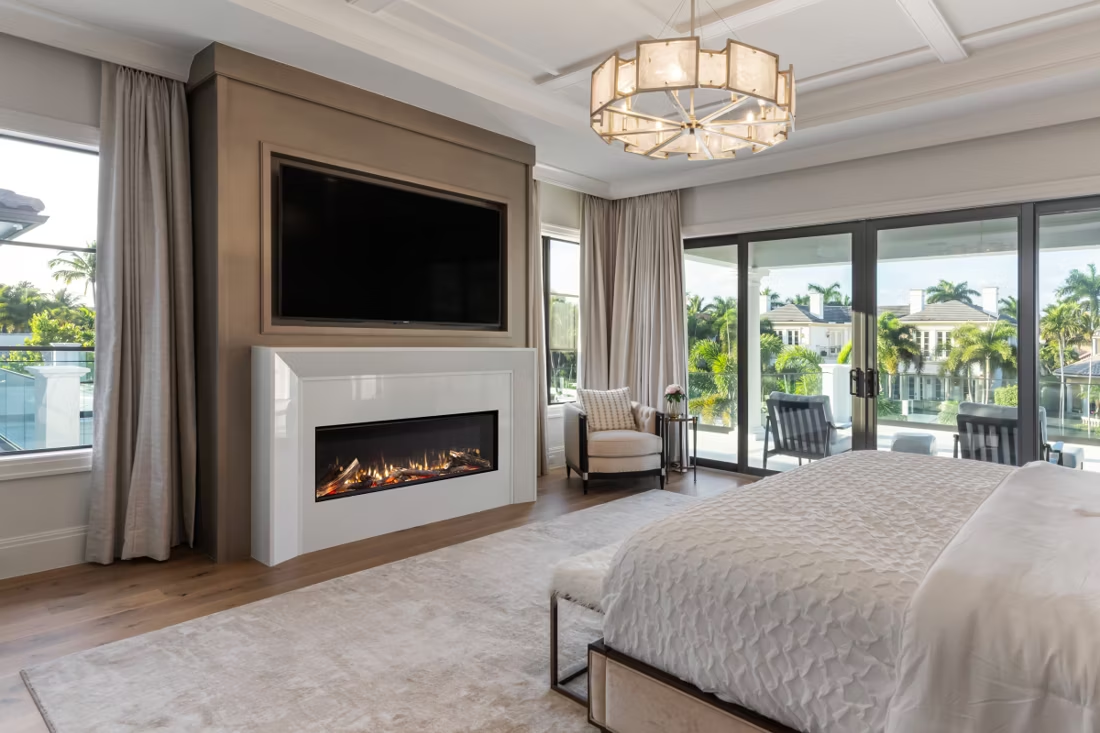
Yes—with an asterisk. Fireplaces are hot and TVs don't like heat. Either put a mantel between them to deflect rising warmth, or choose a fireplace with heat-management technology that creates a cool zone on the wall above—the wall stays around 125 degrees, barely warm, while the room still gets full heat. If you like clean lines and don't want a mantel, heat management is the answer.
Does an electric fireplace need a vent or chimney?
No—that's its superpower. An electric fireplace needs a wall and an outlet, period. No vent pipe, no gas line, no clearances to design around, which is why it works in bedrooms, offices, apartments, and walls where venting a gas or wood unit would be impractical or impossible. Installation is typically the simplest and least expensive of any fireplace type.
Can a fireplace actually lower my heating bill?
Yes—by creating a comfort zone. A furnace heats every square foot of the house just to warm the one room you're in; a gas fireplace on low burns roughly a sixth of the gas a typical furnace does. Set the furnace around 55–60 degrees as a baseline, then heat the rooms your family actually uses. Families who heat this way commonly save $20–$60 a month.
What is an in-home preview and do I need one?
It's a visit where a hearth professional measures your space, confirms the model you picked actually works in your home, and walks the specs—framing, gas line, venting, finish work—before anything is ordered. Some details you just can't know until you see the house. Never make a down payment without one; it's the single most-skipped step that burns buyers.
Stove and Fireplace Dealers in Stephenson County
Find your electric fireplace in Stephenson County.
Tell us a bit about your room and your home—whether it's a Freeport rental, a Lena farmhouse addition, or a basement in Pearl City—and we'll put together a free Project Guide & Parts List: the right electric fireplace or insert for your space, the exact parts you'll need, and a match with a trusted local dealer who can install it.
Find Your Fireplace →