
Zone heat for Stark County farmhouses, no chimney required.
With winter lows averaging 14°F and a heating season across the county on par with Madison, WI, a lot of older Stark County farmhouses need supplemental heat in rooms the furnace never quite reaches. I'll match you with a vetted local dealer who can tell you whether a plug-in unit or a hardwired built-in actually fits your wall and your circuit.
Every Project Starts From One of These Five Situations
Practical heat for one of Illinois's smallest, most spread-out counties.
Stark County is home to fewer than 4,000 people spread across a rural stretch of west-central Illinois anchored by Toulon, and that low density shapes what kind of heating projects make sense here. The county sits in climate zone 5A with a winter heating season on par with Madison, WI—and winter lows that average 14°F. A lot of the housing stock is older farmhouses and small-town homes built long before central air reached every room, so an electric fireplace or insert often solves a real problem: a cold sunroom, a converted porch, a bedroom addition with no ductwork, or a family room with a masonry firebox that's never had a working flue.
Stark County has no listed air quality concerns, no non-attainment status, and no burn curtailment rules—the kind of regulatory pressure that pushes wood-burning counties toward EPA-certified stoves doesn't apply here. That means the electric decision comes down to convenience and circuit capacity rather than compliance. A basic plug-in unit needs nothing more than a standard 120-volt outlet and can be moved room to room; a built-in insert or wall unit pulling more current may need a dedicated 20-amp circuit run by a licensed electrician, and that's the point where it's worth involving your county building or zoning office before work starts. For households weighing alternatives, oak, hickory, walnut, and maple are all common local firewood species, and regional pellet suppliers like Indeck Energy Services, Lignetics, and Somerset Pellet Fuel serve the area if a hopper-fed stove is more your speed than resistance heat.
Three steps. No salesperson until you're ready.
Tell us about your project
Your zip code, your situation, and the fuel you're leaning toward—or let the answers point you to one.
See what's actually available
The brands dealers within 100 miles genuinely carry—real options, never a catalog mirage.
Get your dealer & Project Guide
A trusted local dealer, plus the free Project Guide & Parts List that names every component of the job.
Frequently Asked Questions
How much does it cost to install an electric fireplace in Stark County?
A plug-in electric fireplace or insert that runs off an existing standard outlet is the least expensive route—often just the price of the unit itself plus a couple hours of labor if you want it professionally mounted or trimmed into an existing firebox opening. A hardwired built-in that needs a dedicated circuit run from your panel costs more once you factor in an electrician's time, particularly in older Toulon or Wyoming homes with dated panels that may need capacity checked first. A local dealer can give you a firm number once they see your wall, your panel, and how far the run needs to go.
Will an electric fireplace actually heat a room in a Stark County winter?
Most electric fireplaces are rated around 1,500 watts and are built to supplement heat in a single room, not replace a furnace during a long, Madison-WI-comparable winter with 14°F average lows. They work well for the specific rooms that run cold in older farmhouses—a converted porch, an addition without ductwork, a bonus room over an unheated garage—but they're not sized to carry a whole house through a Stark County cold snap on their own. Think of it as targeted comfort for the room you actually sit in, not a furnace replacement.
Do I need a permit for an electric fireplace in Stark County?
A simple plug-in unit that draws power from an existing outlet typically doesn't trigger a permit. A hardwired built-in or wall unit that requires new wiring or a dedicated circuit usually does need an electrical permit, and your local building or zoning office will want the work done by a licensed electrician regardless of jurisdiction inside or outside Toulon. It's worth asking your dealer whether the specific model you're considering needs a dedicated circuit before you commit to a spot on the wall.
What's the best electric fireplace option for an old farmhouse with an unused chimney?
If you've got a masonry firebox that hasn't had a working flue in years, an electric insert built to slide into that existing opening is usually the cleanest fix—it keeps the mantel and surround you already have while giving you real heat output without touching the old chimney at all. For rooms with no firebox to work with, a wall-mount or freestanding electric stove gives you the same zone heat without any construction. Either way, no venting, no gas line, and no annual chimney sweep to schedule.
Electric vs. wood—which makes more sense for my Stark County home?
Wood cut from local oak, hickory, walnut, or maple costs less per BTU over a season and keeps working during a winter power outage, which matters in a rural county where overhead lines can go down in an ice storm. Electric heat costs more to run per BTU but requires zero maintenance, no wood storage, no chimney sweep, and no ash to manage—a real advantage for a room you use occasionally or a household that doesn't want to deal with fuel logistics. Plenty of Stark County homes end up with both: wood or a wood stove for the main living space, electric for a bedroom or sunroom that just needs to take the chill off.
Electric vs. pellet stove—how do they compare here?
A pellet stove sourced through regional suppliers like Indeck Energy Services, Lignetics, or Somerset Pellet Fuel puts out real whole-room heat and burns cleaner than an open wood fire, but it needs electricity to run the auger and blower, plus a vent through the wall or roof and a bag storage spot. An electric fireplace needs none of that—no venting, no hopper to load, no bags to store—but it also won't match a pellet stove's heat output in a large or drafty room. If you're heating a small, well-sealed addition, electric is simpler; if you're trying to offset furnace load in a bigger space, pellet has more capacity.
Is electric heat expensive to run through a full Stark County winter?
Resistance electric heat converts essentially all the electricity it draws into warmth at the unit, but electricity is generally the priciest way to generate heat per BTU compared to wood or pellet fuel. Over a winter as long and cold as Madison, WI's, running an electric fireplace as your primary heat source for a whole room would add up. Most Stark County homeowners use them the way they're designed to be used—supplemental, room-specific heat layered on top of a furnace or wood stove, not a full replacement for either.
What happens to my electric fireplace during a power outage?
It stops working, full stop—there's no battery backup or manual ignition path the way there is with a gas fireplace's intermittent pilot system. In a rural county like Stark, where winter storms can knock out overhead power for hours or longer, that's worth factoring into your plan. If backup heat during an outage matters to your household, a wood stove or fireplace burning local oak or hickory is the more resilient option; electric is best treated as everyday convenience heat, not storm insurance.
How much maintenance does an electric fireplace actually need?
Very little. There's no chimney to sweep, no ash to haul, and no annual inspection required the way there is for a wood or gas system. Basic upkeep is dusting the unit, occasionally wiping the glass or lens, and replacing an LED module years down the road if the flame effect dims—most manufacturers rate those bulbs for many years of regular use. For a household in Stark County juggling farm work and a short list of chores, that low-maintenance profile is a big part of the appeal.
Can I put a TV above my fireplace?
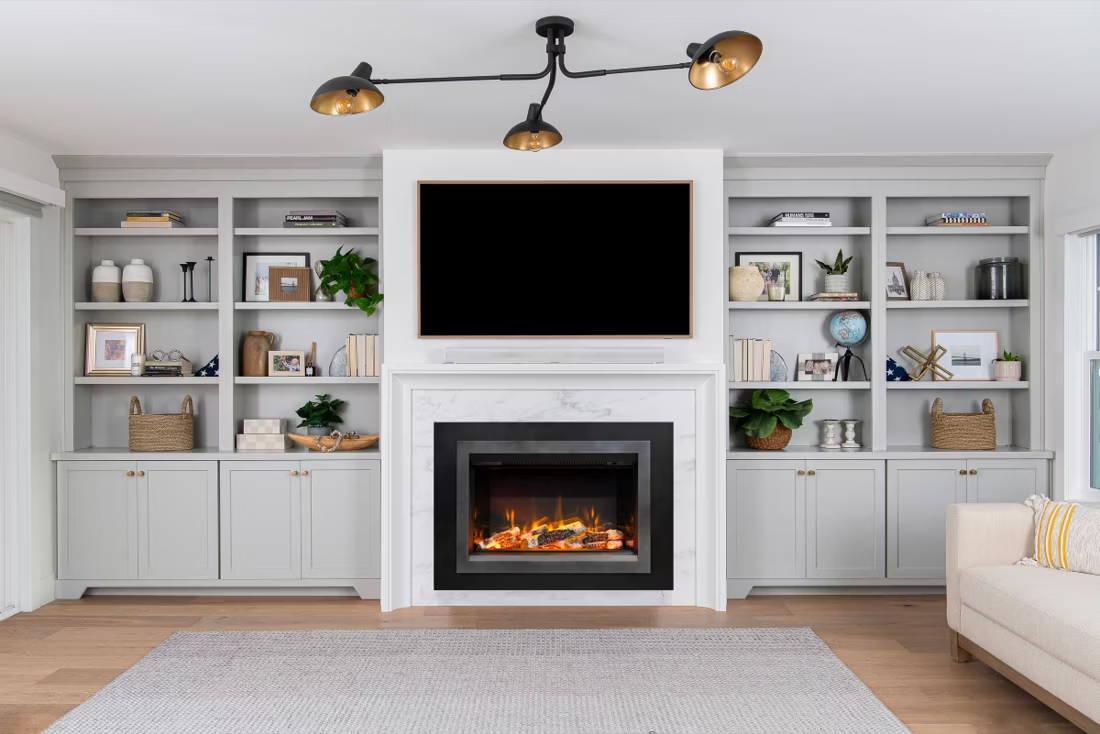
Yes—with an asterisk. Fireplaces are hot and TVs don't like heat. Either put a mantel between them to deflect rising warmth, or choose a fireplace with heat-management technology that creates a cool zone on the wall above—the wall stays around 125 degrees, barely warm, while the room still gets full heat. If you like clean lines and don't want a mantel, heat management is the answer.
Do electric fireplaces actually produce heat?
Yes—most put out around 4,800–5,000 BTUs from a standard outlet, which comfortably warms a bedroom, office, or den as a comfort-zone heater. What they won't do is carry a whole house the way wood, gas, or pellet can. Think of electric as ambiance-first with honest supplemental heat: flames on with no heat in July, flames plus warmth in January.
What is an in-home preview and do I need one?
It's a visit where a hearth professional measures your space, confirms the model you picked actually works in your home, and walks the specs—framing, gas line, venting, finish work—before anything is ordered. Some details you just can't know until you see the house. Never make a down payment without one; it's the single most-skipped step that burns buyers.
Does a fireplace add value to my home?
On average, a fireplace adds back to the home about the same amount you spent installing it. Add the monthly savings from heating the rooms you actually use instead of the whole house—often hundreds of dollars a year—and the value case is strong before you even count what a fire does for how your family uses the room.
Get your free Project Guide & Parts List for an electric fireplace in Stark County.
Tell me about the room you're trying to heat and what's already on that wall, and I'll match you with a trusted local dealer and send over a free Project Guide & Parts List—the right unit, the wiring needs, and a recommended installer for your Stark County project.
Find Your Fireplace →