
Instant heat for Metro East winters, no wood pile required.
With 4,209 heating degree days and winter lows averaging 24°F, St. Clair County's heating season is real but manageable—and Ameren Illinois natural gas reaches most of the Metro East, from Belleville to O'Fallon to Fairview Heights. I'll match you with a trusted local dealer who knows which venting setup and gas line work your specific home needs.
Every Project Starts From One of These Five Situations
The default heating upgrade across the Metro East.
St. Clair County sits directly across the Mississippi from St. Louis and covers roughly 675 square miles of suburban and small-city development, home to more than 204,000 people across Belleville, O'Fallon, Fairview Heights, Cahokia Heights, East St. Louis, Mascoutah, Swansea, and Shiloh. Climate zone 4A puts the county in a moderate mixed-humid heating climate—4,209 heating degree days is a real, multi-month heating season without the extreme swings of a Plains or northern climate. Because so much of the county is incorporated cities and villages rather than scattered rural acreage, Ameren Illinois natural gas infrastructure reaches the large majority of neighborhoods, and gas has become the default fuel homeowners upgrade to when replacing an old fireplace or adding heat to a remodel.
Wood and pellet appliances are genuinely uncommon here—not because the county lacks the hardwoods (oak, hickory, walnut, and maple all grow locally), but because dense suburban lot sizes, existing gas service almost everywhere, and municipal building rules in cities like Belleville and O'Fallon make a new wood or pellet installation impractical for most households. Regional pellet suppliers like Indeck Energy Services, Lignetics, and Somerset Pellet Fuel exist in this part of Illinois, but their volume mostly serves industrial and agricultural markets, not residential pellet stoves. For the typical St. Clair County homeowner, gas and electric are the two fuels that actually make sense, and gas wins whenever real heat output—not just ambiance—is the goal.
Three steps. No salesperson until you're ready.
Tell us about your project
Your zip code, your situation, and the fuel you're leaning toward—or let the answers point you to one.
See what's actually available
The brands dealers within 100 miles genuinely carry—real options, never a catalog mirage.
Get your dealer & Project Guide
A trusted local dealer, plus the free Project Guide & Parts List that names every component of the job.
Frequently Asked Questions
How much does a gas fireplace installation cost in St. Clair County?
Most gas fireplace projects in St. Clair County run roughly $3,500 to $9,500. A direct-vent insert dropped into an existing masonry firebox in an older Belleville or East St. Louis home—with a gas line already nearby—lands toward the lower end. A new built-in fireplace for a remodel or new construction in O'Fallon or Shiloh, requiring framing, a fresh gas line, and venting through an exterior wall or roof, runs toward the middle to upper end. Homes needing a longer gas line run from the meter, or venting through a steep or complicated roofline, can push above that range. A local dealer will confirm a firm number after seeing your space and gas service.
Can I convert my existing wood fireplace to gas?
Yes, and it's a common project in St. Clair County's older housing stock—Belleville, East St. Louis, and Mascoutah all have plenty of homes built with original masonry fireplaces that see little to no use. A gas insert fits into the existing firebox and vents through a stainless liner run up your current chimney, so you keep the fireplace opening but gain real, thermostat-controlled heat. Expect $4,000 to $8,500 depending on chimney condition and whether new gas line work is needed. Homes already piped for gas heat or a gas water heater tend to land on the lower end since a technician can often tap an existing line.
Do I need natural gas to install a gas fireplace, or can I use propane?
Either works. Ameren Illinois natural gas service covers most of St. Clair County's incorporated cities and villages, so homeowners in Belleville, O'Fallon, Fairview Heights, and Swansea usually already have a gas line they can extend to a fireplace. In a handful of unincorporated pockets and smaller communities near Lebanon or Freeburg where a gas main isn't within reach, propane from a local bulk supplier is a straightforward substitute—most gas fireplace models can be configured for either fuel with the correct orifice and regulator kit.
Will my gas fireplace work during a power outage?
Most modern gas fireplaces are designed to keep working when the power drops. Units with intermittent pilot ignition (IPI) run on a battery backup—usually AA batteries built into the unit—that kicks in automatically. Valor fireplaces take it further, using a self-powered thermocouple system that generates its own electricity for the pilot, so there's no battery to maintain at all. St. Clair County doesn't see frequent extended outages, but ice storms and severe spring weather do knock out power in the Metro East from time to time, so this is worth asking your dealer about when comparing models.
What's the difference between a gas fireplace, gas insert, and gas stove?
A gas fireplace is a fully built-in unit framed into a wall—the right fit for new construction or a full remodel in places like O'Fallon or Fairview Heights. A gas insert slides into an existing masonry firebox and uses your existing chimney as a vent path, which is the more common project in older Belleville and East St. Louis homes. A gas stove is a freestanding, cabinet-style unit that sits on the floor, useful in a room with no existing chimney or in a manufactured home. A local dealer can walk your space and tell you which configuration actually fits your layout and budget.
Do I need a permit to install a gas fireplace in St. Clair County?
Yes. If you're in an incorporated city or village—Belleville, O'Fallon, Fairview Heights, Mascoutah, and most of the county's population centers—the local municipal building department issues the permit and inspects the work. In unincorporated areas, St. Clair County's building and zoning office handles it. Either way, the gas line portion has to be run or connected by a licensed gas-fitter, which is one good reason to go through a full-service hearth dealer rather than a handyman install—they coordinate the gas work, venting, and inspection sign-off as one job.
What's the difference between vented and vent-free gas fireplaces?
Vented (direct-vent) gas fireplaces draw combustion air from outside and exhaust it back outside through a sealed pipe, keeping combustion byproducts entirely out of the living space. Vent-free units burn directly into the room and are legal in Illinois within specific room-sizing and oxygen-depletion-sensor requirements. St. Clair County doesn't carry any special air quality restrictions that would rule out either option, so the choice usually comes down to the space: vent-free suits a room with no exterior wall or chimney access, while direct-vent is the better all-around choice for a primary heat source that runs for hours at a stretch through the winter.
How often should my gas fireplace be serviced?
Plan on an annual inspection, ideally before the heating season ramps up in November. A technician checks the burner, pilot or ignition assembly, gas connections, and venting, and cleans the glass and interior. It's a much quicker visit than a wood chimney sweep—typically $150 to $250—but still worth scheduling every year for a unit that may run daily through St. Clair County's roughly 4,200-heating-degree-day winter.
Gas vs. wood or pellet—why does gas dominate here?
Wood stoves and pellet stoves are genuinely uncommon in St. Clair County—local hardwoods like oak, hickory, walnut, and maple exist, but suburban lot sizes, established gas infrastructure, and municipal building rules across cities like Belleville and O'Fallon make new wood or pellet installations rare outside of a legacy fireplace here and there. Gas, by contrast, delivers instant, thermostat-controlled heat through the Ameren Illinois lines that already reach most homes in the county, with no ash, no wood storage, and no fuel to haul. Unless you're on rural acreage without gas access and specifically want a wood-burning backup, gas is almost always the more practical choice for a St. Clair County home.
Is my gas fireplace wasting gas?
If it was installed more than 15 years ago, probably. Older gas fireplaces keep a standing pilot light burning all the time, and that little flame can cost a couple hundred dollars a year. Newer models use pilot-on-demand ignition—the pilot lights only when you use the fireplace and goes out when you turn it off.
Can I put a TV above my fireplace?
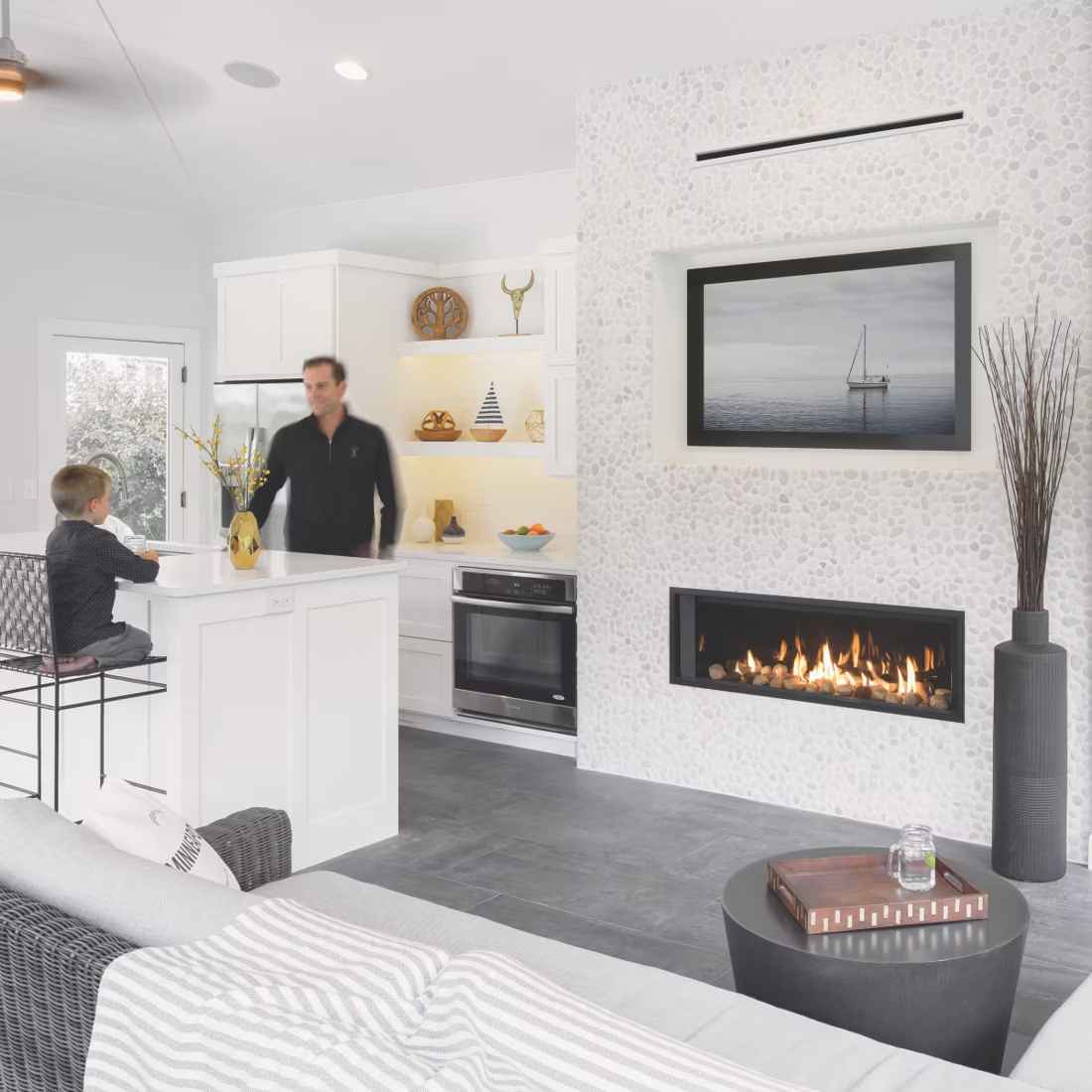
Yes—with an asterisk. Fireplaces are hot and TVs don't like heat. Either put a mantel between them to deflect rising warmth, or choose a fireplace with heat-management technology that creates a cool zone on the wall above—the wall stays around 125 degrees, barely warm, while the room still gets full heat. If you like clean lines and don't want a mantel, heat management is the answer.
What is an in-home preview and do I need one?
It's a visit where a hearth professional measures your space, confirms the model you picked actually works in your home, and walks the specs—framing, gas line, venting, finish work—before anything is ordered. Some details you just can't know until you see the house. Never make a down payment without one; it's the single most-skipped step that burns buyers.
How much should I budget for a fireplace?
For an average home—covering the fireplace, the vent pipe, and basic installation—a budget between $3,900 and $5,500 gives you a lot of options across wood, gas, and pellet. By the time you add finish work, gas line, and electrical, the average complete installation lands between $5,000 and $12,000 all-in. In a remodel or new build, a good rule is to put about 2.5% of the total project cost toward the fireplace.
Stove and Fireplace Dealers in St. Clair County
Get your free Project Guide & Parts List for a gas fireplace in St. Clair County.
Tell me a bit about your home—city, existing fireplace or blank wall, gas or propane—and I'll match you with a trusted local dealer and send over a free Project Guide & Parts List: the exact equipment, vent kit, and recommended installer for your gas project, no big-box guesswork.
Find Your Fireplace →