
Find the right electric fireplace for your Shelby County home.
No chimney, no gas line, no venting—just plug in or wire up and go. From Shelbyville to the cabins ringing Lake Shelbyville, find the right unit and connect with a trusted local dealer.
Every Project Starts From One of These Five Situations
Simple, safe heat without the chimney work.
Shelby County is rural south-central Illinois farmland and small towns—Shelbyville as the county seat, plus Windsor, Cowden, Stewardson, Tower Hill, Herrick, and Findlay spread across a population of about 11,000. The county also wraps around Lake Shelbyville, where seasonal cabins and lake homes have their own heating logistics. Winters here sit in climate zone 4A with about 5,321 heating degree days and average winter lows around 19°F—real cold, though nowhere near the totals a place like Madison, Wisconsin racks up each winter. Plenty of county homes still burn local oak, hickory, walnut, and maple in wood stoves, but electric fireplaces have carved out a solid niche of their own, especially where running a chimney or a gas line isn't practical or worth the cost.
Most of rural Shelby County is served by Shelby Electric Cooperative, headquartered right in Shelbyville, with Ameren Illinois covering some areas as well. That matters for electric fireplace projects because there's no gas line to trench, no masonry chimney to build, and often no permit required at all for a plug-in unit. That makes electric the practical choice for lake cabins around Lake Shelbyville that only run heat seasonally, for finished basements and additions where running new gas isn't in the budget, and for rental properties and older farmhouses where a clean, low-maintenance heat source beats hauling wood or maintaining a propane tank.
Three steps. No salesperson until you're ready.
Tell us about your project
Your zip code, your situation, and the fuel you're leaning toward—or let the answers point you to one.
See what's actually available
The brands dealers within 100 miles genuinely carry—real options, never a catalog mirage.
Get your dealer & Project Guide
A trusted local dealer, plus the free Project Guide & Parts List that names every component of the job.
Frequently Asked Questions
How much does an electric fireplace installation cost in Shelby County?
A freestanding or plug-in electric stove typically runs $150 to $600 for the unit itself, with no real installation cost since it plugs into a standard outlet. A built-in wall unit or mantel-style fireplace that needs a dedicated circuit, wall framing, or an electrician to run new wiring generally runs $800 to $2,500 depending on the model and how much electrical work is involved. For lake cabins around Lake Shelbyville with older panels or limited existing circuits, budget toward the higher end to cover any panel upgrades. A local dealer can give you a firm number after seeing the space.
Do I need a permit to install an electric fireplace in Shelby County?
Most plug-in electric fireplaces and stoves don't require any permit since there's no venting, gas line, or structural chimney work involved—you're just plugging into an existing outlet. If you're installing a hardwired built-in unit that requires a new dedicated circuit or a breaker panel change, that electrical work typically does need a permit, either through Shelbyville's local building department or Shelby County depending on where the property sits. A licensed electrician handling the wiring will usually pull that permit as part of the job.
How much space will an electric fireplace actually heat?
Most electric fireplaces are built for zone heating—figure a comfortable 400 to 1,500 square feet depending on the unit's wattage and how open the floor plan is, not whole-home heat. That's a good match for how a lot of Shelby County residents actually use them: warming a single living room, a finished basement, or a lake cabin around Lake Shelbyville that only needs to be comfortable during weekends and shoulder-season visits, not carrying the full heat load through a January cold spell.
Electric vs. wood—which makes sense for my Shelby County home?
Wood stoves burning local oak, hickory, walnut, or maple put out serious heat and keep working through a power outage—a real consideration here given the ice storms that occasionally roll through central Illinois. Electric fireplaces trade that off for convenience: no wood to split, haul, or clean up after, no chimney to maintain, and instant on-off operation. For a primary heat source in an older farmhouse, wood still often wins. For a rental property, an HOA-restricted subdivision near Shelbyville, or a lake cabin where low maintenance matters more than backup heat, electric is usually the better fit.
Electric vs. propane—which is more practical outside Shelbyville?
Outside Shelbyville's core, natural gas service thins out fast, and propane is the common alternative for gas-style fireplaces across rural Shelby County—which means a tank, a delivery contract, and ongoing fuel costs. An electric fireplace skips all of that: no tank, no delivery schedule, no combustion byproducts to vent. The tradeoff is heat output and running cost per hour, since electricity from Shelby Electric Cooperative or Ameren Illinois is generally a pricier per-BTU fuel than propane for extended, high-output use. For occasional or supplemental heat, electric's simplicity usually wins out.
Will my electric fireplace work during a power outage?
No—electric fireplaces require power to run, so they won't help during an outage, and Shelby County does see winter ice storms that knock out service in rural stretches served by Shelby Electric Cooperative. If backup heat during outages matters to you, an electric fireplace should be a secondary or ambiance-focused choice rather than your only heat source. Many Shelby County homes pair one with a wood stove that can carry the load if the grid goes down.
What electrical circuit does an electric fireplace need?
Most freestanding and plug-in electric stoves run fine on a standard 120V, 15-amp household outlet—no special wiring required. Larger built-in units, especially wide wall-mounted or linear models with higher wattage, often call for a dedicated 20-amp circuit to avoid tripping breakers, particularly if other appliances share the same circuit. Older homes and cabins around Lake Shelbyville with dated panels sometimes need a panel evaluation before a bigger unit goes in—worth asking a local electrician or dealer to check before you buy.
What's the best electric fireplace for actual heat, not just looks?
Not every electric fireplace is built to heat a room—some are almost purely decorative. If you want real supplemental warmth for Shelby County's winter stretch, look for units rated around 1,400 to 1,500 watts with a built-in fan-forced heater, not just an LED flame effect. Manufacturers like Dimplex and Napoleon make models specifically sized and rated for zone heating rather than ambiance alone. A local dealer can match wattage to your room size so you're not stuck with a fireplace that looks good but doesn't take the edge off a cold January evening.
Electric vs. pellet stove—which is right for my home?
Pellet stoves burning bags from regional suppliers like Indeck Energy Services, Lignetics, or Somerset Pellet Fuel put out considerably more heat than an electric unit and can genuinely carry a room or small home through a Shelby County winter—but they need venting, a hopper to load, ash to clean out, and periodic maintenance, and they still rely on electricity to run the auger and blower. Electric fireplaces skip the venting and the fuel deliveries entirely, trading heat output for simplicity. If you want a low-maintenance accent with modest supplemental heat, electric fits. If you want a real secondary heat source and don't mind the upkeep, pellet is worth a look—a local dealer can walk you through both.
Can I put a TV above my fireplace?
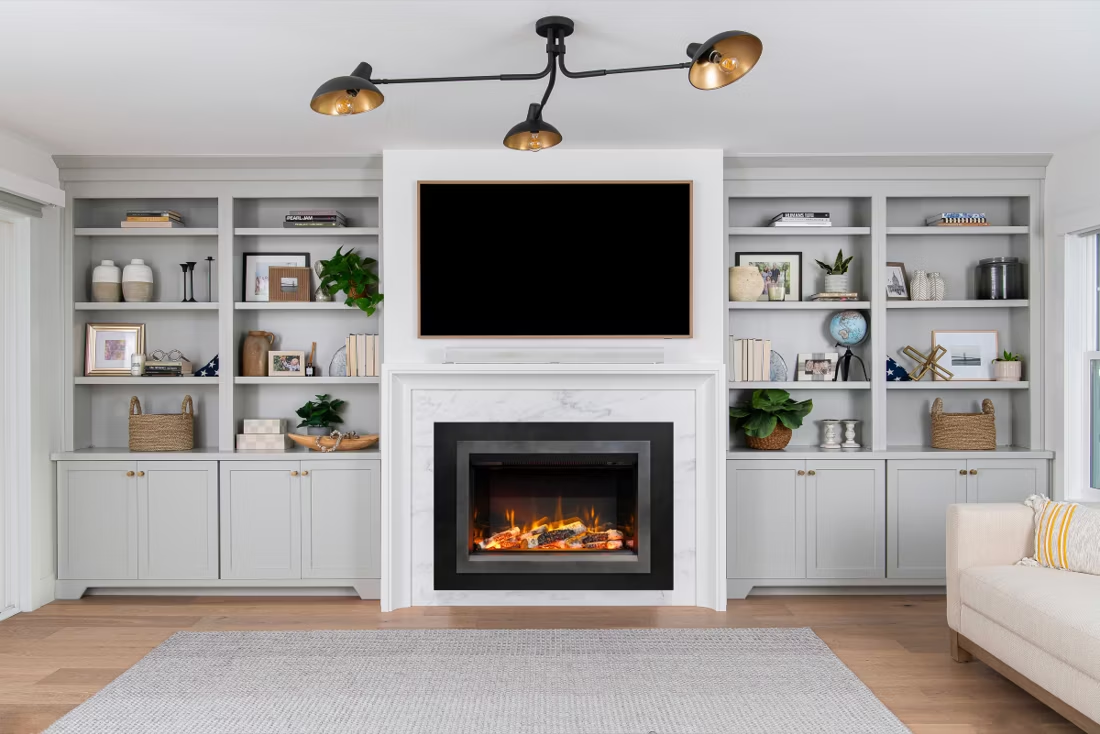
Yes—with an asterisk. Fireplaces are hot and TVs don't like heat. Either put a mantel between them to deflect rising warmth, or choose a fireplace with heat-management technology that creates a cool zone on the wall above—the wall stays around 125 degrees, barely warm, while the room still gets full heat. If you like clean lines and don't want a mantel, heat management is the answer.
Does an electric fireplace need a vent or chimney?
No—that's its superpower. An electric fireplace needs a wall and an outlet, period. No vent pipe, no gas line, no clearances to design around, which is why it works in bedrooms, offices, apartments, and walls where venting a gas or wood unit would be impractical or impossible. Installation is typically the simplest and least expensive of any fireplace type.
Can a fireplace actually lower my heating bill?
Yes—by creating a comfort zone. A furnace heats every square foot of the house just to warm the one room you're in; a gas fireplace on low burns roughly a sixth of the gas a typical furnace does. Set the furnace around 55–60 degrees as a baseline, then heat the rooms your family actually uses. Families who heat this way commonly save $20–$60 a month.
Does a fireplace add value to my home?
On average, a fireplace adds back to the home about the same amount you spent installing it. Add the monthly savings from heating the rooms you actually use instead of the whole house—often hundreds of dollars a year—and the value case is strong before you even count what a fire does for how your family uses the room.
Find your electric fireplace in Shelby County.
Tell us a bit about your home and we'll match you with the right electric fireplace, insert, or stove—plus a free Project Guide & Parts List with your exact parts and a trusted local dealer to install it.
Find Your Fireplace →