
Find your electric fireplace in Scott County.
Simple, no-vent heat for Scott County homes—from Winchester to Bluffs and the farmland in between. Find the right unit and connect with a trusted local dealer.
Every Project Starts From One of These Five Situations
Zone heat that plugs in and works.
Scott County is small and rural—about 3,000 residents spread across farmland in west-central Illinois, with a climate zone 5A winter that averages 18°F lows and adds up to a solid, long heating season. That's a real Midwestern winter, closer to Madison, WI than to Chicago's lakefront moderation, but nowhere near the extremes of a place like Duluth or Fargo. It's cold enough that supplemental heat matters, but not so extreme that homeowners need a whole-home wood or gas system just to get through January.
That combination makes electric fireplaces a practical fit for a lot of Scott County households, especially in Winchester and Bluffs where many homes are older farmhouses or ranch-style builds with a room or two that runs cold no matter what the central furnace is doing. An electric insert or freestanding unit adds instant, no-vent heat to a bedroom, sunroom, or finished basement without touching the chimney, without a gas line, and without pulling a burn permit. For a county this size, where the nearest big-box hearth store is a drive away, having a local dealer who can size and install the right unit matters more than shopping a catalog.
Three steps. No salesperson until you're ready.
Tell us about your project
Your zip code, your situation, and the fuel you're leaning toward—or let the answers point you to one.
See what's actually available
The brands dealers within 100 miles genuinely carry—real options, never a catalog mirage.
Get your dealer & Project Guide
A trusted local dealer, plus the free Project Guide & Parts List that names every component of the job.
Frequently Asked Questions
How much does an electric fireplace installation cost in Scott County?
Most electric fireplace installations in Scott County run $400 to $1,200. A plug-in insert that drops into an existing mantel surround or a wall-mounted unit on existing framing sits at the low end—often just the cost of the unit plus a straightforward mounting job. Recessed or built-in models that require carpentry work to frame a new opening, or a dedicated 240-volt circuit for a larger unit, land toward the higher end. Because there's no venting, chimney, or gas line involved, electric is consistently the least expensive fireplace option for Winchester and Bluffs homeowners looking to add heat to a specific room.
Do I need a permit to install an electric fireplace in Scott County?
In most cases, no. A plug-in electric insert or a fireplace that uses an existing standard outlet typically doesn't require a building permit. If your installation involves adding a new dedicated circuit or breaker for a higher-draw unit, an electrician will need to pull an electrical permit, which is standard practice and usually handled as part of the install quote. Unlike wood stoves in this county, there's no EPA certification or burn-permit consideration for electric—it's the most paperwork-light hearth option available in Scott County.
Will an electric fireplace actually heat a room, or is it just for looks?
A properly sized electric fireplace will genuinely heat a room. Most units are rated for 400-1,500 square feet using a built-in fan-forced heater, and in a Scott County winter with 18°F average lows, that's enough to make a bedroom, den, or finished basement noticeably warmer without running the furnace harder. Where electric falls short is whole-home heating—it's a zone-heat and ambiance solution, not a replacement for a furnace during a Midwestern cold snap. Many Winchester and Bluffs homeowners use one to take the edge off a chronically cold room rather than as their primary heat source.
Can an electric fireplace be used during a power outage?
No—this is the one real limitation to be honest about. Electric fireplaces require power to run both the heater and any flame-effect display, so they go dark the moment the power does. In rural Scott County, where ice storms and summer thunderstorms can knock out power for hours at a time, a wood stove or a battery-backed gas unit will keep working when an electric fireplace won't. If backup heat during outages is a priority for your household, ask a local dealer about pairing an electric fireplace for everyday convenience with a wood or gas appliance elsewhere in the house for true outage resilience.
What's the difference between an electric insert and a freestanding electric fireplace?
An electric insert is built to slide into an existing fireplace opening or a custom-framed cavity, giving you a built-in look without any venting work. A freestanding or wall-mounted electric fireplace stands on its own or hangs like a piece of furniture or artwork, which works well in homes without an existing fireplace opening—common in many of Scott County's ranch-style and mobile homes. For Winchester or Bluffs homeowners converting an old wood-burning fireplace they no longer want to maintain, an insert is often the simpler upgrade since it uses the opening that's already there.
How do electric fireplace running costs compare to wood or gas in Scott County?
Electric fireplaces are generally the cheapest to buy but not always the cheapest to run for sustained heat, since electricity costs more per BTU than firewood cut from local oak, hickory, or walnut, or from propane in areas without natural gas service. Where electric wins is efficiency for spot heating—nearly 100% of the electricity used becomes heat in the room, with no chimney loss. For a household in Scott County using an electric unit to warm one room for a few hours a night rather than heating a whole house, the operating cost is usually modest and predictable, which is part of why it's a popular add-on rather than a primary heat source here.
Are electric fireplaces a good fit for older Scott County farmhouses?
Often, yes. A lot of the housing stock in Scott County consists of older farmhouses with uneven insulation and rooms that were added on over the decades—exactly the situation where a central furnace struggles to keep every room comfortable. An electric fireplace or insert is a low-disruption way to add heat to one of those rooms without touching the home's structure, chimney, or gas lines. The tradeoff is that it won't help during a power outage and it isn't meant to replace whole-home heating, so it works best as a supplement rather than a fix for a poorly insulated house.
Where can I find a local dealer to install an electric fireplace in Scott County?
Because Scott County is small and rural, the nearest hearth specialty retailers are often in a neighboring county rather than in Winchester or Bluffs itself. A trusted local dealer will still size the unit correctly for your room, handle any electrical work with a licensed electrician if a new circuit is needed, and make sure the mounting or framing is done right—details that matter even for a plug-in appliance. Working with a dealer who knows the area avoids the guesswork of ordering a big-box unit online and hoping it fits your space and your electrical panel.
Electric vs. wood—which is right for my Scott County home?
Wood, burned from local oak, hickory, walnut, or maple, delivers real heat output, works without electricity during outages, and suits the self-sufficient, rural character of much of Scott County. Electric offers instant on-off convenience, zero maintenance, no chimney or venting, and the lowest upfront cost of any fireplace type—but it depends entirely on grid power and isn't meant to be a primary heat source through a full Illinois winter. Many households here end up with both: wood or a wood insert for backup heat and ambiance, electric for a quick, no-mess warmth boost in a bedroom or den.
Can I put a TV above my fireplace?
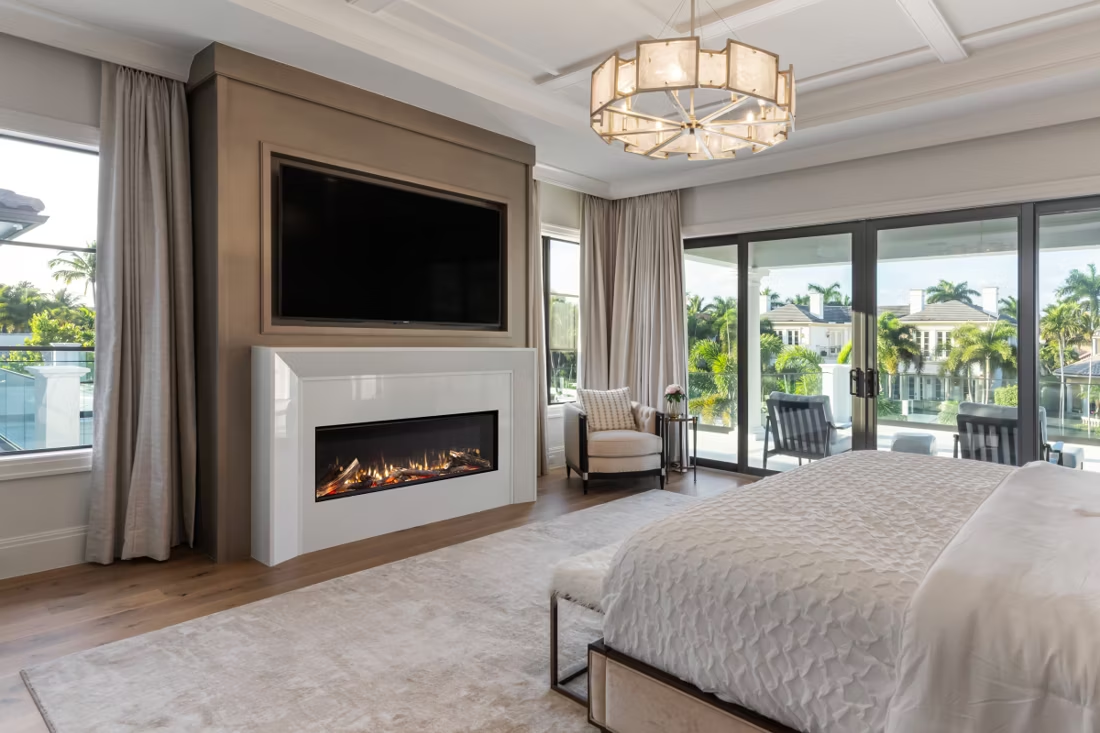
Yes—with an asterisk. Fireplaces are hot and TVs don't like heat. Either put a mantel between them to deflect rising warmth, or choose a fireplace with heat-management technology that creates a cool zone on the wall above—the wall stays around 125 degrees, barely warm, while the room still gets full heat. If you like clean lines and don't want a mantel, heat management is the answer.
Do electric fireplaces actually produce heat?
Yes—most put out around 4,800–5,000 BTUs from a standard outlet, which comfortably warms a bedroom, office, or den as a comfort-zone heater. What they won't do is carry a whole house the way wood, gas, or pellet can. Think of electric as ambiance-first with honest supplemental heat: flames on with no heat in July, flames plus warmth in January.
Does a fireplace add value to my home?
On average, a fireplace adds back to the home about the same amount you spent installing it. Add the monthly savings from heating the rooms you actually use instead of the whole house—often hundreds of dollars a year—and the value case is strong before you even count what a fire does for how your family uses the room.
How much should I budget for a fireplace?
For an average home—covering the fireplace, the vent pipe, and basic installation—a budget between $3,900 and $5,500 gives you a lot of options across wood, gas, and pellet. By the time you add finish work, gas line, and electrical, the average complete installation lands between $5,000 and $12,000 all-in. In a remodel or new build, a good rule is to put about 2.5% of the total project cost toward the fireplace.
Get your Scott County electric fireplace Project Guide.
Tell us a bit about your home and we'll put together a free Project Guide & Parts List for your electric fireplace project, plus match you with a trusted local dealer in or near Scott County.
Find Your Fireplace →