
Real flame-look warmth, zero venting, anywhere in Rock Island County.
From a condo above downtown Rock Island to a farmhouse outside Cordova, electric fireplaces add supplemental heat and real ambiance without a chimney, gas line, or wood pile. Find the right unit and connect with a trusted local dealer.
Every Project Starts From One of These Five Situations
The easiest retrofit heat you can add to an existing home.
Rock Island County sits at the Illinois edge of the Quad Cities—Rock Island, Moline, East Moline, and Silvis along the Mississippi, with Milan, Coal Valley, Andalusia, and the smaller river towns toward Port Byron and Cordova filling out the rest. Winters here run cold and long: an average low around 15°F and a long, heavy heating season, comparable to Madison, WI rather than to the rest of the Midwest's milder pockets. A lot of the county's housing stock—the brick two-flats and bungalows in older Rock Island and Moline neighborhoods especially—was built without a masonry fireplace or a chimney flue, which makes wood or gas retrofits a bigger project than most homeowners want to take on for a secondary heat source.
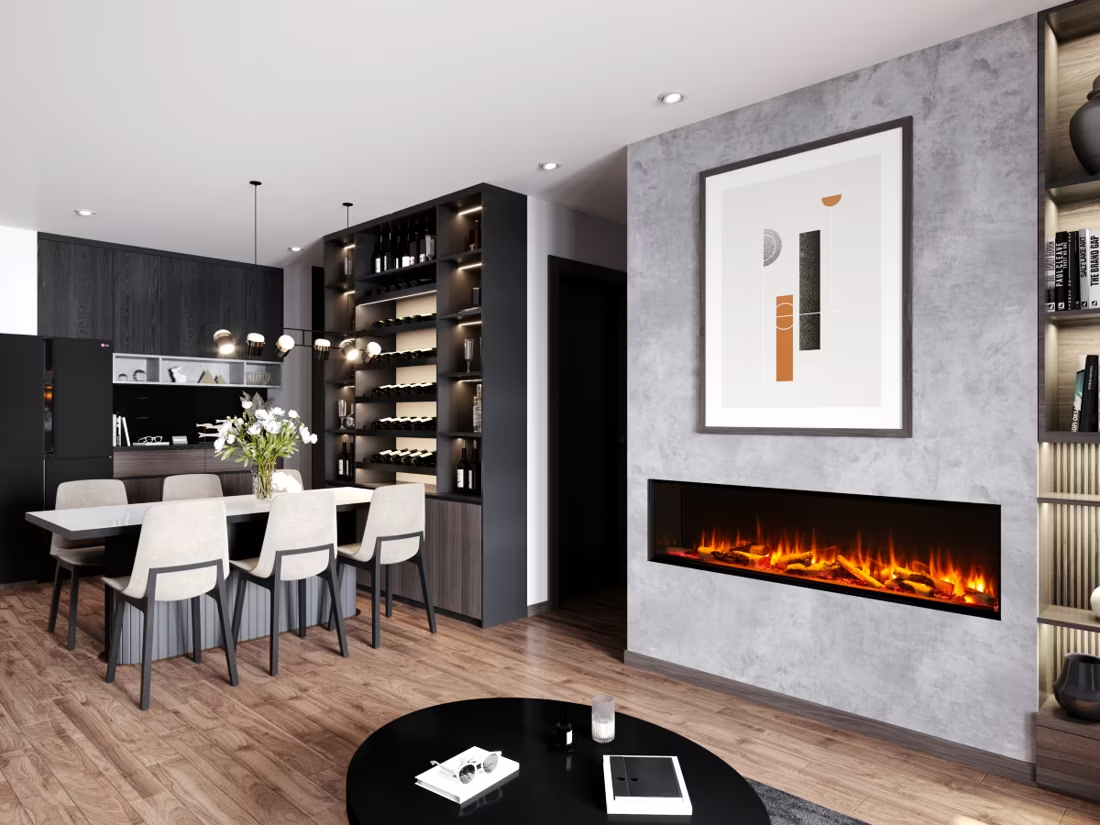
That's where electric fireplaces earn their keep. A plug-in insert or wall-mount unit gives you real flame-look ambiance and 1,500-watt zone heat in a bedroom, basement, or living room with no venting, no gas line, and—in most cases—no permit. It's also the practical answer for renters and condo owners across the county who can't alter a chimney or run new gas piping, and for finished basements near the river where a masonry chimney was never in the plan to begin with. Electric won't replace your furnace on a January cold snap, but as a way to warm the room you're actually sitting in—while MidAmerican Energy keeps the rest of the house running—it's hard to beat for the cost and effort involved.
Three steps. No salesperson until you're ready.
Tell us about your project
Your zip code, your situation, and the fuel you're leaning toward—or let the answers point you to one.
See what's actually available
The brands dealers within 100 miles genuinely carry—real options, never a catalog mirage.
Get your dealer & Project Guide
A trusted local dealer, plus the free Project Guide & Parts List that names every component of the job.
Frequently Asked Questions
How much does an electric fireplace installation cost in Rock Island County?
Plug-in electric inserts and mantel packages are the low end—most run $500 to $2,500 installed, since there's no venting or gas line to run and the unit simply plugs into an existing outlet. If you want a built-in wall unit or a linear electric fireplace set into new framing, expect $2,000 to $5,000, largely because that typically calls for a licensed electrician to run a dedicated 20-amp circuit rather than relying on a shared household outlet. Homes in older Rock Island and Moline neighborhoods with dated electrical panels sometimes need a panel assessment first, which a local dealer can flag during the in-home estimate.
Do I need a permit to install an electric fireplace in Rock Island County?
Usually not for a plug-in unit—it's treated like any other appliance, no different from plugging in a space heater. If you're adding a dedicated circuit or hardwiring a built-in unit, most municipalities in the county, including Rock Island, Moline, and East Moline, require an electrical permit pulled by the licensed electrician doing the work. It's a quick inspection, not a construction project, and a local dealer coordinating the install will typically handle the paperwork rather than leaving it to you.
Will an electric fireplace actually heat my house during a Rock Island County winter?
Not the whole house, and it isn't meant to. With winter lows averaging around 15°F and a long, demanding heating season, your furnace is still doing the heavy lifting. A typical 1,500-watt electric fireplace or insert is built for zone heating—it'll comfortably warm a single room in the 300-to-600-square-foot range, which makes it a good fit for a finished basement, a home office, or a bedroom you want warmer without running ductwork or bumping the thermostat for the whole house. Think supplemental comfort and lower utility bills in the rooms you use most, not primary heat.
Electric vs. gas fireplace—which is right for my Rock Island County home?
Gas fireplaces put out real heat—enough to serve as genuine supplemental or even primary zone heat during a cold snap—and many county homeowners with natural gas service already running to the house find a direct-vent gas insert an easy addition. Electric fireplaces trade heat output for simplicity: no venting, no gas line, and a fraction of the installation cost and time, which matters most in condos, rentals, and finished basements where running gas or venting isn't practical or allowed. If you already have gas service and want a fireplace that can genuinely take the edge off a January night, gas usually wins. If you want flame-look ambiance and light supplemental warmth with the least disruption to your home, electric is the more practical choice.
What about wood-burning fireplaces or stoves in Rock Island County?
Wood-burning appliances are uncommon as a new installation choice in Rock Island County today, even with local oak, hickory, walnut, and maple readily available as firewood species. Most county homeowners who want a real-fire look without the venting, chimney maintenance, and wood handling that come with a wood stove end up choosing electric or gas instead. If you already have an existing masonry fireplace and specifically want to keep burning wood, that's a separate conversation worth having with a local hearth dealer—but for most homes being outfitted new, electric is the lower-friction path to the same ambiance.
What types of electric fireplaces are available for Rock Island County homes?
Three formats cover most projects: freestanding stoves that plug in and sit anywhere in a room, wall-mount linear units that hang like a flat-screen TV and give a sleek, modern flame display, and inserts sized to slide into an existing fireplace opening (masonry or zero-clearance) to convert a dead firebox into working supplemental heat. Brands like Dimplex, Napoleon, and SimpliFire are commonly stocked by hearth dealers in the region and cover everything from budget mantel packages to higher-end linear units with realistic LED flame technology. A local dealer can walk you through which format fits your existing opening, wall, or room layout.
How much does it cost to run an electric fireplace with MidAmerican Energy rates?
A standard 1,500-watt electric fireplace running on high draws about 1.5 kWh per hour. At typical MidAmerican Energy residential rates, that works out to roughly 15 to 20 cents an hour of use—a few dollars for an evening of ambiance, and a manageable add-on if you're using it to warm a single room instead of running the furnace harder to heat the whole house. Most units let you run the flame effect alone, without the heater element, for near-zero operating cost if you just want the look on a mild evening.
Can I install an electric fireplace in a condo or rental in Rock Island County?
Yes—this is one of the main reasons electric fireplaces are popular in the county's condo buildings and rental units, particularly in downtown Rock Island and Moline. A plug-in insert or freestanding stove requires no permanent alteration to the structure, no venting through an exterior wall, and no landlord sign-off for gas work. It can typically be unplugged and taken with you if you move. Wall-mounted units require anchoring into a wall, which is worth checking against a lease agreement first, but even that is a minor, reversible installation compared to gas or wood options.
How much maintenance does an electric fireplace need?
Very little compared to gas or wood. There's no chimney to sweep, no gas line to inspect, and no combustion byproducts to worry about. Basic upkeep is dusting the interior periodically, wiping down the glass front, and occasionally replacing an LED light strip after years of use—most units are rated for 20,000-plus hours of flame-effect operation before that's even a consideration. It's a meaningful advantage for county homeowners who want fireplace ambiance without an annual service call.
Does an electric fireplace need a vent or chimney?
No—that's its superpower. An electric fireplace needs a wall and an outlet, period. No vent pipe, no gas line, no clearances to design around, which is why it works in bedrooms, offices, apartments, and walls where venting a gas or wood unit would be impractical or impossible. Installation is typically the simplest and least expensive of any fireplace type.
Can I put a TV above my fireplace?
Yes—with an asterisk. Fireplaces are hot and TVs don't like heat. Either put a mantel between them to deflect rising warmth, or choose a fireplace with heat-management technology that creates a cool zone on the wall above—the wall stays around 125 degrees, barely warm, while the room still gets full heat. If you like clean lines and don't want a mantel, heat management is the answer.
Does a fireplace add value to my home?
On average, a fireplace adds back to the home about the same amount you spent installing it. Add the monthly savings from heating the rooms you actually use instead of the whole house—often hundreds of dollars a year—and the value case is strong before you even count what a fire does for how your family uses the room.
Can a fireplace actually lower my heating bill?
Yes—by creating a comfort zone. A furnace heats every square foot of the house just to warm the one room you're in; a gas fireplace on low burns roughly a sixth of the gas a typical furnace does. Set the furnace around 55–60 degrees as a baseline, then heat the rooms your family actually uses. Families who heat this way commonly save $20–$60 a month.
Stove and Fireplace Dealers in Rock Island County
Find your electric fireplace in Rock Island County.
Tell us a bit about your home and we'll match you with the right electric fireplace, insert, or wall unit—plus a free Project Guide & Parts List and a trusted local dealer to install it.
Find Your Fireplace →