
Instant heat built for McHenry County winters.
Richmond sits just south of the Wisconsin line, where winter lows average 13°F and the heating season runs long. A gas fireplace delivers real heat at the flip of a switch—find the right unit and get matched with a trusted local dealer.
Every Project Starts From One of These Five Situations
Reliable warmth for a village that gets genuinely cold.
At 785 feet in far northern McHenry County, Richmond has a long, demanding heating season—in the same range as Madison, Wisconsin, just up the road. With average winter lows around 13°F, this is a village where a supplemental heat source isn't a luxury, it's a practical part of getting through January. Unlike more wooded, rural parts of the Midwest, full-time wood burning has never really taken hold here—most Richmond homeowners lean on gas or electric heat rather than splitting and stacking cordwood, even though oak, hickory, and walnut grow throughout the surrounding county.
Much of the village and this stretch of McHenry County is served by Nicor Gas, so homes that already run a gas furnace or water heater usually have an easy path to adding a fireplace. Outlying farmsteads and county-road properties outside that service footprint typically run on propane instead. Either way, a gas fireplace or insert gives you zone heat you can turn on the moment the furnace can't keep up, with no ash, no chimney sweep season, and—with the right ignition system—heat that keeps working even when Commonwealth Edison or Rock Energy Cooperative lines go down in a winter storm.
Three steps. No salesperson until you're ready.
Tell us about your project
Your zip code, your situation, and the fuel you're leaning toward—or let the answers point you to one.
See what's actually available
The brands dealers within 100 miles genuinely carry—real options, never a catalog mirage.
Get your dealer & Project Guide
A trusted local dealer, plus the free Project Guide & Parts List that names every component of the job.
Frequently Asked Questions
How much does a gas fireplace installation cost in Richmond?
A direct-vent gas insert or built-in fireplace typically runs $4,000 to $10,000 installed in this part of McHenry County, depending on the unit, whether a gas line already reaches the hearth, and how much venting work is involved. Homes already on Nicor Gas service with a line nearby tend to land on the lower end. Propane conversions, long gas line runs, or new construction with framing and venting from scratch push toward the higher end. A local dealer will give you a firm number after walking your home—the venting path and line distance are the two biggest cost swings here.
Can I convert my existing wood-burning fireplace to gas?
Plenty of Richmond's older farmhouses still have a masonry fireplace built decades ago, even though burning it regularly isn't really common practice around here anymore. Converting that fireplace to a direct-vent gas insert is one of the more popular local projects: it uses your existing chimney with a stainless liner, and turns a fireplace that mostly sits cold and unused into real, on-demand heat. Expect roughly $4,000 to $8,500 depending on whether the flue needs relining and whether you're running natural gas or propane.
Should I install a natural gas or propane fireplace?
Homes within the village of Richmond and much of the surrounding area are typically served by Nicor Gas, so if you already have a gas furnace or range, tapping that same line for a fireplace is usually straightforward. Outside the natural gas footprint—common on outlying farm properties around Richmond—propane is the standard alternative, either from an existing tank or one set by a local propane supplier. Most gas fireplace models can be configured for either fuel; your installer sets the correct orifice and pressure regulator for whichever you have.
Will my gas fireplace still work if the power goes out?
Most modern gas fireplaces are built to run through power outages. Units with IPI (intermittent pilot ignition) include a battery backup that kicks in automatically, so the fireplace lights on demand just like normal until power returns—just remember to keep fresh batteries in it. Valor fireplaces take a different approach: they use an on-demand pilot with a thermocouple that generates its own electricity, so there's no battery to remember at all. With winter storms in this corner of McHenry County occasionally knocking out ComEd or Rock Energy Cooperative service for a day or more, that's a genuine advantage worth asking about.
What's the difference between a gas fireplace, gas insert, and gas stove?
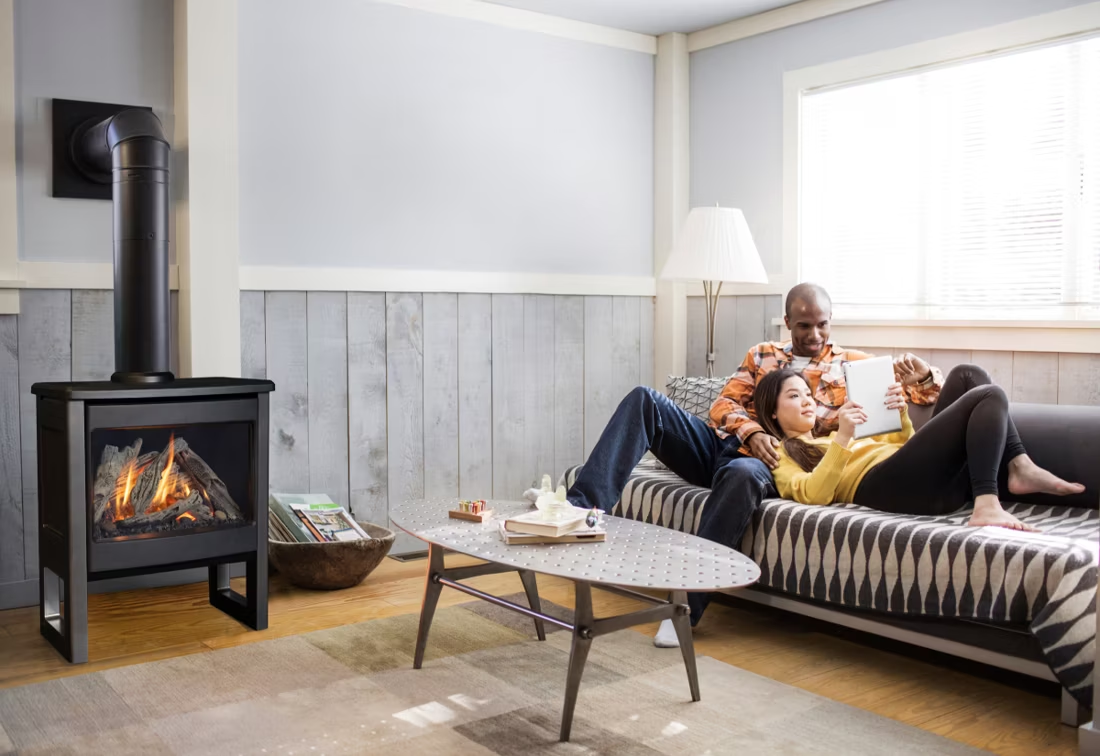
A gas fireplace is a fully built-in unit framed into a wall—the right call for new construction or a remodel without an existing chimney. A gas insert is sized to slide into an existing masonry fireplace opening, sealing it up and venting through your current chimney with a liner. A gas stove is a freestanding unit that sits on the floor like a wood stove but runs on gas. For Richmond's stock of older homes with an existing but rarely-used masonry fireplace, an insert is usually the most cost-effective upgrade. Newer builds or rooms without a chimney are better suited to a built-in fireplace or a freestanding stove.
Do I need a permit to install a gas fireplace in Richmond?
Yes—a new gas fireplace or insert requires a building permit, and any new gas line work has to be pulled by a licensed gas fitter. Projects inside village limits go through the Village of Richmond building department; homes just outside the village boundary typically fall under the McHenry County Building Division instead. Most local hearth dealers handle this paperwork as part of the installation, coordinating the gas line, venting, and final inspection so you're not managing multiple trades yourself.
Should I get a vented or vent-free gas fireplace?
Vented (direct-vent) gas fireplaces draw combustion air from outside and exhaust it back outside through a sealed pipe—they're the standard choice and code-compliant everywhere, including Illinois. Vent-free units burn directly into the room without exterior venting; they're legal here but come with strict room-sizing rules and oxygen depletion sensors, and they add some humidity and combustion byproducts to indoor air. For a village that sees real winter cold and closed-up homes for months at a time, direct-vent units are what most Richmond homeowners and local dealers recommend—you get full heat output without any indoor air quality tradeoffs.
How often does a gas fireplace need to be serviced?
Plan on an annual inspection, ideally before the heating season ramps up in the fall. A technician checks the burner, pilot assembly, venting, gas connections, and any electronic ignition components, and cleans the glass and interior. It's a much lighter lift than chimney sweeping for a wood-burning unit, but skipping it is how small issues—a dirty flame sensor, a loose fitting—turn into bigger repairs. Most local service providers charge $150 to $250 for a standard annual visit.
Should I consider wood instead of gas for Richmond winters?
Wood heat isn't really part of the picture in Richmond the way it is in more forested or rural stretches of the Midwest—most homeowners here rely on gas or electric for supplemental heat, and a full cordwood routine of splitting, seasoning, and stacking oak, hickory, or walnut isn't common local practice, even though those species grow throughout the county. A handful of owners with wooded lots do burn recreationally, but for dependable, whole-room heat during such a long, demanding winter, gas is the far more practical choice for most Richmond homes—you get heat the moment you need it, not after a fire catches.
Why is my open fireplace making my house colder?
Open fireplaces suck—literally. As the fire burns, it consumes air your furnace already paid to heat and pulls it out through the chimney, so the house is actually colder after the fire goes out than before you lit it. An insert fixes this: it seals the chimney, puts fixed glass across the front, and turns that hole in your house into a real heat source.
Can I put a TV above my fireplace?
Yes—with an asterisk. Fireplaces are hot and TVs don't like heat. Either put a mantel between them to deflect rising warmth, or choose a fireplace with heat-management technology that creates a cool zone on the wall above—the wall stays around 125 degrees, barely warm, while the room still gets full heat. If you like clean lines and don't want a mantel, heat management is the answer.
Does a fireplace add value to my home?
On average, a fireplace adds back to the home about the same amount you spent installing it. Add the monthly savings from heating the rooms you actually use instead of the whole house—often hundreds of dollars a year—and the value case is strong before you even count what a fire does for how your family uses the room.
What is an in-home preview and do I need one?
It's a visit where a hearth professional measures your space, confirms the model you picked actually works in your home, and walks the specs—framing, gas line, venting, finish work—before anything is ordered. Some details you just can't know until you see the house. Never make a down payment without one; it's the single most-skipped step that burns buyers.
Nearby Dealers
Hearth shops serving Richmond and the surrounding area. Every listing shows whether it is a WhyFire partner, a dealer we have verified as authorized for the brands we recommend, or a local business carrying hearth products. No manufacturer pays for placement. How we verify dealers →
Lakes Brick & Block
Lakeside Fireplace
Fireplace And Patio
Jhb Group, Inc.
James R. Tayler & Sons
Smokin' Deal Bbq
Fireplaces Plus
Find your gas fireplace in Richmond.
Tell us about your home and heating goals, and we'll match you with a trusted local dealer plus a free Project Guide & Parts List—the exact gas fireplace, insert, or stove specs, vent kit included, sized for your Richmond home.
Find Your Fireplace →