
Warm Up Fast in Pope County, Without the Wood Pile.
Zone heat and real ambiance for the farmhouses and cabins scattered across Pope County's ridges and hollows—no chimney, no gas line, no cut wood to stack. Find the right unit and connect with a trusted local dealer.
Every Project Starts From One of These Five Situations
The easiest heat source in the county's toughest-to-heat homes.
Pope County sits at the southern tip of Illinois, wrapped in the ridges and hollows of the Shawnee National Forest along the Ohio River, with the county seat of Golconda anchoring one of the smallest, most rural populations in the state—just 884 residents spread across a landscape of old farmsteads, hunting cabins, and river-bottom homes. Climate zone 4A means winters here are milder than the northern half of the state, but overnight lows still swing well below freezing, and many of the county's older homes were built long before central heating was standard.
Wood has always been the backbone of heating in this part of Illinois—the county's oak, hickory, walnut, and maple stands make cordwood cheap and abundant, and plenty of homes lean on a wood stove for primary heat. Electric fireplaces fill a different, useful role: a plug-in or hardwired unit adds instant zone heat to a single drafty room, a sunporch, or a finished basement without the permits, venting, or gas line work that wood or gas installs require. The tradeoff worth knowing up front—electric units go dark the moment the power does, and Pope County's rural cooperative lines can go down for hours or days after an ice storm, so most homeowners here treat electric heat as a convenient supplement rather than their only line of defense against the cold.
Three steps. No salesperson until you're ready.
Tell us about your project
Your zip code, your situation, and the fuel you're leaning toward—or let the answers point you to one.
See what's actually available
The brands dealers within 100 miles genuinely carry—real options, never a catalog mirage.
Get your dealer & Project Guide
A trusted local dealer, plus the free Project Guide & Parts List that names every component of the job.
Frequently Asked Questions
How much does an electric fireplace installation cost in Pope County?
Plug-in electric inserts and freestanding stoves run roughly $300 to $900 installed, since most simply plug into an existing 120-volt outlet with no electrical or gas work needed. Built-in wall units or larger hardwired fireplaces—a common upgrade for a sunroom or finished basement in an older Pope County farmhouse—run closer to $1,000 to $2,000 once a licensed electrician runs a dedicated circuit. Because there's no venting or chimney involved, electric installs are consistently the cheapest and fastest of any fuel type available through local dealers.
Will my electric fireplace still work during a power outage?
No—and this matters more in Pope County than in a lot of places. Rural distribution lines run through heavily wooded terrain along the Shawnee National Forest, and ice storms or fallen limbs can knock out power for hours or even a couple of days at a time. An electric fireplace goes dark the instant the grid does. If you're relying on a single heat source for a remote property, most local dealers recommend pairing an electric unit with a wood stove or propane heater that doesn't depend on the local co-op's lines staying up.
Do I need a permit to install an electric fireplace in Pope County?
Generally, no. A plug-in electric insert or freestanding stove typically requires no permit at all since there's no venting, chimney, or gas line involved. If you're having a built-in unit hardwired with a new dedicated circuit, your electrician will pull an electrical permit as a normal part of that work, but this is a much lighter process than the building and mechanical permits required for wood or gas installations. Ask your installer to confirm—requirements can vary slightly depending on whether the home is inside Golconda's limits or out in unincorporated Pope County.
What's the best electric fireplace for an old farmhouse or log cabin?
For the older, often unevenly heated homes common throughout Pope County, a mantel-package electric fireplace or a built-in wall insert both work well because neither requires cutting into an existing chimney—many of these homes have masonry fireplaces that were never designed for a modern liner. A freestanding electric stove is a good option if you want to visually match a wood stove aesthetic in a cabin setting. Local dealers can also install an electric insert directly into an existing masonry firebox if you want to keep the look of the original fireplace while retiring an old, inefficient wood-burning setup.
Electric vs. wood heat—which makes more sense for my Pope County home?
Wood remains the practical choice for primary heat in much of Pope County—oak, hickory, and walnut are all locally abundant and cheap to source, and a wood stove keeps working through the ice-storm outages that periodically hit the county's rural electric lines. Electric wins on convenience: no cutting, hauling, or ash cleanup, instant on-off operation, and installation that doesn't touch your chimney or require a permit. Many homeowners here run both—a wood stove for backup and daily heavy heating, and an electric unit in a secondary room or finished space where running a flue isn't practical.
What size electric fireplace do I need?
Most electric fireplaces are rated for supplemental zone heating rather than whole-home heat, generally covering 400 to 1,000 square feet depending on the model and the insulation of the room. In the older, less-insulated farmhouses common in Pope County, size toward the upper end of a room's square footage rather than the minimum—drafty older construction loses heat faster than a newer, tightly sealed home. A local dealer can size a unit correctly for your specific room during a quick consultation.
What does it cost to run an electric fireplace compared to wood or propane?
A typical electric fireplace draws around 1,500 watts on its heat setting, which works out to roughly 10 to 20 cents per hour depending on your electric rate through your local cooperative. That's usually cheaper per hour than running a propane heater, though more expensive than burning free or low-cost self-cut firewood, which is common practice in a county surrounded by hardwood forest. Electric heat's real value isn't fuel cost—it's the convenience of zoning heat to one room without stocking fuel or maintaining a flue.
Can an electric fireplace heat more than one room in an old farmhouse?
Not effectively on its own. Electric fireplaces are built for zone heating—warming the room they're in—rather than distributing heat through a house the way a central furnace or a well-placed wood stove can. In the multi-room, often poorly-insulated older homes typical of rural Pope County, the better strategy is placing an electric unit in whichever room you spend the most time in during winter (a living room or a converted sunporch) and relying on your primary heat source—furnace, propane, or wood stove—for the rest of the house.
Are there rebates available for electric fireplaces in Pope County?
Rebate programs for electric fireplaces specifically are limited compared to gas or high-efficiency wood appliances, since electric units don't reduce emissions the way EPA-certified wood or pellet stoves do. That said, it's worth checking with your local electric cooperative directly—rural co-ops serving southern Illinois occasionally run efficiency or electrification incentive programs that apply to supplemental electric heating equipment. A local dealer can also tell you whether any current state or utility programs apply to your specific model.
Can I put a TV above my fireplace?
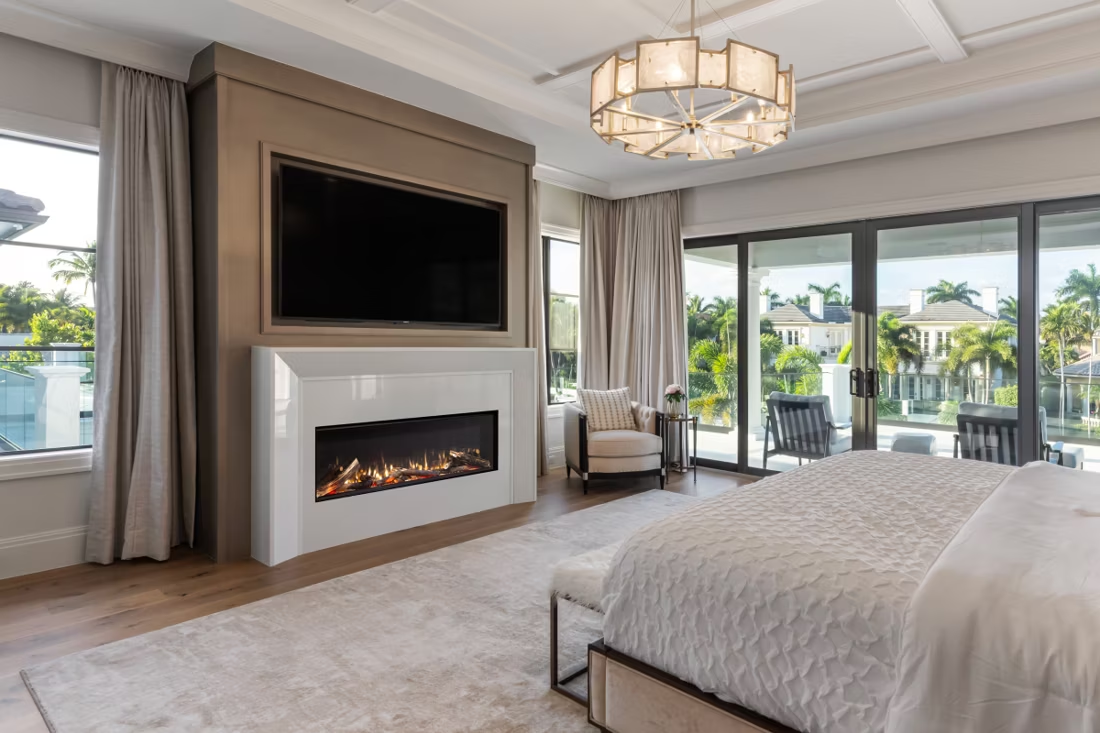
Yes—with an asterisk. Fireplaces are hot and TVs don't like heat. Either put a mantel between them to deflect rising warmth, or choose a fireplace with heat-management technology that creates a cool zone on the wall above—the wall stays around 125 degrees, barely warm, while the room still gets full heat. If you like clean lines and don't want a mantel, heat management is the answer.
Does an electric fireplace need a vent or chimney?
No—that's its superpower. An electric fireplace needs a wall and an outlet, period. No vent pipe, no gas line, no clearances to design around, which is why it works in bedrooms, offices, apartments, and walls where venting a gas or wood unit would be impractical or impossible. Installation is typically the simplest and least expensive of any fireplace type.
Can a fireplace actually lower my heating bill?
Yes—by creating a comfort zone. A furnace heats every square foot of the house just to warm the one room you're in; a gas fireplace on low burns roughly a sixth of the gas a typical furnace does. Set the furnace around 55–60 degrees as a baseline, then heat the rooms your family actually uses. Families who heat this way commonly save $20–$60 a month.
How much should I budget for a fireplace?
For an average home—covering the fireplace, the vent pipe, and basic installation—a budget between $3,900 and $5,500 gives you a lot of options across wood, gas, and pellet. By the time you add finish work, gas line, and electrical, the average complete installation lands between $5,000 and $12,000 all-in. In a remodel or new build, a good rule is to put about 2.5% of the total project cost toward the fireplace.
Find your electric fireplace in Pope County.
Tell us a bit about your home and we'll match you with the right electric fireplace or insert—plus a free Project Guide & Parts List and a trusted local dealer to install it.
Find Your Fireplace →