
Find your electric fireplace in Perry County.
Plug-in warmth and no-chimney convenience for Pinckneyville, Du Quoin, Tamaroa, and every farmhouse and ranch home across Perry County. Find the right unit and connect with a trusted local dealer.
Every Project Starts From One of These Five Situations
Instant warmth, no venting required.
Perry County sits in the farmland of southern Illinois, anchored by Pinckneyville and Du Quoin—home to the Du Quoin State Fairgrounds—with smaller communities like Tamaroa, Willisville, and Swanwick spread across the county's roughly 12,500 residents. Winters here fall in climate zone 4A with a moderate heating season and average lows near 24°F—real cold, but nowhere near the much longer, harsher winters of a place like Bozeman, Montana. A lot of the county's housing stock is older farmhouses, ranch homes, and mobile homes built before central duct systems reached every room evenly, and many never had a masonry fireplace or chimney to begin with.
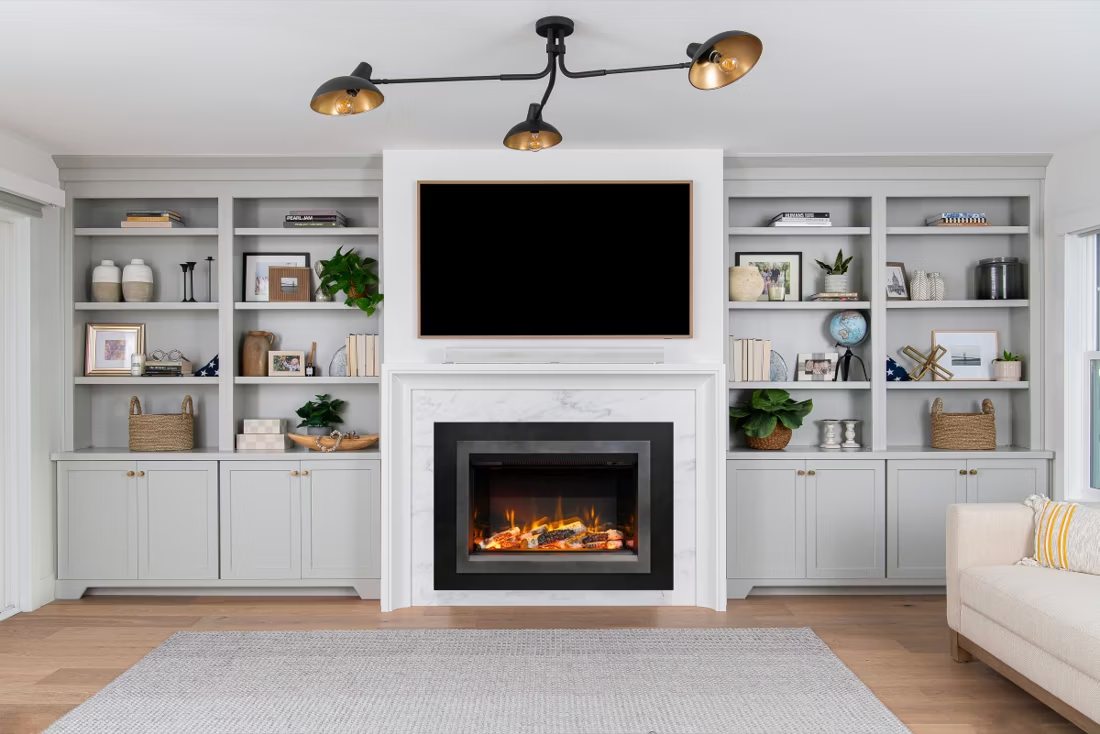
That's exactly where electric fireplaces do their best work. There's no gas line to run, no chimney to build or inspect, and no combustion byproducts to vent—just a standard outlet or, for larger built-in units, a dedicated 240-volt circuit. Whether you're heating a drafty bedroom in a Pinckneyville farmhouse, adding ambiance to a Du Quoin living room, or supplementing propane heat in a rural mobile home outside Tamaroa, an electric unit installs in an afternoon through Ameren Illinois service or, in the more rural stretches of the county, through Egyptian Electric Cooperative Association's lines. It's zone heat you control room by room, without touching the rest of the house.
Three steps. No salesperson until you're ready.
Tell us about your project
Your zip code, your situation, and the fuel you're leaning toward—or let the answers point you to one.
See what's actually available
The brands dealers within 100 miles genuinely carry—real options, never a catalog mirage.
Get your dealer & Project Guide
A trusted local dealer, plus the free Project Guide & Parts List that names every component of the job.
Frequently Asked Questions
How much does an electric fireplace installation cost in Perry County?
Most electric fireplace installations in Perry County run $400 to $1,200. A simple plug-in insert or wall-mounted unit that uses an existing 120-volt outlet sits at the lower end—often just the cost of the unit and a bit of mounting labor. Larger built-in units, or any model that needs a dedicated 240-volt circuit run by an electrician, land toward the higher end once wiring work is factored in. Because there's no venting, gas line, or chimney work involved, electric installs are consistently the least expensive fireplace option available to Perry County homeowners.
Do I need a permit to install an electric fireplace in Perry County?
In most cases, no. A plug-in electric fireplace or insert that uses an existing outlet doesn't typically require a permit. If you're having a built-in unit hardwired on a new 240-volt circuit, that electrical work usually does need a permit through the Perry County Building & Zoning Department, or the relevant city office if you're inside Pinckneyville or Du Quoin city limits, since it involves new wiring rather than the fireplace itself. Your electrician or installer can confirm what applies to your specific project.
What size electric fireplace do I need?
Electric fireplaces are sized by BTU output and by the square footage of the room you're heating, not the whole house. A 1,500-watt unit, roughly 5,000 BTU, comfortably heats a single bedroom or den in the kind of older farmhouse common around Tamaroa and Willisville. Larger insert or built-in models rated closer to 10,000 BTU can take the edge off a bigger living room in a Pinckneyville or Du Quoin home, especially paired with existing furnace heat. Electric units are supplemental heat, not a whole-house replacement for a furnace—local dealers can help match wattage to your specific room.
Can an electric fireplace be my primary heat source in Perry County?
It's not recommended as your only heat source through a southern Illinois winter, even with our relatively moderate heating season and average lows near 24°F. Electric fireplaces are excellent zone heaters—they take the chill off a bedroom, sunroom, or finished basement without running the furnace for the whole house—but they're best used alongside your existing central heat, propane furnace, or wood stove rather than replacing it outright.
What's the difference between an electric insert, a wall-mounted unit, and a freestanding electric stove?
An electric insert is built to slot into an existing masonry fireplace opening, which works well for older Pinckneyville and Du Quoin homes that have a fireplace but rarely burn wood anymore. A wall-mounted unit hangs directly on the wall like a flat-screen TV and needs no existing fireplace at all—a popular choice for newer builds or rooms without a hearth. A freestanding electric stove sits on the floor and can be placed almost anywhere with an outlet, similar in footprint to a wood or pellet stove. All three plug in or hardwire the same way; the choice mostly comes down to what your room already has and the look you want.
Will an electric fireplace work if the power goes out?
No—unlike a wood stove, an electric fireplace depends entirely on grid power and won't run during an outage. For most Perry County homes served by Ameren Illinois or Egyptian Electric Cooperative, outages tend to be short, so this is rarely a dealbreaker. But if you're in a rural stretch of the county where storm-related outages can run longer, it's worth keeping a wood stove or propane heater as backup rather than relying on electric heat alone during winter weather events.
How does an electric fireplace compare to a wood stove for a Perry County home?
Wood stoves burn local hardwood—oak, hickory, walnut, and maple are all common firewood species in this part of southern Illinois—and keep working during a power outage, but they need a chimney, regular cleaning, and hands-on tending. Electric fireplaces need none of that: no venting, no ash, no chimney sweep, just a switch or remote. For homes without an existing chimney, or households that want reliable supplemental heat with zero maintenance, electric is usually the simpler fit. For homes that already burn wood or want backup heat independent of the grid, wood remains the better choice. Plenty of Perry County homes run both—wood in the living room, electric in a bedroom or basement.
Where can I get an electric fireplace installed near me in Perry County?
Local hearth dealers and electricians serving Pinckneyville, Du Quoin, and the surrounding county handle most electric fireplace installs, from simple plug-in units to hardwired built-ins requiring new circuit work. Because installation is straightforward compared to gas or wood, many retailers can turn around a project quickly once you've picked a unit. Working with a dealer who carries multiple brands means you get an honest read on which unit actually fits your room and electrical setup, rather than a one-size-fits-all recommendation.
Are electric fireplaces energy efficient to run?
Yes—electric fireplaces convert essentially all the electricity they use into heat, with no combustion losses up a flue the way wood or gas units have. Running one costs roughly what any 1,500-watt space heater costs per hour on your Ameren Illinois or Egyptian Electric Cooperative bill, which for zone heating a single room is usually cheaper than running a furnace to heat the whole house. Many models also let you run the flame visual without the heater engaged, which uses only a few watts—useful for ambiance in the shoulder seasons when Perry County doesn't need active heat at all.
Can I put a TV above my fireplace?
Yes—with an asterisk. Fireplaces are hot and TVs don't like heat. Either put a mantel between them to deflect rising warmth, or choose a fireplace with heat-management technology that creates a cool zone on the wall above—the wall stays around 125 degrees, barely warm, while the room still gets full heat. If you like clean lines and don't want a mantel, heat management is the answer.
Does an electric fireplace need a vent or chimney?
No—that's its superpower. An electric fireplace needs a wall and an outlet, period. No vent pipe, no gas line, no clearances to design around, which is why it works in bedrooms, offices, apartments, and walls where venting a gas or wood unit would be impractical or impossible. Installation is typically the simplest and least expensive of any fireplace type.
Can I install a fireplace myself?
If you're putting a fire in your house on purpose, it's best to work with an expert. Unless you're genuinely experienced in framing, gas line, vent pipe, and the national code on clearances to combustibles, have a professional do it—and ideally the same company that sells you the fireplace, so warranty, service, and liability all live under one roof.
How much should I budget for a fireplace?
For an average home—covering the fireplace, the vent pipe, and basic installation—a budget between $3,900 and $5,500 gives you a lot of options across wood, gas, and pellet. By the time you add finish work, gas line, and electrical, the average complete installation lands between $5,000 and $12,000 all-in. In a remodel or new build, a good rule is to put about 2.5% of the total project cost toward the fireplace.
Find your electric fireplace in Perry County.
Tell us a bit about your home and we'll match you with the right electric fireplace, insert, or stove—plus a free Project Guide & Parts List—and connect you with a trusted local dealer.
Find Your Fireplace →