
Add electric warmth to any room in Moultrie County—no chimney needed.
From farmhouse bedrooms outside Sullivan to basement rec rooms in Lovington, an electric fireplace plugs into rooms a furnace never quite reaches. Find the right unit and get matched with a local dealer who can handle any wiring.
Every Project Starts From One of These Five Situations
The easiest heat upgrade for older farmhouses in Moultrie County.
Moultrie County sits in the heart of central Illinois farm country, home to about 7,700 people spread across Sullivan (the county seat), Bethany, Lovington, and the edge of Arthur's Amish community. Winters here average lows around 18°F with a heating season that's cold enough to matter, but noticeably milder than the far northern Midwest, where a city like Minneapolis faces nearly half again as much winter heating load in an average season. Much of the county's housing stock is older farmhouses and post-war ranch homes built well before anyone planned for a masonry chimney or a gas line running to every room, and a fair number of manufactured and mobile homes sit out in the rural townships between Sullivan and Lovington.
That's exactly the gap an electric fireplace fills. Ameren Illinois serves electric accounts throughout Moultrie County, and a 120-volt plug-in unit can go into almost any room with a standard outlet—no venting, no chimney, no gas line, and typically no building permit beyond what applies to any electrical fixture. Larger 240-volt built-ins need a licensed electrician to run a dedicated circuit, but even that install wraps up in a day. For a basement rec room, a manufactured home, a rental unit, or a farmhouse bedroom the furnace never quite reaches, electric is often the fastest route to real supplemental warmth—while oak, hickory, walnut, and maple firewood off the county's own woodlots keeps feeding the wood stoves doing most of the heavy lifting elsewhere in the house.
Three steps. No salesperson until you're ready.
Tell us about your project
Your zip code, your situation, and the fuel you're leaning toward—or let the answers point you to one.
See what's actually available
The brands dealers within 100 miles genuinely carry—real options, never a catalog mirage.
Get your dealer & Project Guide
A trusted local dealer, plus the free Project Guide & Parts List that names every component of the job.
Frequently Asked Questions
How much does an electric fireplace installation cost in Moultrie County?
Plug-in electric fireplace inserts and freestanding units are the cheapest hearth upgrade available—many run $200 to $800 for the unit itself, with no professional installation needed beyond an existing outlet. Larger built-in or wall-mounted units that need a dedicated 240-volt circuit typically run $1,000 to $2,500 installed once you factor in an electrician, which is common in older Moultrie County farmhouses where the panel wasn't built with a fireplace circuit in mind. Because there's no chimney, venting, or gas line to coordinate, electric installs are consistently the fastest and least expensive of any fuel option local dealers quote.
What size electric fireplace do I need to actually feel heat from it?
Most electric fireplaces are rated to heat 400 to 1,000 square feet on their own—realistic for a single room like a den, a basement rec room, or a farmhouse bedroom, but not a whole house. In Moultrie County's climate, with average winter lows around 18°F, an electric unit works best as zone heat supplementing a central furnace rather than replacing it, especially in older, less-insulated homes common outside Sullivan and Bethany. If you're hoping to offset propane or electric baseboard costs in a specific room, look for a 5,000-BTU-class heater with a built-in thermostat and size it to the room you're actually trying to warm.
Do I need an electrician to install an electric fireplace in Moultrie County?
For a plug-in unit, no—it goes into any standard 15- or 20-amp outlet, and most homeowners handle it themselves. For a built-in or wall-mount model wired to a dedicated 240-volt circuit, yes, and it's worth using a licensed electrician familiar with older housing stock, since a lot of Moultrie County farmhouses and rural homes still run on panels that predate central air conditioning, let alone a dedicated fireplace circuit. Local hearth dealers who carry electric lines typically coordinate the electrical work as part of the installation rather than leaving you to find a separate contractor.
What's the difference between an electric fireplace, insert, and stove?
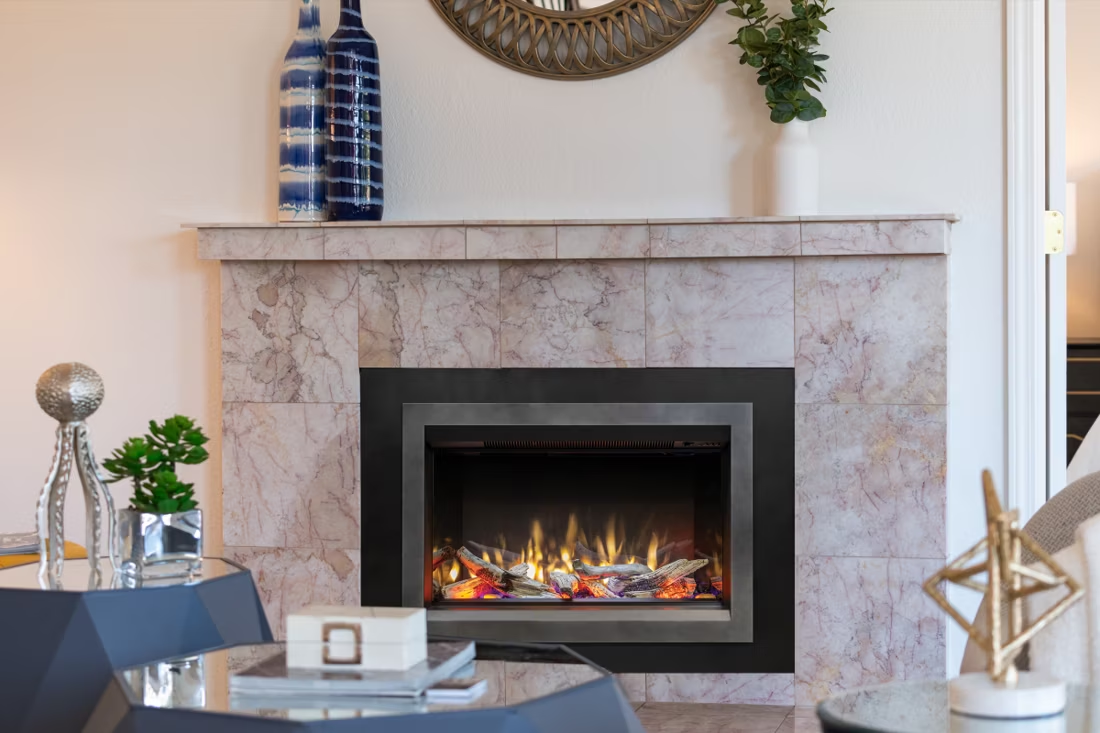
An electric fireplace is usually a built-in or wall-mounted unit designed to look like a traditional hearth, often with a mantel surround. An electric insert is sized to slide into an existing masonry fireplace opening—a common upgrade for Moultrie County homes with an old, rarely-used wood fireplace the family wants to keep visually but stop feeding with cordwood. An electric stove is a freestanding cabinet-style unit that mimics a wood stove's look without any venting requirement. All three use the same basic heating element and produce comparable heat output; the choice mostly comes down to what you're filling or replacing.
Do I need a permit to install an electric fireplace in Moultrie County?
In most cases, no separate permit is required for a plug-in electric fireplace, since it's treated like any other appliance on an existing circuit. If you're adding a dedicated 240-volt circuit or doing a built-in install involving framing or wall changes, check with the Moultrie County Zoning Office in Sullivan—new circuit work generally requires the standard electrical permit that applies to any home wiring project, regardless of what's plugged into it. This is a much lighter permitting lift than wood or gas installations, which require inspection of venting and clearances.
Is an electric fireplace enough heat for a Moultrie County winter?
On its own, no—with average lows around 18°F and a solid stretch of cold winter weather each year, Moultrie County winters ask more of a heating system than a single electric unit can deliver for a whole house. Electric fireplaces are built for zone heat: warming the room you're in without running the furnace harder, or backing up a wood stove or gas insert that carries the primary load. For smaller spaces—a converted porch, a basement office, a mobile home bedroom—a well-sized electric unit with a built-in thermostat can genuinely carry the room through most of the season.
How much maintenance does an electric fireplace need?
Very little, which is part of the appeal. There's no creosote, no ash, no chimney to sweep, and no gas line to inspect. Maintenance is limited to occasionally dusting the heating element and blower vents, and replacing LED flame bulbs every several years on models that use them. Compare that to the annual chimney inspection recommended for wood-burning setups in the county's older farmhouses, and electric is the lowest-maintenance hearth option by a wide margin.
Electric vs. wood—which makes sense for a Moultrie County home?
Wood has deep roots here—oak, hickory, walnut, and maple from local woodlots have heated Moultrie County farmhouses for generations, and a wood stove keeps working through a power outage, which matters when winter storms roll through central Illinois. Electric can't do that; it depends entirely on Ameren Illinois service staying up. But electric wins on convenience and low cost of entry—no cutting, hauling, or stacking wood, no chimney maintenance, and a unit you can move room to room. Plenty of Moultrie County households run both: a wood stove for primary or backup heat, and an electric unit in a bedroom or basement where running a chimney doesn't make sense.
Are there rebates or incentives for electric fireplaces in Moultrie County?
Ameren Illinois, the utility serving Moultrie County, periodically runs energy-efficiency rebate programs, but they're typically aimed at whole-home measures like insulation, smart thermostats, and heat pump upgrades rather than electric fireplaces specifically, since a fireplace is supplemental rather than primary heat. It's worth checking Ameren's current efficiency program offerings before you buy, since some space-heating equipment occasionally qualifies. Local dealers can also tell you if any manufacturer rebates or seasonal promotions apply to the specific unit you're considering.
Can I put a TV above my fireplace?
Yes—with an asterisk. Fireplaces are hot and TVs don't like heat. Either put a mantel between them to deflect rising warmth, or choose a fireplace with heat-management technology that creates a cool zone on the wall above—the wall stays around 125 degrees, barely warm, while the room still gets full heat. If you like clean lines and don't want a mantel, heat management is the answer.
Does an electric fireplace need a vent or chimney?
No—that's its superpower. An electric fireplace needs a wall and an outlet, period. No vent pipe, no gas line, no clearances to design around, which is why it works in bedrooms, offices, apartments, and walls where venting a gas or wood unit would be impractical or impossible. Installation is typically the simplest and least expensive of any fireplace type.
How much should I budget for a fireplace?
For an average home—covering the fireplace, the vent pipe, and basic installation—a budget between $3,900 and $5,500 gives you a lot of options across wood, gas, and pellet. By the time you add finish work, gas line, and electrical, the average complete installation lands between $5,000 and $12,000 all-in. In a remodel or new build, a good rule is to put about 2.5% of the total project cost toward the fireplace.
Does a fireplace add value to my home?
On average, a fireplace adds back to the home about the same amount you spent installing it. Add the monthly savings from heating the rooms you actually use instead of the whole house—often hundreds of dollars a year—and the value case is strong before you even count what a fire does for how your family uses the room.
Find your electric fireplace in Moultrie County.
Tell us about the room you're trying to heat and we'll match you with the right electric fireplace, insert, or stove—and connect you with a trusted local dealer who can handle any wiring the install needs.
Find Your Fireplace →