
Warm up your Machesney Park home—no chimney required.
Zone heat for cold Winnebago County winters, installed without a gas line or masonry chimney. Find the right unit and get matched with a trusted local dealer.
Every Project Starts From One of These Five Situations
Real ambiance, zero venting, and heat exactly where you sit.
Machesney Park sits in climate zone 5A along the Rock River just north of Rockford, where winters bring a long, cold season with average lows of 11°F—comparable to Madison, Wisconsin, not far to the north. That's a long, genuinely cold stretch, and it's why so many local homeowners want supplemental heat in the rooms they actually live in, without opening up a wall for gas line or running new masonry.
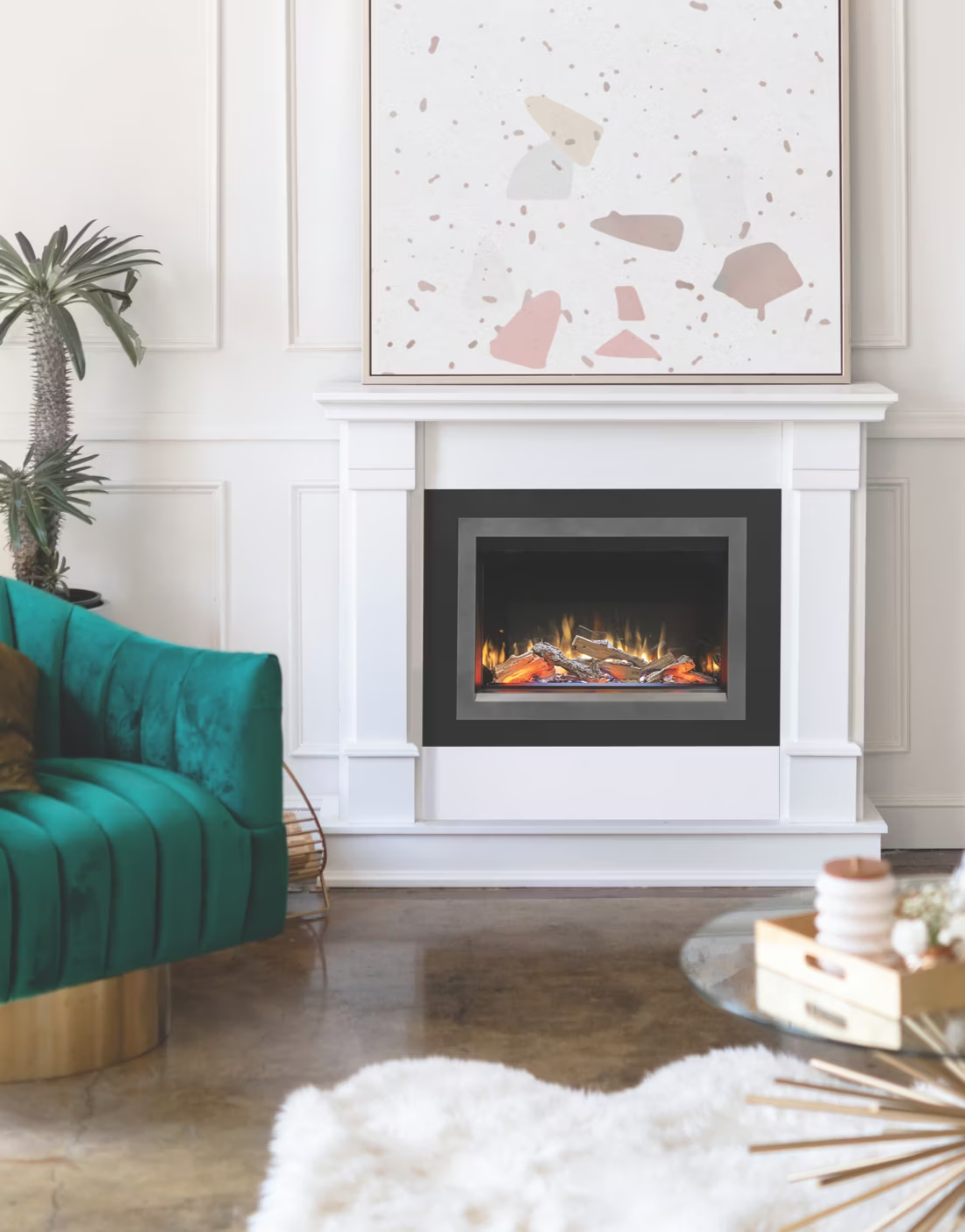
Electric fireplaces solve that directly. They plug into a standard outlet or a dedicated circuit, need no venting, and can go into a finished basement, a condo, or a ranch-style home built without a chimney—common throughout Machesney Park's mid-century housing stock. Electricity here comes from either Commonwealth Edison or Rock Energy Cooperative depending on your address, at roughly 13.4 to 14.5 cents per kWh, which makes running an electric unit as a zone heater for a family room or bonus space genuinely affordable compared to firing up a furnace for one occupied room.
Three steps. No salesperson until you're ready.
Tell us about your project
Your zip code, your situation, and the fuel you're leaning toward—or let the answers point you to one.
See what's actually available
The brands dealers within 100 miles genuinely carry—real options, never a catalog mirage.
Get your dealer & Project Guide
A trusted local dealer, plus the free Project Guide & Parts List that names every component of the job.
Frequently Asked Questions
How much does an electric fireplace installation cost in Machesney Park?
Plug-in electric inserts and mantel packages typically run $300 to $1,200 installed, since most just need a standard 120V outlet and a few hours of labor to mount and trim out. Built-in wall units or larger linear models that require a dedicated 240V circuit run higher, often $1,500 to $3,000, once an electrician runs new wiring and a breaker. Retrofitting an existing masonry fireplace with an electric insert tends to land in the middle of that range, since the chimney stays in place and doesn't need any modification.
What does it actually cost to run an electric fireplace here?
Most electric fireplaces draw around 1,500 watts on the heat setting. At Commonwealth Edison's residential rate of about $0.1339/kWh, that's roughly $0.20 an hour to run; at Rock Energy Cooperative's $0.1447/kWh, it's closer to $0.22 an hour. Run one for a typical 4-hour evening and you're looking at under a dollar—cheap enough that most Machesney Park homeowners use theirs daily through the winter without worrying about the bill, especially compared to heating an entire zone with the furnace.
Do I need a permit to install an electric fireplace in Machesney Park?
It depends on the unit. A plug-in insert or freestanding electric stove that uses an existing outlet typically doesn't require a permit. If you're installing a built-in unit that needs new wiring or a dedicated 240V circuit, that electrical work does require a permit through the Village of Machesney Park Building & Zoning Department, and it should be pulled by a licensed electrician. Local dealers who install built-in units generally coordinate this as part of the job.
How big of an electric fireplace do I actually need?
With winters as cold as Madison, Wisconsin, and average winter lows around 11°F, no electric fireplace here is going to carry a whole house—most max out around 4,600 to 5,200 BTUs, enough to noticeably warm a single room, not a floor plan. Think of it as zone heat: a unit sized for the room you're actually sitting in, paired with your furnace for the rest of the house. A local dealer will look at your room's square footage and insulation and recommend a specific model rather than guessing off a box store's generic chart.
Electric vs. gas—which fits my Machesney Park home better?
Gas fireplaces deliver more real heat output and can double as a backup heat source if the model has battery-backed ignition, but they require a gas line and venting work, which adds cost and construction. Electric skips both—no gas line, no venting, no chimney—which makes it the simpler retrofit for basements, condos, and rooms without existing hookups. If your home already has gas service and you want serious heat output plus the option of running during a power outage, gas is worth a look. If you want ambiance and supplemental warmth with minimal construction, electric is usually the faster, cheaper path.
Will my electric fireplace work during a winter power outage?
No—electric fireplaces need grid power to run, so during an ice storm outage from ComEd or Rock Energy Cooperative, yours will go dark along with everything else in the house. If backup heat during outages matters to you, that's a real consideration; a battery generator can run a smaller unit temporarily, but for guaranteed heat when the power's out, a gas unit with standing pilot backup or a wood-burning appliance is the more reliable choice. Most homeowners who choose electric are doing so for daily ambiance and zone heat, not storm resilience.
What types of electric fireplaces are available?
You'll generally see four formats locally: wall-mounted linear units that hang like a flat-screen TV, freestanding stoves styled to look like a wood stove, mantel packages that include a surround and fireplace in one piece, and inserts sized to slide into an existing masonry firebox. For Machesney Park's older homes with an unused wood fireplace, an insert is often the easiest upgrade—for newer construction or basements without a firebox, a wall-mount or mantel package makes more sense.
Can I convert my existing wood-burning fireplace to electric?
Yes, and it's a common retrofit for older Machesney Park homes with a masonry fireplace that no longer gets used for wood. An electric insert slides into the existing firebox, plugs into a nearby outlet (or a new dedicated circuit if the model calls for it), and the chimney above can simply be capped and left alone—no liner, no sweep, no wood handling. It's a straightforward way to get usable heat and a real flame appearance back out of a fireplace that's otherwise sitting empty.
Why do so few homes around here use wood, and is electric the better default?
Even though the oak, hickory, walnut, and maple trees common to Winnebago County make good firewood, new wood-burning fireplace installs are genuinely uncommon in Machesney Park's newer and mid-century suburban housing—most lots and floor plans here were built without masonry chimneys, and adding one after the fact is a major construction project. Electric fills that gap: no chimney, no venting, no wood storage, and it drops into almost any room. For homeowners who want the flicker and warmth without rebuilding part of the house, electric is the practical default here.
Do electric fireplaces actually produce heat?
Yes—most put out around 4,800–5,000 BTUs from a standard outlet, which comfortably warms a bedroom, office, or den as a comfort-zone heater. What they won't do is carry a whole house the way wood, gas, or pellet can. Think of electric as ambiance-first with honest supplemental heat: flames on with no heat in July, flames plus warmth in January.
Can I put a TV above my fireplace?
Yes—with an asterisk. Fireplaces are hot and TVs don't like heat. Either put a mantel between them to deflect rising warmth, or choose a fireplace with heat-management technology that creates a cool zone on the wall above—the wall stays around 125 degrees, barely warm, while the room still gets full heat. If you like clean lines and don't want a mantel, heat management is the answer.
What is an in-home preview and do I need one?
It's a visit where a hearth professional measures your space, confirms the model you picked actually works in your home, and walks the specs—framing, gas line, venting, finish work—before anything is ordered. Some details you just can't know until you see the house. Never make a down payment without one; it's the single most-skipped step that burns buyers.
Can a fireplace actually lower my heating bill?
Yes—by creating a comfort zone. A furnace heats every square foot of the house just to warm the one room you're in; a gas fireplace on low burns roughly a sixth of the gas a typical furnace does. Set the furnace around 55–60 degrees as a baseline, then heat the rooms your family actually uses. Families who heat this way commonly save $20–$60 a month.
Nearby Dealers
Hearth shops serving Machesney Park and the surrounding area. Every listing shows whether it is a WhyFire partner, a dealer we have verified as authorized for the brands we recommend, or a local business carrying hearth products. No manufacturer pays for placement. How we verify dealers →
The Fireworks Store
Advanced Chimney Systems
Janesville Brick & Tile
Al Beyers Indoor Comfort Systems
Electric Service in Machesney Park
An electric fireplace's heater draws about 1,500 watts—pennies per hour at local rates.
Commonwealth Edison Co
Rock Energy Cooperative
Find your electric fireplace in Machesney Park.
Tell us a bit about your room and budget and we'll put together a free Project Guide & Parts List—the right electric fireplace or insert for your space, matched with a trusted local dealer who can install it.
Find Your Fireplace →