
Add real warmth to your Loves Park home—no chimney required.
Zone heat for the long Winnebago County winters—installed in an afternoon, no venting or gas line needed. Find the right unit and connect with a trusted local dealer.
Every Project Starts From One of These Five Situations
Instant heat for a Rockford-area climate that demands it.
Loves Park sits just north of Rockford in Winnebago County, where winter lows average 14°F and the region has a heavy winter heating load—comparable to Madison, Wisconsin, a couple hours up the interstate. Much of the city was built out in ranch and split-level subdivisions from the 1960s through the 1990s, plus newer developments near the Rock River, and very few of those homes were framed with a masonry chimney. That single fact drives a lot of what people in Loves Park actually install.
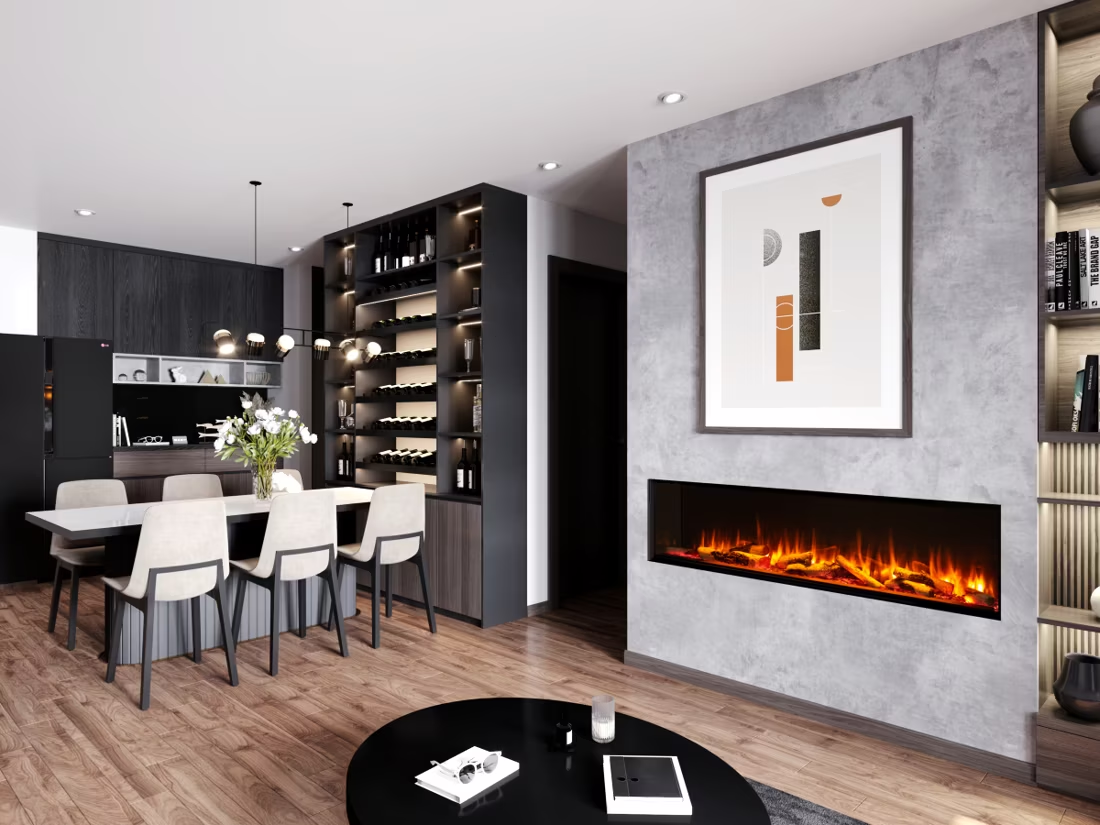
With gas lines not reaching every pocket of the city and wood-burning largely impractical without an existing flue, electric fireplaces fill a real gap—as supplemental zone heat in a family room, a no-venting upgrade for a finished basement, or ambiance in a condo or rental where nothing structural can change. Both ComEd and Rock Energy Cooperative serve residential customers here at rates around 13 to 14.5 cents per kWh, which keeps the cost of running a 1,500-watt unit for a few hours in the evening well under a dollar. No chimney, no gas line, no annual sweep—just a plug or a simple dedicated circuit.
Three steps. No salesperson until you're ready.
Tell us about your project
Your zip code, your situation, and the fuel you're leaning toward—or let the answers point you to one.
See what's actually available
The brands dealers within 100 miles genuinely carry—real options, never a catalog mirage.
Get your dealer & Project Guide
A trusted local dealer, plus the free Project Guide & Parts List that names every component of the job.
Frequently Asked Questions
How much does it cost to install an electric fireplace in Loves Park?
It depends heavily on the type. A plug-in freestanding or mantel-style electric fireplace runs $200 to $700 for the unit itself and needs no installation beyond finding an outlet. A built-in wall or linear electric fireplace, framed into a wall with a dedicated 120V or 240V circuit run by a licensed electrician, typically lands between $800 and $3,000 once the electrical work and surround finishing are included. Converting an existing masonry firebox with an electric insert usually falls in the $600 to $1,800 range. Local dealers will quote a firm number after seeing your wall and existing wiring.
How much does an electric fireplace cost to run in Loves Park?
Less than most people expect. Loves Park is served by both ComEd and Rock Energy Cooperative, with residential rates running roughly 13.4 to 14.5 cents per kWh. A standard 1,500-watt electric fireplace on high costs about 20 to 22 cents an hour to run, so a typical evening of three or four hours of use adds up to well under a dollar. Most owners run the heater element only on the coldest nights and use the flame effect alone the rest of the time, which draws only a few watts.
Do I need a permit to install an electric fireplace in Loves Park?
In most cases, no. A plug-in unit that uses an existing outlet requires no permit at all. If you're having a built-in wall unit installed with a new dedicated circuit, the electrical work itself typically requires a permit through the City of Loves Park Building & Zoning Department, or Winnebago County if you're in one of the unincorporated pockets covered by the 61011 or 61130 zips. Licensed electricians who do this work regularly usually pull the permit as part of the job, so it's not something you'll need to handle yourself.
What's the difference between an electric insert, a built-in wall unit, and a freestanding fireplace?
An electric insert is sized to drop into an existing masonry firebox, giving an old wood-burning fireplace new life without touching the chimney. A built-in wall unit is framed into new construction or a remodel, similar to how a gas fireplace would be installed, and usually needs its own circuit. A freestanding or mantel-style unit is furniture—plug it in and it works anywhere, which makes it the most common choice for renters and condo owners in Loves Park who can't modify a wall. All three use the same heating technology; the difference is really about your home and how permanent you want the installation to be.
Are electric fireplaces powerful enough to heat a room in a Loves Park winter?
Most electric fireplaces top out around 1,500 watts, which is roughly 5,100 BTU—enough to comfortably supplement heat in a single room of 300 to 400 square feet, but not enough to replace a furnace during a Winnebago County cold snap when lows drop into the single digits. Think of it as zone heating: it takes the edge off a chilly family room or finished basement so you can turn the thermostat down elsewhere, rather than as your home's primary heat source. For whole-home heating, gas or a furnace upgrade is the better path.
Is an electric fireplace safe for a home with kids or pets?
Yes, and it's one of the main reasons families choose them. The glass front on most electric fireplaces stays cool to the touch, unlike a gas or wood unit where the glass can reach several hundred degrees. There's no open flame, no combustion byproducts, and no risk of sparks or embers. Many local buyers in Loves Park choose electric specifically for finished basements or playrooms for this reason.
Why don't more homes in Loves Park have wood-burning fireplaces?
Winnebago County has plenty of native hardwood—oak, hickory, walnut, and maple all grow regionally—so firewood itself isn't the limiting factor. It's the housing stock: most of Loves Park was built after 1960 in ranch, split-level, and subdivision construction that was never framed with a masonry chimney, and retrofitting one is a major structural project. Wood stoves show up occasionally in older farmhouses on the edges of Winnebago County, but for the vast majority of Loves Park homeowners, electric or gas is the realistic option, not wood.
Electric vs. gas fireplace—which is right for my Loves Park home?
Gas delivers real heat output, a live flame, and can serve as a genuine secondary heat source during a cold snap—worthwhile if your home already has or can reach a natural gas line. Electric wins on installation simplicity: no gas line, no venting, works in a condo or rental, and costs a fraction to install. For homes without existing gas service, or for a finished basement or bedroom where running a gas line isn't practical, electric is usually the pragmatic choice. Homeowners who want a real primary supplemental heat source and already have gas nearby tend to go gas; everyone else tends to land on electric.
How long does an electric fireplace installation take?
A plug-in freestanding unit is same-day—unbox it, place it, plug it in. A built-in wall unit with a new dedicated circuit typically takes a local electrician half a day to a full day, plus whatever time is needed for surround or mantel finishing work if you're doing a full remodel. Compare that to a gas fireplace conversion, which often involves multiple trades and a longer timeline, and electric is by far the fastest path to a working fireplace in a Loves Park home.
Can I put a TV above my fireplace?
Yes—with an asterisk. Fireplaces are hot and TVs don't like heat. Either put a mantel between them to deflect rising warmth, or choose a fireplace with heat-management technology that creates a cool zone on the wall above—the wall stays around 125 degrees, barely warm, while the room still gets full heat. If you like clean lines and don't want a mantel, heat management is the answer.
How much does an electric fireplace cost to run?
With the heater on, a typical unit draws about 1,500 watts—at average electric rates that's roughly 20 cents an hour. Run the flame effect alone and it costs pennies; the flames are LED-driven and use about as much power as a light bulb. There's no pilot light, no fuel delivery, and essentially no maintenance.
Can a fireplace actually lower my heating bill?
Yes—by creating a comfort zone. A furnace heats every square foot of the house just to warm the one room you're in; a gas fireplace on low burns roughly a sixth of the gas a typical furnace does. Set the furnace around 55–60 degrees as a baseline, then heat the rooms your family actually uses. Families who heat this way commonly save $20–$60 a month.
Can I install a fireplace myself?
If you're putting a fire in your house on purpose, it's best to work with an expert. Unless you're genuinely experienced in framing, gas line, vent pipe, and the national code on clearances to combustibles, have a professional do it—and ideally the same company that sells you the fireplace, so warranty, service, and liability all live under one roof.
Nearby Dealers
Hearth shops serving Loves Park and the surrounding area. Every listing shows whether it is a WhyFire partner, a dealer we have verified as authorized for the brands we recommend, or a local business carrying hearth products. No manufacturer pays for placement. How we verify dealers →
The Fireworks Store
Advanced Chimney Systems
Janesville Brick & Tile
Electric Service in Loves Park
An electric fireplace's heater draws about 1,500 watts—pennies per hour at local rates.
Commonwealth Edison Co
Rock Energy Cooperative
Find your electric fireplace in Loves Park.
Tell us a bit about your home and we'll put together a free Project Guide & Parts List—the right electric fireplace or insert for your space, matched with a trusted local dealer near Loves Park.
Find Your Fireplace →