
Instant heat and real ambiance for Long Lake homes.
Zero-clearance electric heat for lake cottages, condos, and year-round homes around Long Lake. Find the right unit and connect with a trusted local dealer.
Every Project Starts From One of These Five Situations
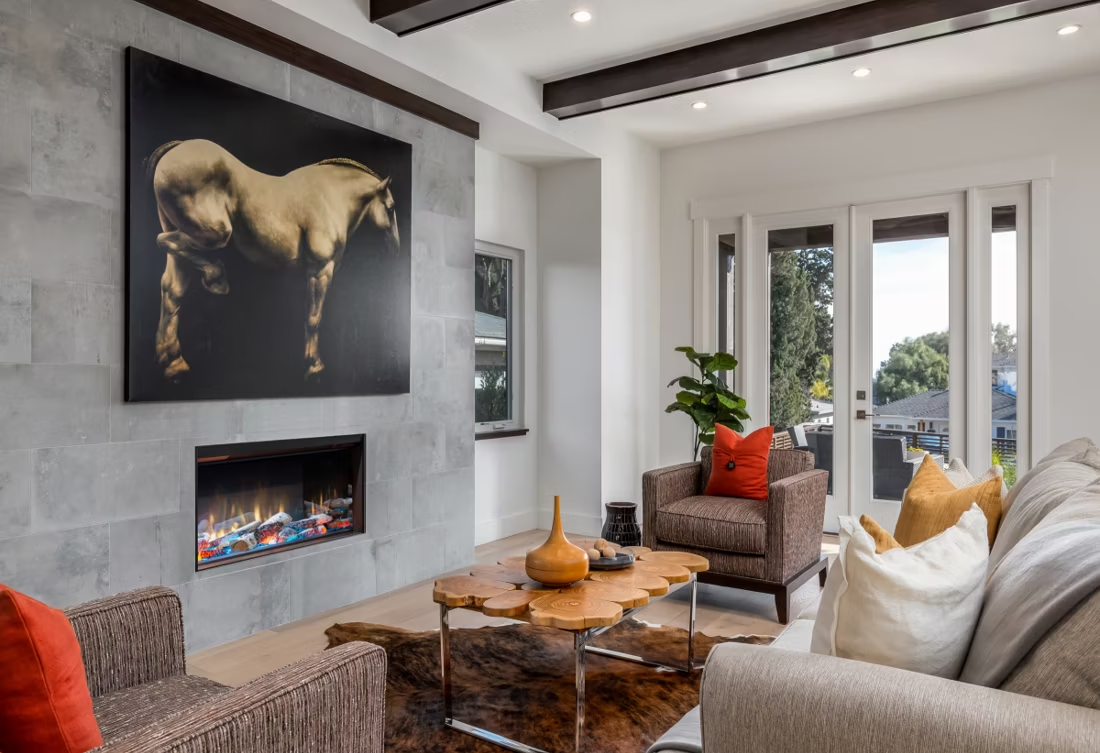
Zero-clearance heat for lake cottages and modern homes alike.
Long Lake is a small unincorporated community of under 3,000 people tucked into the Chain O'Lakes region of Lake County, Illinois, where cottages, condos, and year-round homes sit close together along the shoreline. Winters here are genuinely cold—climate zone 5A, a heating season on par with a long Midwest winter, and average lows around 15°F, not far off the winter numbers you'd see in Madison, Wisconsin. That combination of small lots, seasonal properties, and cold nights makes electric fireplaces a practical fit for a lot of local homes.
Many properties around Long Lake are older lake cottages or converted seasonal homes that were never plumbed for gas and don't have a masonry chimney worth retrofitting. An electric fireplace or insert solves both problems at once—no gas line, no venting, no clearance issues near a shared wall or dock-facing window. Commonwealth Edison serves electric customers here at a residential rate of roughly 13.4 cents per kWh, and most electric fireplaces run efficiently enough that supplemental use in a bedroom, sunroom, or main living area adds only a modest amount to a monthly bill.
Three steps. No salesperson until you're ready.
Tell us about your project
Your zip code, your situation, and the fuel you're leaning toward—or let the answers point you to one.
See what's actually available
The brands dealers within 100 miles genuinely carry—real options, never a catalog mirage.
Get your dealer & Project Guide
A trusted local dealer, plus the free Project Guide & Parts List that names every component of the job.
Frequently Asked Questions
How much does an electric fireplace installation cost in Long Lake?
It depends heavily on the type of unit. A plug-in electric fireplace or freestanding stove that runs off a standard 120-volt outlet typically costs $200 to $700 installed, since there's no wiring work involved beyond plugging it in. A built-in electric fireplace or wall-mounted unit that needs a dedicated 20-amp circuit run by a licensed electrician usually falls between $1,500 and $3,500, depending on how far the wiring has to run and whether it's a new-construction wall or an existing one. A local dealer can tell you which category your home falls into after a quick look at your electrical panel and the install location.
Can an electric fireplace heat my whole house in a Long Lake winter?
No—and it's worth being honest about that upfront. Most electric fireplaces top out around 5,000 to 9,000 BTU, which is enough to noticeably warm a single room but not a whole home once temperatures drop into the teens, which happens regularly here (Long Lake's average winter low sits around 15°F, with a long, cold heating season on the books). Think of an electric fireplace as zone heat for a living room, bedroom, or sunroom that works alongside your existing furnace or boiler, not a replacement for whole-home heat.
Do I need a permit to install an electric fireplace in Long Lake?
A plug-in electric fireplace that uses an existing outlet generally doesn't require a permit. A built-in unit that needs new wiring or a dedicated circuit does—that work falls under the Lake County Building Department's electrical permit requirements for unincorporated areas like Long Lake, and it needs to be pulled and inspected by whoever runs the circuit. Most licensed electricians and hearth dealers handle that paperwork as part of the installation.
What's the difference between a plug-in electric fireplace and a built-in electric insert?
A plug-in unit—whether a freestanding stove, a mantel-style fireplace, or a log insert for an existing masonry firebox—runs on a standard outlet and can usually be set up in an afternoon. A built-in electric insert or wall-mounted unit is recessed into a wall or cabinetry, often wired directly rather than plugged in, and typically produces a more finished, architectural look with a larger flame display. For older Long Lake cottages with an existing wood-burning fireplace nobody uses anymore, a plug-in electric log insert is usually the simplest upgrade. For a remodel or new construction, a built-in unit gives a cleaner result.
How much does it cost to run an electric fireplace in Long Lake?
With Commonwealth Edison's residential rate at roughly 13.4 cents per kWh, a typical 1,500-watt electric fireplace running on high costs about 20 cents an hour to operate. Most units let you run the flame effect alone, without the heater, for a fraction of that—closer to a few cents an hour—which is common for homeowners who want the ambiance during three-season use on the lake without the heat output. Running one for a few hours most winter evenings adds somewhere in the range of $15 to $30 a month to a typical ComEd bill.
Are electric fireplaces a good fit for lake cottages and seasonal homes around Long Lake?
Yes, and it's one of the more common reasons homeowners here look at electric. A lot of the housing stock around the Chain O'Lakes started as seasonal cottages, and many were never plumbed for natural gas or built with a proper masonry chimney. An electric fireplace sidesteps both issues—there's no gas line to run, no venting to route through a low-clearance cottage roof, and no clearance-to-combustible concerns near tight lot lines. It also means a property that only gets used a few weekends a month in winter doesn't need a full heating system overhaul just to get a fireplace.
Can I install an electric fireplace in an existing wood-burning fireplace?
Yes—an electric log insert is one of the easiest retrofits available. It slides into the existing masonry firebox, plugs into an outlet run behind or beside the fireplace (an electrician can add one if there isn't one already), and doesn't require a working flue or chimney cleaning. This is a popular option for older Long Lake homes with a fireplace that hasn't been used in years, since it restores the look and some ambient warmth without the cost of chimney repair or a wood-to-gas conversion.
Electric vs. gas—which is right for my Long Lake home?
Gas fireplaces produce more heat and can serve as a genuine supplemental heat source on cold nights, but they require a gas line and proper venting, which adds cost and isn't always feasible in an older cottage or a home on the edge of the natural gas service area. Electric fireplaces install almost anywhere with a standard or dedicated circuit, cost less upfront, and need essentially no maintenance—but they can't match a gas unit's BTU output. For year-round Long Lake homes with existing gas service, gas is often worth the investment for real heat. For seasonal cottages, rental properties, or rooms where ambiance matters more than heat output, electric is usually the simpler, less expensive choice.
What's the difference between an electric fireplace and an electric stove?
An electric fireplace is typically built to look like a traditional mantel fireplace or a modern linear unit set into a wall, while an electric stove is a freestanding cabinet styled after a wood or pellet stove, usually with a black or enameled body and a glass viewing window. Functionally they work the same way—a heating element paired with an LED flame display—so the choice comes down to style and where it needs to sit in the room. Freestanding electric stoves are popular in smaller Long Lake cottages where a corner unit makes more sense than a wall-mounted fireplace.
Can I put a TV above my fireplace?
Yes—with an asterisk. Fireplaces are hot and TVs don't like heat. Either put a mantel between them to deflect rising warmth, or choose a fireplace with heat-management technology that creates a cool zone on the wall above—the wall stays around 125 degrees, barely warm, while the room still gets full heat. If you like clean lines and don't want a mantel, heat management is the answer.
How much does an electric fireplace cost to run?
With the heater on, a typical unit draws about 1,500 watts—at average electric rates that's roughly 20 cents an hour. Run the flame effect alone and it costs pennies; the flames are LED-driven and use about as much power as a light bulb. There's no pilot light, no fuel delivery, and essentially no maintenance.
Can a fireplace actually lower my heating bill?
Yes—by creating a comfort zone. A furnace heats every square foot of the house just to warm the one room you're in; a gas fireplace on low burns roughly a sixth of the gas a typical furnace does. Set the furnace around 55–60 degrees as a baseline, then heat the rooms your family actually uses. Families who heat this way commonly save $20–$60 a month.
What is an in-home preview and do I need one?
It's a visit where a hearth professional measures your space, confirms the model you picked actually works in your home, and walks the specs—framing, gas line, venting, finish work—before anything is ordered. Some details you just can't know until you see the house. Never make a down payment without one; it's the single most-skipped step that burns buyers.
Nearby Dealers
Hearth shops serving Long Lake and the surrounding area. Every listing shows whether it is a WhyFire partner, a dealer we have verified as authorized for the brands we recommend, or a local business carrying hearth products. No manufacturer pays for placement. How we verify dealers →
Fireplace And Patio
Smokin' Deal Bbq
Fireplaces Plus
Jhb Group, Inc.
Lakes Brick & Block
General Masonry Supply
Lakeside Fireplace
Electric Service in Long Lake
An electric fireplace's heater draws about 1,500 watts—pennies per hour at local rates.
Commonwealth Edison Co
Find your electric fireplace in Long Lake.
Tell us a bit about your home and we'll match you with a trusted local dealer and send over a free Project Guide & Parts List—a plan for your electric fireplace project in Long Lake, with the exact parts and our recommended local dealer.
Find Your Fireplace →