
Electric heat that keeps up with Lakewood's long winters.
No gas line, no chimney, no venting—just a fireplace that plugs in and adds real warmth to a McHenry County home. Find the right unit and connect with a trusted local dealer.
Every Project Starts From One of These Five Situations
No flame, no venting, no fuss—just heat where you need it.
Lakewood is a small village of under 5,000 people in McHenry County, where winters average a low of 14°F and the area sees a long, cold heating season—a duration of cold on par with Madison, Wisconsin, or International Falls, Minnesota. Most homes here rely on natural gas furnaces for whole-house heat, but electric fireplaces have become a popular way to add supplemental warmth and ambiance to a living room, basement, or bedroom without cutting into a wall for venting or running a gas line.
Electricity in Lakewood comes primarily from Commonwealth Edison (ComEd), with Rock Energy Cooperative serving pockets near the McHenry County line—residential rates run roughly 13.4 to 14.5 cents per kWh. Because electric fireplaces plug into a standard outlet (or, for larger built-ins, a dedicated circuit), there's no masonry, no chimney sweep, and none of the firewood logistics that matter elsewhere in the Midwest. For a village of mostly newer construction on tighter suburban lots, that simplicity is a big part of the appeal.
Three steps. No salesperson until you're ready.
Tell us about your project
Your zip code, your situation, and the fuel you're leaning toward—or let the answers point you to one.
See what's actually available
The brands dealers within 100 miles genuinely carry—real options, never a catalog mirage.
Get your dealer & Project Guide
A trusted local dealer, plus the free Project Guide & Parts List that names every component of the job.
Frequently Asked Questions
How much does it cost to install an electric fireplace in Lakewood?
Costs vary widely by unit type. A freestanding or wall-mounted electric fireplace that plugs into an existing outlet typically runs $200 to $800 installed, since no electrician is required. A built-in electric fireplace or insert set into a wall or existing masonry firebox—which usually needs a dedicated 20-amp circuit run by a licensed electrician—runs closer to $1,200 to $3,500 once surround, mantel, or cabinetry work is included. Converting an existing wood-burning fireplace to an electric insert is often the most affordable retrofit in Lakewood's older housing stock, since it uses the opening you already have.
Electric vs. gas fireplace—which is right for a Lakewood home?
Gas is the more common choice for anyone who wants real heat output that can meaningfully supplement a furnace during a McHenry County cold snap—natural gas service is widely available, and a direct-vent gas insert can genuinely warm a room even at Lakewood's average winter low of 14°F. Electric fireplaces produce far less usable heat and are better suited to ambiance, zone comfort in a room you use often, or homes where running a gas line or venting isn't practical, like a finished basement or condo. If you want a fireplace that can meaningfully cut your furnace's workload on the coldest nights, gas is the stronger option; if you want low-maintenance warmth and glow at the flip of a switch, electric wins.
What does it cost to run an electric fireplace in Lakewood?
Most electric fireplaces draw about 1,500 watts on the heat setting. At ComEd's residential rate of roughly 13.4 cents per kWh (Rock Energy Cooperative customers pay closer to 14.5 cents), that works out to about 20 cents an hour of heater use, or roughly $1.50 to $2.00 for a typical evening. Running the flame effect alone, without the heater engaged, draws only 20 to 30 watts—a fraction of a cent per hour. That low running cost is a big reason electric fireplaces are popular as supplemental heat in a single room rather than a whole-house solution.
Do I need a permit to install an electric fireplace in Lakewood?
A plug-in electric fireplace that uses an existing outlet doesn't require a permit. If you're installing a built-in unit that needs a new dedicated circuit or any wiring changes, that electrical work typically requires a permit through the Village of Lakewood or McHenry County building department and should be done by a licensed electrician. Most installers handling that kind of job pull the permit as part of the work.
Can an electric fireplace heat my whole living room in Lakewood?
It can take the edge off a room, but it's not designed to replace your furnace. Most electric fireplaces are rated to comfortably heat 400 to 1,000 square feet under mild conditions, which works fine for a den or bedroom on a 30°F evening. But with McHenry County facing a long, cold heating season and winter lows dropping into the teens, an electric unit alone won't keep a whole room comfortable on the coldest nights—it's meant to supplement your existing gas furnace, not replace it.
What's the best electric fireplace for Lakewood's cold winters?
Look for a model with a true heating element rated for at least 1,500 watts and a built-in thermostat, rather than one that's purely decorative. Brands like Dimplex, Touchstone, and ClassicFlame all make infrared and fan-forced inserts that hold up well as supplemental heat sources in Midwest homes. If you're converting an existing wood-burning fireplace, an insert sized to your firebox opening will seal better and throw heat more effectively into the room than a freestanding unit set in front of an open hearth.
Will my electric fireplace work during a power outage?
No—and that's worth planning around in a region where ice storms and high winds can knock out power for hours. Unlike a wood stove or a battery-backed gas fireplace, an electric unit is entirely dependent on grid power from ComEd or Rock Energy Cooperative. If backup heat during outages matters to your household, a gas fireplace with intermittent-pilot ignition (which runs on AA batteries) is a better complement to an electric fireplace than a substitute for one.
Can I convert my existing wood-burning fireplace to electric in Lakewood?
Yes, and it's a straightforward retrofit for the village's older housing stock. An electric insert slides into the existing masonry opening, and the chimney above it is typically capped or left as-is since the insert doesn't need venting. Most conversions run $1,200 to $2,500 depending on insert size and whether new electrical work is needed. It's a popular option for homeowners who want the look of an existing fireplace without ash, smoke, or the need to source and season firewood—something that's uncommon on Lakewood's smaller residential lots anyway.
Why don't more homes in Lakewood use wood-burning fireplaces?
Lakewood is a small, mostly newer-built residential village on tight suburban lots rather than acreage—there's little local wood supply nearby, and many homes were built without masonry chimneys designed for solid-fuel burning. A handful of older homes in the area do still have working wood fireplaces, but for most residents, gas and electric options are simply a better fit for the lot sizes and construction styles common here. If you have your heart set on wood heat, a local hearth dealer can tell you whether your home's existing chimney, if you have one, is a candidate for a wood insert.
Can I put a TV above my fireplace?
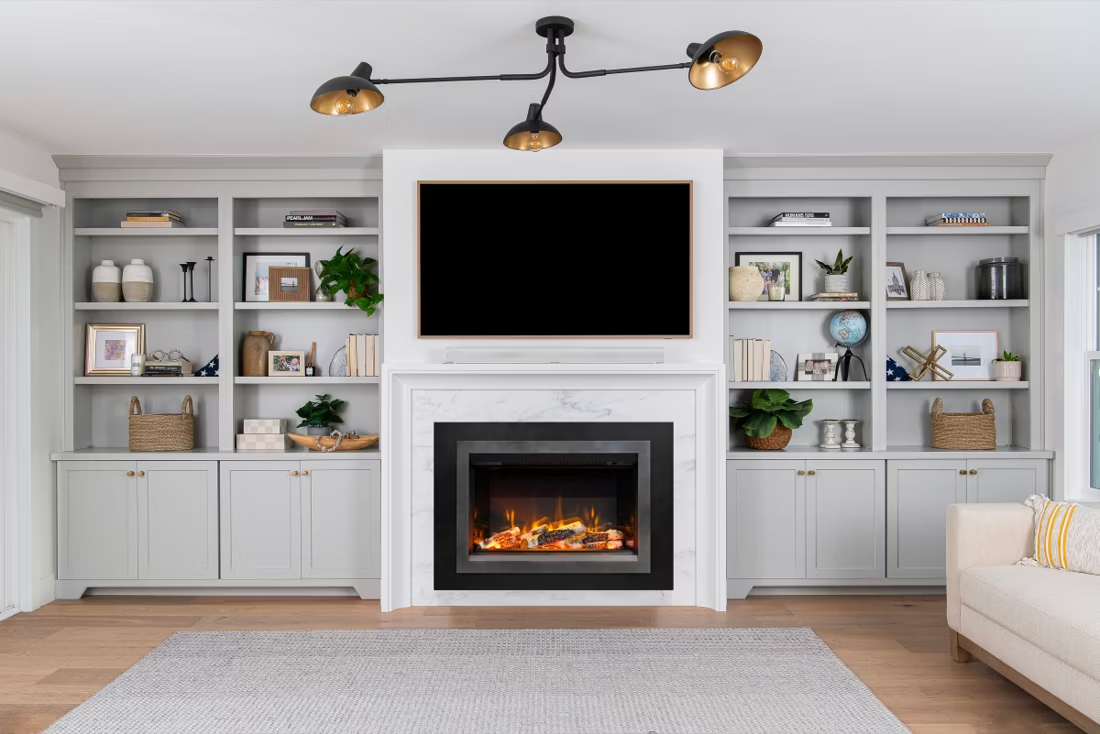
Yes—with an asterisk. Fireplaces are hot and TVs don't like heat. Either put a mantel between them to deflect rising warmth, or choose a fireplace with heat-management technology that creates a cool zone on the wall above—the wall stays around 125 degrees, barely warm, while the room still gets full heat. If you like clean lines and don't want a mantel, heat management is the answer.
Do electric fireplaces actually produce heat?
Yes—most put out around 4,800–5,000 BTUs from a standard outlet, which comfortably warms a bedroom, office, or den as a comfort-zone heater. What they won't do is carry a whole house the way wood, gas, or pellet can. Think of electric as ambiance-first with honest supplemental heat: flames on with no heat in July, flames plus warmth in January.
Can I install a fireplace myself?
If you're putting a fire in your house on purpose, it's best to work with an expert. Unless you're genuinely experienced in framing, gas line, vent pipe, and the national code on clearances to combustibles, have a professional do it—and ideally the same company that sells you the fireplace, so warranty, service, and liability all live under one roof.
Can a fireplace actually lower my heating bill?
Yes—by creating a comfort zone. A furnace heats every square foot of the house just to warm the one room you're in; a gas fireplace on low burns roughly a sixth of the gas a typical furnace does. Set the furnace around 55–60 degrees as a baseline, then heat the rooms your family actually uses. Families who heat this way commonly save $20–$60 a month.
Nearby Dealers
Hearth shops serving Lakewood and the surrounding area. Every listing shows whether it is a WhyFire partner, a dealer we have verified as authorized for the brands we recommend, or a local business carrying hearth products. No manufacturer pays for placement. How we verify dealers →
Jhb Group, Inc.
Fireplace And Patio
Lakes Brick & Block
Smokin' Deal Bbq
Fireplaces Plus
Electric Service in Lakewood
An electric fireplace's heater draws about 1,500 watts—pennies per hour at local rates.
Commonwealth Edison Co
Rock Energy Cooperative
Find your electric fireplace in Lakewood.
Tell us about your home and we'll match you with a trusted local Lakewood dealer and send you a free Project Guide & Parts List—the exact electric fireplace or insert parts you need, sized right for your room.
Find Your Fireplace →