
Add Fireplace Warmth Without Opening a Wall in Lake Bluff.
No chimney, no gas line, no masonry work—just plug-in or hardwired ambiance and supplemental heat for Lake Bluff's historic homes and North Shore condos.
Every Project Starts From One of These Five Situations
Zone heat that fits Lake Bluff's historic housing stock.
Lake Bluff is a small, tightly built village of under 6,000 residents on the Lake Michigan bluff in Lake County—narrow in-town lots, a walkable downtown, and a housing stock heavy on early-1900s homes that were never built with masonry fireplace chimneys. With winter lows averaging 16°F, the village sits in a heating season comparable to Madison, Wisconsin—long, genuinely cold, and one where supplemental heat in the rooms people actually use matters. Wood-burning is essentially a non-factor here: lots are too small for practical firewood storage or cutting, and there's no rural forest land nearby for permits. Most Lake Bluff homes already run on natural gas for central heat, which is part of why electric has become the go-to for adding a fireplace feature without touching the furnace system.
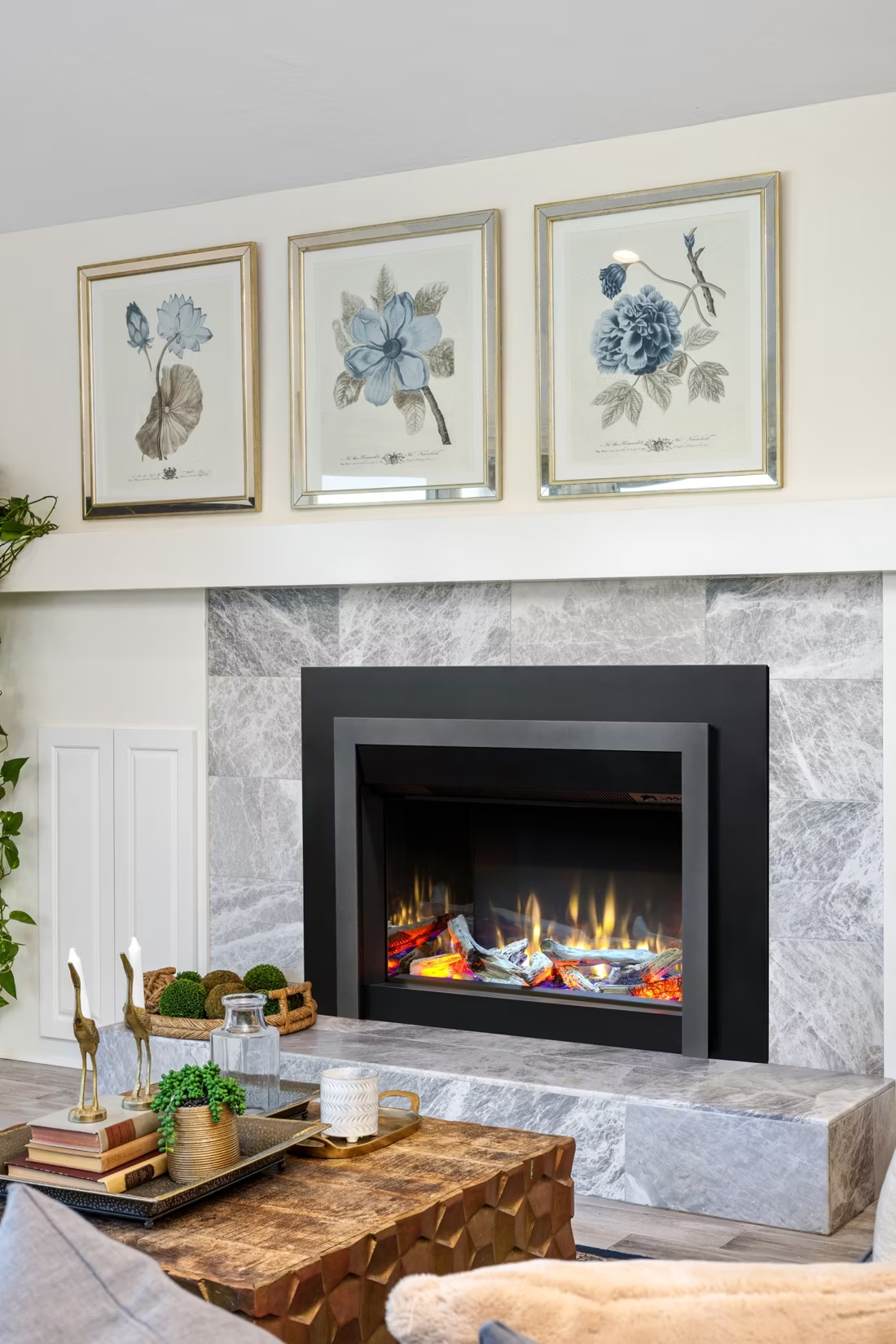
An electric fireplace or insert solves the problem a lot of Lake Bluff homeowners actually have: they want the look and the ambient warmth of a fire in a living room, den, or finished basement, but they don't have an existing chimney and don't want to cut into plaster walls or run new gas line through a century-old house. Commonwealth Edison serves the village at roughly 13.4 cents per kWh, which keeps day-to-day running costs modest for supplemental use. No venting, no combustion byproducts, and—for condo owners and renters in the village's multi-family buildings—often the only fireplace option that's actually permitted.
Three steps. No salesperson until you're ready.
Tell us about your project
Your zip code, your situation, and the fuel you're leaning toward—or let the answers point you to one.
See what's actually available
The brands dealers within 100 miles genuinely carry—real options, never a catalog mirage.
Get your dealer & Project Guide
A trusted local dealer, plus the free Project Guide & Parts List that names every component of the job.
Frequently Asked Questions
How much does an electric fireplace installation cost in Lake Bluff?
Costs vary widely by unit type. A plug-in freestanding electric stove or mantel package can run $300 to $900 installed, since it typically just needs a standard outlet. A built-in wall unit or a linear electric fireplace set into a custom surround runs $1,500 to $4,000 once carpentry, a dedicated 120V or 240V circuit, and finish work are factored in. Retrofitting an electric insert into an existing (often non-functioning) masonry fireplace—common in Lake Bluff's older homes near the downtown historic district—usually lands in the $800 to $2,000 range depending on the insert and whether new wiring is needed.
Do I need a permit to install an electric fireplace in Lake Bluff?
There's no combustion appliance permit required since electric fireplaces don't vent or burn fuel, but any new dedicated circuit or 240V hardwired unit typically requires an electrical permit through the Village of Lake Bluff Building Department. A licensed electrician usually pulls this as part of the job. Simple plug-in units on an existing outlet generally don't require any permit at all—one reason electric is often the fastest fireplace project to complete in the village.
Will an electric fireplace actually heat my room in Lake Bluff's winters?
Most electric fireplaces are rated around 4,600 to 9,000 BTU (roughly 1,500 watts), which is enough to noticeably warm a single room—typically 400 to 1,000 square feet depending on ceiling height and insulation—but it's supplemental heat, not a replacement for your furnace. Lake Bluff's heating season is long and genuinely cold, so an electric unit works best as a way to take the edge off a chilly family room or finished basement while your central system does the heavy lifting whole-home.
What's the difference between an electric insert, a wall-mount, and a freestanding electric stove?
An electric insert is built to slot into an existing fireplace opening—a common fit for Lake Bluff's older homes with a decorative or unused masonry firebox. A wall-mount or built-in linear unit is designed to be recessed into a wall or set into custom cabinetry for a modern, TV-adjacent look. A freestanding electric stove sits on the floor like a traditional wood stove and can go almost anywhere near an outlet—popular in condos and rentals where no structural changes are allowed. All three use the same basic heating cartridge technology; the choice comes down to your room layout and whether you're renovating or just adding a feature.
How much does it cost to run an electric fireplace with ComEd rates?
At Commonwealth Edison's residential rate of about 13.4 cents per kWh, a typical 1,500-watt electric fireplace running on its heater setting costs roughly 20 cents per hour, or about $1.20 for a six-hour evening. Running it on flame-only mode without the heater draws a fraction of that—often under 100 watts. For a Lake Bluff household using one a few evenings a week through the winter, that typically adds $10 to $25 a month to the ComEd bill, well below the cost of running supplemental space heaters or an underused second furnace zone.
What's the best electric fireplace for Lake Bluff's climate?
Look for units with a true infrared or fan-forced heater rated for at least 1,500 watts if you want real supplemental warmth during Lake Bluff's coldest stretches—brands like Dimplex, Napoleon, and Amantii build models specifically with cold-climate homes in mind, with heaters that can be run independently of the flame effect. For rooms that just need ambiance rather than heat, a flame-only or lower-wattage unit keeps operating costs down. A local dealer can walk through your room's square footage and insulation to steer you toward the right wattage rather than guessing from a big-box shelf tag.
Electric vs. gas fireplace—which makes more sense for my Lake Bluff home?
Most Lake Bluff homes already have natural gas service for the furnace and water heater, which makes a direct-vent gas fireplace or insert a realistic option if you want higher heat output and the look of a real flame—installed cost typically runs several thousand dollars once gas line and venting work are included. Electric skips all of that: no gas line, no exterior venting, and a far simpler install, but with lower heat output and a less convincing flame on budget units. For condos, rentals, upper-floor rooms with no venting path, or anyone who wants a fast, low-disruption project, electric is usually the practical choice. For a primary living room where heat output matters more, gas is worth the extra installation complexity.
Can I add an electric fireplace to a condo or a historic home without a chimney?
Yes—this is actually the most common reason Lake Bluff homeowners choose electric. Many of the village's homes near the downtown historic district and along Sheridan Road predate modern chimney codes, and condo and multi-family buildings often prohibit any combustion appliance outright. An electric insert or wall-mounted unit sidesteps both problems entirely: no chimney, no venting path through a shared wall, and no exterior penetration to get past an HOA or building association. It's frequently the only fireplace option that's actually allowed in these buildings.
Why isn't wood or pellet heat common in Lake Bluff?
Lake Bluff's small in-town lots leave little room for firewood storage or cutting, and there's no nearby public forest land for cutting permits the way there is in more rural parts of Illinois—so wood-burning stoves are genuinely rare here, and pellet stoves see similarly little demand since most homes are already on natural gas for central heat. Electric fills the gap for homeowners who want fireplace ambiance without the smoke, ash, fuel storage, or venting that wood and pellet appliances require, which is why it's become the standard choice for adding a fireplace feature in this village.
Can I put a TV above my fireplace?
Yes—with an asterisk. Fireplaces are hot and TVs don't like heat. Either put a mantel between them to deflect rising warmth, or choose a fireplace with heat-management technology that creates a cool zone on the wall above—the wall stays around 125 degrees, barely warm, while the room still gets full heat. If you like clean lines and don't want a mantel, heat management is the answer.
Do electric fireplaces actually produce heat?
Yes—most put out around 4,800–5,000 BTUs from a standard outlet, which comfortably warms a bedroom, office, or den as a comfort-zone heater. What they won't do is carry a whole house the way wood, gas, or pellet can. Think of electric as ambiance-first with honest supplemental heat: flames on with no heat in July, flames plus warmth in January.
How much should I budget for a fireplace?
For an average home—covering the fireplace, the vent pipe, and basic installation—a budget between $3,900 and $5,500 gives you a lot of options across wood, gas, and pellet. By the time you add finish work, gas line, and electrical, the average complete installation lands between $5,000 and $12,000 all-in. In a remodel or new build, a good rule is to put about 2.5% of the total project cost toward the fireplace.
Can I install a fireplace myself?
If you're putting a fire in your house on purpose, it's best to work with an expert. Unless you're genuinely experienced in framing, gas line, vent pipe, and the national code on clearances to combustibles, have a professional do it—and ideally the same company that sells you the fireplace, so warranty, service, and liability all live under one roof.
Nearby Dealers
Hearth shops serving Lake Bluff and the surrounding area. Every listing shows whether it is a WhyFire partner, a dealer we have verified as authorized for the brands we recommend, or a local business carrying hearth products. No manufacturer pays for placement. How we verify dealers →
Fireplaces Plus
Smokin' Deal Bbq
General Masonry Supply
Fireplace And Patio
Jhb Group, Inc.
Ember Glow
Electric Service in Lake Bluff
An electric fireplace's heater draws about 1,500 watts—pennies per hour at local rates.
Commonwealth Edison Co
Find your electric fireplace in Lake Bluff.
Tell us a bit about your home and we'll match you with the right electric fireplace, insert, or stove—plus a free Project Guide & Parts List covering the exact unit, any electrical work needed, and your recommended local Lake Bluff dealer.
Find Your Fireplace →