
Ambiance and heat, without the venting.
A clean-installing heat source for Kildeer's custom homes on Lake County's wooded, large-lot streets. Find the right unit and get matched with a trusted local dealer.
Every Project Starts From One of These Five Situations
The heat source built for Kildeer's custom homes.
Kildeer sits in Lake County on large, heavily wooded residential lots—oak, hickory, walnut, and maple canopy that would suggest classic wood-heat country. But this is a village of custom-built estate homes, not a rural cutting-permit town, and winters here are genuinely serious: an average low of 14°F and a long, cold winter season put Kildeer in the same cold-climate tier as Madison, Wisconsin. Most homes were built with forced-air or geothermal systems as primary heat, and many newer builds skip a masonry chimney altogether.
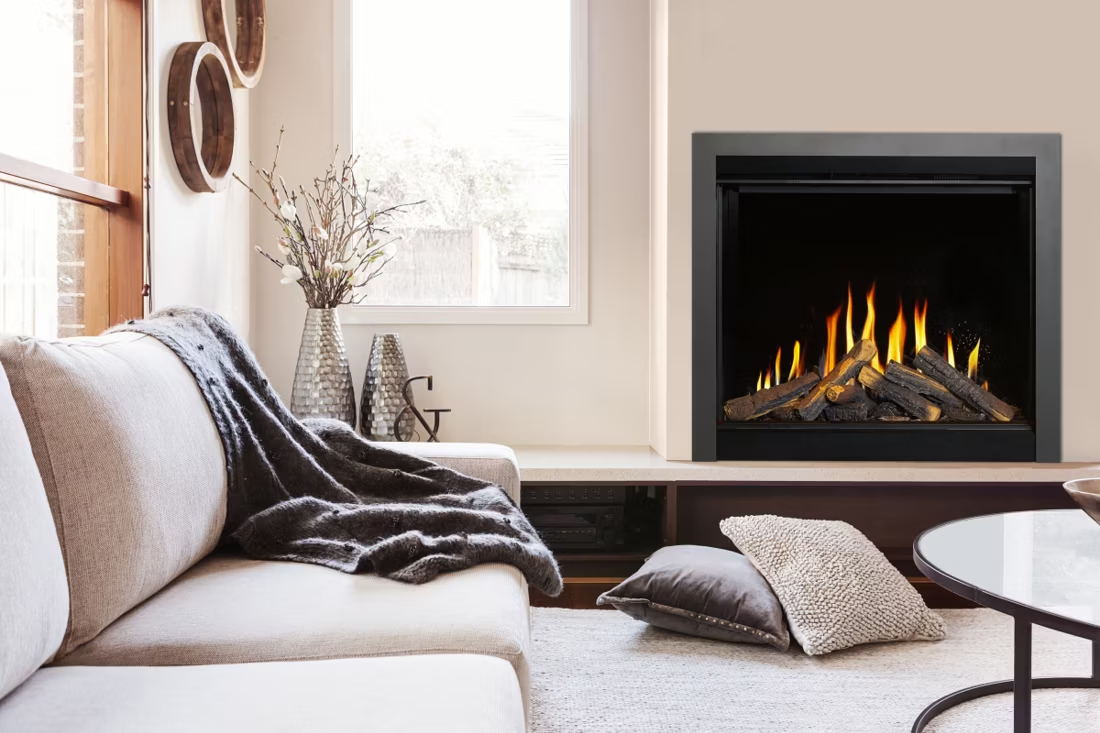
That combination is exactly where electric fireplaces earn their place. There's no gas line, no chimney, and no wood storage to coordinate—just a unit and, for larger built-ins, a dedicated circuit run by an electrician. Commonwealth Edison serves the village at a residential rate of $0.1339/kWh, which keeps day-to-day operating cost low for a room that's used for evening ambiance and supplemental warmth rather than whole-house heating. For great rooms, primary suites, and finished basements in Kildeer's larger homes, electric is often the simplest fit.
Three steps. No salesperson until you're ready.
Tell us about your project
Your zip code, your situation, and the fuel you're leaning toward—or let the answers point you to one.
See what's actually available
The brands dealers within 100 miles genuinely carry—real options, never a catalog mirage.
Get your dealer & Project Guide
A trusted local dealer, plus the free Project Guide & Parts List that names every component of the job.
Frequently Asked Questions
How much does it cost to install an electric fireplace in Kildeer?
It depends heavily on the type. A plug-in freestanding unit or a simple insert that drops into an existing masonry opening typically runs $200 to $700 installed, since it just needs a standard outlet. A wall-mount linear unit that requires a licensed electrician to run a new dedicated 120V or 240V circuit—common in Kildeer's larger great rooms—usually lands between $1,200 and $2,500. Full custom built-ins with a framed wall cavity, mantel, and stone or tile surround, which fit the scale of many homes in the village, can run $2,500 to $5,000 or more once carpentry is included. Unlike a gas or wood installation, there's no chimney or gas line to coordinate, which keeps the timeline short.
What's the best electric fireplace for a large great room in Kildeer?
For the high-ceilinged great rooms common in Kildeer's custom construction, a linear wall-mount unit in the 50" to 60" range gives enough visual scale without overwhelming the wall. Brands like Dimplex, Napoleon, and Amantii make models with a 1,500-watt heater (roughly 5,100 BTU) and realistic multi-layer flame effects that read well from across a large room. Keep in mind that's supplemental heat for one zone, not a replacement for the home's furnace or geothermal system during a winter as long and cold as Kildeer's—a local dealer can confirm sizing based on your room's square footage and ceiling height.
Will an electric fireplace actually heat my home during Kildeer's cold winters?
Not the whole home—and it's worth being upfront about that. Kildeer averages 14°F on the coldest nights and has a long, cold winter season, similar to Madison, Wisconsin. A typical electric fireplace heater tops out around 1,500 watts, or about 5,100 BTU, which is enough to noticeably warm a single room but not enough to carry a whole house through a January cold snap. Most Kildeer homeowners use electric fireplaces as zone heat for a specific room—a primary suite, a basement, a home office—while their furnace or geothermal system continues doing the primary heating work.
Do I need a permit for an electric fireplace in Kildeer?
A plug-in unit that runs off an existing outlet generally doesn't require a permit. If your installation involves a licensed electrician running a new dedicated circuit—typical for larger built-in units—that electrical work is usually permitted through the Village of Kildeer's building department, which, like many small Lake County villages, contracts out plan review and inspection services rather than staffing it in-house. Your electrician or the installing dealer can confirm what's needed for your specific unit before work starts.
What's the difference between an electric insert, wall-mount, and built-in electric fireplace?
An electric insert is sized to slide into an existing masonry fireplace opening—a common retrofit in Kildeer for homes that were built with a wood-burning fireplace shell that's rarely, if ever, used for actual wood fires. A wall-mount unit is a slim linear fixture that hangs on a wall like a large flat-screen, no fireplace opening required. A built-in electric fireplace is framed into a wall cavity during construction or remodel and finished with a custom surround, mantel, or stone facing—the option most often chosen for great rooms in Kildeer's newer custom builds. Which one fits depends on whether you're retrofitting an existing opening or building the wall from scratch.
How much does it cost to run an electric fireplace on ComEd's rates?
Commonwealth Edison's residential rate in the Kildeer area runs around $0.1339 per kWh. A typical 1,500-watt electric fireplace heater on its highest setting draws about 1.5 kWh per hour, which works out to roughly $0.20 an hour to run. Used for ambiance and supplemental warmth for a few hours each evening—say five hours a day through the coldest months—that's about $1 a day, or roughly $30 a month. Running just the flame effect without the heater draws far less, often only a few watts.
Electric vs. gas fireplace—which is right for my Kildeer home?
Gas fireplaces are standard and well-supported in this area and deliver more real heat output plus a more traditional flame, but they require a gas line, venting, and a permit through the village's building department. Electric skips all of that—no gas line, no venting, no combustion byproducts—which makes it the better fit for rooms where running gas isn't practical, like a converted basement, a primary suite addition, or a room where the homeowner simply doesn't want to deal with permitting a new gas appliance. Several Kildeer homeowners end up with both: gas in a main living space for real heat, electric in a secondary room for ambiance and easy install.
With all the oak and hickory on these lots, why isn't wood heat more common in Kildeer?
It's a fair question given the tree canopy—oak, hickory, walnut, and maple line most Kildeer lots. But wood heat here isn't logistically supported the way it is in a forest-adjacent town: there's no national forest cutting-permit program nearby, no local firewood-permit infrastructure, and many of Kildeer's custom homes were built without a masonry chimney at all, favoring forced-air or geothermal systems from the start. Pellet stoves face a similar gap—while brands like Indeck Energy Services, Lignetics, and Somerset Pellet Fuel supply the broader Chicago region, pellet appliances aren't a common fit for Kildeer's newer, larger homes. Electric fireplaces fill that ambiance role instead, without needing a chimney, wood storage, or ash cleanup.
How long do electric fireplace inserts last, and what maintenance do they need?
The LED light engines in most modern electric fireplaces are rated for 20,000 to 30,000 hours, which typically translates to well over a decade of normal evening use. Maintenance is minimal compared to wood or gas: dust the vents and flame area periodically, keep the heater intake clear of pet hair and debris, and replace the blower fan if it becomes noisy after several years of heavy use. There's no annual chimney sweep, no gas line inspection, and no combustion byproducts to manage—one of the reasons electric units are popular for lower-maintenance secondary rooms in Kildeer's larger homes.
Do electric fireplaces actually produce heat?
Yes—most put out around 4,800–5,000 BTUs from a standard outlet, which comfortably warms a bedroom, office, or den as a comfort-zone heater. What they won't do is carry a whole house the way wood, gas, or pellet can. Think of electric as ambiance-first with honest supplemental heat: flames on with no heat in July, flames plus warmth in January.
Does an electric fireplace need a vent or chimney?
No—that's its superpower. An electric fireplace needs a wall and an outlet, period. No vent pipe, no gas line, no clearances to design around, which is why it works in bedrooms, offices, apartments, and walls where venting a gas or wood unit would be impractical or impossible. Installation is typically the simplest and least expensive of any fireplace type.
Can I install a fireplace myself?
If you're putting a fire in your house on purpose, it's best to work with an expert. Unless you're genuinely experienced in framing, gas line, vent pipe, and the national code on clearances to combustibles, have a professional do it—and ideally the same company that sells you the fireplace, so warranty, service, and liability all live under one roof.
How much should I budget for a fireplace?
For an average home—covering the fireplace, the vent pipe, and basic installation—a budget between $3,900 and $5,500 gives you a lot of options across wood, gas, and pellet. By the time you add finish work, gas line, and electrical, the average complete installation lands between $5,000 and $12,000 all-in. In a remodel or new build, a good rule is to put about 2.5% of the total project cost toward the fireplace.
Nearby Dealers
Hearth shops serving Kildeer and the surrounding area. Every listing shows whether it is a WhyFire partner, a dealer we have verified as authorized for the brands we recommend, or a local business carrying hearth products. No manufacturer pays for placement. How we verify dealers →
Smokin' Deal Bbq
Fireplaces Plus
General Masonry Supply
Fireplace And Patio
Jhb Group, Inc.
Ember Glow
Electric Service in Kildeer
An electric fireplace's heater draws about 1,500 watts—pennies per hour at local rates.
Commonwealth Edison Co
Find your electric fireplace in Kildeer.
Tell us a bit about your home and we'll put together a free Project Guide & Parts List—sized for your room, matched to your circuit needs, and paired with a trusted local Kildeer-area dealer.
Find Your Fireplace →