
Real ambiance, zero venting, for Johnsburg homes.
No chimney, no gas line, no permit headaches—just plug in or wire up and get warmth on a cold McHenry County night. Find the right unit and connect with a trusted local dealer.
Every Project Starts From One of These Five Situations
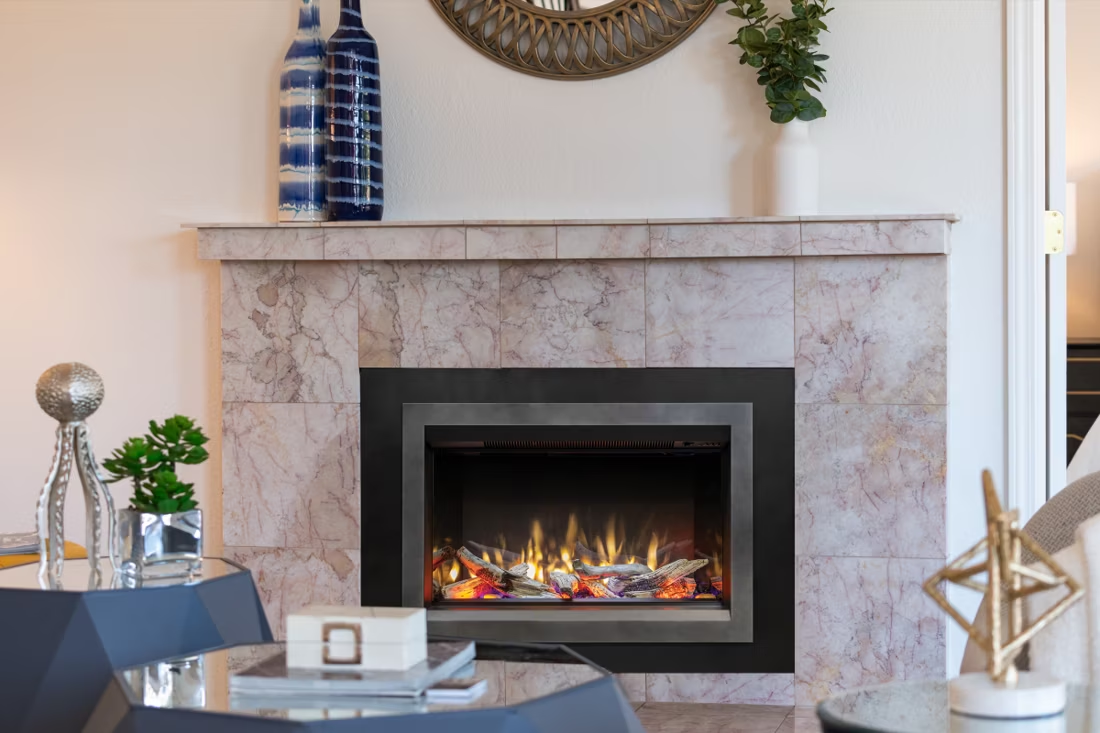
Ambiance and heat without the chimney work.
Johnsburg sits along the Fox River near the Chain O'Lakes, at a modest 797 feet elevation, but winters here are genuinely cold—an average low of 13°F and a long, demanding heating season put the village in the same climate territory as Madison, Wisconsin. Many of Johnsburg's homes are newer construction, part of subdivisions built without masonry fireplaces or chimneys at all, which is exactly the gap electric fireplaces fill: a real flame effect and supplemental warmth without any structural venting work.
Power in Johnsburg comes from either Commonwealth Edison (ComEd), which serves most of the village, or Rock Energy Cooperative, which covers pockets of rural McHenry County—so which utility bills you depends on your exact address. At ComEd's residential rate of about 13.39¢/kWh or Rock Energy's 14.47¢/kWh, an electric fireplace is inexpensive to run compared to the cost of adding gas line or chimney infrastructure, and it drops into finished basements, additions, condos, and rental units where a wood or gas installation isn't practical.
Three steps. No salesperson until you're ready.
Tell us about your project
Your zip code, your situation, and the fuel you're leaning toward—or let the answers point you to one.
See what's actually available
The brands dealers within 100 miles genuinely carry—real options, never a catalog mirage.
Get your dealer & Project Guide
A trusted local dealer, plus the free Project Guide & Parts List that names every component of the job.
Frequently Asked Questions
How much does it cost to install an electric fireplace in Johnsburg?
Most electric fireplace projects in Johnsburg run between $500 and $2,500. A simple plug-in insert or freestanding stove that uses an existing outlet is on the low end. A built-in wall unit or linear fireplace that requires a dedicated 120V or 240V circuit—and an electrician to run it—sits in the middle to upper end, especially if it's part of a larger remodel with custom surround or mantel work. Local dealers will give you a firm number after seeing the space and confirming what electrical work, if any, is needed.
Which utility will power my electric fireplace—ComEd or Rock Energy Cooperative?
It depends on exactly where in Johnsburg you're located. Commonwealth Edison (ComEd) serves the bulk of the village at roughly 13.39¢/kWh, while Rock Energy Cooperative covers some rural pockets of McHenry County at roughly 14.47¢/kWh. Check a recent electric bill to confirm which provider serves your address—it won't change how the fireplace is installed, but it's worth knowing when you're estimating what it'll cost to run.
Will an electric fireplace actually heat my Johnsburg home?
It'll help, but it shouldn't be your only heat source. With average winter lows around 13°F and a long, demanding heating season, Johnsburg's climate calls for a real furnace or boiler as primary heat. Most electric fireplace heaters put out around 4,000-5,000 BTU and are rated to comfortably supplement a room up to roughly 1,000-1,500 square feet—great for a finished basement, three-season room, or main living area that runs cold, but not a replacement for central heat on the coldest nights.
Do I need a permit to install an electric fireplace in Johnsburg?
A plug-in insert or freestanding unit that just uses an existing outlet typically doesn't require a permit. A built-in wall unit or linear fireplace that needs new wiring or a dedicated circuit does require an electrical permit, pulled through the Village of Johnsburg Building Department (or McHenry County's Building Division for unincorporated addresses just outside village limits). Most licensed electricians handle the permit paperwork as part of the installation.
What's the difference between an electric insert, electric fireplace, and electric stove?
An electric insert is sized to slide into an existing masonry firebox—a good option for the handful of older farmhouses along the Fox River that still have a real fireplace opening. A built-in electric fireplace is designed into a wall or framed enclosure, the common choice in Johnsburg's newer subdivision homes that were never built with a chimney. An electric stove is a freestanding cabinet-style unit that can go in almost any room with an outlet nearby—no construction required. For most Johnsburg homes without an existing fireplace, the built-in wall unit or freestanding stove are the practical picks.
What's the most realistic-looking electric fireplace available?
Look at units with multi-layer LED flame technology and independent flame/heat controls, so you can run the visual effect without the heater on warm days—useful given Illinois summers. Dimplex's Opti-myst line uses a water-vapor effect for an unusually convincing flame and smoke look, while Napoleon's Cinema series and Touchstone's Sideline models are popular mid-range choices with adjustable brightness and multiple flame colors. A local dealer can show you units in person, which matters more with electric fireplaces than any other fuel type since the flame quality varies a lot between brands.
Electric vs. gas—which is right for my Johnsburg home?
Gas fireplaces put out real, substantial heat and can serve as genuine supplemental or zone heat during a McHenry County winter, but they require venting and, if you're not already piped, a gas line run—which adds cost and needs a permit. Electric fireplaces skip all of that: no venting, no gas line, and a much lower install cost, but they run on electricity at ComEd or Rock Energy rates and produce less usable heat per dollar than gas. Homes already plumbed for natural gas often lean gas for a primary supplemental heat source; basements, additions, condos, and rentals without existing gas infrastructure usually lean electric.
How much does it cost to run an electric fireplace in Johnsburg?
A typical electric fireplace heater draws about 1,500 watts on its highest heat setting. Running it four hours a day at ComEd's rate of 13.39¢/kWh costs roughly 80 cents a day, or about $24 over a month of regular winter use; at Rock Energy Cooperative's 14.47¢/kWh, that's closer to 87 cents a day. Running the flame effect alone, without the heater, draws only a few watts and costs pennies a month—a nice option for year-round ambiance without a winter-sized electric bill.
What about wood or pellet stoves in Johnsburg?
They're uncommon here. Johnsburg's typical subdivision lot sizes, village building requirements, and the lack of any nearby public-land cutting permit program (unlike national forest areas out west) mean most homeowners looking for supplemental heat or fireplace ambiance choose electric or gas instead. A small number of rural properties on larger McHenry County acreage still run a wood stove for backup heat, but for most Johnsburg addresses, electric is the far more practical route.
Can I put a TV above my fireplace?
Yes—with an asterisk. Fireplaces are hot and TVs don't like heat. Either put a mantel between them to deflect rising warmth, or choose a fireplace with heat-management technology that creates a cool zone on the wall above—the wall stays around 125 degrees, barely warm, while the room still gets full heat. If you like clean lines and don't want a mantel, heat management is the answer.
Do electric fireplaces actually produce heat?
Yes—most put out around 4,800–5,000 BTUs from a standard outlet, which comfortably warms a bedroom, office, or den as a comfort-zone heater. What they won't do is carry a whole house the way wood, gas, or pellet can. Think of electric as ambiance-first with honest supplemental heat: flames on with no heat in July, flames plus warmth in January.
Can I install a fireplace myself?
If you're putting a fire in your house on purpose, it's best to work with an expert. Unless you're genuinely experienced in framing, gas line, vent pipe, and the national code on clearances to combustibles, have a professional do it—and ideally the same company that sells you the fireplace, so warranty, service, and liability all live under one roof.
How much should I budget for a fireplace?
For an average home—covering the fireplace, the vent pipe, and basic installation—a budget between $3,900 and $5,500 gives you a lot of options across wood, gas, and pellet. By the time you add finish work, gas line, and electrical, the average complete installation lands between $5,000 and $12,000 all-in. In a remodel or new build, a good rule is to put about 2.5% of the total project cost toward the fireplace.
Nearby Dealers
Hearth shops serving Johnsburg and the surrounding area. Every listing shows whether it is a WhyFire partner, a dealer we have verified as authorized for the brands we recommend, or a local business carrying hearth products. No manufacturer pays for placement. How we verify dealers →
Fireplace And Patio
Jhb Group, Inc.
Lakes Brick & Block
Smokin' Deal Bbq
Fireplaces Plus
Lakeside Fireplace
Electric Service in Johnsburg
An electric fireplace's heater draws about 1,500 watts—pennies per hour at local rates.
Commonwealth Edison Co
Rock Energy Cooperative
Find your electric fireplace in Johnsburg.
Tell us a bit about your home and we'll match you with the right electric fireplace, insert, or stove—plus a free Project Guide & Parts List and an introduction to a trusted local dealer.
Find Your Fireplace →